 Afghan Hound
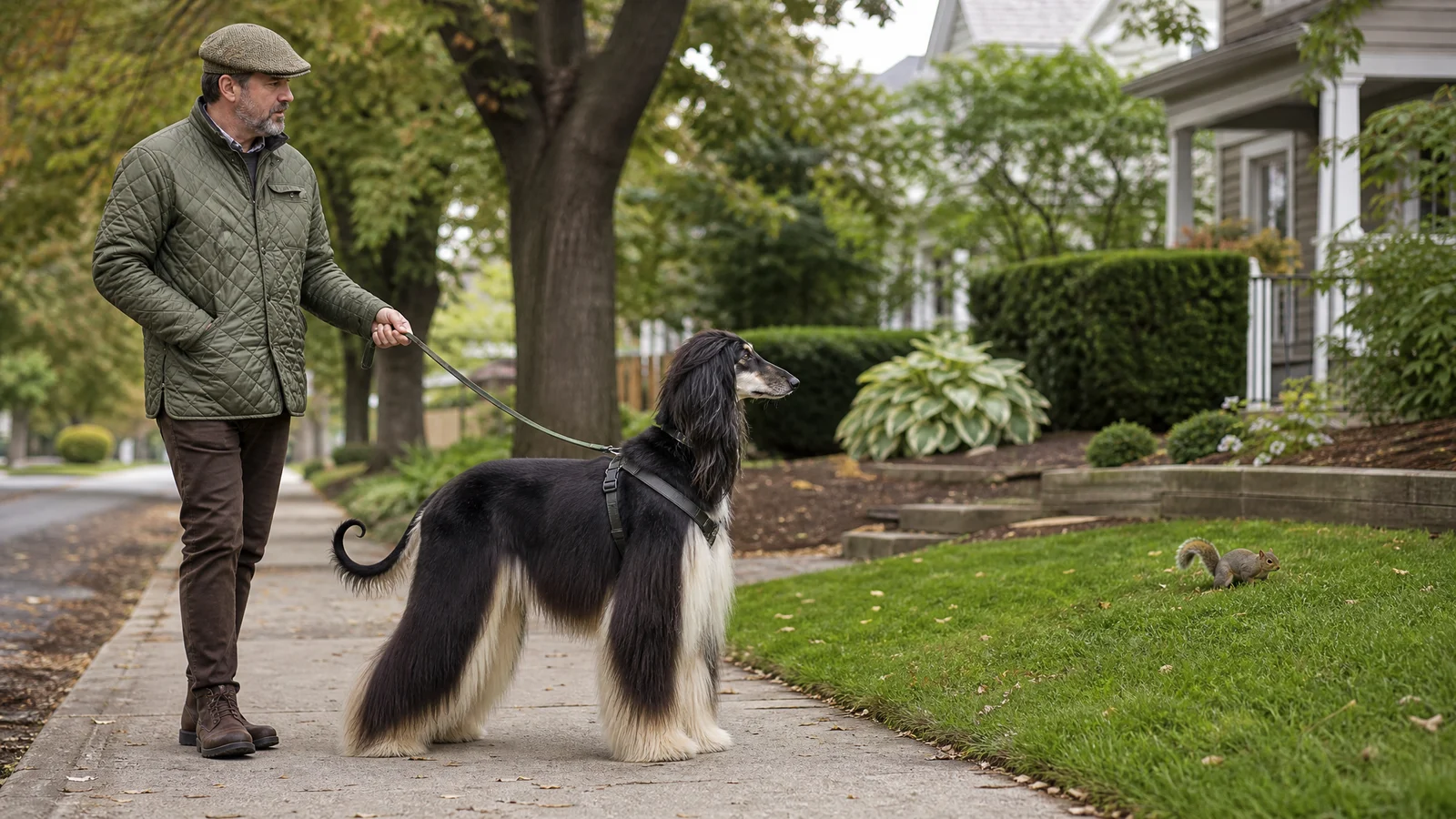
An Afghan Hound will bolt after anything that looks like prey. You manage that with leashes, fences and rewarded habits, not by trying to remove the instinct. The reason is history: a sighthound shaped to spot movement across open ground and run it down, and that wiring doesn't switch off because your dog adores you.
Handled badly, one sprint after a squirrel can end at a road. Handled well, you get a hound who glances back at you, walks on a soft leash and still gets real chances to run. That is worth the effort, and it is easier than it sounds.
This guide covers training around prey drive, from the mountain origins of the breed to trigger-by-trigger steps for squirrels, bikes and joggers, with the signs that tell you it's working along the way.
Four Afghan Hound Chase Triggers
Each trigger on a walk is its own problem, but each gets the same recipe: more distance, a quick U-turn when needed, and payment for looking at you. Take them one at a time and practice the easy versions before you meet the real thing.
Squirrel Trigger Snapshot
Squirrels dart, freeze and dart again, which is irresistible to a sighthound. Keep your dog on a comfortable, short leash near trees and hedges, scan ahead, and feed for a look at you before the squirrel moves. If your dog locks on, turn away cheerfully and pay for following.
Bike and Skateboard Trigger Snapshot
Fast, quiet approaches are the hardest, because a bike can appear before your hound has time to think. Step off the path early and feed steadily as it passes. For practice, find a spot where bikes pass far away, mark calm looks and move closer over many sessions.
Jogger Trigger Snapshot
A runner coming toward you or moving away makes a clean moving target. Cross the street or move to the edge of the sidewalk well ahead of time, then feed in a steady stream while the jogger passes. If your dog stiffens, use the U-turn and try again from farther back.
Small-Pet Trigger Snapshot
A cat, rabbit or small dog moving fast can look exactly like game, so keep leashes short and introductions slow and supervised. Our article on Afghan Hound and cat friendship walks through household introductions. Out on a walk, treat a small dog running loose like a squirrel: add distance and pay for looking away.
Chase Training at First Sight
Chasing isn't a bad habit in this breed. It is the job the Afghan was shaped for, and seeing how it starts makes every training step easier to follow.
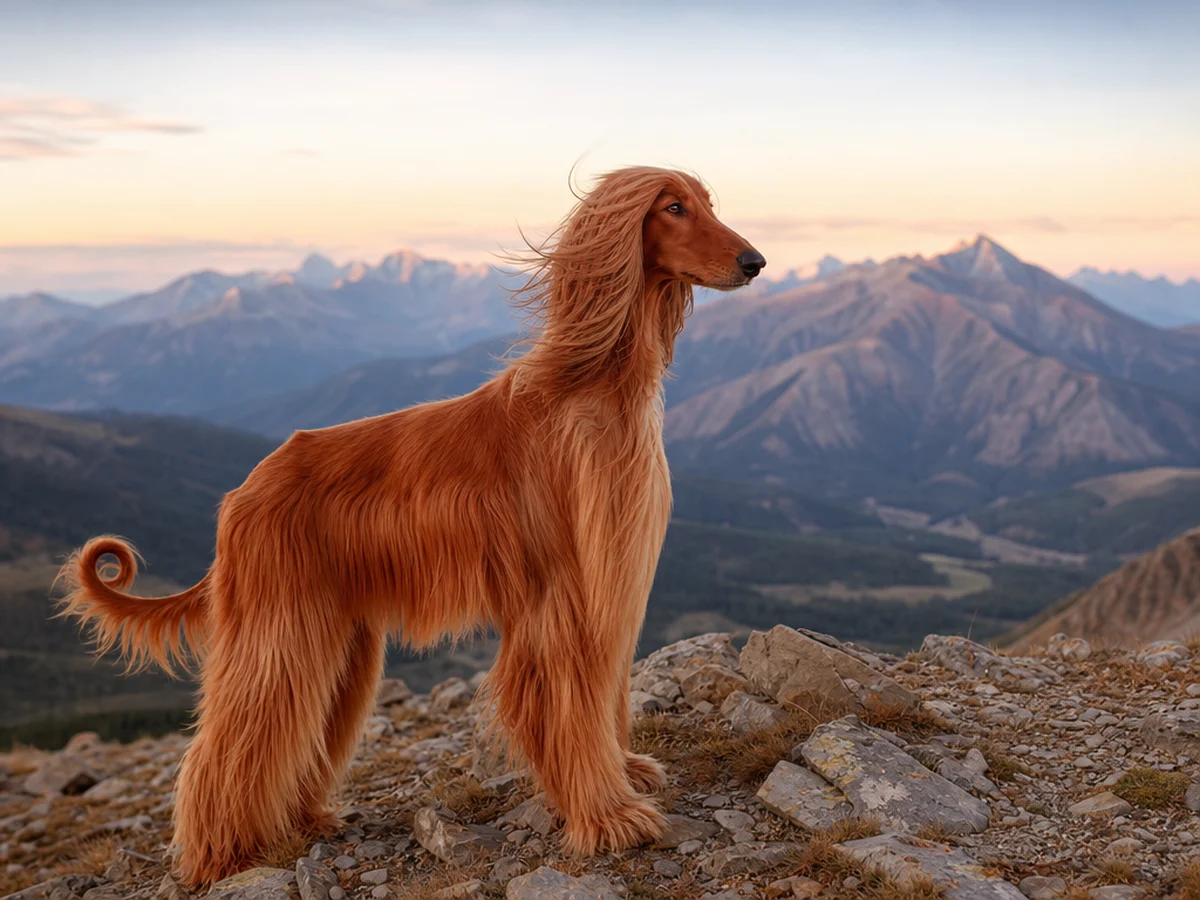
The chase begins with the eyes, and the trigger is motion. A squirrel streaking across a lawn, a cat slipping under a hedge, a bicycle, a jogger, a plastic bag skittering down the street, even a small dog running flat out can all register as prey. Your Afghan doesn't sort these into acceptable and unacceptable the way you do. Movement is movement.
From the dog's side, it feels automatic. The instinct fires before any decision to stay or go, so a relaxed hound can be sprinting in a heartbeat, then ignore a person standing perfectly still. By the time your voice arrives, it is competing with something far more exciting than a request to stop.
If you've worried that a dog who bolts doesn't care about you, set that worry down. Afghans are affectionate and extremely loyal to the people they've bonded with. Loyalty and instinct simply run on separate circuits, so a chase says nothing about how much they love you.
The useful part is that you can learn your own dog's tell, whether that's a lifted head, a locked stare or a sudden stillness. Acting at that moment, before the sprint, is when every skill below works best.
Afghan Hound Chase History
The Afghan Hound comes from Afghanistan, where they were bred as sighthounds to hunt and chase prey by sight. For centuries they were rugged, fleet-footed hunting companions, and they were also status symbols of royals, tribal chieftains and aristocrats in Asia's mountain kingdoms.
Even the famous coat had a job, protecting them from the harsh climate in the mountainous regions where Afghans originally earned their keep. That life demanded eyes that catch distant movement and the speed to act on it, and that is the body now sprawled on your couch.
Hunting is history for your dog, and nothing here asks you to revive it. What remains is the wiring. By the time a national registry opened its Stud Book to Afghans in 1926 and adopted a brief standard from British sources, the instincts were already centuries old.
Temperament traveled with the work. The breed is a strong-willed, independent thinker, dignified and aloof with strangers but exuberant and playful with family. That independence is why training here runs on treats, play and patience, and why our piece on a hound sensitive to harsh tones belongs beside this one.
Recall Training Limits
Here is the honest part: no amount of practice makes an Afghan Hound safe on open, unfenced ground. A lovely recall in the living room tells you little about the moment a rabbit breaks cover, because the pull of the chase can outrank any cue, even from a devoted dog.
You'll often hear that enough drilling earns a reliable off-leash recall. After many years of training Afghans, we disagree for this breed. Recall is a bonus layered over the leash and the fence, never a replacement for them.
That doesn't make it pointless. Teach it in a secure yard, call only when you can pay for the response, and use treats your dog adores. Calling again and again teaches that your voice is background noise.
Reward every arrival, and often release your dog straight back to sniffing or playing afterward, which shows them that answering your call doesn't end the good part. A hound who prefers to do things their own way keeps returning only while the deal stays good.
As for open ground, keep it off the table. Parks, beaches and open trails stay leashed outings however well training goes, and the payoff for that discipline is simple: you never have to find out how the contest ends.
Three Chase Training Safeguards
Living well with this instinct happens in layers. Management keeps your dog safe while the drive is at full strength, and rewarded habits slowly give them better options when something moves. Build them in that order, because the second layer only works when the first one is solid.
The Leash Prevents Rehearsal
Afghans have a strong instinct to run off in pursuit of perceived prey, so walking off leash isn't advisable. Plan on leashed outings in any open area and secure containment at home. Afghans are tall, lean and strong, which makes them excellent jumpers, so the exercise area needs a high, secure fence, and our fence rules for a jumper cover the details. Check gates and latches too.
Management also protects your training. Every successful chase pays the dog handsomely, which makes it harder to build anything else, so a closed gate does as much teaching as any treat.
A Check-In Earns the Pay
Once the setting is safe, pay generously for looking at you, settling beside you and turning away from movement. Pick a crisp marker word such as yes and feed within a heartbeat of saying it. Praise, tasty treats and play all count as pay.
Keep sessions short and cheerful. Afghans are independent and sensitive, so they cooperate when the deal is clearly worth it and drift off when it isn't. Unless obedience or agility competition is a goal, come, sit and stay are generally enough. A dog who is reliable around triggers is worth far more than one with a long list of tricks.
Distance Keeps the Brain Online
Distance is your main tool with anything that moves. Work through these steps in order, and advance only when your dog looks loose and keeps taking treats.
- Start far enough from the trigger that your dog notices it and can still eat comfortably.
- Mark and feed the instant they look at the trigger calmly, then again when they turn back to you.
- Close the distance in small steps over many sessions, never in the middle of one excited burst.
- If treats get refused or the body goes stiff, you're too close, so back up and make the next try easier.
- Vary only one element per session, for example the place, then the speed of movement, then the distance.
Afghan Hound Walk Setup
A daily walk is where training meets the real world, and short strolls don't give this athletic breed enough exercise anyway. A hound with energy to burn finds triggers harder to ignore, so plan walks that protect your progress instead of testing it.
Gear and Leash Handling
A sighthound who hits the end of a leash at speed can hurt their neck, so a well-fitted harness is a sensible choice, and a harness is recommended for dogs who pull. Pick one your dog can't back out of, and clip the leash on before the front door opens.
Teach walking beside you by rewarding the dog who stays close and stopping the moment the line tightens. Consistency decides whether this works, because you need to stop every time the dog pulls. Giving in now and then teaches that pulling can still pay off. Hold the handle with a firm, relaxed arm so a sudden lunge doesn't pull it free.
Routes and Timing
Early mornings and late evenings usually mean fewer bikes, joggers and loose animals, which means more successful repetitions. Pick wide routes where you can see trouble coming, and skip blind corners, hedges and park edges where animals burst out of cover.
Stick with a few familiar routes for a while. Familiar ground helps your hound relax, lets you pay for calm and shows you exactly where the squirrels live. Teach an emergency U-turn somewhere quiet first: say your cue, spin away cheerfully and feed them for following. Then use it on the street before your dog reacts rather than after.
Where Real Running Happens
Running is a need, not an indulgence. Ideally an Afghan runs full out several times a week in a large, enclosed area, and that is the right place for freedom. Once mature, they can also join you on long leashed runs. Regular vet visits help you confirm your hound is fit for that much exercise.
Safer Walk Training Progress
Progress with a sighthound tends to be subtle, and knowing the signs makes it easier to spot. Watch for these signs that the work is paying off.
- Your dog looks back at you sooner on walks, sometimes before you've said or marked anything.
- The leash has more slack in it, with fewer lunges and a softer feel in your hand.
- When a trigger grabs their attention, they recover faster, take a treat sooner and settle sooner than they used to.
- You can pass a bike or jogger at a distance that would have been too close before.
- You spot your dog's tell before the sprint and act in time.
A newly adopted adult may need longer to show these changes. Our guide to settling in an adult Afghan explains how trust and routine develop.
Ask a qualified positive-reinforcement trainer or behaviorist for help when you notice fixation, where your dog stares at a trigger and can't be drawn away even at a good distance with the best treats. The same goes for lunging that is getting worse despite steady practice, or a near miss with a road or a fence.
Call for help too if anyone in the household can't hold the dog safely on a leash. A sudden change on walks, such as fear or shaking, deserves a mention to your vet as well.
Asking for help isn't failure, and for a breed this fast, an extra pair of experienced eyes can turn a stressful routine into a safe one. Keep the instinct managed, the rewards flowing and the fence high, and your Afghan will go on giving you what they've always offered: loyalty, humor and a spectacular run.
 BehaviorHelping a Loyal Adult Afghan Hound Settle Into a New Home
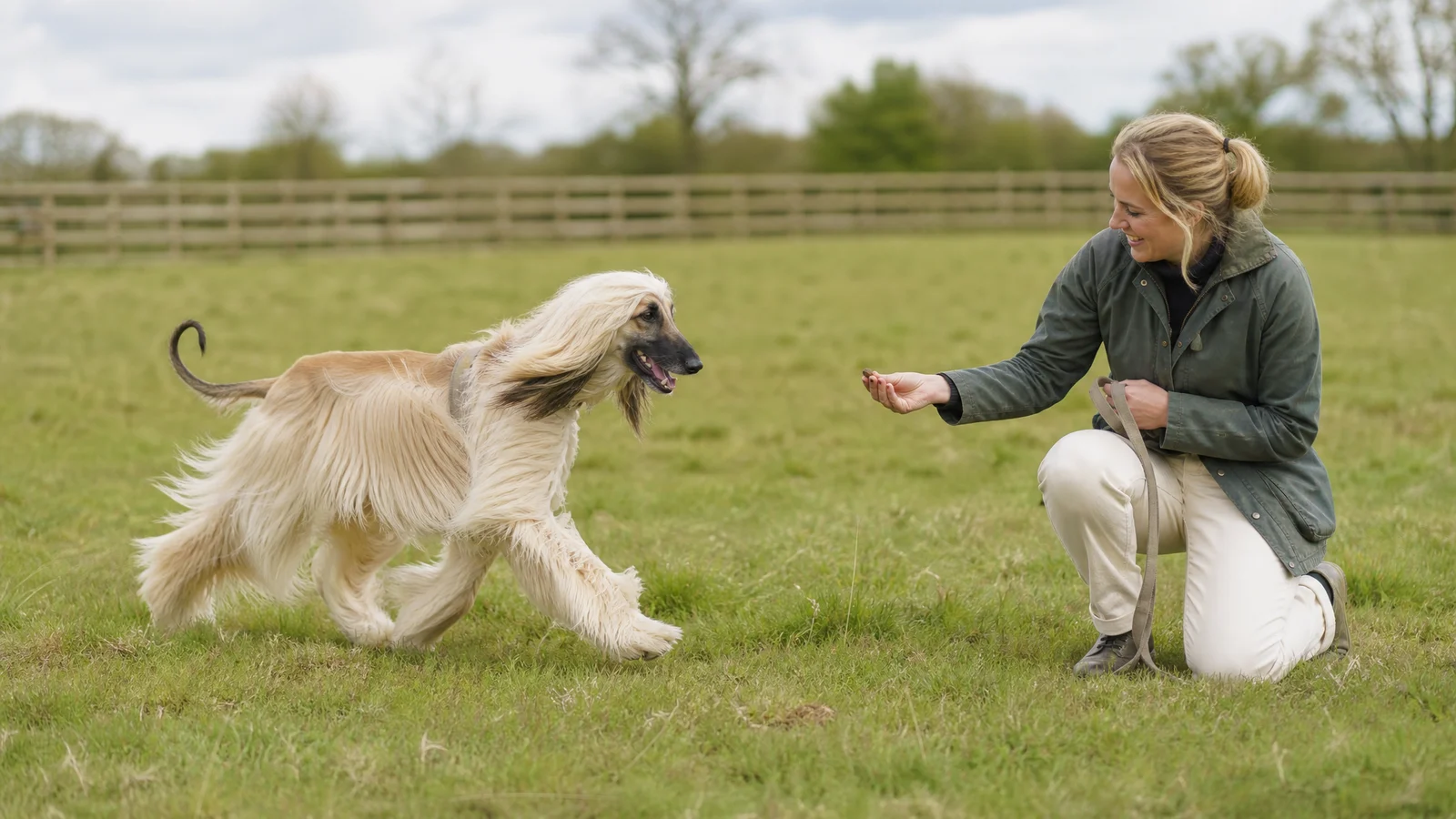 Training basicsWhen an Afghan Hound Bolts: Rewarding the Return Home
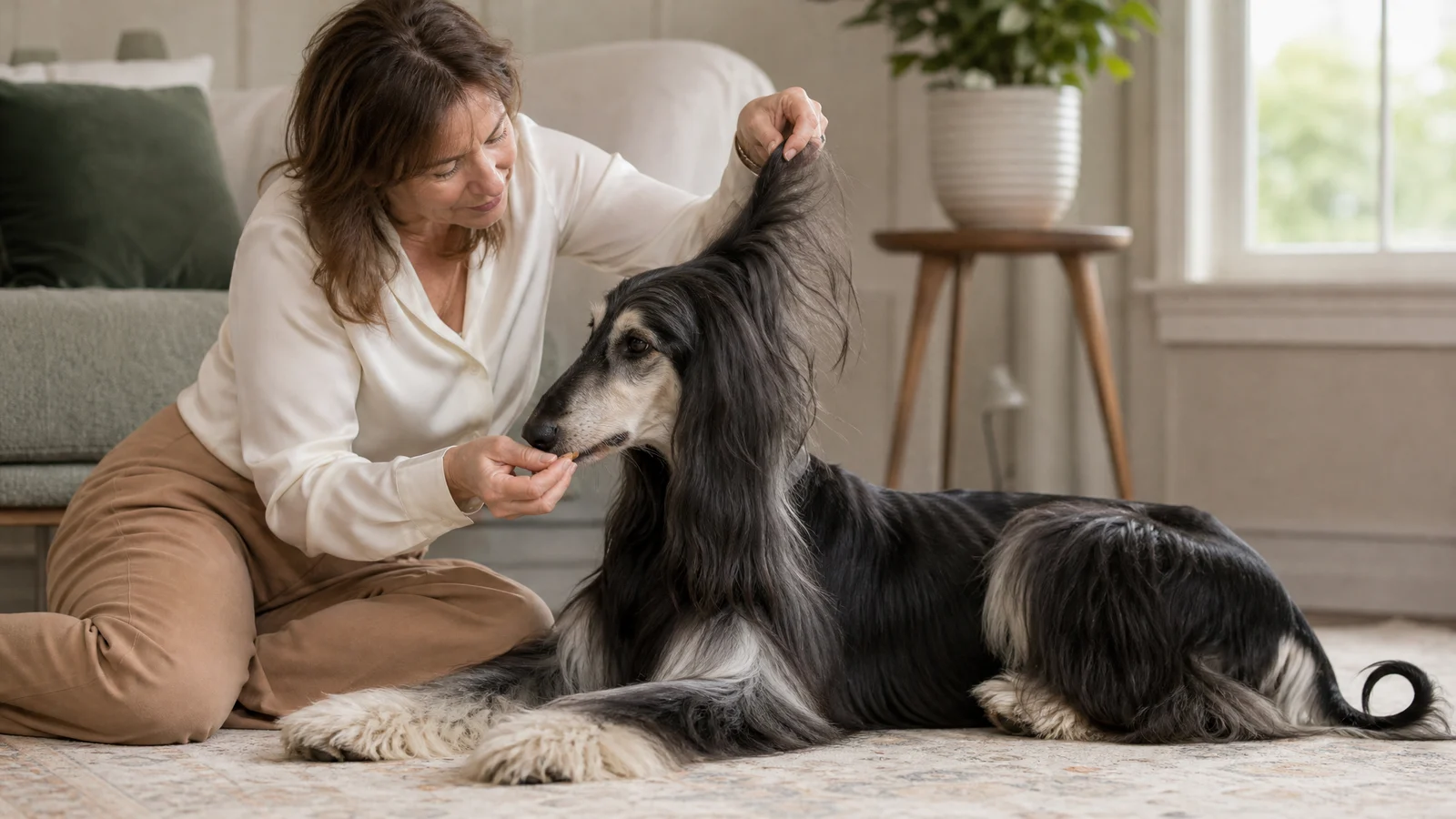 CareHow to Make Paw and Ear Checks Easy for an Afghan Hound