 Afghan Hound
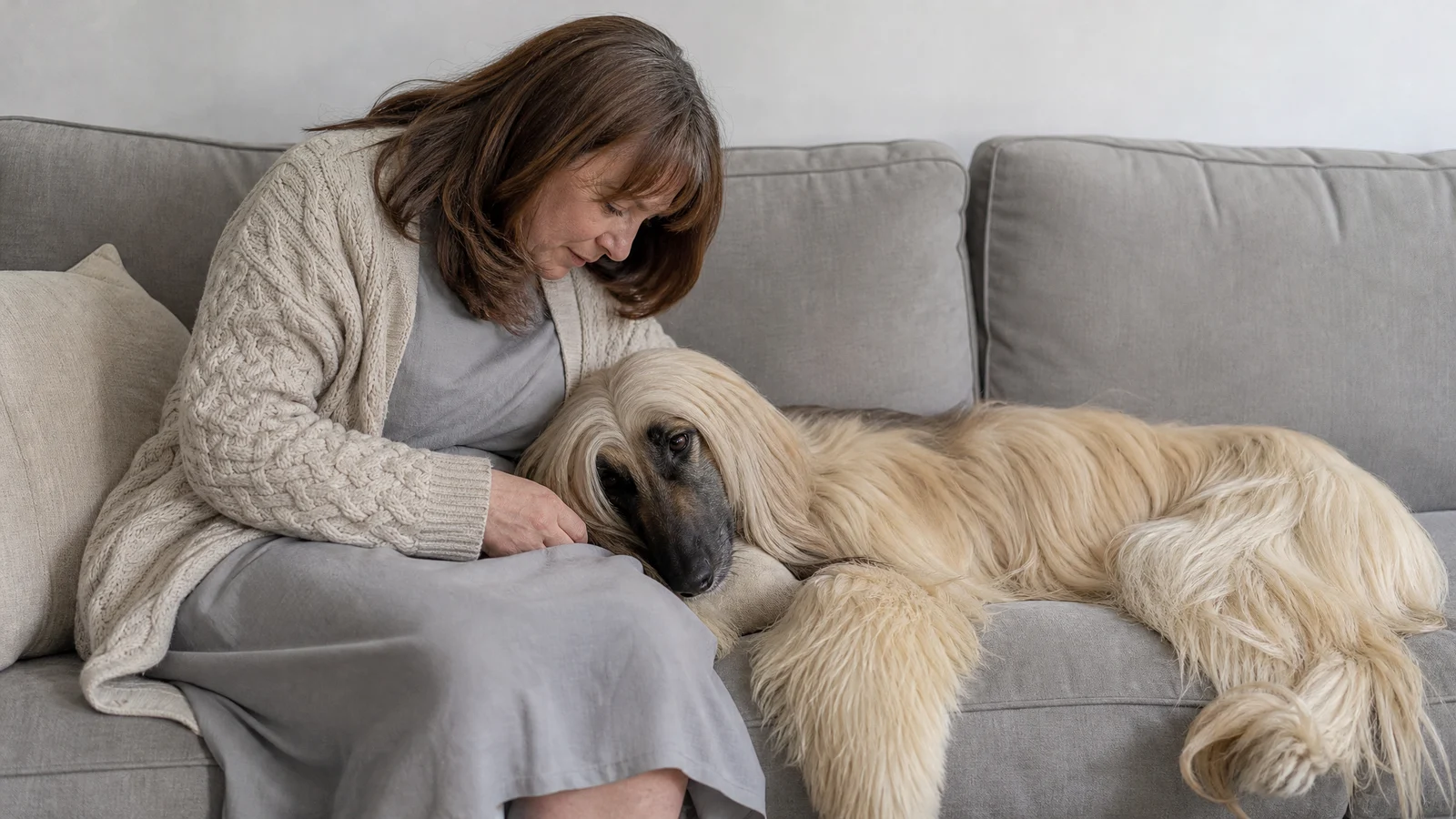
Say your Afghan Hound freezes, slinks off, or drifts to the far end of the house, you decide they are being stubborn, and you repeat the cue with more edge. That is how you lose a sensitive hound. The fix is a quiet, predictable voice paired with rewards, in a home arranged so you seldom feel the urge to sharpen your tone.
Handled badly, a loud household teaches a loyal dog to treat you as a hazard, and distance is hard to win back from a breed that already likes things their own way. Handled well, the same sensitivity gives you a hound who watches you closely, wants to get it right, and shows the playful side the breed saves for family.
In this article, we'll go through what sensitivity looks like in this breed, how to prevent scares, which tones and noises land as harsh, and how to reward and interrupt quietly, ending with household quiet-voice rules. Behavior and training of this one breed is what we specialize in, and the quiet route is the one we stand behind.
Afghan Hound Sensitivity Recovery Signs
Obedience is a poor scoreboard for a sensitive, independent hound. Watch how fast they bounce back instead. You are not aiming for a dog who never startles. You are aiming for one who startles and recovers, so the dropped pan that used to be a crisis becomes a quick glance.
The table pairs the signs worth watching with what each one tells you. Use it to decide whether to keep practicing or ask for help.
| Sign | What you see | What it tells you |
|---|---|---|
| Faster recovery | A bang rattles them briefly, then they return to what they were doing | The calmer house is working |
| Relaxed posture | A loose body and soft face, lying in the open instead of the corner | They feel safe in the room |
| Self-started check-ins | They glance at you on walks or walk over when called | Your voice now predicts good things |
| Eating in new places | They take treats away from home and near visitors | You can add the next small challenge |
| Staying put | They remain in the room when you speak instead of leaving | Your tone has stopped being a threat |
Read Uneven Progress in Context
Progress is uneven, and one bad evening after a loud party does not undo two weeks. If you see the opposite, such as hiding, refusing treats, or avoiding certain rooms, you moved too fast. Back up, make it easier, and pay more.
Schedule regular vet checkups, and tell your vet about any abrupt shift in how your dog acts. Some sensitivity is simply the breed, but constant fear is a different matter. The parent club's standard lists sharpness or shyness as temperament faults, so a hound who stays frightened for weeks is not just being an Afghan.
If fear comes with growling or snapping, behavior modification guided by a qualified professional and built on rewarding good behavior is the safest route. Check credentials first: only a veterinarian with ACVB board certification may call themselves a behaviorist, while the word trainer needs no education behind it.
Harsh Inputs Behind Afghan Hound Sensitivity
Harsh is not only shouting. For a hound who reads the people they love closely, it covers the voice, the body behind it, and the noise level of the house, and you can be guilty of all three while believing you are perfectly calm.
The Voice Itself
Volume is the obvious one, like a sharp no from the next room. But clipped, tight, or sarcastic speech counts too, and so does repeating a cue louder each time. A whispered, furious name is still furious. Judge your tone by what a dog hears, which is pitch and tension, not vocabulary.
Your Body Behind the Words
A tall hound has a lot of body to be loomed over. Leaning over the dog, a fixed stare, a quick grab toward the collar, or cornering them in a hallway can all land as pressure, even in a sweet voice. Approach from the side, crouch if you need to be close, and let the dog come to you. An aloof dog appreciates being asked.
Household Noise
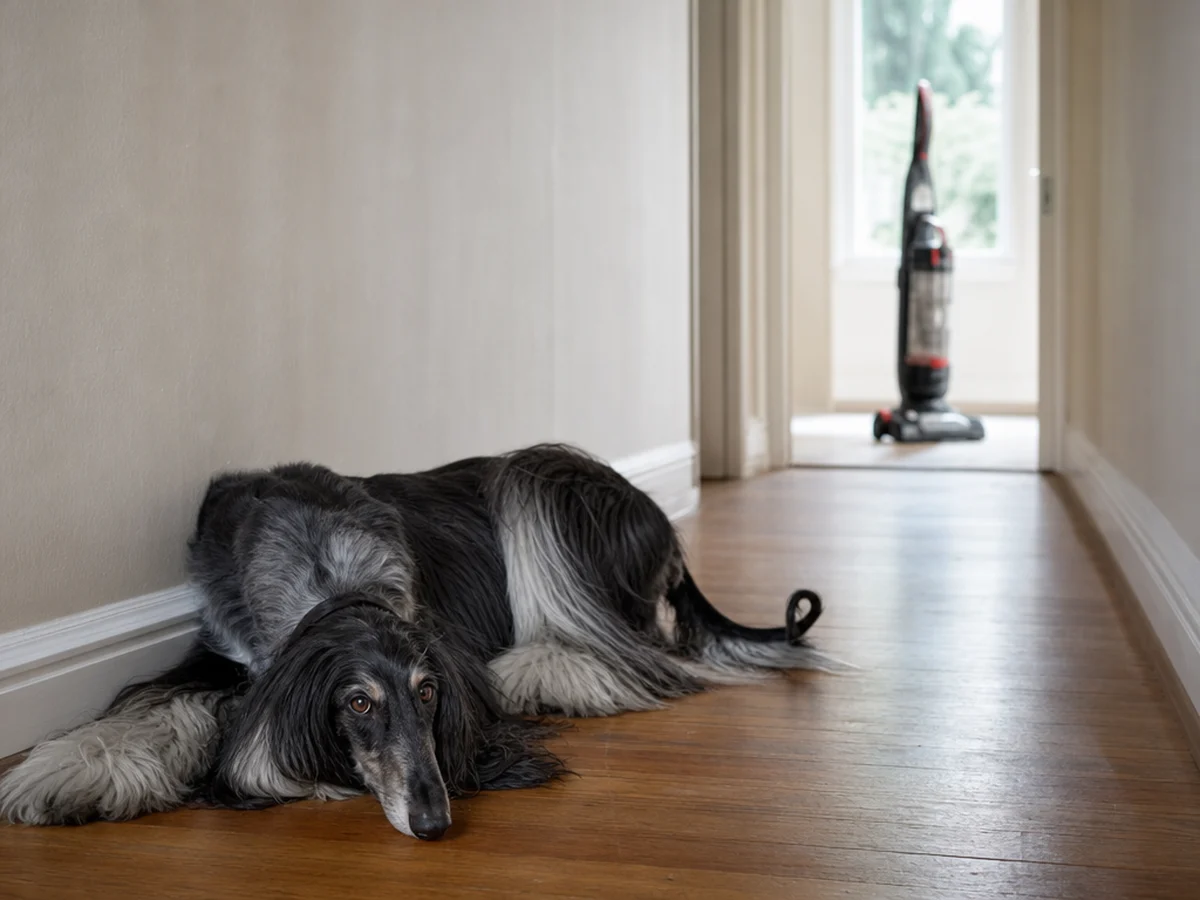
Dropped pans, slammed doors, arguments, a vacuum cleaner pursuing them from room to room, and children in full shriek mode all count as background harshness. You do not need a silent house. You need one where the loud things are predictable and the dog can leave.
Watch the reaction rather than guessing. Sudden stillness, a lowered body, a turned head, or a slow retreat all say the sound landed hard. Dogs vary, so learn your own hound's list.
Shutdown Is Afghan Hound Sensitivity, Not Stubbornness
The breed description says the Afghan Hound does not respond well to harsh training methods and prefers to do things their own way. Add a sensitive nature, deep loyalty to their own people, and a trainability rating of 1 of 5 (where 1 means self-willed), and you get a dog who is independent and tender at once. Most people notice only the independent half.
That mix explains why a hard tone misfires. An independent dog who is simply busy shrugs, wanders toward the window, and carries on. An overwhelmed dog does something different: they go still, lower their body, look away, or quietly leave the room. Both can pass for ignoring you, and you will keep confusing them unless you watch the body. The first needs better pay. The second needs a quieter house and a quieter you.
The aloof, dignified exterior can sit on top of a hound who feels a sharp tone keenly. Dogs vary, but plenty of Afghans have heard you perfectly well and filed the sound under things to avoid. With family, the same dog can be exuberant and playful, and that goofy side only shows up when the room feels safe.
For the wider picture on rewarding a self-willed dog, see our guide to Afghan Hound trainability. Here we stay on voice, tone, and the calm that lets everything else work.
Quiet Interruptions for Sensitive Afghan Hounds
You interrupt earlier, lower, and with somewhere to send the dog. An interrupt is not a punishment. It is a calm signal that means pause and check in with you, followed by a better option that pays. Your Afghan is not deaf, so volume was never the missing ingredient.
Teach it while nothing is wrong. Say a neutral word like enough once, in an even voice, and hand over a treat. After many easy repetitions the word predicts food and means pause. Then use it like this:
- Spot the trouble early, when the dog is eyeing the sock rather than shredding it, and say your interrupt word once at normal volume.
- The moment they glance at you, mark it with your cheerful yes and redirect to something allowed, such as a chew, a bed, or a sit.
- Pay generously for the switch, because the interrupt only works while it leads to good things.
- If they ignore it, do not repeat it louder. Step closer, lower your voice further, and use a gate, a leash, or a trail of treats to move them away from the problem.
- If play has turned frantic or pestering, stand up and end it, guide them to a quiet spot for a short break, and welcome them back when they settle.
If you are fuming during a time-out, it stopped being one. Chasing deserves its own note. A dog locked onto prey is not choosing to ignore you, and a shout will not carry past that instinct. Close the distance yourself on a leash, and save the happy call for moments when the route back is safe. Our guide to chasing, ignoring, and aloofness covers that side.
Rewards After a Sensitive Afghan Hound Response
Rewards are the only part of this plan that tells the dog what to do, which is the one thing a raised voice never manages. With a trainability rating of 1 of 5, an Afghan will not work for a lukewarm good dog while a squirrel crosses the fence. The pay has to beat the window. Use food they truly like in tiny pieces, a sniff break, or a chance to move.
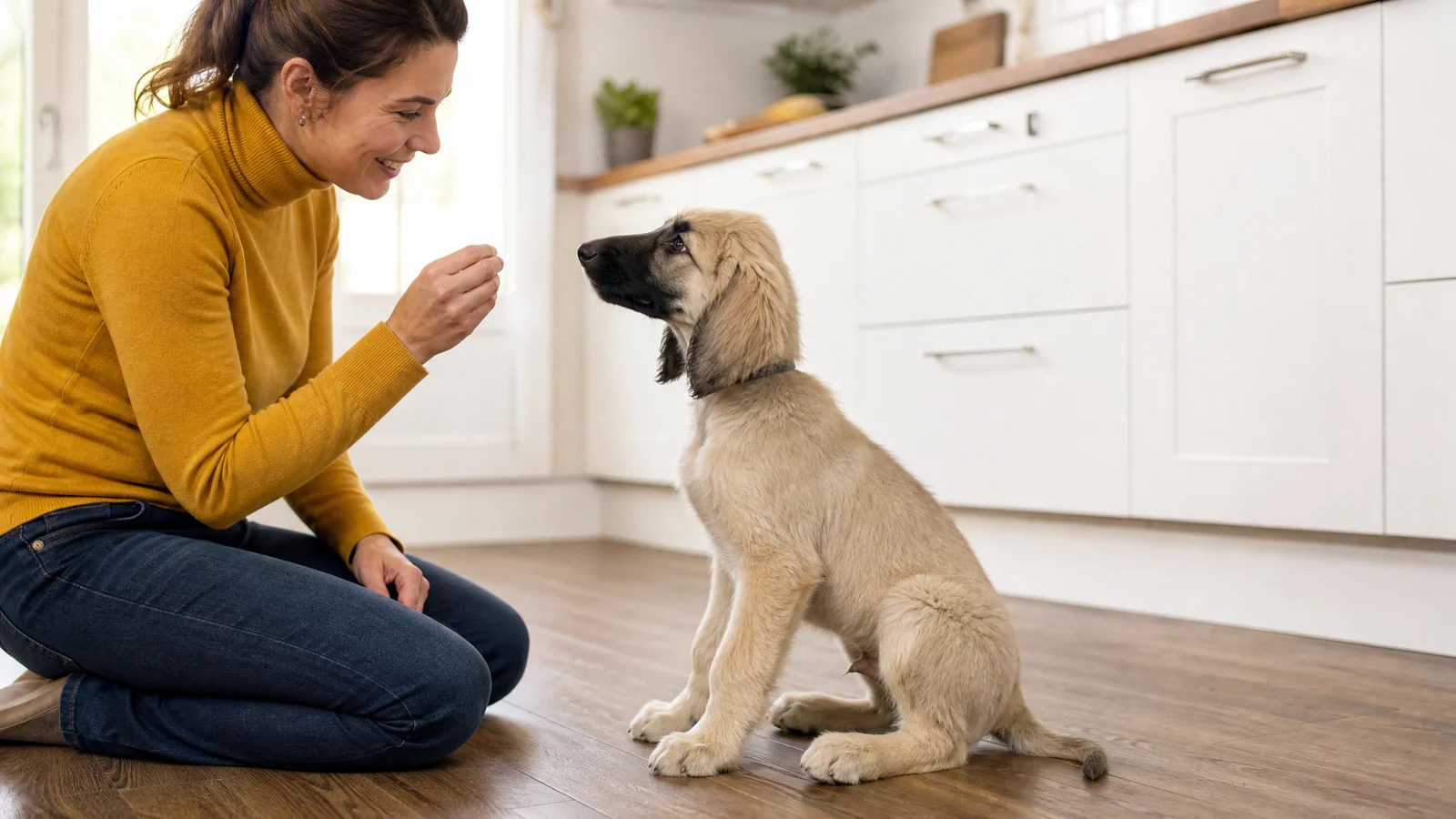
Add a marker word, a bright yes, at the instant the dog gets it right, and deliver the reward straight after. Keep the marker cheerful and the rest of your voice level. Play makes a decent reward, but the breed's playfulness rating is only moderate, so do not expect a game to carry the whole load.
Catch the Quiet Wins
Most people talk to their dog only when something goes wrong. Flip that. Pay for lying on the bed while you cook, for glancing at you on a walk, for strolling over when you call, for greeting a guest without a leap. An independent hound who chooses to check in is doing the hard part voluntarily, and every payment makes the next check-in likelier.
Keep the Menu Short
Unless obedience or agility competition is the goal, come, sit, and stay are generally sufficient. A short menu practiced calmly and paid well beats a long one practiced with a sigh. The same loyalty that makes the breed fairly easy to housetrain also makes them want to please, as long as pleasing you feels safe.
Preventable Afghan Hound Sensitivity Triggers
Most raised voices happen in the same handful of moments, and you can delete a surprising number of them by changing the house instead of the dog. Management is not giving up on training. It stops your Afghan from rehearsing fear while the skills catch up. Start with the physical setup.
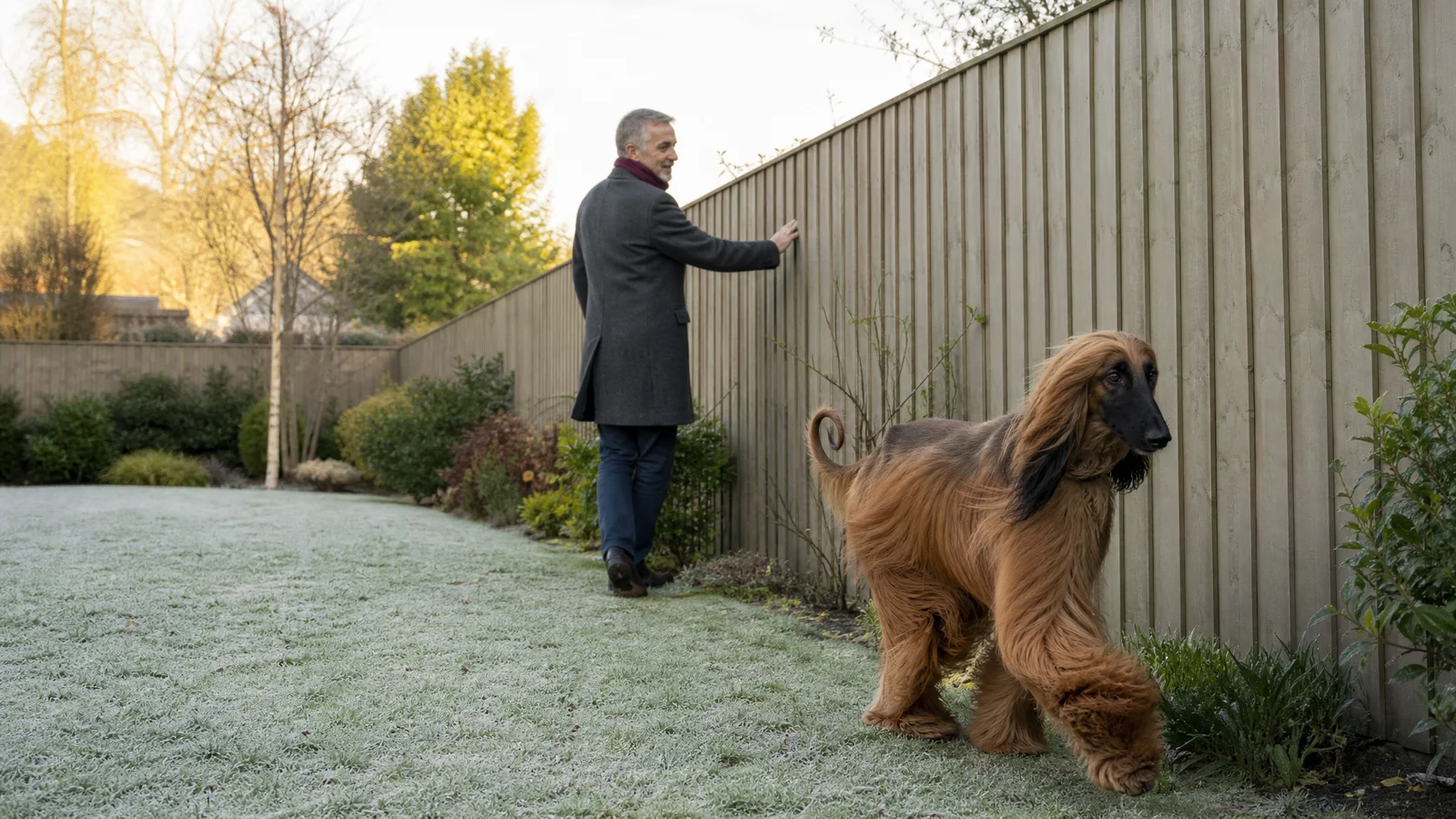
- Keep a high, secure fence around any yard. Afghans are tall, lean, and strong, which makes them excellent jumpers, and an escape is the quickest way to turn a calm owner into a bellowing one.
- Leash every outing outside secure fencing. The chase instinct is well developed and walking off leash is not advisable, so you never end up hollering a name across a park at a dog who stopped listening three hedges ago.
- Offer a full-speed run in a large enclosed area several times a week. Short walks do not cover this athletic breed, and a hound who has stretched out is far easier to talk to than one who is wired.
- Give them a retreat, such as a bed in a low-traffic spot away from the front door and the kitchen, and make it off limits for interruptions from anyone in the house.
- Move shoes, food, and chewables out of reach and gate off rooms you cannot watch. Our guide to stopping destructive Afghan Hound chewing goes deeper.
Set One House Rule for Tone
Then set the voice rules, because a house with a different opinion about tone in every room produces a dog who trusts none of them. Agree on one word per behavior and have everyone use it. Keep the dog's name a good word, which means no hissing it through your teeth over a ruined sofa cushion.
If you feel your voice climbing, put the dog behind a gate or walk away, then return with treats. A hound gated for a few minutes is fine. A hound who learns that you sometimes turn scary is not.
Household Rules for Afghan Hound Sensitivity
A gentle voice is the training. For a hound with this much sensitivity and this little interest in being pushed, the useful rules are the ones a household can follow every day, including during the awkward moments when the dog is already distracted.
- Audit the house and yard for predictable scare points, then prevent the ones you can prevent.
- Use one calm word for each cue, and ask every person in the home to follow the same voice rule.
- Keep rewards within reach so quiet choices can be paid at the moment they happen.
- Teach the interrupt word while nothing is wrong before using it to redirect unwanted behavior.
- Add only one distraction at a time, and create more distance whenever the dog stops taking treats.
- Judge progress by recovery time, relaxed posture, and voluntary check-ins rather than perfect obedience.
These are standing rules, not a two-week test the dog can pass or fail. Review them whenever the household gets louder, the setting changes, or recovery slows, and ask your veterinarian or a credentialed trainer who uses rewards only for help when fear is persistent or worsening.
An Afghan Hound who trusts your voice can show the loyal, playful side the breed saves for family. Keep the rules boring, the tone low, and the rewards generous enough that listening remains the easy choice.
 BehaviorFence Rules for a Tall, Lean Afghan Hound Who Jumps
 Puppy trainingWhat to Teach Your Afghan Hound Month by Month to Age Two
 BehaviorStop Destructive Chewing in an Afghan Hound