 Afghan Hound
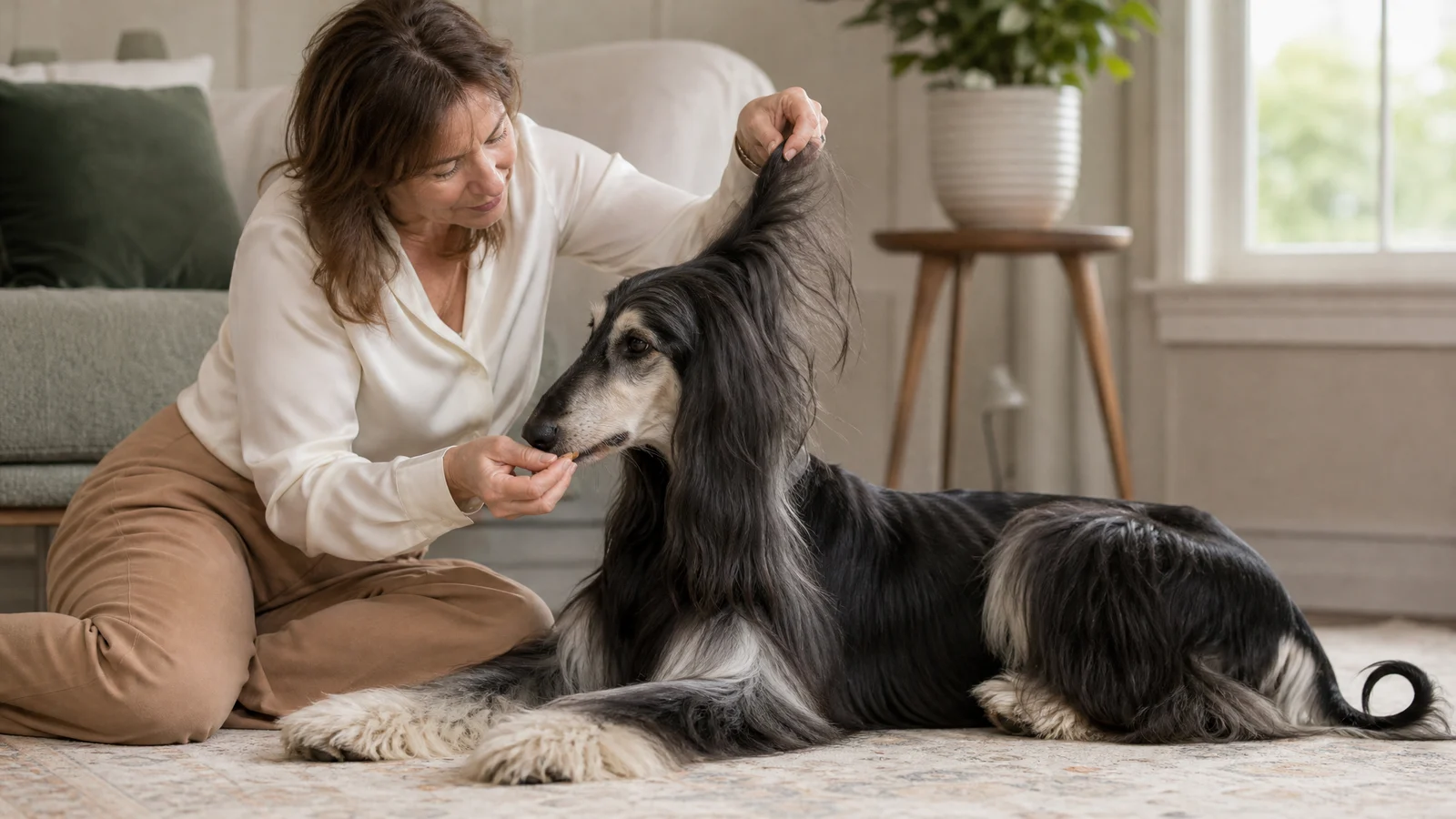
Pair every small touch on a paw or ear with a treat and a calm voice, and your Afghan Hound learns that reaching hands predict something good. Keep each session brief and let them walk away whenever they choose, so handling never turns into a struggle.
Long, feathered ears and large feet make regular checks especially useful for an Afghan Hound. Burrs, tangles, and early irritation hide under silky hair, and a dog who dislikes being checked will keep those spots out of reach. We have trained this breed for many years, and the Afghans who accept handling are the ones whose small problems get caught early.
Read on for the signs you will see, from a snatched paw and a ducking head to shaking, foot licking, and ear smells that need a vet, plus a short daily routine that ties the fixes together.
Paw and Ear Handling for a Snatching Afghan Hound
A paw that snaps back as your hand approaches is the clearest sign that foot handling needs work. The snatch has a cause, and the cause decides where you begin.
What Sits Behind the Snatch
Sore pads come first. A hurting paw pulls away even from a tolerant dog, so look for redness, cuts, or a tender spot before you blame behavior.
Feathering, the long silky hair on an Afghan's legs and toes, is the next suspect. A light, fluttering touch tickles, and many dogs tolerate firm, steady contact better.
Past rough handling is the third cause. Some dogs dislike having their feet touched with no bad history at all, and an adult who was held down before may need extra time.
The First Touch and Treat
Most dogs resist paw and face contact at first, so start on the chest or shoulder and move down only while the dog stays loose. Your first lesson is one gentle touch, then one treat.
- Kneel beside the dog on a non-slip mat with soft treats in a pouch, and say a calm word such as easy in a low voice.
- Rest your palm on the shoulder and say yes, a marker word, which is a short sound that tells the dog a treat is coming. Then give the treat.
- Move your hand slowly down the front leg, mark, and treat.
- Touch the top of the paw with one finger, mark, treat, and lift your hand away.
- End the round there, even if the dog looks keen for more.
Climb the ladder over several days. Move up a rung when the dog stays relaxed as your hand travels down and glances at your treat hand rather than at the paw.
If the paw snaps back, drop to the leg and make the touch smaller. The Afghan's large feet sit at the end of long legs, so even a small lift can feel like a big move to them.
Paw and Ear Handling for a Ducking Afghan Hound
An Afghan who ducks, leans away, or flinches as your hand rises toward the head is usually protecting the ears, not defying you. Finding the reason comes before choosing the fix.
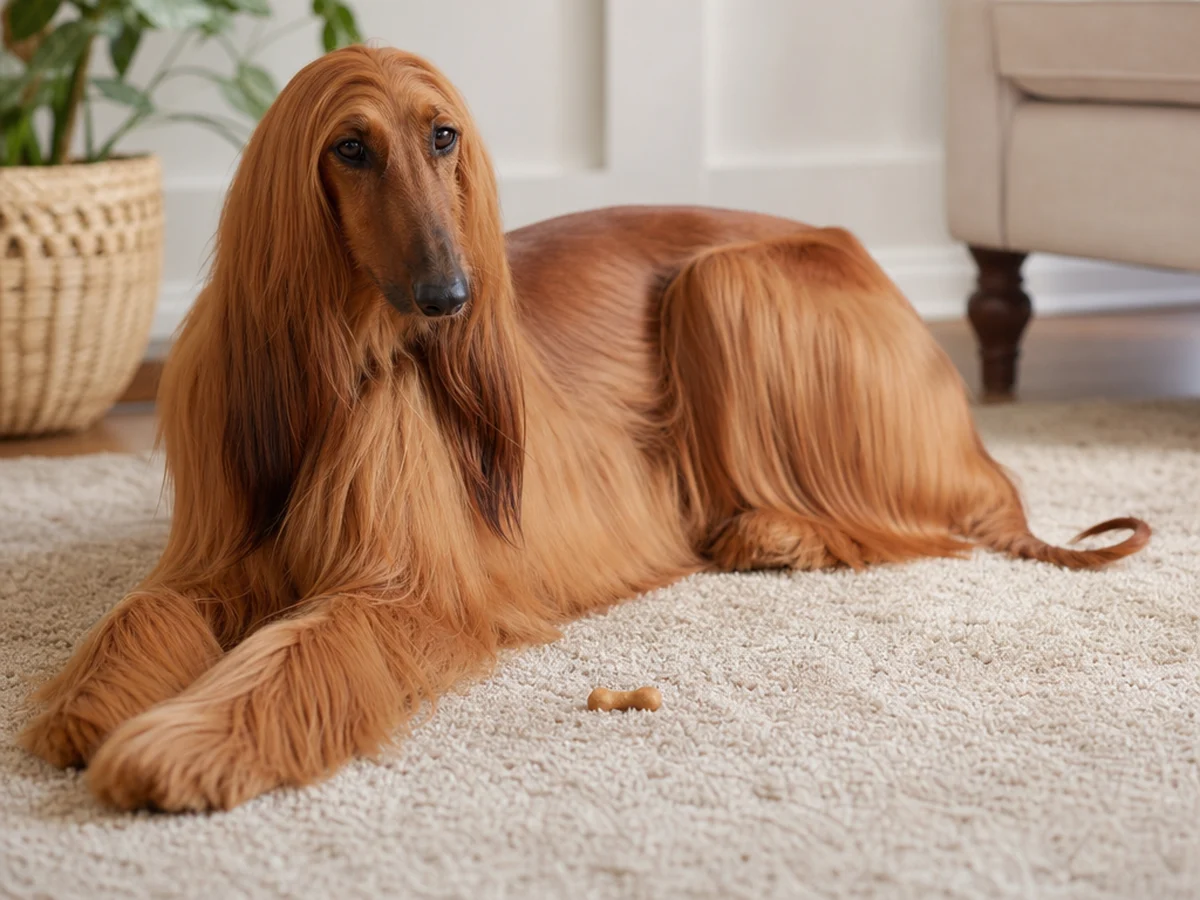
Why Heavy, Feathered Ears Make Dogs Wary
The ear leather, the thin flap that hangs down, carries long silky hair that can knot near the base. A tug on a knot stings, and a dog who has felt it once may brace every time a hand comes close.
Height adds to the problem. At 25–27 inches tall, an Afghan watches a hand descend from above, and most dogs dislike a reach over the head.
Pain is the cause to rule out. A dog who ducks on one side only, or cries out, needs a vet look before any more practice.
Approach From the Side
Kneel beside the dog so your hand arrives where they can see it. Speak your calm word slowly and low, because a steady sound tells them a touch is coming.
Rest a hand on the neck and treat. Over several days, move to the cheek, the base of the ear, and then the feathering, treating at each spot and lifting your hand before the dog pulls away.
At the flap, cradle the ear in a flat palm and keep the hair from being dragged. End each round while the dog still looks loose.
Afghans are described as aloof and dignified, and such dogs often show discomfort by leaving rather than protesting. A duck may be a polite no, so honor it with a pause and restart one rung lower.
Why Does Your Afghan Hound Shake Their Head?
A shake after a nap or a drink is normal. Repeated shaking has causes you can sort out at home, and a few that need a vet.
Long, hanging ears may hold moisture and dirt longer than upright ears do. That makes finding the cause better than waiting to see if it passes.
Tangles, Moisture, and Itch
Tangles at the base of the ear can tug with every head movement, and shaking may be the dog's attempt to free the hair. Run your fingers gently through the feathering to see whether it knots.
Moisture is the second cause. Heavy feathering stays damp after a bath, a rainy walk, or a deep drink, so towel it dry and watch whether the shaking stops.
Itch is harder to pin down. A passing itch from dry skin may fade fast, but shaking that returns day after day deserves a closer look, especially if the dog also scratches the ear with a back foot.
What to Check at Home First
Work in good light with the ear folded back over your hand, the same view your handling practice builds toward. Note whether the skin looks clean and whether the ear smells neutral.
Compare the two sides and think about timing. Shaking on one side only, or shaking that began suddenly, may point to a problem.
If the shaking continues after you remove tangles and dry the hair, move on to the vet signs below and make the call. Until then, keep handling gentle and brief. Until then, keep handling gentle and brief.
Paw and Ear Handling for Foot Licking
Licking and chewing at the feet is a symptom to investigate, not a habit to break. Each likely cause has its own handling fix.
Debris in the Feathering
Burrs, seeds, and small tangles lodge between the toes where long hair grows, and the dog works at them with their mouth. A big Afghan foot has plenty of room for trouble to hide.
After walks, spread the toes gently, run a finger along each gap, and look. Mark and treat so the check feels easy and the dog lets you do the work.
Dry or Sore Pads
Rough ground can leave pads dry, cracked, or tender, and licking may be the dog's way of soothing them. Run a fingertip across each pad and watch for flinching, which tells you where it hurts.
Ask your vet what to use on cracked pads rather than guessing. Until they heal, keep practice to a light touch and a treat.
When Allergies May Be Involved
Licking across several feet at once, with redness and a pattern that follows the seasons, can point to allergies. Only a vet can diagnose them, though dated notes from your daily looks help.
Wiping the feet with a damp cloth after walks, while rewarding the dog for standing still, gives you a daily view of the skin. It also makes vet exams much easier.
Chewing that spreads from the feet to furniture and other objects is a separate pattern, covered in our guide to stopping destructive chewing in Afghan Hounds. Keep that problem separate from the handling plan. Keep that problem separate from the handling plan.
Which Ear Smells and Sounds Need a Vet?
Handling practice should never cover up a medical problem. Stop the session and call your vet if you notice any of these signs.
- A sour, yeasty, or foul smell from the ear that was not there before.
- Discharge that is dark, waxy, bloody, or yellow, or that wets the feathering around the ear opening.
- A squelching or crackling sound when you touch the ear or when the dog shakes their head.
- Redness or swelling inside the ear or on the flap, or an ear that feels hot to the touch.
- A tilted head, an ear scratched raw, or an ear dragged along the floor.
- Sudden pulling away from a touch that was easy last week.
Treats cannot make a painful ear comfortable, and pushing on may teach the dog that handling hurts. Dogs vary and some wax is normal, so compare the two ears against the baseline you learn from daily looks.
While a problem is being checked, shift practice to easy zones such as the shoulder and legs. The dog keeps a happy link with handling, and you lose nothing.
Have your vet look at the ears and feet at every regular visit so they can see what is normal for your Afghan. Those exams catch what a home check misses.
This article is general information, not medical advice. Check with your veterinarian about any ear or paw concern, including what to use for cleaning, soothing, or treating.
Building Paw and Ear Handling Into Daily Life
Pick one fixed moment, such as after the evening walk, so the check becomes a habit instead of a chore. The breed's grooming need rates 4 of 5, between weekly and daily, so a quick look fits naturally beside brushing.
The routine below moves from a single touch to a full paw and ear look. Add a step only after the dog stays loose through several days of the one before.
- Settle on a non-slip mat beside the dog, say your calm word, and give a treat so the round starts well.
- Touch one paw, say yes as your finger lands, and treat. Add the other paws as each becomes easy.
- Cup a paw and lift it slightly, supported from underneath and kept close to the body. A long-legged dog feels unsteady when a leg is pulled out to the side.
- Part the toes lightly, look between them and at the pads, then mark and treat.
- Move to the ear from the side: neck, base, feathering, then fold the flap back over your hand for a quick look and a treat.
- Finish with a last treat and open hands, so the dog learns that the round ends and they are free to go.
Stay flexible on hard days. A brief, easy round beats a long, tense one, and progress is rarely a straight line.
Expect clippers or shears to need more time. Unless a dog has been groomed since puppyhood, several months of gradual exposure is likely before they are comfortable with them.
The same pairing works across your grooming kit, as in our Afghan Hound puppy brush lessons. When the coat changes stage, training an Afghan Hound through coat changes shows how to adjust, and the month-by-month timeline shows where handling fits.
Afghan Hound Paw and Ear Handling Starts With Treats
Whatever you saw, whether a snatched paw, a ducking head, shaking, or licking, the starting point is the same. Teach the dog that gentle hands near the feet and ears predict food, and let them leave when they need to.
An Afghan's large feet and long feathered ears hide trouble, and an aloof, dignified dog will show discomfort by walking away. Trust built from small, rewarded touches is what lets you keep checking for life.
Today, choose one paw and rest a single finger on it for a second. Say your calm word, hand over a treat, and do exactly the same thing again tonight.
 Training basicsSoft Voices, Clear Cues: Training a Sensitive Afghan Hound
 Puppy trainingKeeping Training Steady as Your Afghan Hound's Coat Changes
 Puppy trainingHow to Stop Afghan Hound Puppy Biting