 Afghan Hound
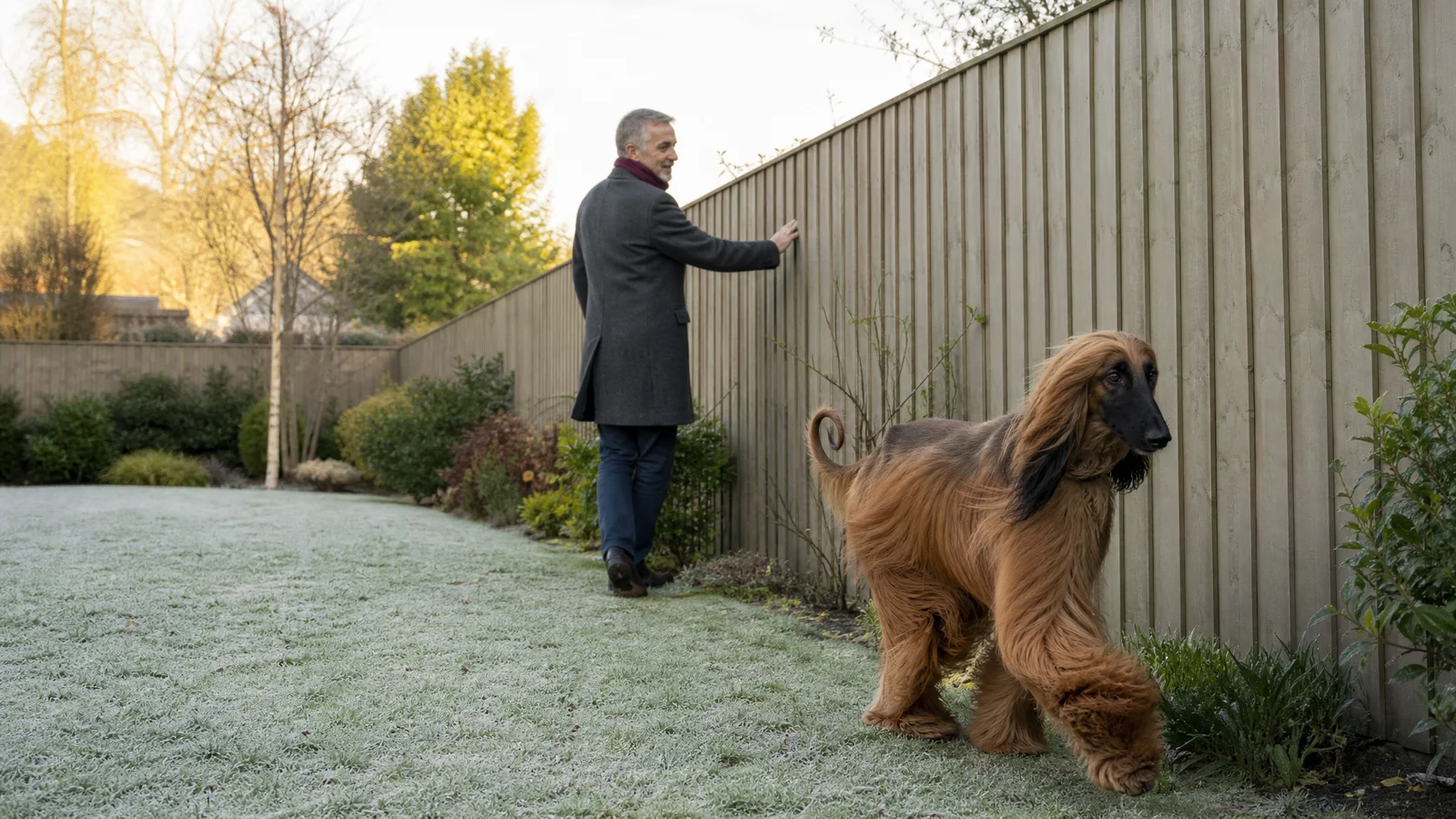
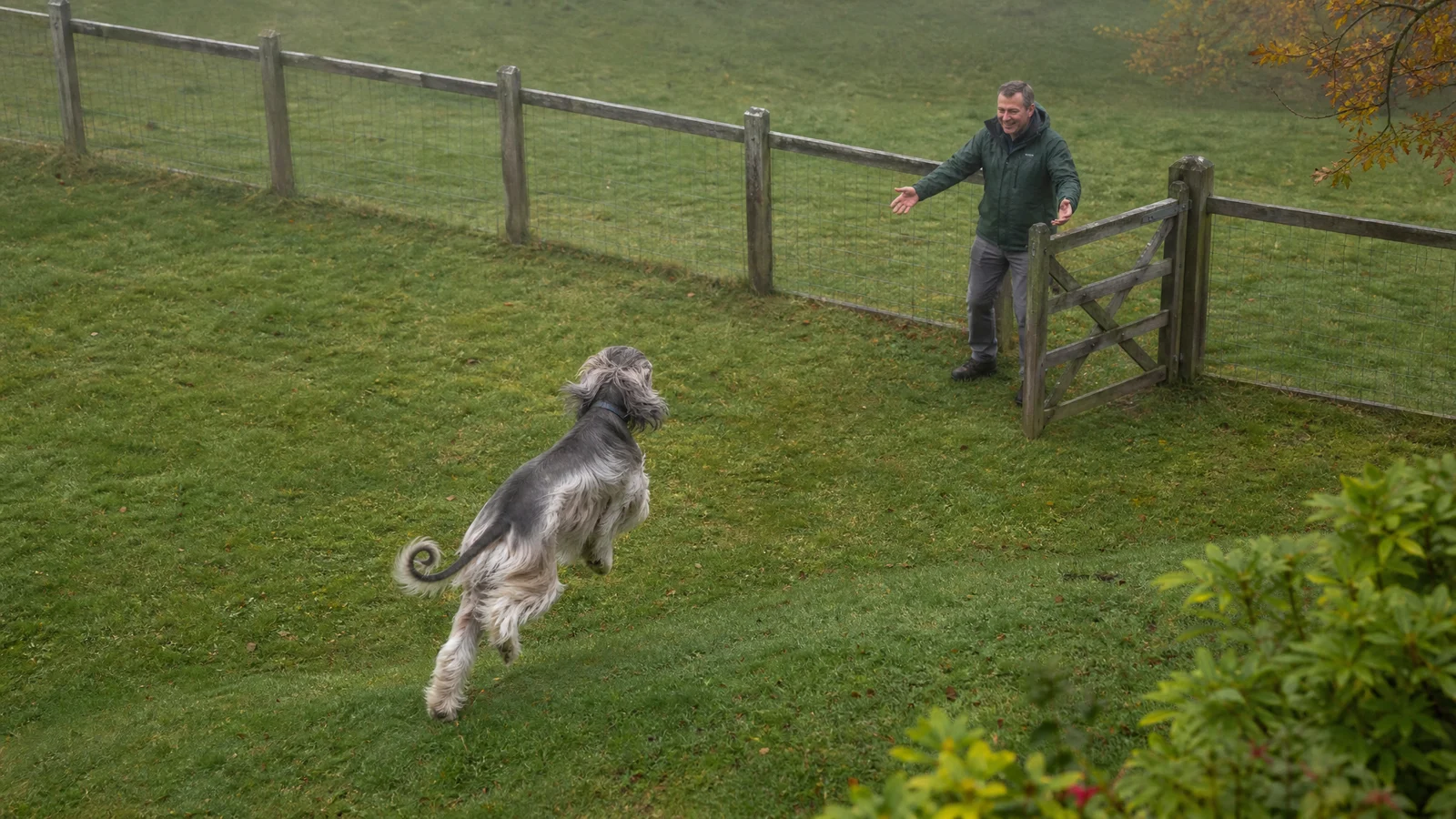
The moment is a familiar one. An Afghan Hound is standing calmly in the yard, the back door is still in one hand or the leash in the other, and then a flicker of movement past the fence turns a relaxed dog into a smooth arc over the top rail. Nothing was wrong with the training that morning.
What is going on is anatomy plus instinct. A lean, strong sighthound (a hound built to spot movement at a distance and run it down) who stands 25–27 inches treats a fence as a small problem, and a dog who gets out once and enjoys the chase is likely to try again. We have trained this breed for many years, and the fence is where we begin.
Read on for a fence audit, one factor at a time, with a verdict on each: height, solid panels versus open rails, gates and ground, launch points, the motive behind the jump, and the rewarded routines that keep your dog from choosing between a barrier and a chase.
Fence Height for a Jumping Afghan Hound
Height comes first because every other fix in the yard sits on top of it. Afghans are tall, lean, and strong, which makes them excellent jumpers, so their exercise area needs a high, secure fence.
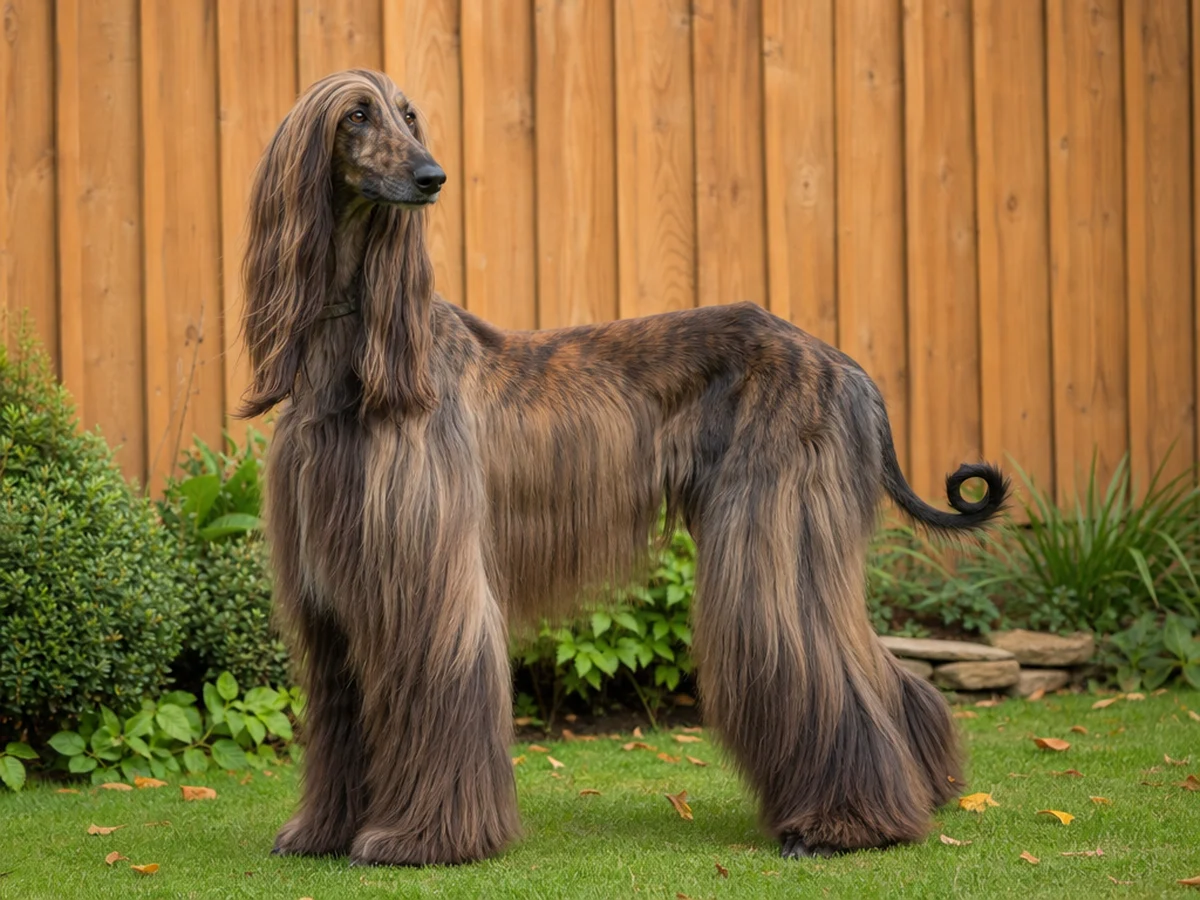
The breed standard sets males at 27 inches at the shoulder and females at 25, give or take an inch, at about 60 and 50 pounds. That is a great deal of leg and very little spare weight to lift over a top rail, and the likely reason Afghans clear tall fences is that lean, long-legged build.
Why Shoulder Height Understates the Jump
Shoulder height measures where the dog stands, not what they can clear. The standard describes a square outline, with body length matching height at 1:1, so a 27-inch Afghan is also a long, rangy athlete. Fitness, motivation, and the approach all change how high a given dog will go, and we cannot tell you where your dog's limit is. That uncertainty is the reason to build for the dog's best day, not their average one.
Verdict on Minimum Height
Build taller than seems necessary, with a top that is level and free of anything to grab. Judge the result from the dog's side of the fence, since a fence that looks tall to you can look like a hurdle to them. If your Afghan has cleared a fence even once, treat that as proof of ability and raise the barrier before the next yard session. Until then, keep them on a long line (a light, extra-long leash) and stay within reach.
Do Solid Panels Reduce Fence Jumping?
For this breed, mostly yes, and the reasons are about triggers as much as climbing. An Afghan reacts to movement, and an open fence turns every jogger, bicycle, and squirrel into a live feed that keeps the chase instinct switched on. Horizontal rails add a second problem, since they work like a ladder for a long-legged dog. The table compares the two on the points that matter.
| Factor | Solid panels or tight vertical slats | Open rails or wide gaps |
|---|---|---|
| View of passing movement | Mostly blocked, so fewer triggers | Constant, so the dog keeps scanning |
| Footholds | Few, if the face is smooth | Cross rails give steps up |
| Your view of the dog | Limited, so check on them more often | Clear |
| Upkeep | Check for loose boards and warped tops | Check for bent or loosened rails |
Verdict: solid panels win, and tight vertical slats come second. If you already have open rails, screen the dog's side with a smooth covering and keep any horizontal members on the outside. A solid fence does not make the dog uninterested in what lies beyond, so it lowers the odds but never replaces the other checks in this audit.
Gates, Latches, and Low Spots in Fence Training
Many escapes are not jumps at all. A gate hung shorter than the fence, a latch a nose can bump, or a dip in the ground gives a motivated sighthound an easy exit, and a dog who finds one route will remember it. A dog who cannot go over may also go under, so the bottom edge deserves as much attention as the top. Walk the whole line and rate each of these:
- Hang every gate at the same height as the fence, with no wide gap at the bottom or along the hinge side.
- Choose a latch that closes on its own and cannot be lifted or bumped open from the dog's side.
- Fill low spots and hollows along the base, especially where water pools or the ground has settled.
- Look for fresh digging near corners and posts, which shows where the dog has been testing.
- Recheck the line after storms and heavy wind, when boards and hinges loosen.
Verdict: check the gate first, because it is the part that moves, gets left open, and gets forgotten. Before you open any outside gate, clip on the leash and hold it until you have seen what is outside.
Yard Layout Without Fence-Jumping Launch Points
A fence is only as tall as the ground beside it. Anything the dog can step on shortens the barrier by its own height, and a strong, lean athlete needs only a small boost. Garden planters, woodpiles, dog houses, grills, stacked furniture, compost bins, and a raised bed along the boundary all qualify. So does a slope that rises toward the fence on the dog's side, or a pile of dirt left after a project.
The layout also affects how excited the dog gets before any jump. If the favorite lounging spot faces the street, the dog will watch it, and watching feeds the chase reflex. Move seating and shade to the middle or the far side of the yard, and give the dog a reason to be there, such as a mat where treats appear.
Verdict: move whatever the dog could stand on well away from the fence, starting with the item closest to the boundary. Then grade any slope or raised area that brings the ground up toward the top rail. If something cannot move, screen it off so the dog cannot reach it.
Reward-Based Afghan Hound Fence Training
The fence stops the jump, but routines change what the dog wants to do. The idea behind reward-based training is simple: a behavior that earns food, toys, or praise becomes more likely to happen again. It suits an independent hound who prefers to do things their own way and who does not respond well to harsh handling. If staying near you pays better than scanning the boundary, the dog is never left to choose between a barrier and a reward.
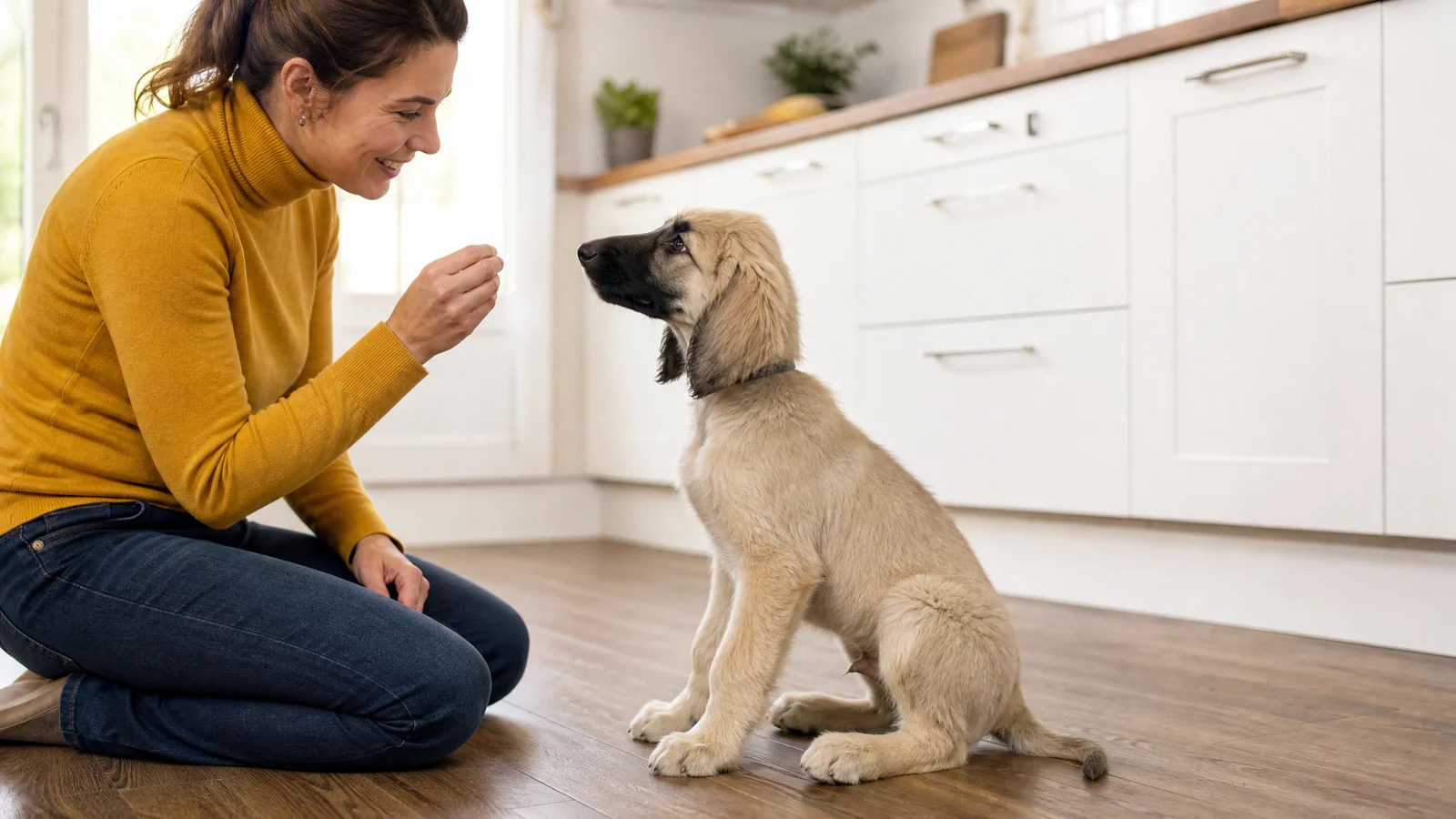
Start indoors with a marker word, a short sound that pinpoints the exact moment the dog earned a treat. Pairing the marker with food comes first, somewhere quiet and calm. Say the word, hand over a treat within 3 seconds, and run through that sequence a number of times until the sound predicts food. Then bring it to the yard, where the world competes with you. This routine works for most households:
- Clip on the harness and leash, ask for a pause at the door, then mark and reward the pause.
- Walk to the middle of the yard, away from the fence, and release the dog to sniff or trot.
- Call the dog to you every so often, pay with a treat, then release them again.
- When something moves beyond the fence and the dog looks back at you, mark and pay at once, before pursuit starts.
- Walk in together calmly and reward at the door, so going back inside is the best part of the session.
When Yard Access Stops
A safety audit needs a stop rule. End unsupervised yard access after any cleared barrier, gate rush, repeated launch at one spot, new gap under a panel, or latch failure. Clip on the leash before the next trip outside and keep it on until the physical weakness has been repaired and checked from both sides.
Do the same after a move or any major change outside the fence. New construction, a neighbor's dog, a low branch, stacked materials, or a changed sightline can turn a previously quiet boundary into an active one. Walk the full perimeter with the dog leashed, watch where attention locks, and test every latch by hand before treating the yard as secure again.
Training progress never cancels this rule. A week of calm check-ins shows that the rewarded routine is becoming familiar, but it does not lower the fence or remove the chase response. Restore off-leash yard time only when the barrier is sound, the launch points are gone, and an adult is present to watch the first sessions.
Verdict: pay most for the boring behaviors, such as lying near you, waiting while a gate swings, and walking inside without fuss. Come, sit, and stay are generally enough unless you plan to compete. A released sprint in a safely enclosed space is also strong pay, since Afghans love to run.
A Secure Fence for Your Afghan Hound for Life
Consistent routines make calm behavior more likely over time. When the yard stays a calm place where staying put pays, the fence line can become somewhere to pass rather than a puzzle to solve. Dogs vary, though, and a quiet stretch can end when a new cat, jogger, or neighbor dog appears.
What does not fade is the ability. The height, strength, and chase instinct stay with the breed, and the chase instinct stays strong, so the fence stays high and maintained for the dog's whole life. Check posts, boards, and latches on a regular schedule, screen any new view, and keep paying for calm now and then. Regular vet visits also help keep an athletic dog sound for running and jumping.
Big changes mean restarting the routine. A move, a new yard, or an adult dog adopted later calls for a fresh run through this audit, and our guide to settling an adult Afghan picks up from there. Over the long run, the reward is a dignified, loyal hound who naps in the sun while the street goes by, and that depends on a fence that never gets lowered or neglected.
 Puppy trainingWhat to Teach Your Afghan Hound Month by Month to Age Two
 BehaviorStop Destructive Chewing in an Afghan Hound
 Exercise and jobsSetting Up Safe Sprints and Calling an Afghan Hound Back