 Afghan Hound
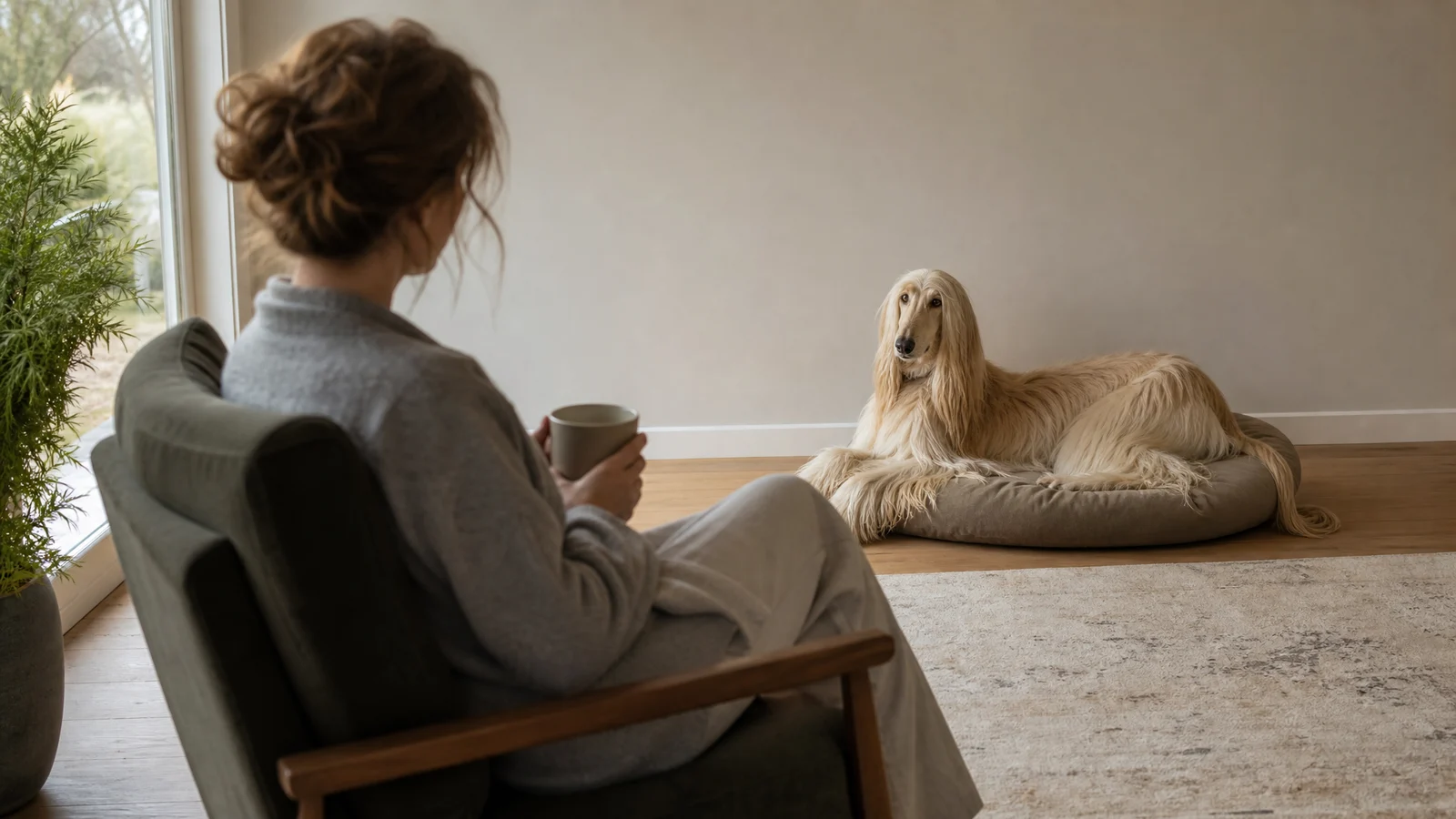
The breed standard calls the Afghan Hound an aristocrat, aloof and dignified, and the breed's profile adds a deep loyalty to the people they have bonded with. The usual advice for an adopted adult is to be patient. In practice that means weeks of shadowing you from a distance, skipped meals and hesitation at doorways. The loyalty that makes an Afghan so rewarding still belongs to the people they left.
Handled badly, that gap shows up as stress, refused food or a dash through an open door. Handled well, you end up with a devoted companion who chose you. We have trained Afghans for many years and specialize in how they behave and learn, and our reasoning is simple: a predictable day gives a loyal dog something steady to trust, while rushing the bond asks for trust they have not had time to build.
Below, you'll find a settling scorecard for an adult Afghan Hound, including the signs to watch, a stage-by-stage routine table and a clear call after each section: train now, wait, or get help.
Afghan Hound Settling Scorecard
Progress with an Afghan looks ordinary, not dramatic. A loose body, a normal appetite and a dog who seeks contact on their own terms all count. The table pulls the scorecard together, with a call for each sign.
| Sign | Train now | Wait | Get help |
|---|---|---|---|
| Voluntary proximity | Picks a spot in your room | Stays at the far edge | Will not leave a hiding spot |
| Rest and appetite | Eats on time, sleeps through noise | Skips an early meal | Appetite stays low |
| Cue response | Glances at name, takes treats | Ignores cues in a new room | Refuses food and cues |
| Touch | Leans in, stays loose | Stiffens or turns away | Freezes or flinches at all touch |
| Alone-time recovery | Rests soon after you return | Paces on short exits | Distress does not ease |
| Routine confidence | Heads for bowl or door on time | Hesitates at doorways | Panics at ordinary routine |
Routine confidence is the clearest sign of all. When the dog walks to the bowl or the door before you move, the day now predicts something. That is trust, in a form a loyal, reserved dog can show.
Lingering stress looks like constant pacing, hiding, trembling, refused meals and hesitation at every doorway. If it does not ease as the weeks pass, have your veterinarian check for pain or illness first, and after that call in a reward-based trainer. Regular vet visits belong on your calendar anyway, so book a checkup early for a newly arrived adult.
Once the dog settles, add calm visitors a few at a time. Our guide to socializing an aloof Afghan shows how.
Chosen Distance and Afghan Hound Trust Building
Loyalty is the first factor to score, and it sets the pace for everything else. Afghans are independent, dignified and aloof in general, but affectionate and extremely loyal to humans they have bonded with. That same loyalty can make it difficult for an adult to adjust to a new home. The bond is real. It points at someone else.
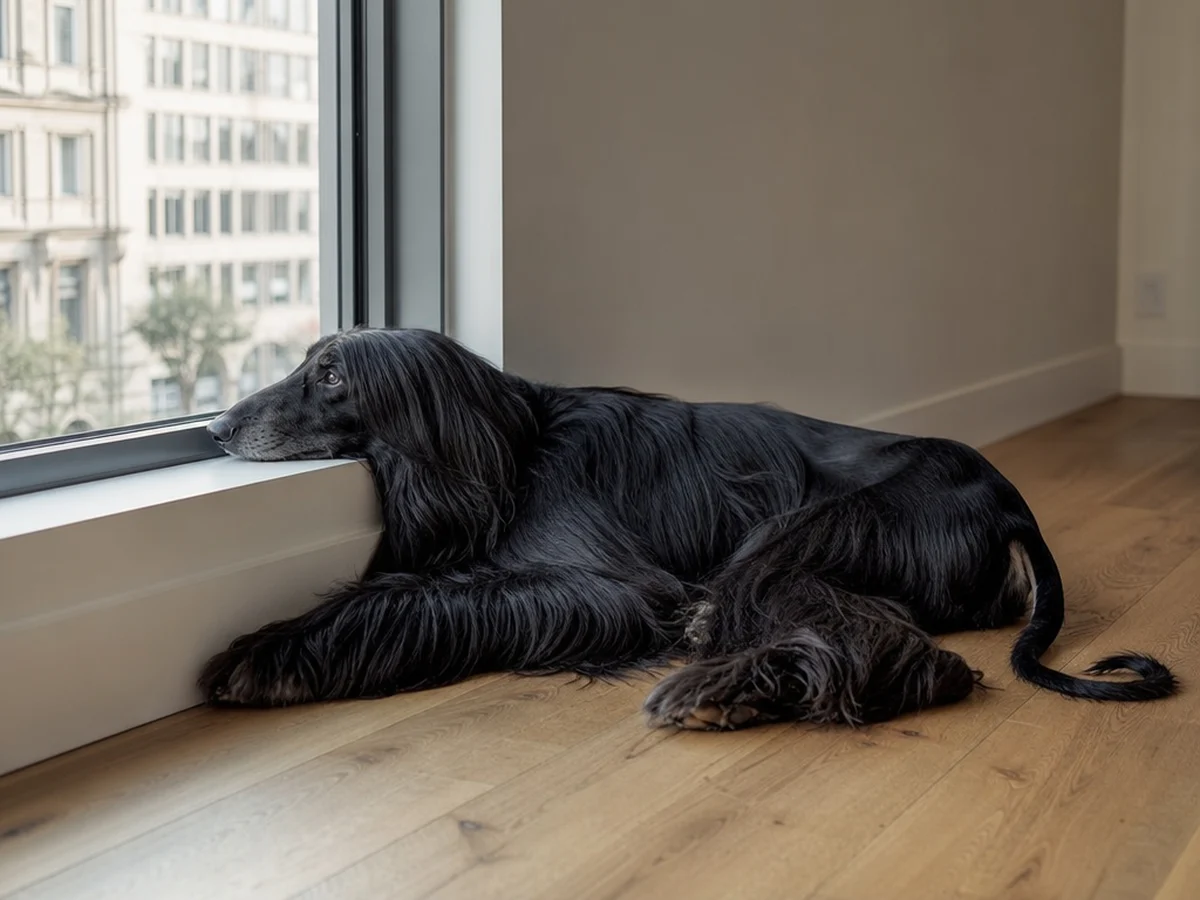
The breed is also aloof with strangers and can be exuberant and playful with family. On day one you are a stranger. The playful dog shows up after you stop being one.
The sign to track is voluntary proximity: where the dog chooses to be when nobody asks for anything. A spot at the far edge of the room, near an exit, comes first. The same room as you comes next. A spot within reach comes last. Some adults shadow you from room to room yet refuse food or a hand. That still counts as interest.
How long should you expect this to take? Dogs vary, so let the dog set the pace. A dog who lost a person, not just an address, adjusts on their own clock, and your job is to stay calm and predictable while they do.
Decision: wait on formal training while the dog keeps to the far edge, and spend that time being calm and predictable. Start training once the dog chooses your room. If they will not leave a hiding spot at all, or will not eat, get your veterinarian involved.
Touch Limits During Afghan Hound Settling
No. For an aloof, sensitive breed, low-pressure presence beats rushed affection every time. Rescue guidance says to keep the pressure off in the first days, not to expect too much at once, and to avoid visitors for at least the first few days. With an Afghan, treat that as a rule.
Hugging, grooming marathons and forced greetings all ask for trust you have not earned yet. These habits build it instead.
- Sit on the floor near the dog's bed with a book and let them watch you do nothing.
- Toss treats a short way off without speaking, then toss them a little nearer each day.
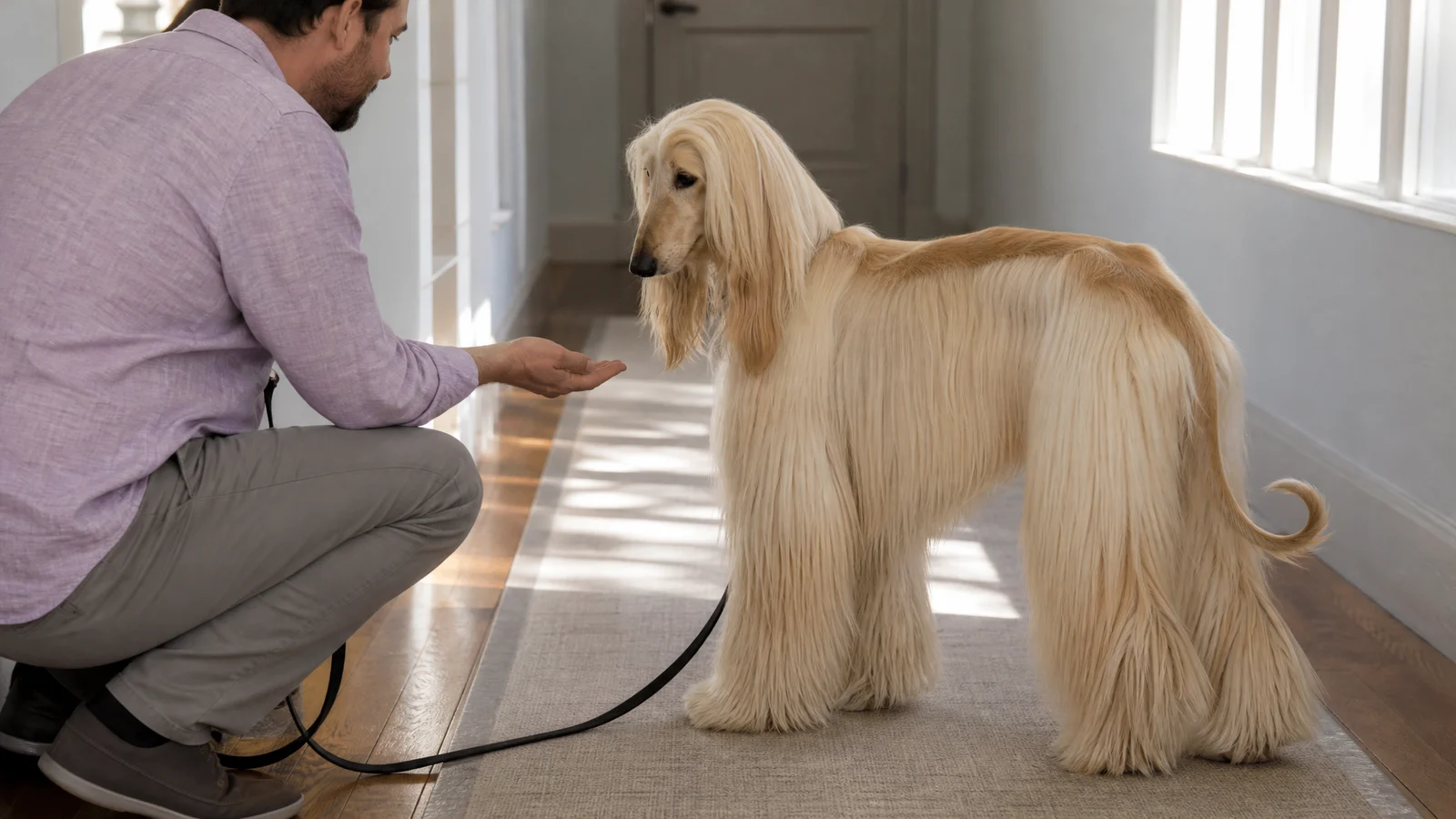
- Offer a low hand and wait. If the dog leans in, stroke the chest or shoulder and stop before they move away.
- Brush one small patch of coat, hand over a treat and stop while the dog is still loose. The coat is shown natural, never clipped or trimmed, so brushing will be a long-term part of life.
- Ask everyone in the home not to crowd the dog, reach over their head or call them over to be petted.
Touch is the sign to score. A dog who leans in, stays loose and walks away calmly when you stop is ready for a little more. Stiffening, freezing or turning away means you went too far, so ease back.
Ending contact first teaches the Afghan that touch finishes when they want it to. That lesson does more for trust than any amount of petting.
Decision: do not push. Train handling only after the dog approaches on their own. If they freeze or pull away from every touch weeks in, ask your veterinarian, then a reward-based trainer, for help.
Training Cues After an Afghan Hound Settles
Three habits pay off first: settling on a bed, coming to a name and waiting calmly at doors. Cue response is the sign to score. The Afghan is a strong-willed, independent thinker who answers when answering pays, so make it pay. Come, sit and stay are generally sufficient unless you plan to compete in obedience or agility.
Add the habits one at a time. The order below keeps safety ahead of difficulty.
- Settle on a bed. Drop a treat there whenever the dog lies down, with no cue at first.
- Come to a name. Say it once in a calm voice, mark the glance with a word and follow with a treat.
- Exit doors calmly. Pause at the door, wait for the dog to stop, mark, treat, then open it.
Skills often seem to vanish in a new house. Usually the setting changed, not the skill. Ask the previous owner which words and hand signals the dog knew and use those exact ones. A housetrained adult who has an accident early on is stressed, not untrained. Loyalty makes Afghans fairly easy to housetrain, so go back to frequent trips outside and the habit returns.
Name Response Is the First Test
Use small, soft treats the dog can swallow fast. Pay the instant the habit happens and at the spot where it happens. Hand-feeding starts when the dog steps toward you, not before.
If the dog will not take treats at all, they are too stressed to train. Wait, and go back to the routine.
Door Pause Is the Safety Test
Life rewards carry a lot of weight with this breed. The door opening, the leash going on, time to sniff on the walk and calm praise all count. A slow stroke counts only when the dog invites it.
Keep your voice even. Afghans are sensitive, and our piece on sensitivity to harsh tones explains why. For door habits, our guide to managing prey drive on walks shows how to keep exits safe.
Decision: train now when the dog glances at their name or takes a treat. Wait if cues vanish in a new room, and make the request easier instead of repeating it. Get help if the dog refuses food and ignores every cue for days.
Quiet Zone for a New Home
The environment is the safety factor. A stressed adult in strange surroundings is the dog most likely to bolt, and the breed has a very well-developed chase instinct. Some setup is essential on day one. The rest can wait.
Several things are essential before the dog arrives. Each one reduces pressure while the new routine takes shape.
- A quiet resting spot with a bed and water, away from foot traffic, where the dog can retreat and nobody follows.
- Secure exits. Treat every door and gate as an escape route for now, because walking off leash is not advisable.
- A high, secure fence around any outdoor space. Afghans are tall, lean and strong, which makes them excellent jumpers. The medium-sized sighthound combines speed with power and agility. Our Afghan Hound fence rules cover the details.
- Limited access to rooms. Start with a few and open more as the dog relaxes.
What can wait: a pile of new toys, visitors, outings and long absences. None of them speeds trust, and each adds load.
Alone-time recovery is the sign to score here. Put a treat on the bed, step outside and return while the dog is still calm. Lengthen the time only after the last absence passed quietly. Keep leaving and returning dull, with no long goodbyes. Watch how quickly the dog goes back to rest after you walk in.
Decision: train absences now if the dog settles soon after you return. Wait if they pace or howl, and drop back to the last length that worked. Get help if distress does not ease with shorter absences.
Meals and Rest as Settling Signals
Routine is the strongest trust builder you control. A loyal dog has lost a familiar day and needs a new one that repeats. Fixed times for meals, walks and rest tell the dog what happens next. Appetite is the sign to score: an Afghan who eats at the usual hour with you in the room is ready for more.
Build the Daily Schedule
Ask the previous owner or rescue for meal, walk and bedtime hours, and copy them at first. Shift toward your own hours in small steps once the dog is eating and resting. The table shows how the routine grows. Treat the pacing as a guide, not a deadline.
| Stage | Routine focus | Sign to score |
|---|---|---|
| First days | Old hours copied, no visitors, short leashed outings | Watches you, eats a little, rests in the spot |
| Next stretch of days | Fixed meal, walk and rest times, evening settle on the bed | Heads for the bowl or door at the usual hour |
| Following weeks | Easy cues rebuilt, brief brushing, first short absences | Approaches on their own, takes treats from your hand |
| Months later | Longer alone time, calm visitors, loose-leash skills | Seeks contact, plays, settles when you leave |
Exercise belongs in the schedule too. Short walks do not give this athletic breed enough. Ideally an Afghan runs full out several times a week in a large, enclosed area, so plan that slot once the dog is steady.
Handle Disruptions Without Losing Ground
A houseguest, a vet trip or a missed walk will bend the day. Keep the anchor and shrink everything else. Serve the meal at the usual hour even if the walk is short, and skip training that day.
Return to the normal schedule the next morning without fuss. If the dog skips a meal after a disruption, offer food again at the next usual time instead of hovering or coaxing.
Decision: train now when the dog eats at the usual hour and rests in their spot. Wait if meals are skipped in the first days. Get help from your veterinarian if appetite stays low as the days pass.
The Next Afghan Hound Settling Sign
Every factor above points the same way. An Afghan's loyalty means trust arrives at the dog's pace, and your job is to be the steady thing in a changed life. You cannot hurry the thaw. You can make the day predictable enough that the thaw has room to happen.
Start tonight with one fixed routine. Pick a feeding time and a short leashed walk at the same hour. Set the bowl in a quiet corner, say nothing and let the dog eat in peace. Then take a brief, calm walk, with time to sniff.
Tomorrow, do the same at the same hour. When the dog heads for the bowl or the door before you move, you have your first sign, and you can add the bed settle next. A loyal dog who left someone behind will decide you are theirs. A steady dinner is how you make that decision easy.
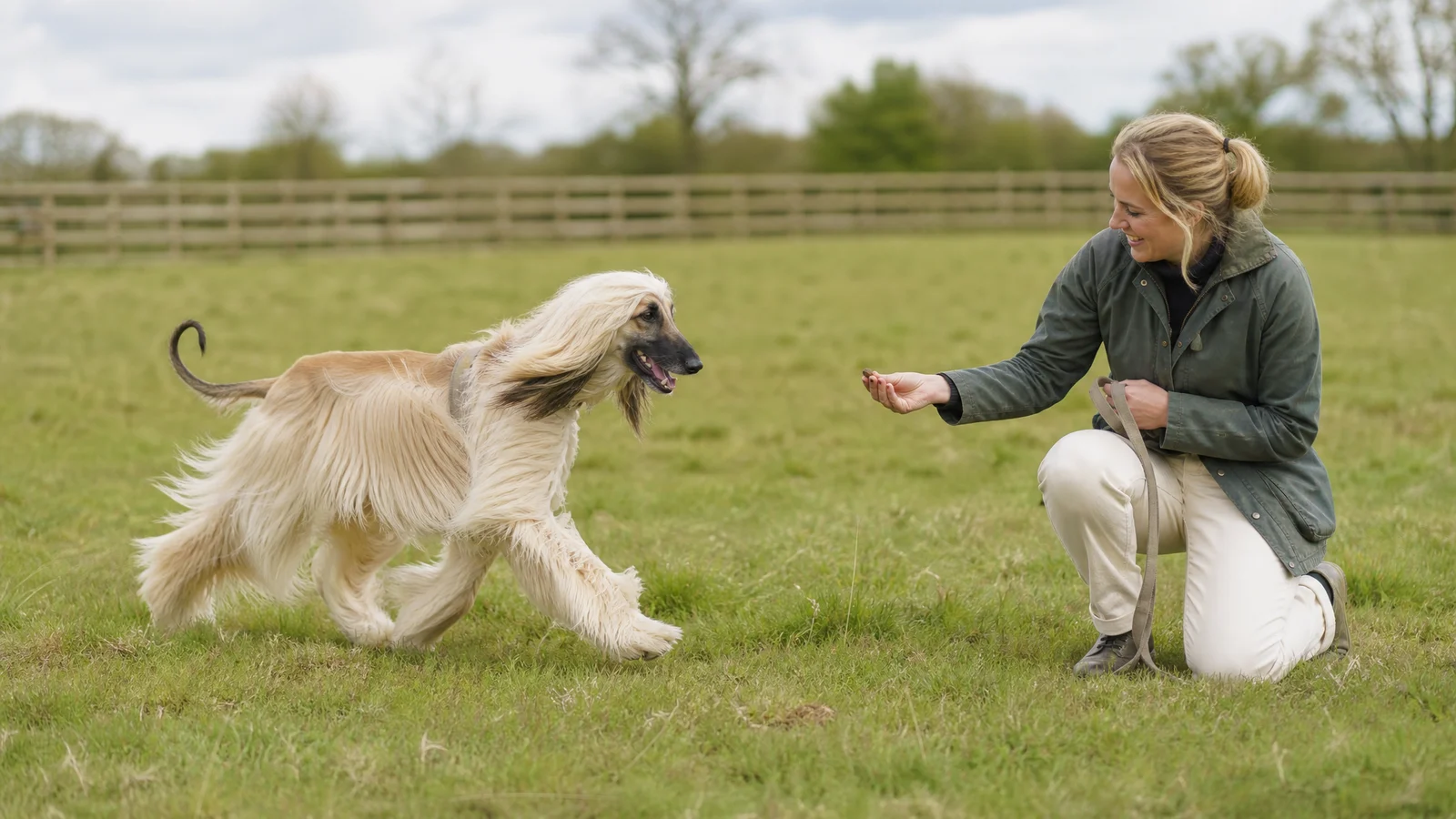 Training basicsWhen an Afghan Hound Bolts: Rewarding the Return Home
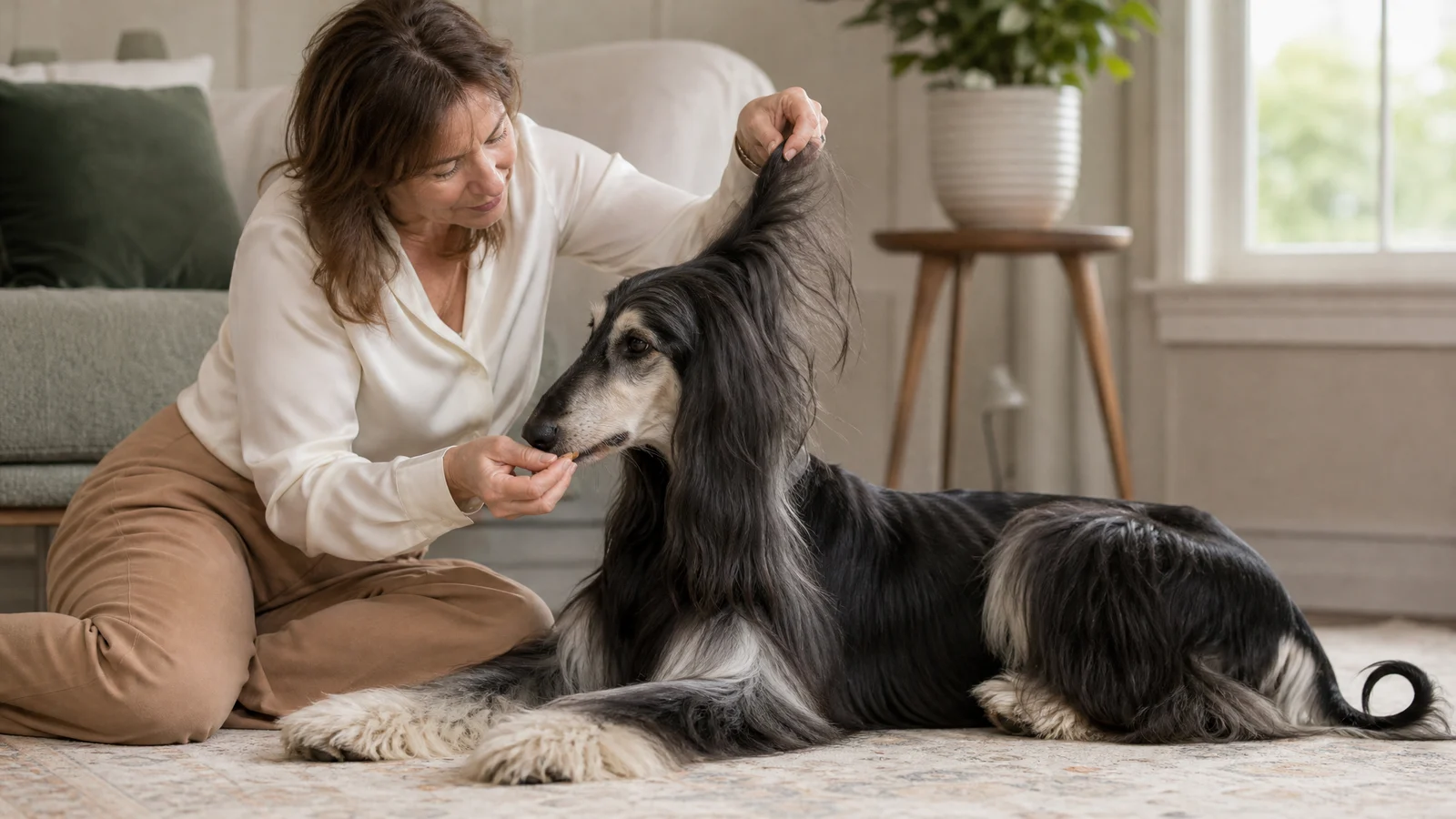 CareHow to Make Paw and Ear Checks Easy for an Afghan Hound
 Training basicsSoft Voices, Clear Cues: Training a Sensitive Afghan Hound