 Afghan Hound
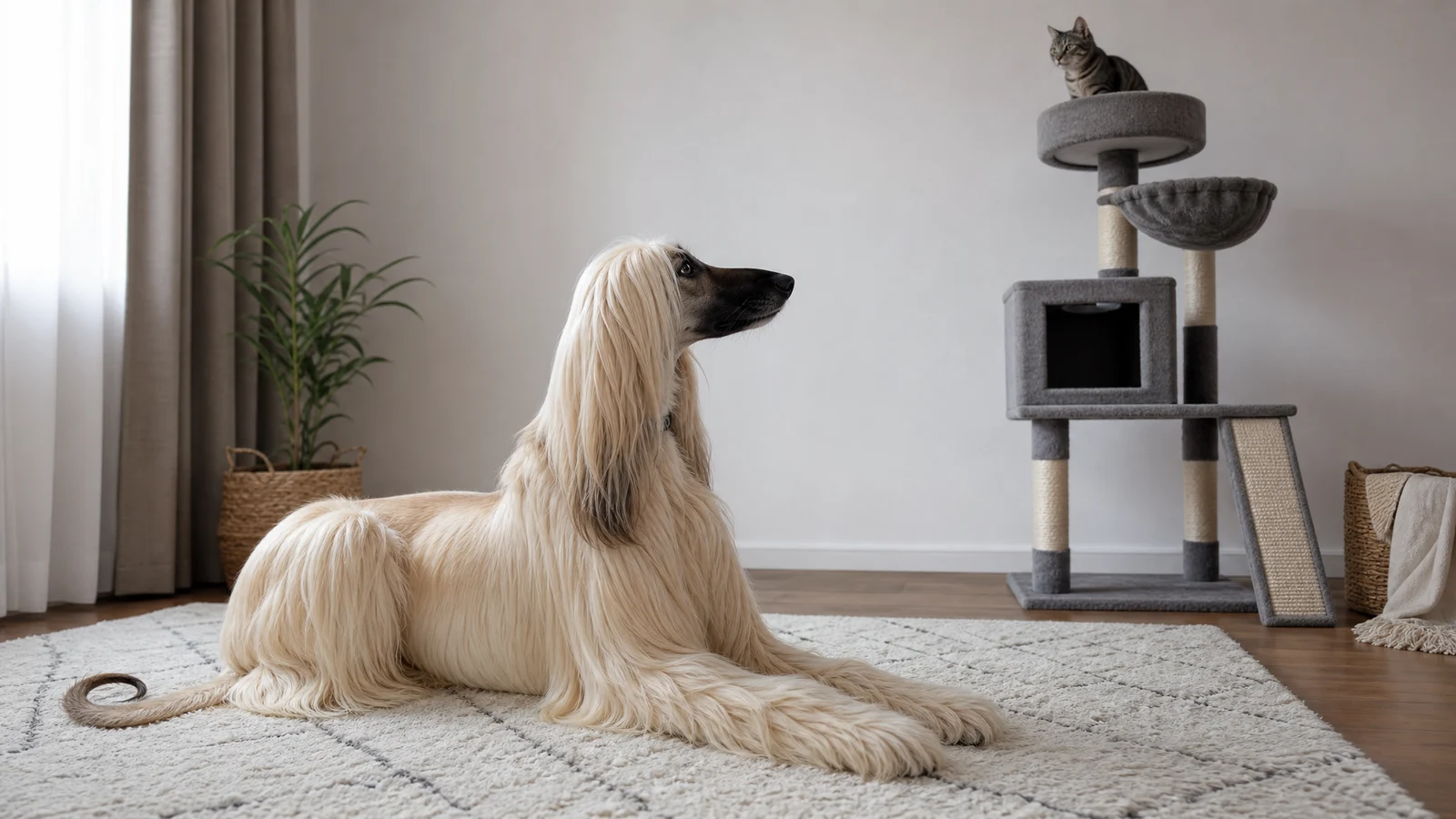
The usual advice for a dog and a cat is to introduce them slowly and let time do the rest. The Afghan Hound's brief descriptive standard, adopted in 1926, sketches an aloof and dignified aristocrat. That sounds like a dog who would glide past a cat without a glance, and videos of an Afghan curled up beside one make the same promise.
Real homes tell a more careful story. This is a sighthound, built to spot movement and go after it, and a clip captures one good moment, not the rest of the day. Handled badly, the cat gets hurt or lives in hiding, and the dog learns that chasing pays. Handled well, you get a quiet house and a dog who checks in with you instead of fixating.
This guide covers training an Afghan Hound around a cat. We start with the chase drive itself, move through common households such as an apartment, young kids, another dog in the house or an owner away at work all day, and end with what life together looks like years on. We have trained this breed for many years, and our verdict is that calm is achievable, but it is built, not assumed.
Chase Instinct Training
The breed is described as having a very well-developed chase instinct, along with a strong urge to run off in pursuit of perceived prey. The word that matters is perceived. A cat doesn't need to be prey in any way the dog could explain, only to move like prey. Afghans are sighthounds, bred to chase by sight, so a streak of fur across the floor does the work that a scent trail does for other hounds.
Be skeptical of the claim that a dog raised with cats will never chase them. Early exposure helps, but it doesn't rewrite a drive this old. Plan for a dog who is calm most days and capable of surprising you on the wrong one.
What Sets Off the Chase
Triggers are mostly about motion, not about the cat as an individual. The usual ones are a cat bolting off the couch, a cat sprinting down a hallway, a tail whipping around a corner, and a cat that panics when the dog stands up. Doorways and stairs are hot spots because both animals move fast along tight lines.
The dog's own state counts too. A dog already wound up from a game or a knock at the door locks on far faster than a settled one. Watch for the moment before the chase: staring, going still, tracking every step. That is when you call the dog's name, move away cheerfully and pay them for following you. Don't wait for the lunge.
Tolerance Versus Friendship
The videos show friendship. Most homes realistically get tolerance, which means the dog notices the cat, stays loose and chooses to look away. Friendship, with shared naps and gentle sniffing, happens for some dogs and can't be promised. Aim for tolerance and treat anything warmer as a bonus. Remember that the cat gets a vote: a cat who is frozen, cornered or hiding is not friends with anyone.
Because this breed likes to do things their own way, the work has to pay the dog well. Reward the choices you want, again and again, and keep sessions short enough that the dog stays interested.
Signs a Dog Shouldn't Be Alone With a Cat
Some Afghans will always need supervision, and a few should never be left alone with a cat. These are the signs to take seriously.
- The dog fixes a hard stare on the cat and won't break it for their name or a treat they normally love.
- The body goes stiff and silent, then bursts toward the cat without warning.
- Stalking, lunging or herding the cat into corners continues after weeks of calm practice.
- The chase keeps going when the cat is already hiding, cornered or crying out.
- The dog grabs, pins or mouths the cat, even in what looks like play.
- The dog can't settle at all while the cat is in view.
A dog who shows several of these gets full separation and a long, patient plan, ideally with a reward-based trainer who knows sighthounds.
Training an Afghan Hound in an Apartment
This case file looks hardest on paper: a long-legged dog, a cat and very little floor. Distance is the main tool in cat training, and an apartment gives you almost none for free. You build it with furniture, doors and routine, and you build it before the first meeting, not after the first scare.
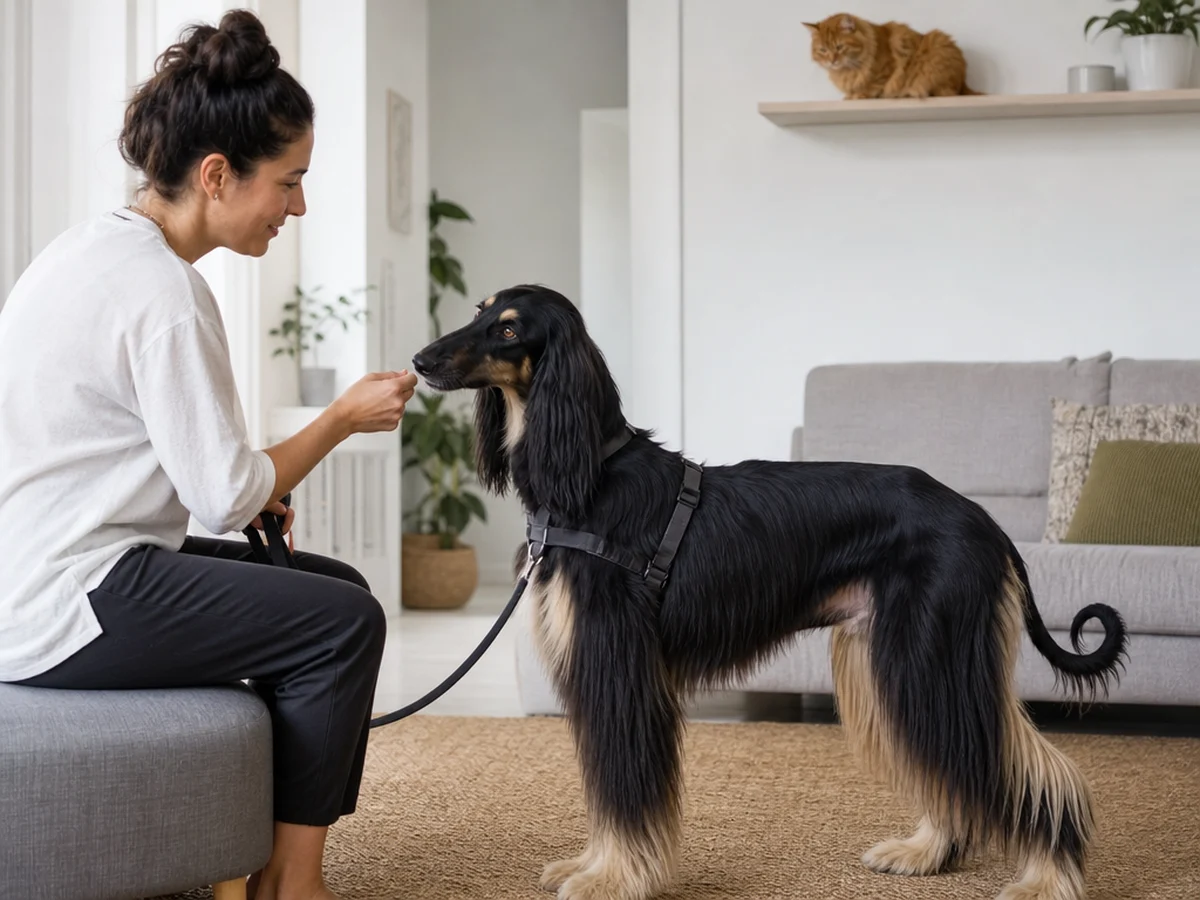
Set Up the Cat's Safe Space
The cat needs a zone the dog can never enter, holding food, water, the litter box and a place to sleep. Add height, since a tall cat tree or a sturdy shelf lets the cat watch the room without being in it. Make sure the cat can reach that space without passing the dog.
Don't trust a baby gate to do the job alone. Afghans are tall, lean, strong and excellent jumpers, so a gate is a visual cue at best. A closed door is a barrier, and a gate is a helper.
Introduction Steps
Go slower than feels necessary. Standard guidance on introducing dogs starts with leashes in the resident's space, and the same logic suits a cat. Work through these steps over many days, not one afternoon.
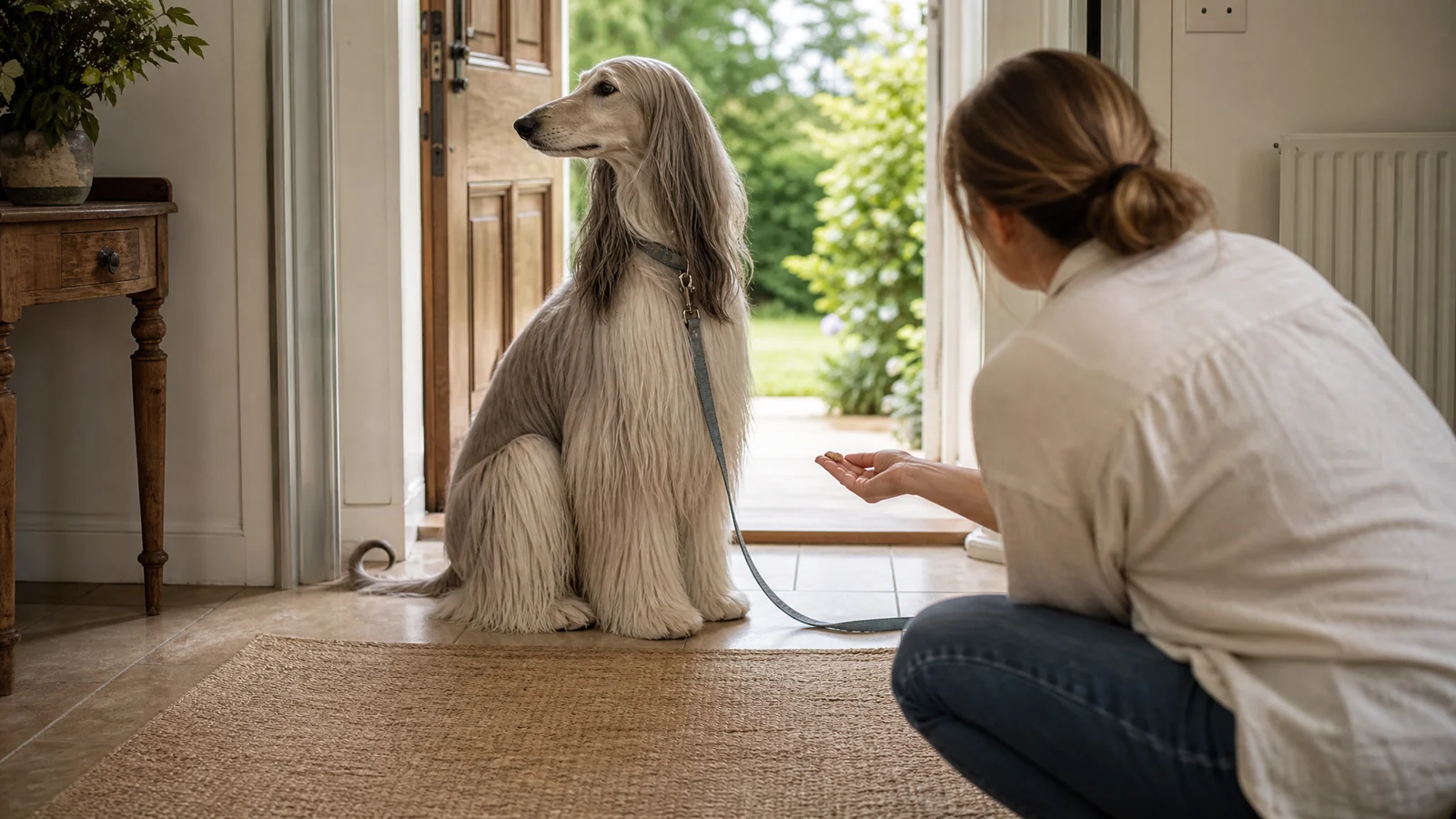
- Keep the dog on leash in the room, with the cat free to leave whenever it wants.
- Let the cat appear at a distance where the dog notices but stays loose.
- Say your marker word the moment the dog looks at the cat and then turns back to you, and give a treat.
- Reward every calm glance away, and end the session while the dog is still relaxed.
- Close the distance only after many easy sessions, and back up the moment the dog stiffens.
Leash-in-the-Room Practice
Once the steps feel boring, make them part of ordinary life. Clip on the leash while you read or watch television, let the cat wander, and quietly reward the dog for settling on a mat. An apartment makes this easy because everything happens in sight. The goal is a dog who treats the cat's movement as background, not a signal to launch.
Afghan Hound Cat Training With Young Kids
This case file adds the trigger an Afghan finds hardest to ignore: small people running and shrieking. Sudden movement from a child looks a lot like a fleeing cat, and this is a sensitive breed that can find the noise stressful too. A dog under strain handles cat training badly, so watch for early stress signals such as lip licking, whale eye and ears pulled back. They come before growling or snapping, and they mean the dog needs space now.
Supervision must be a job with a name on it. One adult watches the dog and the cat, and does nothing else. Cooking with half an eye on the room doesn't count. When play turns wild, the dog and cat go to separate areas, and the cat's safe space stays off limits to everyone but the cat.
Give the children a short list of rules they can actually follow. Walk indoors. Never chase the cat or the dog. Never carry the cat toward the dog. Let the cat leave whenever it chooses. Kids can also help with training by sitting calmly and handing over treats when you ask, which turns them into a signal for good things instead of chaos. For the wider picture, our guide to socializing an Afghan Hound covers how to protect a sensitive dog from being pushed too far.
Two-Dog Training Around Cats
A second dog changes the math. Excitement spreads between dogs, and one dog's sprint or bark can launch the other into a chase neither would start alone. If you have ever watched two dogs wind each other up at a fence, you know how quickly it happens. Treat the pair as a different animal from either dog alone.
Separate the work. Train each dog with the other behind a closed door, and repeat the look-at-the-cat, look-back-at-me routine until each one is dependable solo. Only then bring them into the same room, and begin again at a greater distance. Feed apart, walk apart for a while, and keep the cat out of the room during any rowdy game between the dogs.
If one dog is calm around cats, that dog can be a useful partner. Borrow the structure Best Friends describes for helper dogs: approach only until the dog notices but doesn't react, then move away and reward, and repeat before the dog reacts. The excitable dog is the one who sets the pace, though. Whichever dog is the instigator gets managed first.
Training on Workdays
This case file removes the one thing every plan above relies on, which is you. A dog and a cat left loose together all day are the riskiest setup in this article, however well the evening practice goes. The honest rule is that a pair isn't trusted alone until supervised time has been uneventful for a long stretch, and for some dogs that day never comes.
Safe Separation Setups
Pick a setup where a closed door stands between them, with the dog in a secure, comfortable room or crate and the cat in the rest of the home, or the reverse. The cat should have food, water, a litter box and high perches wherever it spends the day. Because Afghans jump so well, a closed door beats any gate.
Leave the dog with something good to do, such as a chew or a food puzzle. Keep the departure and arrival calm so the dog's arousal is low when the cat is nearby.
Short Training Windows
A busy schedule still has room for training. A few short sessions before work and again in the evening beat one long one. Use them for the look-back game, a settle on a mat and a recall to your voice. For an Afghan, basic commands like come, sit and stay are generally enough, as long as they hold up near the cat.
Exercise belongs in the plan too, because short walks don't tire this athletic breed. Ideally they run full out several times a week in a large, enclosed area, and our guide to safe sports for an Afghan Hound has outlets that suit it. A dog who has really run is easier to train around a cat. Schedule regular vet checkups too, because pain or illness can change how a dog reacts.
Afghan Hound and Cat, Years On
The goal is a calm, supervised coexistence, and many dogs can learn to get there with steady effort, though it never fully replaces management. The picture to aim for is a dog who glances at the cat, looks back at you and carries on, and a cat who crosses the room with confidence and sleeps in the open. Gains like that come from thousands of small repetitions, and they last only as long as the routines behind them do.
The limits stay too. A cat that bolts, a new puppy, a houseguest, a stressful month or a change in the dog's health can bring the old reflex back in a moment. The doors, the cat's high perches and the habit of watching the dog's body all stay in place. Outdoors, secure fencing and a leash still matter, since walking off leash isn't advisable for the breed.
Give the dog credit for what they can do. Afghans are loyal and want to be with their people, and that bond is what you are drawing on when a dog turns away from a cat to find your face.
If you see the warning signs from earlier in this guide, don't talk yourself out of them, and read our piece on the sighthound instinct behind behavior problems to put them in context. Peace in the house is usually a matter of planning, and the dogs who earn real freedom earn it slowly.
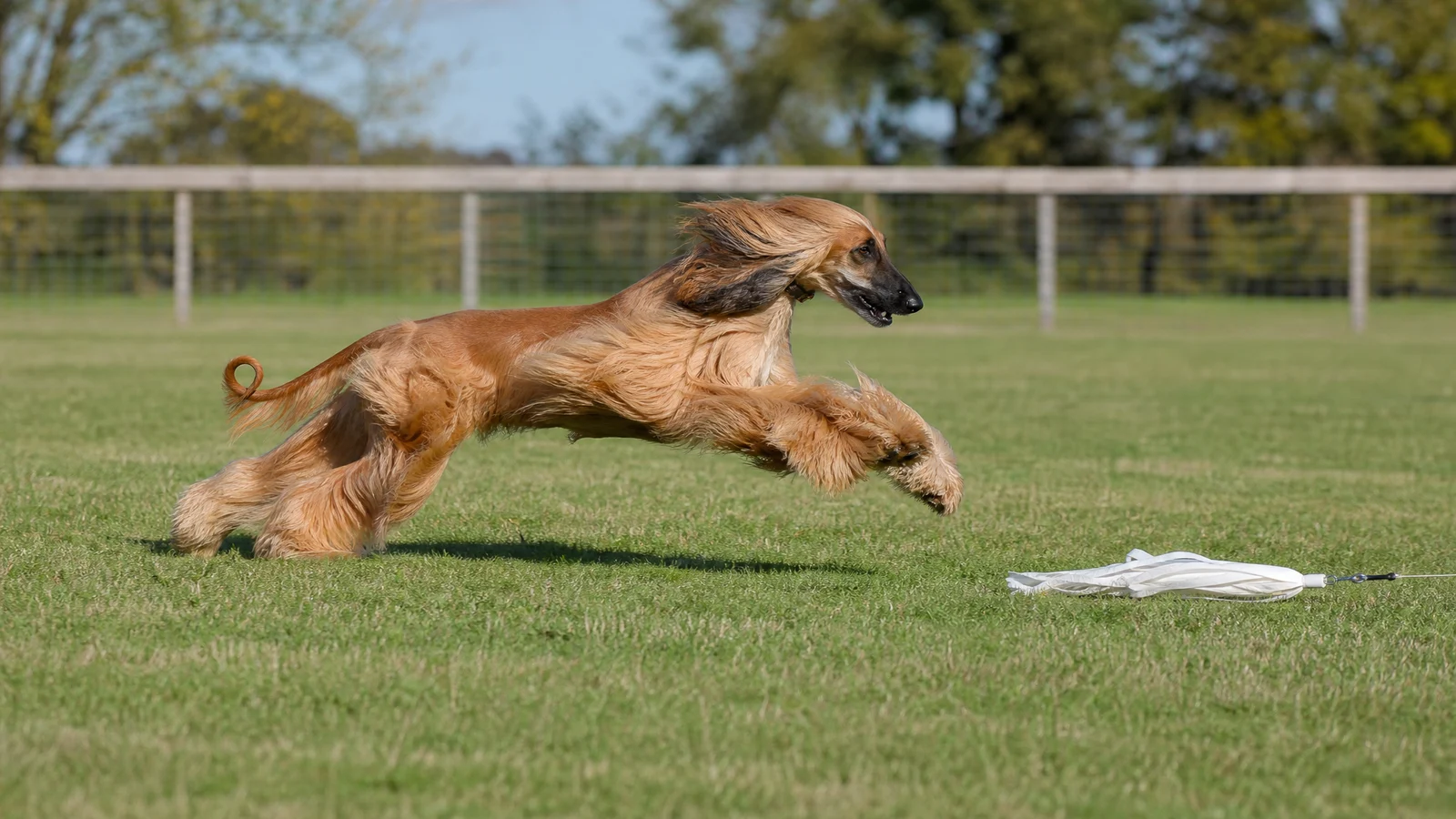 Exercise and jobsSafe Lure Coursing and Sports Jobs for an Afghan Hound
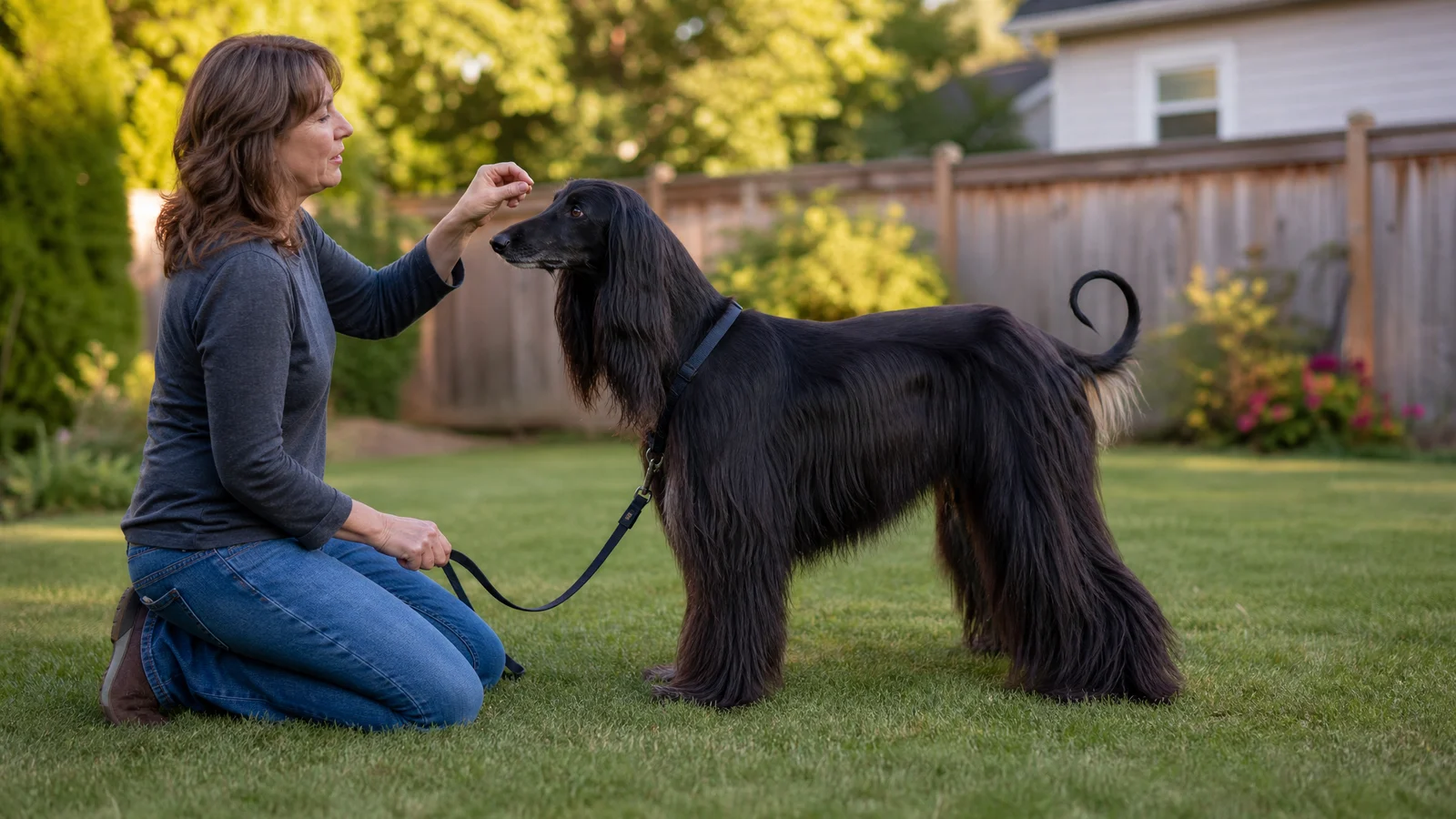 Training basicsTraining an Independent Afghan Hound: An Owner's Roadmap
 Training basicsAfghan Hound Trainability: Rewards for a Self-Willed Dog