 Afghan Hound
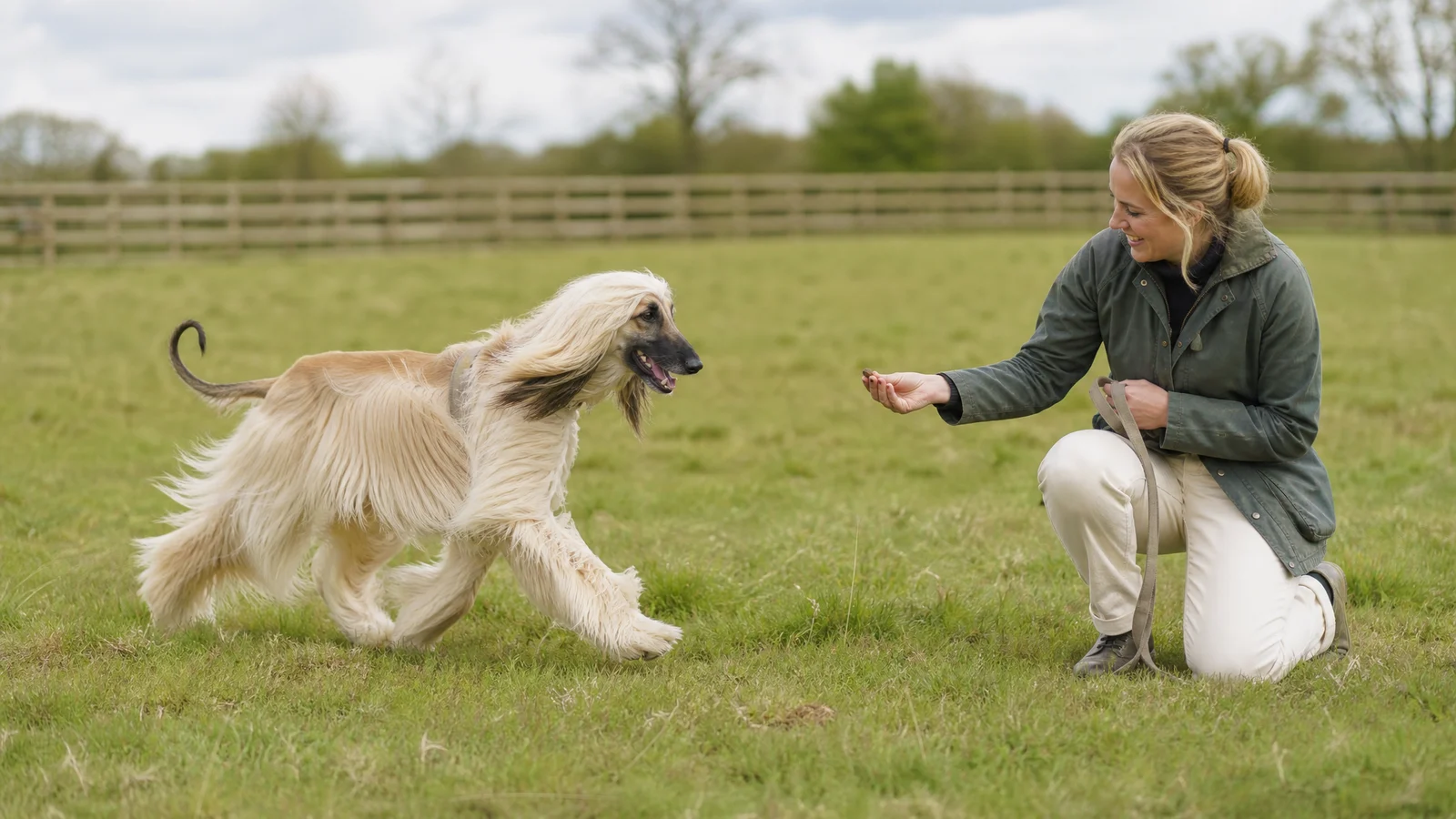
Ordinary dog advice says to tell off a dog who comes back late, so they learn that dawdling has a price. For an Afghan Hound that lesson backfires. The hound learns that arriving is the risky part, and next time they simply stay away. The breed has a very well-developed chase instinct, so a bolt will happen sooner or later, and every return, however slow, has to be paid like a jackpot.
This article looks at recall after a bolt stage by stage, from puppy months to the senior years, so you can build the return habit before it is tested, pay a late return so the next one comes sooner, handle your own frustration, and keep the payment going for life. Our work focuses on Afghan Hound behavior and training, and the same rule applies at every age: a generous welcome beats a loud voice.
Building Recall After a Bolt Before It Happens
The cheapest time to teach a return is before any real bolt exists. From the day your puppy comes home until about 5 months, work in a secure space with a long line clipped to a harness. The puppy can wander but never leave, you never have to chase, and running away never gets the chance to pay off. Every short, rewarded return you collect now becomes the history your hound draws on when the stakes are higher.
Use the family side of this breed's character. Afghans are described as strong-willed, independent thinkers who turn exuberant and playful with their own people, and they prefer to do things their own way, so harsh training methods earn a poor reception. A puppy comes most readily to someone warm and fun, so keep your voice light and your pace unhurried.
Run several short sessions each day. Use the same sequence every time:
- Wait until the puppy is a few steps away and busy sniffing or looking elsewhere.
- Say your recall word once in a bright voice, then stay quiet and let the puppy work it out.
- The moment the puppy turns toward you, mark it, then deliver a treat on arrival and a second one right after.
- Release the puppy straight back to sniff and explore.
- Stop while the puppy is still keen, and put the line away without fuss.
Mix in many returns that end with the puppy being sent off to play again. A puppy who is called only when the fun is over soon hears the cue as bad news. Our roadmap for training an independent Afghan Hound shows where this habit fits in the wider plan.
Puppy Months Build Recall After a Bolt
The return habit is built in the first months, long before a real bolt is possible. From the first weeks at home to about 5 months, your job is to make coming to you the best part of your puppy's day, and to do it where running off is not an option.
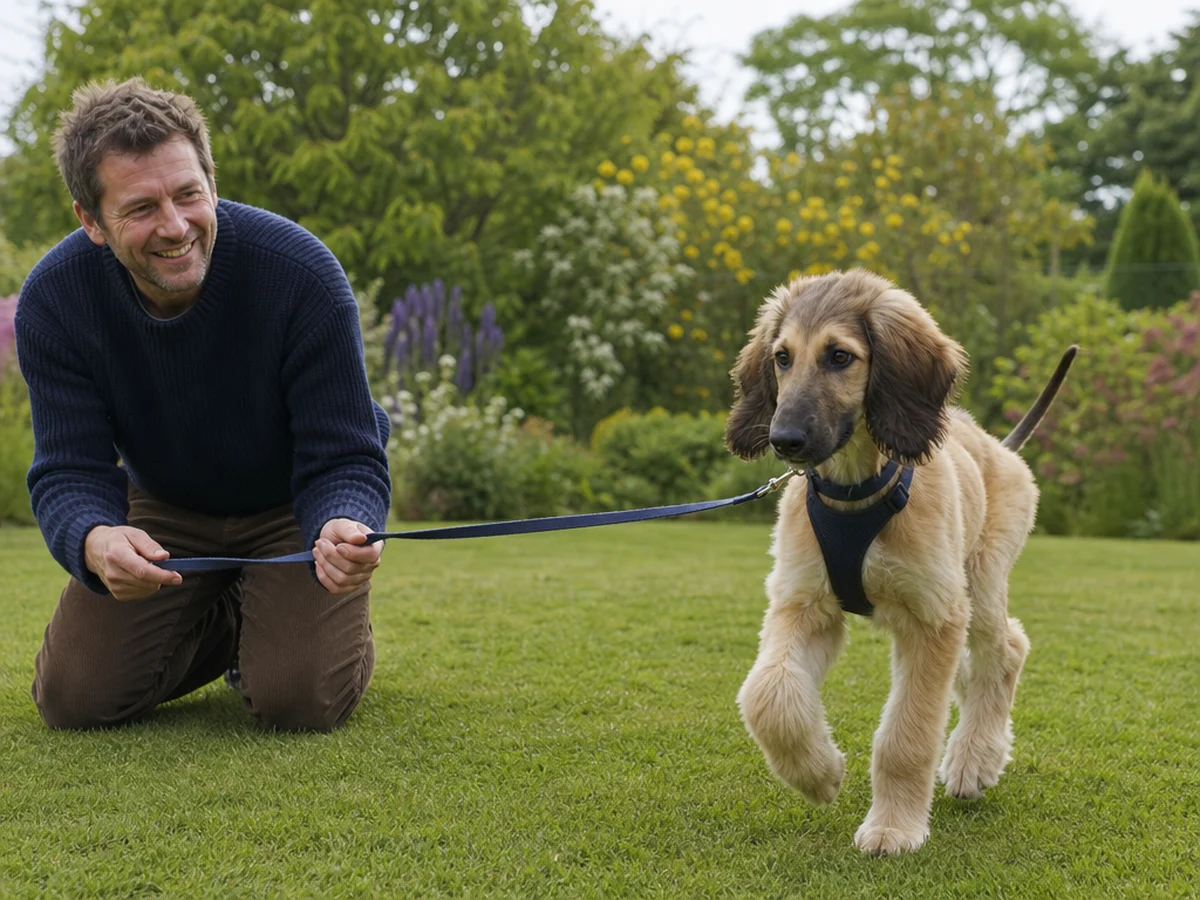
Clip a long line to a harness and let the puppy wander in a secure space. When they glance back or drift your way, say your recall word once in a bright voice, mark the turn toward you, and pay with a treat when they arrive. Then release them to sniff and explore again. Stop each short session while the puppy is still eager for more.
Afghans have a very well-developed chase instinct, so the line matters even when the puppy seems uninterested in running. It keeps every attempt successful and means you never have to chase. Call only when the puppy is already heading toward you at first, and let the word predict a treat every time.
Do not make the recall word the signal that fun is over. Some calls should end in a treat and an immediate release to play. Afghans have a sensitive nature, so a light voice and relaxed body will do more for your puppy's response than volume ever could.
What Pays for Afghan Hound Recall After a Bolt?
A sighthound weighs your offer against the run itself, and the run is a strong competitor. Ordinary kibble loses that contest every time. Choose rewards your hound finds extraordinary and keep them for returns only, so they stay special. These usually outrank the pull of the run:
- Roast chicken shredded fine and soft enough to be gulped in a moment.
- Cheese cut small and strongly scented, carried in a pouch you open only for returns.
- A chase game in which you run away happily and your hound chases you, which gives the chase instinct a job you control.
- A favorite tug toy that appears only when the dog arrives and ends when you decide.
Deliver It at the Moment of Arrival
Timing matters as much as the food. Mark the instant your hound reaches you with your marker word, and have a treat in their mouth right away. Follow with more pieces so arrival feels like winning. Keep your hand low and your body relaxed, and leave the collar alone until the food has been eaten. A hand that grabs first teaches the dog to stop just out of reach.
Never Let a Return End the Outing
If you call only to clip on the leash and go home, the dog makes the association and becomes reluctant to return. Pay first, allow a little more sniffing or strolling, and only then clip on the leash. Some returns should end in nothing but a treat and a release. For more on matching rewards to this breed's temperament, see our guide to rewards for a self-willed Afghan Hound.
This is general information about training treats, not veterinary advice. Check with your veterinarian about which treats and how much suit your Afghan Hound, especially if your dog has health or dietary concerns.
Adolescent Recall After a Bolt and the Late Return
From roughly 6 to 18 months, independence peaks and bolts become real. The body is now adult-sized and built for speed. The breed standard says an Afghan running free moves at a gallop, and no person on foot closes that gap. Chasing makes you part of the game, so the faster you run, the faster the dog goes. Stay put or move away calmly, because a steady person at a familiar spot is easy to return to.
Expect late returns, sometimes after minutes of acting as though you do not exist. That is normal at this age. Pay a late return exactly as you would a prompt one. The dog judges only what happened when they reached you, so a rich reward at that moment makes the next return faster, while a cold welcome makes the next bolt longer.
The Recovery Routine
Keep it simple enough to run while your heart is pounding. Do these steps in order:
- Stop, take one slow breath, and keep your eyes on the dog so you know which way they are heading.
- Call once in a bright, happy voice, then go quiet.
- Turn side-on, lower your height, and show the treat. Do not stare, loom, or lunge.
- If the dog is far away, walk slowly toward the car, the gate, or an enclosed area so you become the one who is leaving.
- When the dog arrives, use the marker word, deliver the jackpot, and greet them calmly.
- Allow a little sniffing before the leash goes on.
If the dog is heading toward a road or an open gate, move toward them quietly at an angle, walking rather than running. Ask any helpful passerby to stand still too, since a hound who is aloof with strangers may swerve away from unfamiliar hands.
Rebuilding Trust in the Cue
After a bolt, treat the cue as shaky. Go back to a secure space such as a fenced yard and practice there before you trust the cue anywhere else. Call from a short distance when the dog is already drifting your way, and pay generously. Add distance and distractions gradually, and end each session on a win.
If the old word has been shouted too often, choose a fresh one and pair it with your reserved treats from scratch. Our guide to safe sprints and recall shows how to build the next stage in an enclosed space.
Should an Afghan Hound's Late Return Be Scolded?
No. After a scare, relief and anger arrive together, and the urge to tell the dog off is strong. But a dog links your tone to the moment they arrive, not to the bolt that ended minutes earlier. The lesson becomes that coming to you leads to trouble. Afghans are known for a sensitive nature and deep loyalty to their people, so a hound who is scolded on arrival is likely to stay out of reach next time, and the next bolt will last longer.
Greet Them as If They Came Right Away
Use a soft voice, slow hands, and a relaxed face. Use the marker word, give the treat, and walk on together. If the dog picked up something on the run, offer a treat in trade rather than snatching. Pulling items from mouths can teach a dog to run off when you need something back.
Give Your Frustration Somewhere Else to Go
Your anger is real, so give it a harmless outlet. Breathe out slowly and drop your shoulders before you touch the dog. Once the leash is on and you are home, walk a lap around the yard or sit down with a drink. Then turn the energy into a fix. A bolt is nearly always a gap in management, such as a loose latch, a low spot in the fence, or a missing long line, and closing that gap is the productive form of anger.
Keeping Recall After a Bolt Strong in the Adult Years
In the prime years your Afghan is fit, confident, and still a sighthound. A recall that was solid last season can fail when something small and fast crosses the field. Maintenance keeps the habit ahead of the instinct, and it comes down to three jobs.
Rotate the Rewards
Even great treats go stale. Rotate chicken, cheese, tug, and the chase game, and pick whichever one your hound seems keenest on that day. Every so often, pay a surprise jackpot of many pieces so a return always holds the chance of something wonderful.
Practice in Secure Spaces
Ideally, an Afghan runs full out several times a week in a large, enclosed area. Afghans are tall, lean, and excellent jumpers, so that space needs a high, secure fence. Call your hound back during these sprints, pay, and release them again. Walking off leash is not advisable for this breed, so keep other outings leashed or on a long line.
A Plan for Rare Slips
Even a well-trained adult may bolt now and then. Treat a slip as information, not failure:
- Run the recovery routine and pay the return in full, however long it took.
- Note what set off the bolt, such as a small animal, an open gate, or a new place.
- Go back to shorter distances in a secure space for a few sessions before trusting the cue again.
- Close the management gap that allowed the bolt.
Recall After a Bolt in Older Afghan Hounds
Mature and senior hounds move more slowly, and their senses change. The drive may soften, but it rarely disappears, and a sudden flash of movement can still send an older Afghan off. Dogs vary, so watch your own hound. The return reward stays, and only its form adapts. Regular vet visits help you notice changes in hearing, vision, and comfort that affect how your dog responds.
Adapt the Call
If hearing fades, add a visible signal to your voice, such as a raised hand or a slow wave, taught the same way you taught the word: signal, marker, treat. Call from shorter distances, and use a long line on open ground so a slow bolt stays a short one.
Adapt the Reward
Older mouths may prefer softer treats, so keep the chicken or cheese but make the pieces easy to chew. A slow, happy walk together can become part of the payment, and the tug and chase games can shrink to gentle versions your dog's body enjoys. The jackpot does not disappear with age. It just fits the dog you have now.
Older Afghan Hounds Still Bolt and Return
A mature or senior Afghan moves more slowly, hears and sees differently, and may chase with less drive than before. That does not retire the instinct, so do not assume a slower hound will never bolt. What changes is how you call and how you pay, not whether you pay.
Adapt the Call
If hearing fades, add a visible signal to your voice, such as a raised hand or a slow wave. Teach it the same way you taught the word: signal, marker, treat. Do it in a secure space first, then use it anywhere else only after it works reliably there.
Adapt the Reward
Older mouths may prefer softer treats, so keep the chicken or cheese but make the pieces easy to chew. Deliver them at the moment of arrival, as you always have, and add calm praise and a gentle touch. A slower return is still a return, so greet it like a fast one.
Bring up any change in hearing, sight or movement at your regular vet visits. A hound who seems to ignore the call may simply not have heard it, and scolding would only teach them that coming to you is a bad idea.
Paying Every Return After a Bolt, for Life
Expect steady progress rather than a perfect result. With repetition, returns get faster and more willing, and many hounds begin turning toward you before you finish the cue. But an Afghan stays a sighthound for life. The urge to chase movement may never retire, and one exciting moment can override years of habit. Fencing and leashed outings remain part of the plan at every age, and the cue earns its keep as a layer on top of them.
What you can control is the deal your hound makes each time they decide whether to come home. A dog who is never scolded and always paid generously, whether the return took moments or minutes, keeps choosing to come back, and that choice grows stronger with every repetition. So keep the best treats reserved, keep your welcome warm, keep practicing in secure spaces, and keep the payment going through puppyhood, adolescence, the prime years, and the senior ones.
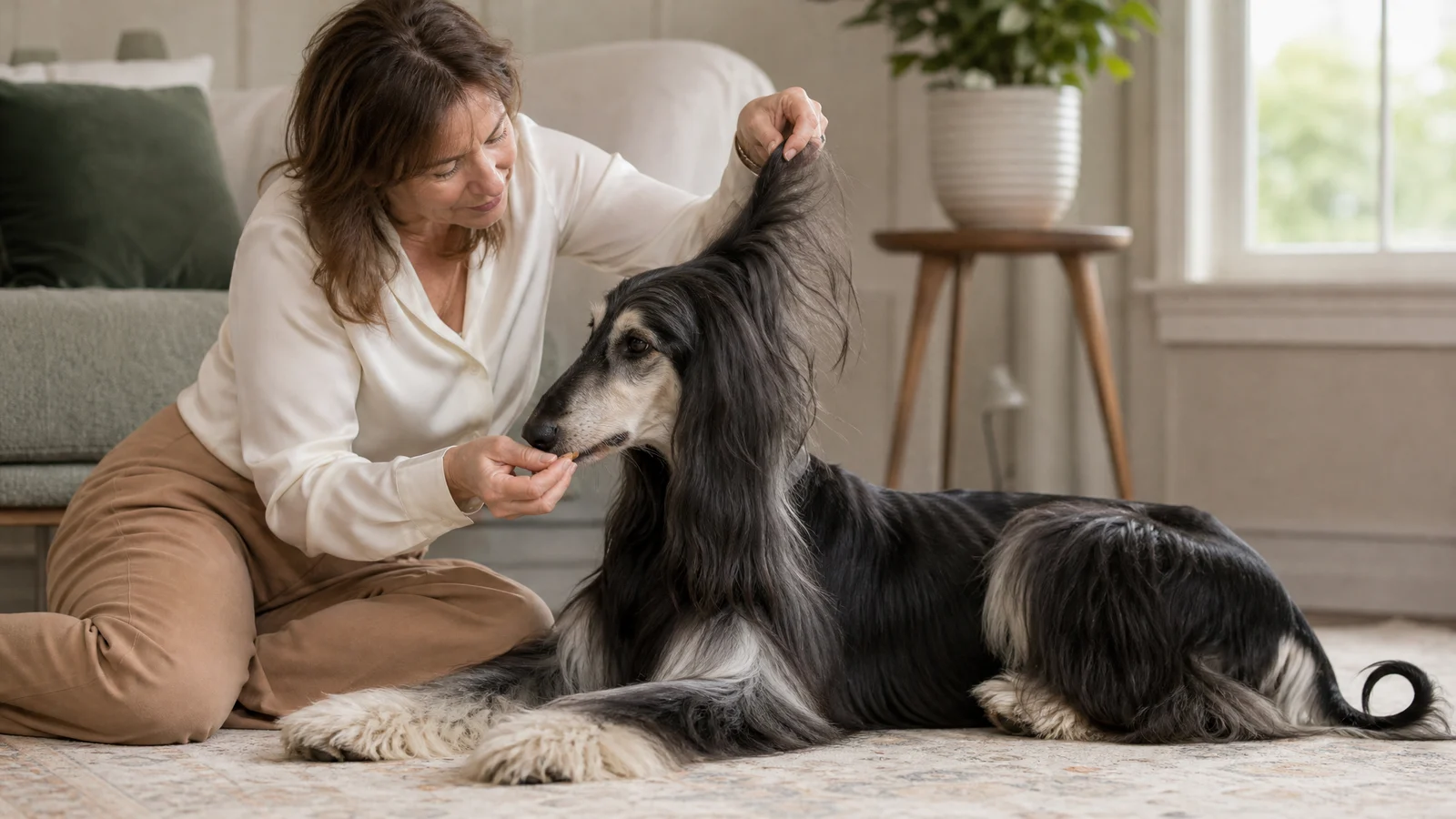 CareHow to Make Paw and Ear Checks Easy for an Afghan Hound
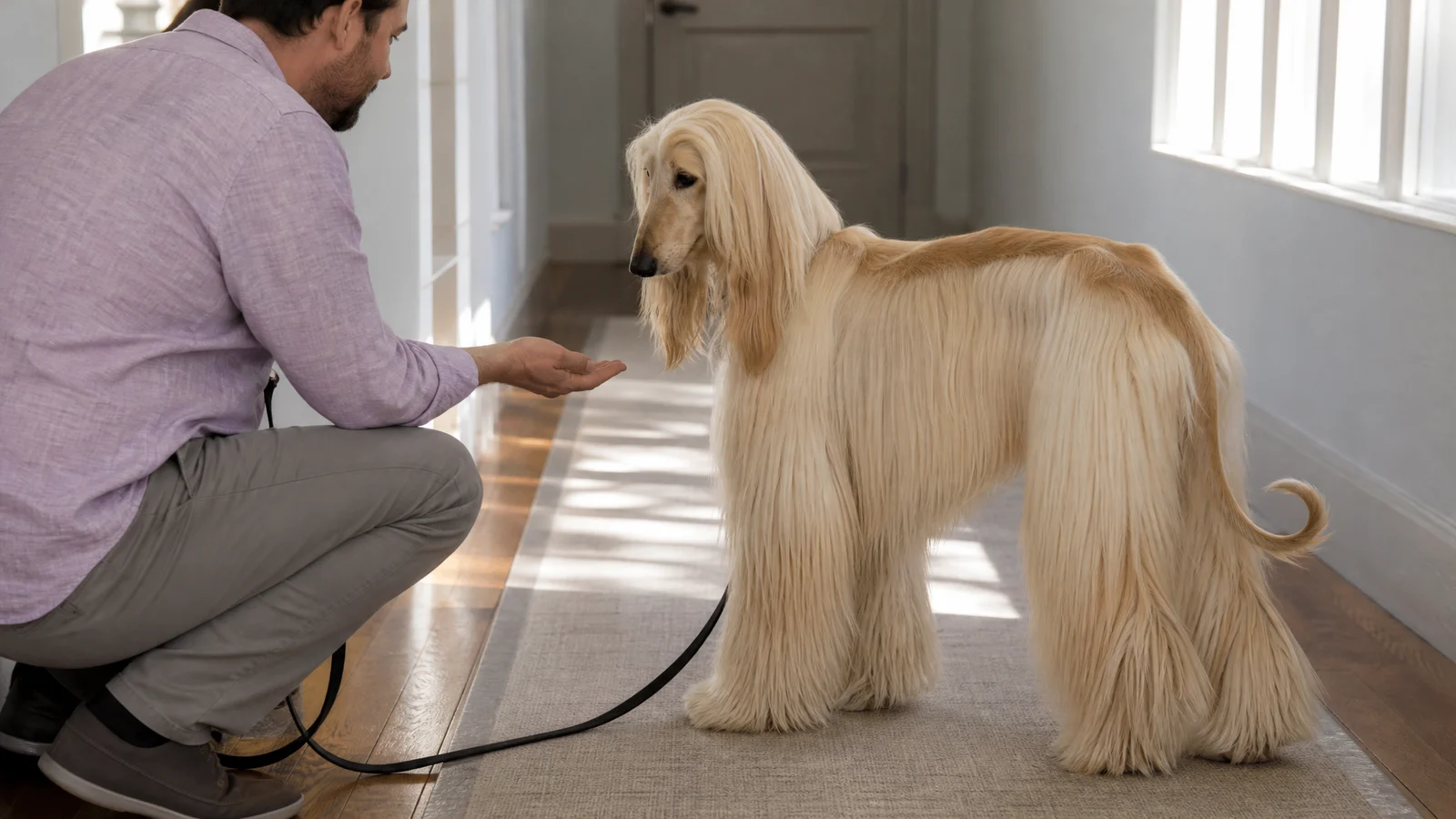 Training basicsSoft Voices, Clear Cues: Training a Sensitive Afghan Hound
 Puppy trainingKeeping Training Steady as Your Afghan Hound's Coat Changes