 Afghan Hound
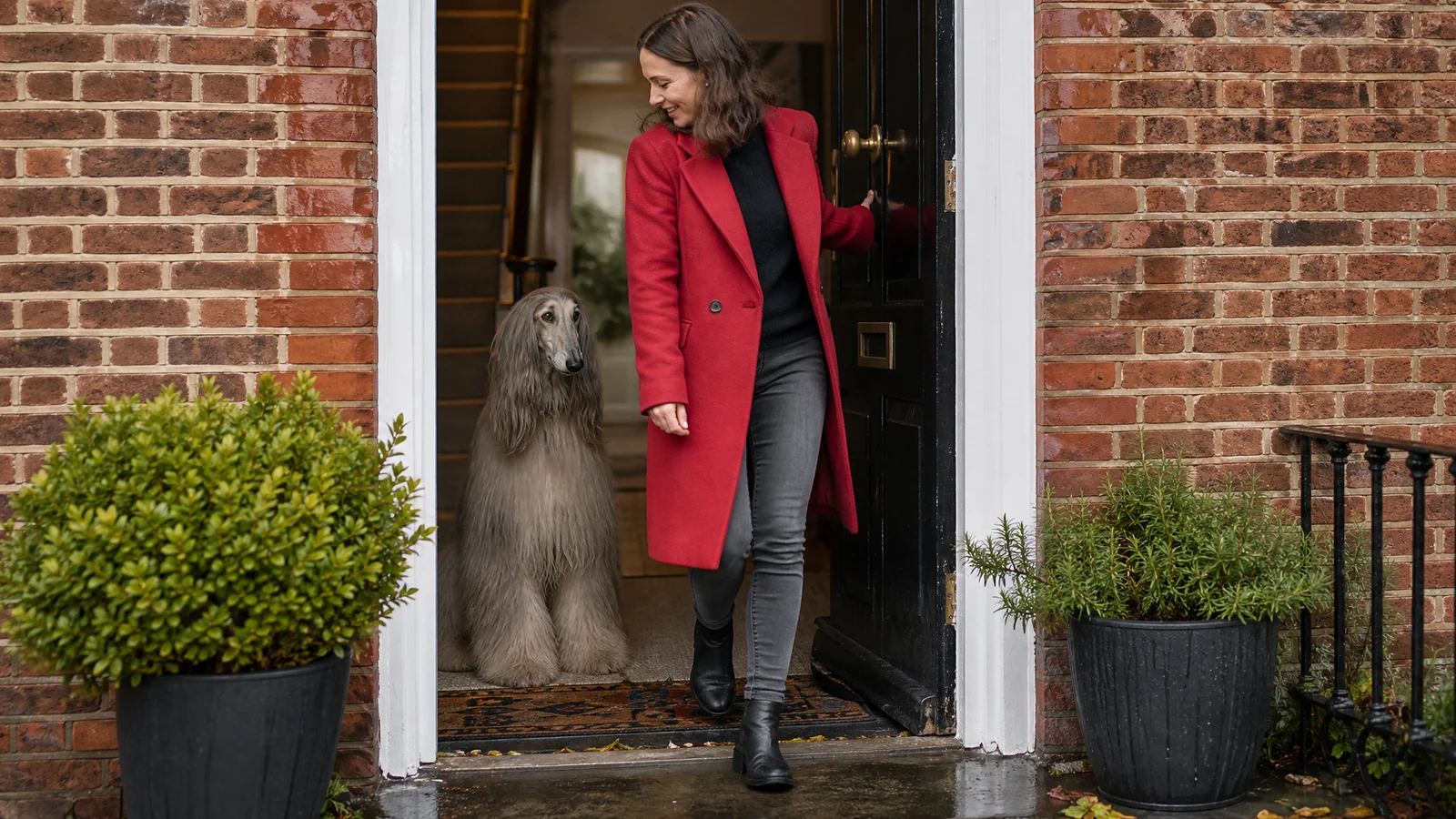
Ordinary dog advice treats door manners as politeness: a dog who waits is pleasant, and one who barges through is merely rude. For an Afghan Hound the same skill is a safety measure. Their chase drive is intense, and an open door is an exit toward whatever they have just spotted, so the wait has to be taught and paid for generously before it is ever tested.
Sighthounds react to movement faster than most people can speak, and a name called down a street seldom competes with something running. A habit built calmly indoors is the dependable layer. Our work centers on this breed's behavior and training, and this is among the first skills we would put in place. Read on for the gear and rewards to prepare, the wait in small stages, gates, car doors and crates, distractions, and a plan for your next two weeks.
Afghan Hound Door Training Risk
A door does two things to an Afghan at once. It removes a barrier, and it often opens onto exactly what sets them off, whether that is a cat on a wall, a jogger, or a squirrel crossing the road. Afghans are sighthounds, bred to hunt and chase prey by sight, and they have a strong instinct to run off after anything that looks like prey. That is also why walking off leash is not advisable for them.
Build raises the stakes. Afghans are tall, lean, and strong, which makes them excellent jumpers, so a dog who slips past you can be several strides down the road before you have turned around. Add the temperament described in the breed standard, an independent thinker who prefers to do things their own way, and calling after a runner becomes a poor plan.
Think in trade-offs. The wait costs a few short sessions across two weeks. One bolt can cost far more, and every rehearsal of running through an open door makes the next one more likely. The skill is a close cousin of the stay in our come, sit, and stay plan, and because Afghans are deeply loyal to the people they bond with, most make willing partners for it.
Front Door Wait Training
The wait is built in stages named for how much of the door is in play. Do only a few repetitions per session, and end while your dog is still succeeding. Pick one cue word for the wait and a different one for the release, and never swap them.
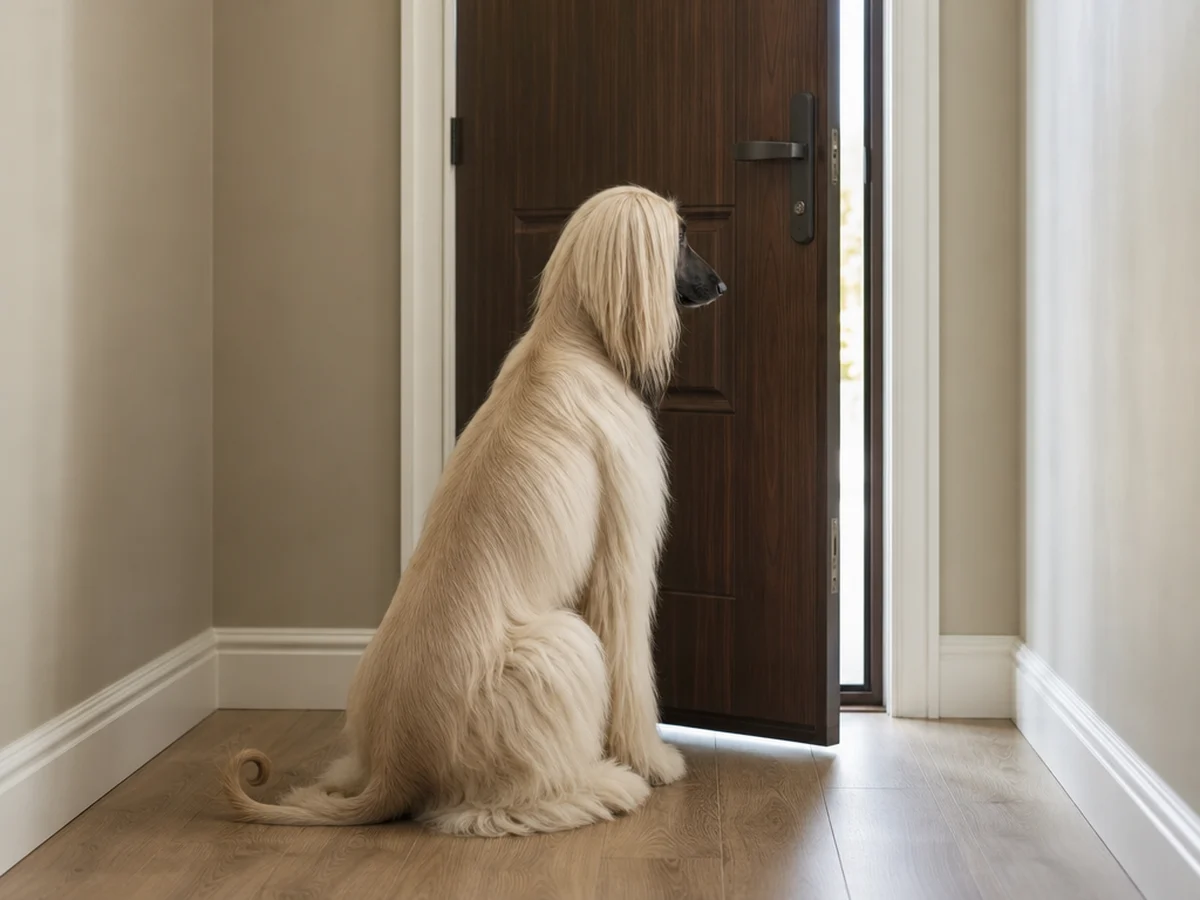
The Closed Door
Stand with your dog on leash facing a closed door. Ask for a sit or a stand, whichever they find comfortable, say your wait cue, and mark and treat while they hold still. Then say the release word and step away from the door to deliver a second treat. Paying away from the door teaches that the reward follows the wait and is not found in the doorway.
Repeat until your Afghan looks relaxed instead of fixed on the door. This breed is sensitive, so keep your voice low and your pace unhurried. This stage may take several sessions, and that time is well spent.
Hand on the Handle
Now touch the handle and reward if your dog holds position. Then turn it, then unlatch the door without opening it, rewarding at each step. If your dog gets up or leans forward, say nothing, take your hand off the handle, pause, and start again from the easier step. That quiet reset is a mild consequence: the door simply stays shut until the wait returns.
A Cracked Door and the Release
Open the door a sliver, reward, and close it. Over several sessions widen the gap a little at a time until the door opens fully while your dog holds the wait. Then release them through on leash. Every repetition follows the same order:
- Cue the wait and let your dog settle into position.
- Touch the handle, then open the door to the width you are practicing.
- Mark and treat while your dog stays where they are.
- Close the door and reward again, or say the release word and walk through together.
Vary how often you actually go outside. If every wait ends in an outing, your dog will start leaning toward the outing, and the lean is the first sign of a bolt. Often the door should open, the treat should arrive, and the door should close again.
Yard Exit Training for an Afghan Hound
Gates and yard entrances come next, and they are trickier for a sighthound because the dog can see straight through the bars. A cat or bird in view acts as a trigger while the barrier is still in place, so start on a quiet day with nothing moving nearby.
Use the same stages with the gate in place of the door. Work inside the fenced yard first, then at the gate that leads out. Gates swing wide and are often opened while your hands are full, so grow duration and distance in small steps:
- Hold the wait a few extra moments before marking, then stretch the time gradually across sessions.
- Step back a short way, return, and reward, so distance grows while your dog stays in position.
- Open the gate a little further each session before you release.
- Practice entering and leaving, so the wait applies in both directions.
Make the release worth the wait. Afghans should have the chance to run full out several times a week in a large, enclosed area, so a release into a secure yard for a sprint is among the best payments you can give. Check the latch as well. A high, secure fence works only if the gate is as secure as the fence, and a tall, clever dog who learns to nudge a latch can undo weeks of practice.
Car Door and Crate Training
Car doors and crate doors are where bolting often happens, because the door opens suddenly in a place your dog may not know well, such as a parking lot or a clinic entrance. A tall, athletic hound can also clear a car doorway in a single leap. The wait you built at the front door transfers, but it needs its own short practice in each place.
Clip the leash on before the car door opens, every time. Ask for the wait while the door is still closed, open it a crack, mark and treat, then open it fully and wait for the release before your dog steps down. Practice first in your own driveway with the area secure, then in quiet parking lots. Vet visits become safer with the same routine, so a calm rehearsal at the clinic entrance is a good use of a spare day.
Crate exits follow the same logic. Ask for the wait with the crate door closed, open it slowly, and reward your dog for staying inside until the release word. If your Afghan rushes the opening, close the door calmly and try again with a smaller gap. Practiced together, house, car, and crate teach one habit: an opening door is the signal to wait, not to go.
Door Training With Real Distractions
Test the wait only after it is reliable at every stage with no distractions. Then add real life in layers, changing one thing at a time and keeping the leash on. Because this breed reacts to motion, order the distractions by how much they move and how far away they are:
- A doorbell or knock with nobody coming in.
- A family member walking past the door.
- A toy rolling across the floor in view.
- A visitor entering while your dog holds the wait behind a barrier.
- Sights outside the window, from a calm neighbor to a passing person or animal.
When the Wait Breaks
Expect breaks. They are information and not defiance. If your dog stares and cannot take a treat, the distraction is simply larger than their training so far, and making it smaller is the fix. Calmly close the door or stop moving, drop back to an easier version, and reward the next success.
Skip the chasing and the shouting, since a hurried reaction can turn into a game of chase for a sighthound. If movement outside also sets your dog off on walks, our guide to walking an Afghan Hound on a loose leash covers the street side of the same problem.
Door Training Gear and Rewards
Preparation takes an afternoon and makes the teaching calmer. Before the first repetition, settle three things: what your dog wears, what they earn, and what keeps a mistake from becoming an escape.
Gear for the First Weeks
Choose a snug harness and a collar with identification, and check that a dog who backs up cannot wriggle free. Keep a standard leash clipped on for every early session, even indoors. It is not there to haul your dog back. It simply makes sure a lapse in week one ends at the end of the leash and not on the street. At your next regular vet visit, confirm that any microchip carries your current contact details.
Rewards Worth Waiting For
Afghans prefer to do things their own way, so the payment must beat the view. Small, soft treats work well, and a marker word or clicker pinpoints the instant your dog has earned one. Begin by pairing the clicker with food: sound it, give a treat within 3 seconds, and keep repeating in a quiet room until your dog looks up expectantly.
Training also goes best when the focus is teaching the dog what to do. In a 2020 study of 92 companion dogs, those from reward-based schools were less tense in posture, panted less, and showed smaller cortisol increases once sessions ended. Hounds with this sensitive nature gain nothing from a stressful lesson. Our piece on rewards for a self-willed Afghan Hound goes deeper on motivation.
Barriers Between Sessions
Management between sessions matters as much as the sessions themselves. Put a tall pen or a closed interior door between your dog and the entrance whenever the front door might open unannounced, such as for deliveries, guests, or children coming home. A low baby gate offers little against a breed of excellent jumpers. Everyone in the home should follow the same routine: the dog is behind the barrier before the door opens, every time, until the wait is reliable.
Weekly Afghan Hound Exit Audit
Once a week, audit the exits instead of advancing through a dated plan. The goal is to find the weakest doorway before a real distraction finds it for you, then give that single location the next few short practice sessions.
- Confirm that the harness fits, the identification is current, and the leash is clipped on before any exterior door opens.
- Test the front-door wait with no visitor present, then repeat with one light distraction only if the first response stays calm.
- Check the yard gate latch by hand and clear anything nearby that could become a launch point.
- Rehearse the car and crate release in a secure place, paying while the dog is still inside rather than after they rush out.
- Watch the first body movement at every exit. A forward lean means the setup needs an easier repetition, not a louder cue.
A dependable wait is a habit, not a guarantee against a sighthound's chase drive. Keep barriers, leashes, and secure fenced running in the routine for life, and return to the weakest exit whenever a move, visitor, new animal, or changed schedule adds pressure.
Pick one exit from the audit and practice there tomorrow with a closed door, a leash, and a pocket of treats. When that doorway stays calm, audit the others again rather than assuming the same response will transfer automatically.
 BehaviorBred to Chase by Sight: Managing the Afghan Hound's Prey Drive
 BehaviorHelping a Loyal Adult Afghan Hound Settle Into a New Home
 Training basicsWhen an Afghan Hound Bolts: Rewarding the Return Home