 Afghan Hound
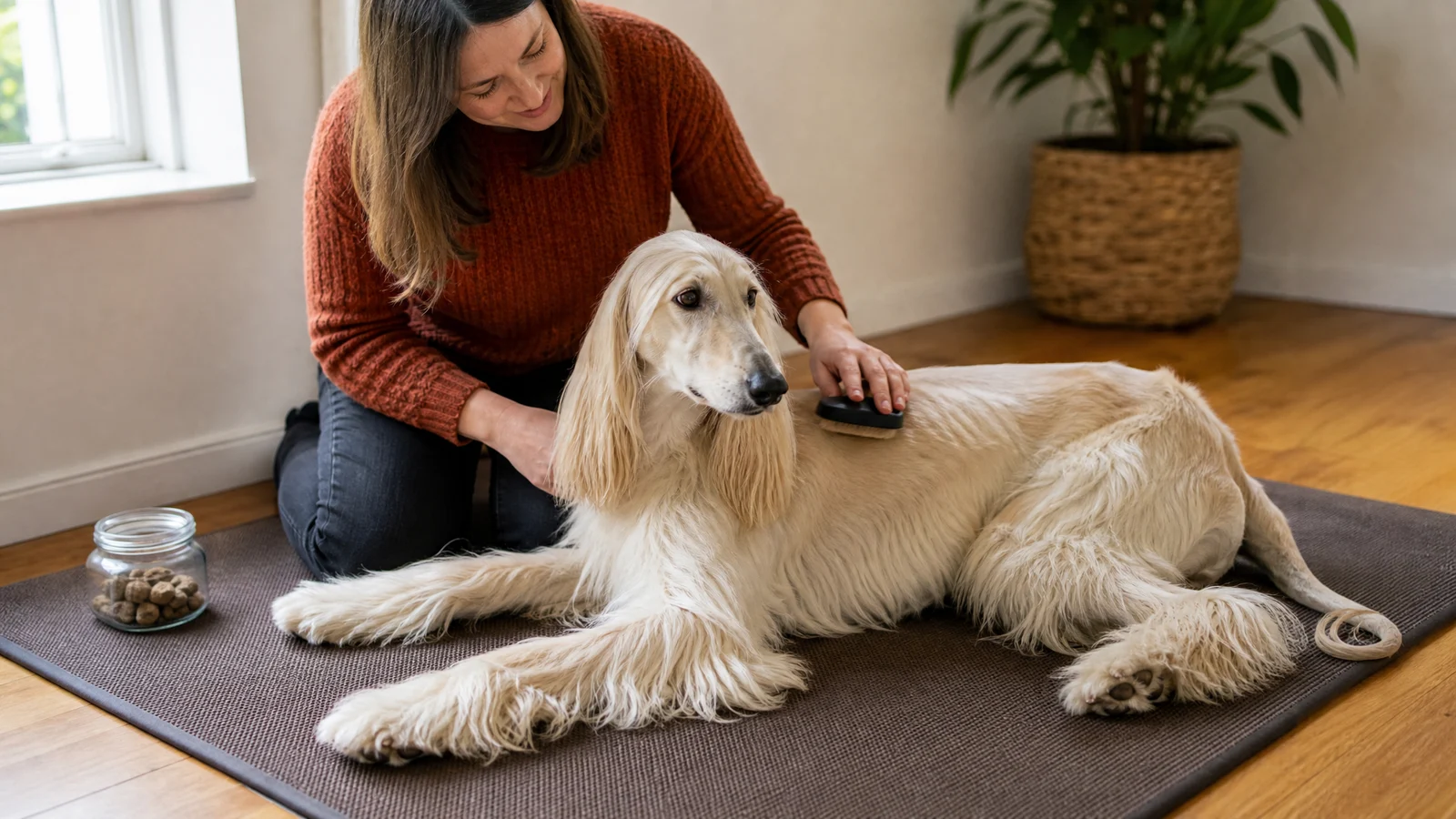
Should you wait out the awkward coat phase before training? Owners ask this once the soft puppy fluff gives way to something longer, patchier and harder to brush. The usual reply, keep sessions short, answers only the training half of the problem.
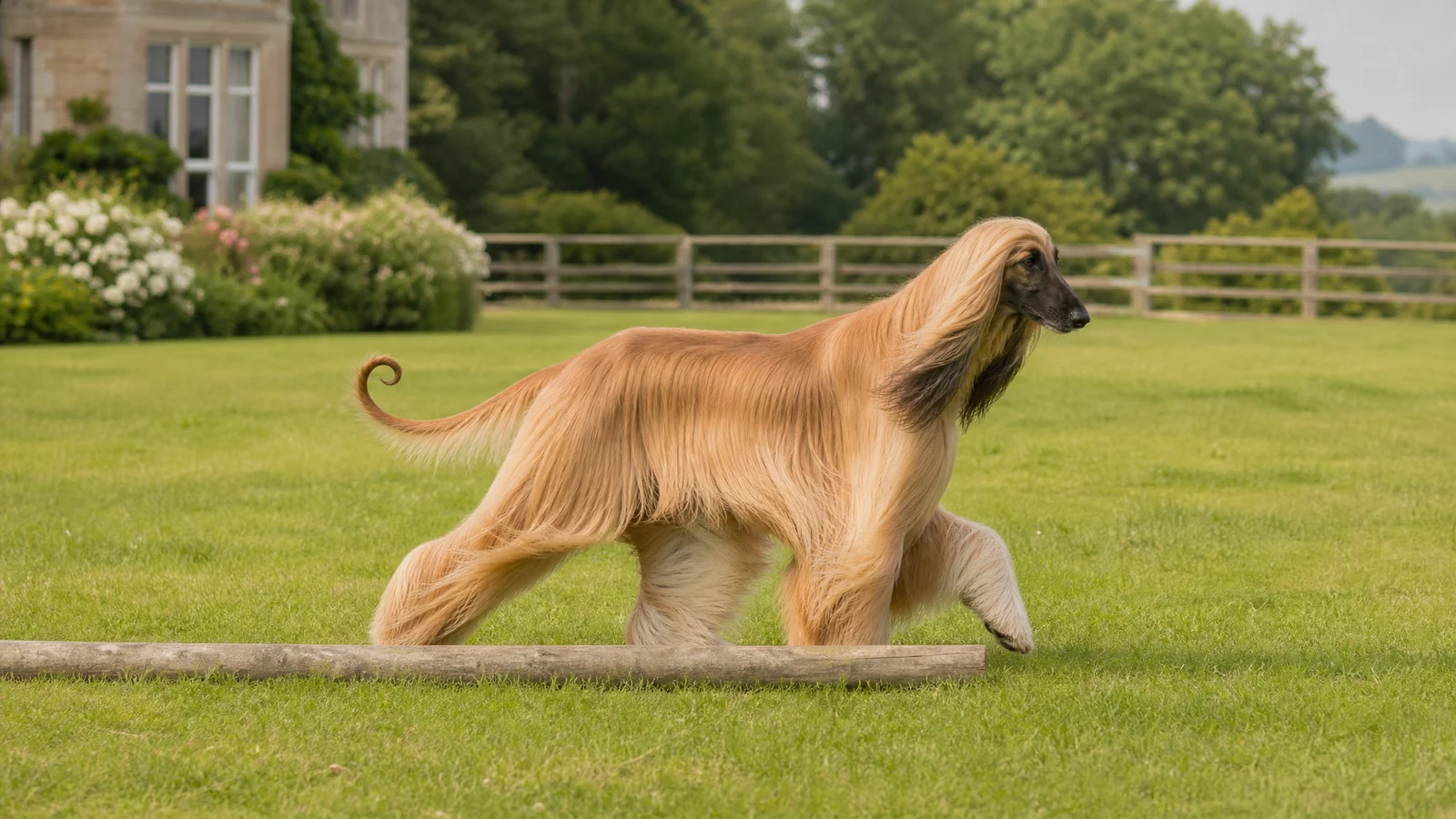
An Afghan Hound is shown in a natural state, never clipped or trimmed, and grooming frequency is rated 4 of 5, where 3 means weekly and 5 means daily. Short sessions suit a young puppy's attention, but they say nothing about the brush, the comb and the hands this coat will need for life. A puppy who skipped handling for a few weeks meets all of it as a surprise.
We'll walk you through the themes that surround this coat, early handling, the in-between stage, tangles, rewards during heavy coat change and the adult coat, then a practical two-week plan to begin today.
What Coat Changes Mean for Afghan Hound Puppy Training
Several themes run through coat care and training in this breed, and seeing them side by side explains why the advice below keeps pairing the two. The coat is meant to stay natural, and the national club asks breeders to be guided by the breed standard, so the care routine is yours to build and to keep up for the dog's whole life.
- The coat moves through stages, from soft puppy fluff to an uneven in-between look to the heavier adult coat, and each stage feels different under a brush and under your hand.
- Trainability is rated 1 of 5, labeled self-willed, so cue practice depends on rewards the puppy truly wants and on stopping a beat before interest fades.
- The temperament is described as aloof and dignified, and shyness is a listed fault, so handling has to stay pleasant and predictable from the first day.
- Shedding is rated 1 of 5, so hair on the floor will not announce that the coat is changing. Your fingers and eyes will, which means checking the coat by hand every few days.
Each theme returns in its own section, and the advice follows one thread: pay for handling, pay for cues, and keep both going whatever the coat is doing this month.
Fluffy Puppy Months in Afghan Hound Puppy Training
The soft puppy coat forgives a great deal, which makes these weeks the best time to turn the brush into something good before it has any real work to do. Begin with the brush lying on a non-slip mat and a few treats scattered beside it, much as trainers introduce a muzzle. The puppy eats next to the brush, and before long the brush predicts food.
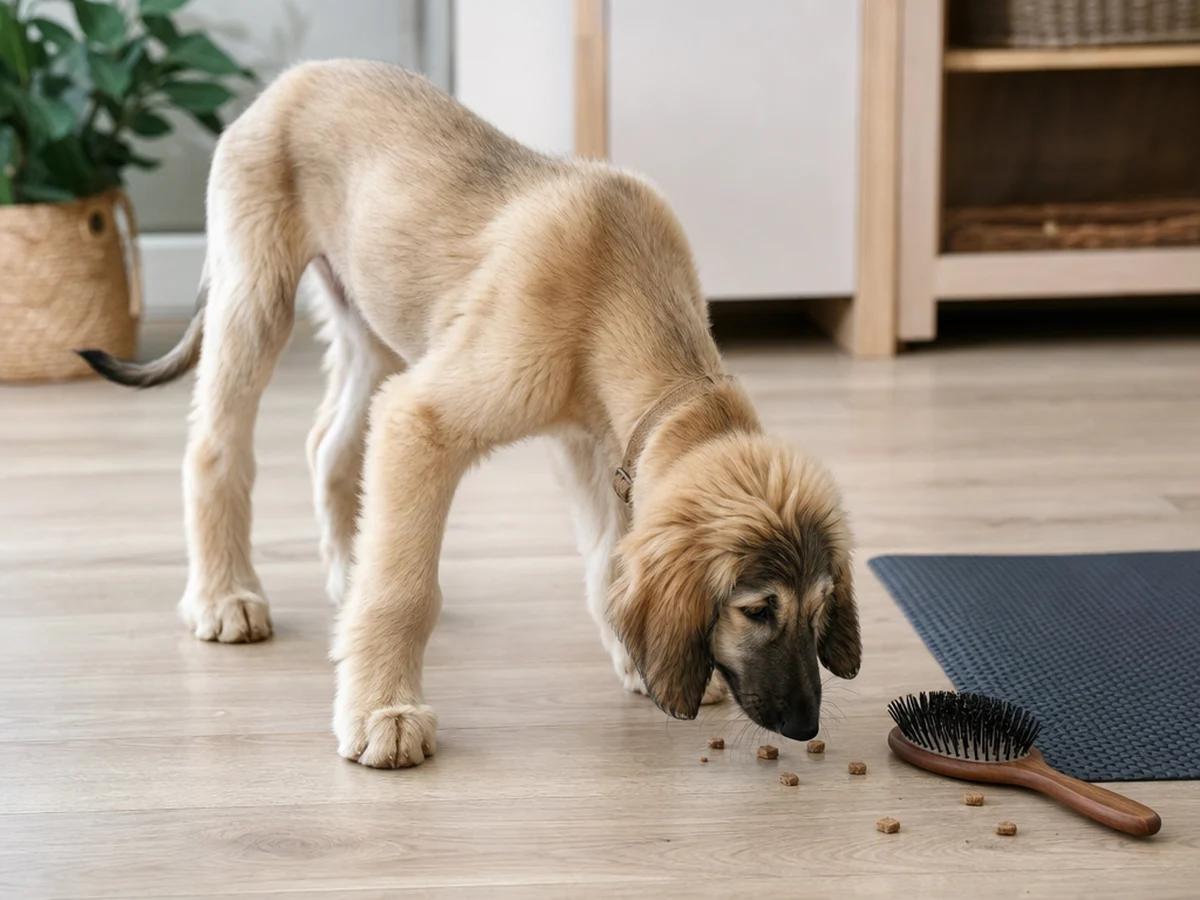
Touch comes second, and where your hand lands matters. Heads, feet and a hand reaching over from above are the touchiest spots for most dogs learning to be handled, so start on the chest or shoulder and come in from the side. Over several calm evenings, the steps run like this.
- Leave the brush on the mat with treats around it and let the puppy eat without any touching.
- Rest a hand on the chest or shoulder for a moment, then mark with your chosen word and feed a treat.
- Add one slow stroke of your hand along the shoulder, then mark and feed again.
- Show the brush, give a treat, make one soft brush stroke on the chest or shoulder, and feed once more.
- Stretch the strokes toward the side and back, paying after every stroke at first and after every few strokes later.
- Stop while the puppy's body is still loose, then release them into a short game.
Paws, ears and legs wait until the brush is welcome, and our guide to Afghan Hound paw and ear checks covers them step by step. Regular vet visits belong in this picture too, because an exam room is one more place where being handled should pay off, and a puppy who already trusts your hands copes far better with a stranger's.
Does Puppy Training Stall When the Coat Turns Awkward?
It does not have to, though the in-between stage is where many owners let sessions drift. The soft coat lengthens unevenly, the brush drags where it used to glide, and a shoulder that was easy last week may now get tugged away from you. Timing varies from dog to dog, so watch the coat under your fingers rather than the calendar. Nothing about the habit needs to change, only the shape of each session.
Cue Practice Stays Exactly Where It Was
Cues need no coat at all, so name response and sit on the mat keep the same times of day, the same treats and the same marker word. Energy is rated 4 of 5, so a short burst of movement beforehand helps the puppy settle enough to look at you. These sessions are also the reliably easy part of the day, and those easy wins keep a puppy cooperative on the days when the brush is harder.
Handling Practice Shrinks Before It Grows
Handling is the part that shrinks, and it should never vanish. Return to the easy areas such as the chest and shoulder, cut each session short, and raise the pay.
A stretch of almost boring handling costs far less than a long break followed by a fresh start, and in a dignified, aloof hound a surprise is what produces the stiff body and the quick exit. We have spent a long time around this breed's training, and the surest way to lose a puppy's trust in the brush is to bring it out only when it has become urgent.
Matting Worries That Interrupt Puppy Training Cues
Tangles set a quiet trap. You find a knot, hurry for the comb, and the puppy learns that the brush shows up when something unpleasant is about to happen. Before long the puppy ducks away from it, and the same ducking begins to appear in cue sessions that have nothing to do with grooming. The remedy is to keep the two jobs apart in time and make each one easy on its own.
Hold cue practice at moments with no brush in sight, such as after a meal or after play, so a name call never reliably means grooming comes next. If you do use the name cue during brushing, pay for the turn toward you and then end that moment cleanly. The puppy learns that responding always pays, and the brush never becomes the place every cue leads.
When you find a tangle, hold the hair close to the skin so no pull reaches the puppy, work a small section at a time, and feed after each short stroke. Spread the job across several days instead of finishing it in one sitting, because a knot can wait a day while trust in the brush takes much longer to rebuild. If the puppy keeps avoiding one spot even after the work is easy, or the skin there looks sore, mention it at the next vet visit.
How Do You Reward an Afghan Hound Through Shedding?
Heavy coat change can leave a puppy touchier and less interested in training, so the reward has to carry more of the session. Shedding is rated 1 of 5 for this breed, yet the coat still loosens and shifts, and the puppy feels it on their skin. Pay generously, keep sessions brief, and let the puppy choose to stay in the game.
Food Rewards That Hold Attention
With trainability rated 1 of 5, praise alone seldom carries a session. During coat change, swap the everyday treat for something softer and tastier, and keep the pieces tiny so the puppy can keep working. Mark the right moment with the same short word and deliver the treat at once. Pay for the first calm second of a brushing session as well as for the sit, and the puppy learns that holding still is itself worth something.
Touch and Life Rewards
Touch works as a reward only if the puppy enjoys it, and an aloof hound often wants less contact than owners expect. Offer one slow stroke on the chest or shoulder and watch whether the puppy leans in or leans away. Life rewards help just as much, such as the door opening for a walk or a few steps of fast play, since energy is rated 4 of 5. End on one of these and the brush becomes the doorway to something good.
Adult Afghan Hound Coat Arrives and Cues Stay Put
When the adult coat comes in, longer and heavier and more demanding, nothing in the training needs to restart. The mat, the marker word and the treats stay the same, and what grows is the handling time. Because the grooming rating of 4 of 5 sits between weekly and daily care, check what your dog's coat needs and spread the work over short sessions instead of one long one.
Keep teaching well past puppyhood. Training an older dog still works with patience, and rusty behaviors can be polished when they slip. If your Afghan has gone a few weeks with little practice, return to the first steps for a day or two and rebuild without fuss.
Our month-by-month Afghan Hound training timeline shows where new cues fit as the coat matures, and a new one should wait until name response and sit are easy. The puppy who learned to like the brush will usually meet the adult coat with the same calm.
Two Weeks of Steady Training Through Every Coat Stage
This plan pairs one cue with a few minutes of rewarded handling each day. Match the handling to the coat stage in front of you: longer strokes on soft fluff, easy areas only in the awkward stage, and short check-ins on the adult coat. Move on only when a step looks easy for your puppy.
- Days one and two: set out the mat, brush, comb and treats, scatter treats around the brush, and practice the name cue once or twice.
- Days three and four: add a hand on the chest or shoulder with a mark and a treat, and practice sit on the mat.
- Days five and six: add one soft brush stroke on the chest or shoulder, then a treat, and run the cue session before it.
- Day seven: rest from handling and offer a play session and a treat scatter instead.
- Days eight and nine: lengthen the strokes toward the side and back, feeding after each, and keep the name cue separate from brushing.
- Days ten and eleven: begin gentle paw and ear touches with a treat for each, going back a step if the puppy hesitates.
- Days twelve to fourteen: join one cue and a short brush session into a single routine, ending on a game every time.
What matters most is that coat care and training are one project for your Afghan, not two. A natural coat rated 4 of 5 for grooming and a trainability rating of 1 of 5 mean a puppy needs generous pay for cues and for being touched, and a few minutes each day of both will carry them through every stage. Adjust to the coat you have this month, keep paying calm handling, and the coat will change around a dog who already trusts your hands.
 Puppy trainingHow to Stop Afghan Hound Puppy Biting
 Training basicsHow to Teach an Afghan Hound to Sit
 BehaviorHow to Teach an Afghan Hound to Jump Over Obstacles