 Afghan Hound
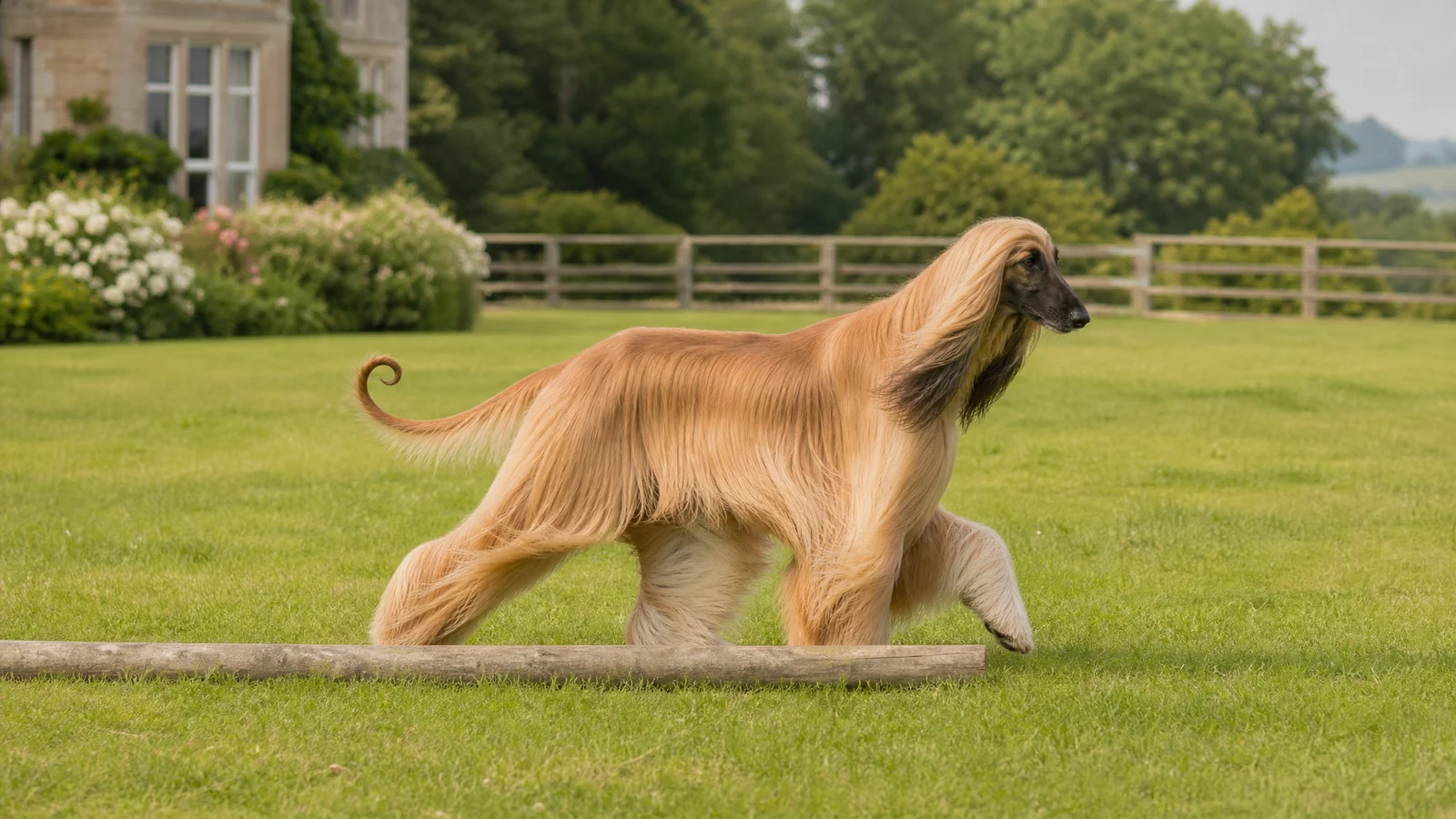
Start Afghan Hound obstacle training with a ground-level crossing that the individual dog can approach willingly, not with a fixed jump height. A dog who can clear something has not automatically shown that formal jumping is appropriate.
The first lesson can be a step over an object resting on the ground. Suitable footing, open approach and landing areas, and a yielding object matter more than making the exercise look athletic. That conservative start lets the handler observe movement and willingness before adding a cue or making the setup more difficult.
This guide separates secure management from a trick, prepares both sides of the crossing, teaches one voluntary sequence and keeps higher physical demands outside the method.
An Afghan Hound's Jumping Ability Is Not a Training Target
An Afghan Hound's movement ability is not a clearance decision for a particular obstacle. Training should begin with what this dog can do comfortably in this setting, while age, health, prior experience and footing remain individual considerations.
AKC breed guidance describes a strong pursuit instinct and advises against off-leash walking. That supports secure fencing and attached equipment as management. A jump cue is never a substitute for a boundary, and this article does not teach fence clearing.
Keep outdoor access and the trick separate. The Afghan Hound recall training guide owns safe sprint and return arrangements, while this page owns one controlled crossing in a prepared area.
Choose a Safe Ground-Level Jump Setup
Prepare a non-slip route with enough clear space for an unhurried approach and exit. Use an object that stays visually obvious but can move or fall away if contacted, and remove nearby furniture or equipment that could turn a simple step into a collision.
AKC obstacle guidance recommends keeping practice obstacles low, using non-slip footing and choosing materials that will not injure a dog if struck. Those principles support a ground-level start without supplying a progression target.
Before the Approach
Let the Afghan inspect the area without being pulled toward the object. Place the starting point where they can see a direct path, then stand so your body does not block an easy retreat or funnel them toward the obstacle.
Puppies need an especially conservative plan. PDSA puppy exercise guidance says to limit jumping, twisting and skidding while puppies grow, provide non-slip footing and ask the veterinarian about individual suitability.
Beyond the Obstacle
Keep the landing side as plain as the approach. Put the reward beyond the object so forward movement has a clear destination, but avoid tossing it where the dog must skid, turn sharply or compete with another animal.
Routine veterinary care belongs in the dog's broader support outside training. Pause this physical trick if movement, willingness or comfort changes, and ask the veterinarian about a new or persistent concern before resuming.
Stop the lesson when the setup or the dog's response no longer supports an easy crossing. These signs call for less demand, not persuasion:
- The object shifts unpredictably or no longer yields safely when touched.
- The approach or landing area becomes slippery, crowded or distracting.
- The dog repeatedly detours, backs away or chooses not to approach.
- Movement or willingness changes during a session that began comfortably.
A General Jump Method Starts at Ground Level
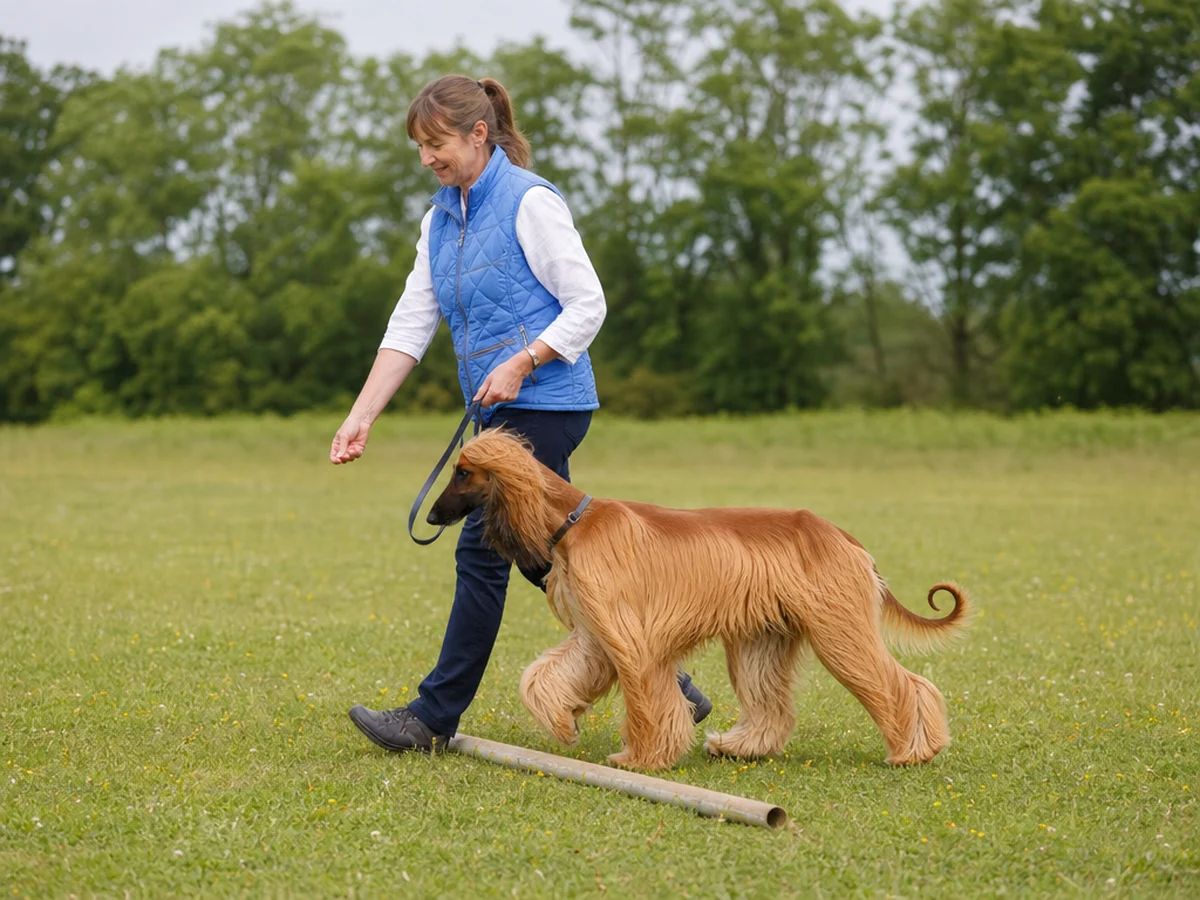
Use a cue, precise marker and valued reward to make the wanted crossing clear. The veterinary behavior position statement describes reward-based training with cues, markers and reinforcers. Blue Cross training guidance supports teaching a marker's meaning by consistently following it with something the dog values.
The sequence begins with an object resting on the ground and remains voluntary. Do not pull the leash, chase the dog toward it or use the reward to draw them through a setup they are trying to avoid.
- Invite the Afghan to approach from a clear, non-slip path without adding the cue.
- Mark and reward looking at or moving toward the object while the dog remains comfortable.
- Allow the dog to step across the ground-level object, with the reward placed beyond it.
- Mark the completed crossing and deliver the reward where forward movement ends safely.
- Reset by walking around the object, restoring the same easy approach before another choice.
Add a verbal cue only after the crossing is already predictable from the prepared setup. The cue should name this voluntary action, not pressure the dog to continue when they stop or choose another path.
The complete activity plan remains with the Afghan Hound exercise guide. A few controlled crossings are a learning task, not a daily athletic-work plan.
Afghan Hound Obstacle Questions
The method covers setup, approach, reward placement and a later cue. Three practical gaps remain about keeping the exercise at ground level, naming the action and positioning a helper without turning that person into a lure.
- Can crossing a ground-level object be the complete exercise?
- Yes. The useful skill can remain a calm, voluntary crossing over an object resting on the ground. Nothing in this method requires raising it, and individual advice governs whether more athletic work is suitable.
- What word should cue the obstacle crossing?
- Choose one short word that the household is not using for another action. Say it only after the prepared setup already predicts a comfortable crossing, then mark and reward the completed action.
- Can a helper stand beyond the obstacle?
- Yes, if the helper stays quiet, leaves the route open and delivers the reward without pulling the dog forward. Move or remove the helper if their position creates crowding, excitement or hesitation.
Keep the Crossing Easy Instead of Raising the Bar
We recommend defining success by whether the Afghan can approach, cross and leave the setup comfortably. It does not create a requirement to add height, speed or repetitions, and enthusiasm on one day does not settle suitability for a more demanding version.
Preserve the ground-level option whenever it remains useful. If the setting changes or the dog hesitates, return to a clear path and an object resting on the ground, or pause the trick and seek individual veterinary guidance before adding physical demand.
 Exercise and jobsHow to Teach an Afghan Hound to Shake and High Five
 Training basicsIs an Afghan Hound the Right Dog for You? What Training Takes
 BehaviorHow to Stop an Afghan Hound Pulling on the Leash