 Afghan Hound
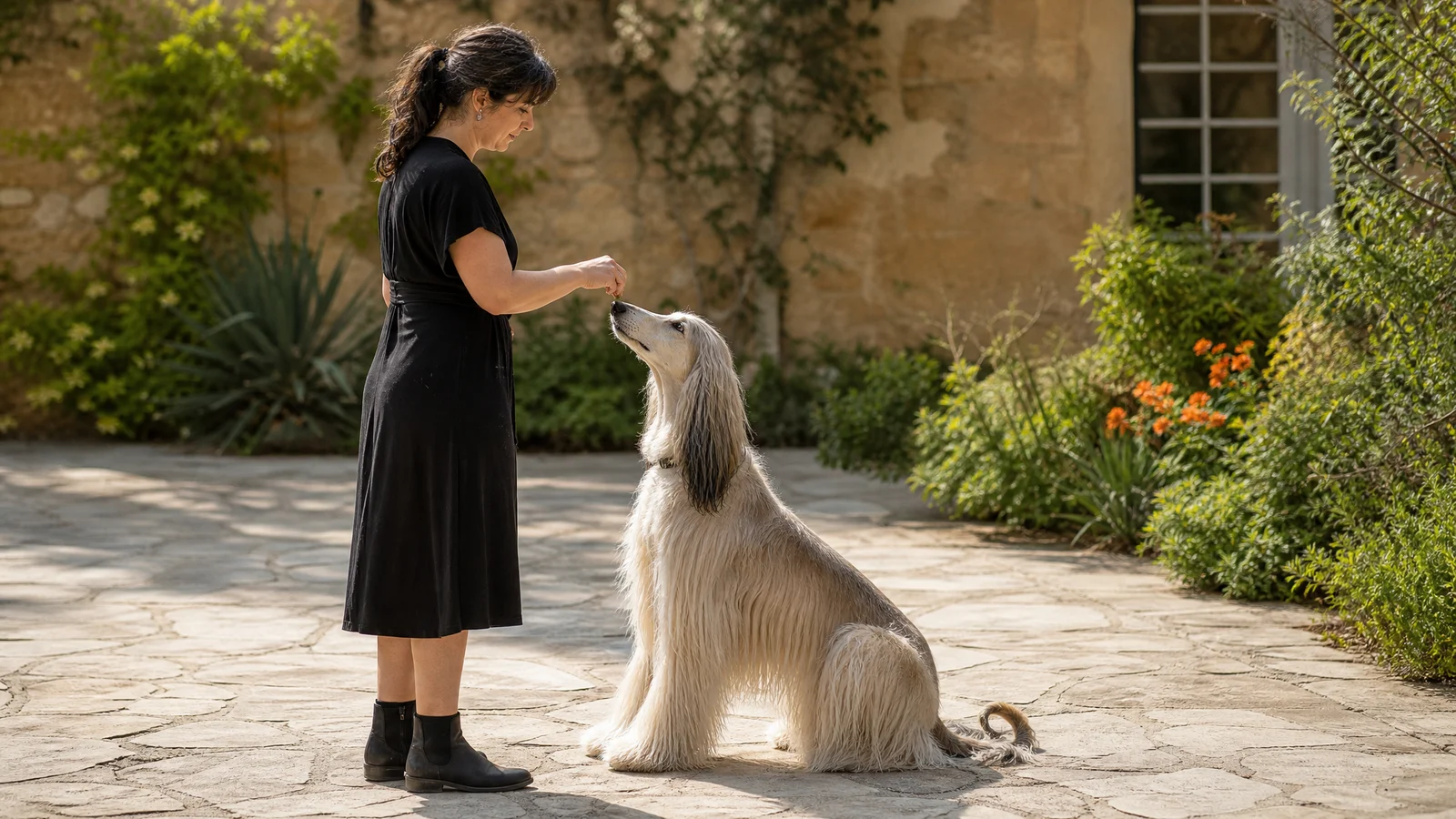
Teach an Afghan Hound to sit by rewarding a comfortable, voluntary movement into the posture, then add the word only after that movement is predictable. Use secure footing and enough room for the dog to shift their weight. Never press the hips down or hold the dog in position.
The lesson begins with a setup the dog can leave, follows the path of the reward hand, and ends before repeated words replace clear information. In this guide, we begin with that sequence, separate a movement problem from a cue problem, answer practical household questions and keep sit available as a brief skill rather than a compulsory posture in daily life.
A Sit the Afghan Hound Can Choose
Start on a level, non-slip surface with open space behind the dog. A sit requires the rear to lower while the front remains organized, so a dog who feels crowded by a wall, furniture or the handler may step away instead. Let the dog stand naturally before presenting the reward.
The UKC Afghan Hound standard describes an independent thinker. That description does not prove how one dog will learn, but it supports giving the individual a clear choice rather than treating hesitation as deliberate defiance. The setup should make the wanted movement easy to discover and easy to decline.
Check the training space before bringing the reward hand into position. These details keep the lesson about one voluntary posture:
- Choose flooring where the dog's feet do not slide as their weight moves back.
- Leave room behind the dog so the rear can lower without touching an obstacle.
- Keep the leash loose and use it only for ordinary physical security.
- Place the reward where the dog can collect it without twisting or scrambling forward.
- Plan a release so the dog knows when the close-position task has ended.
Build Sit From the Reward Path
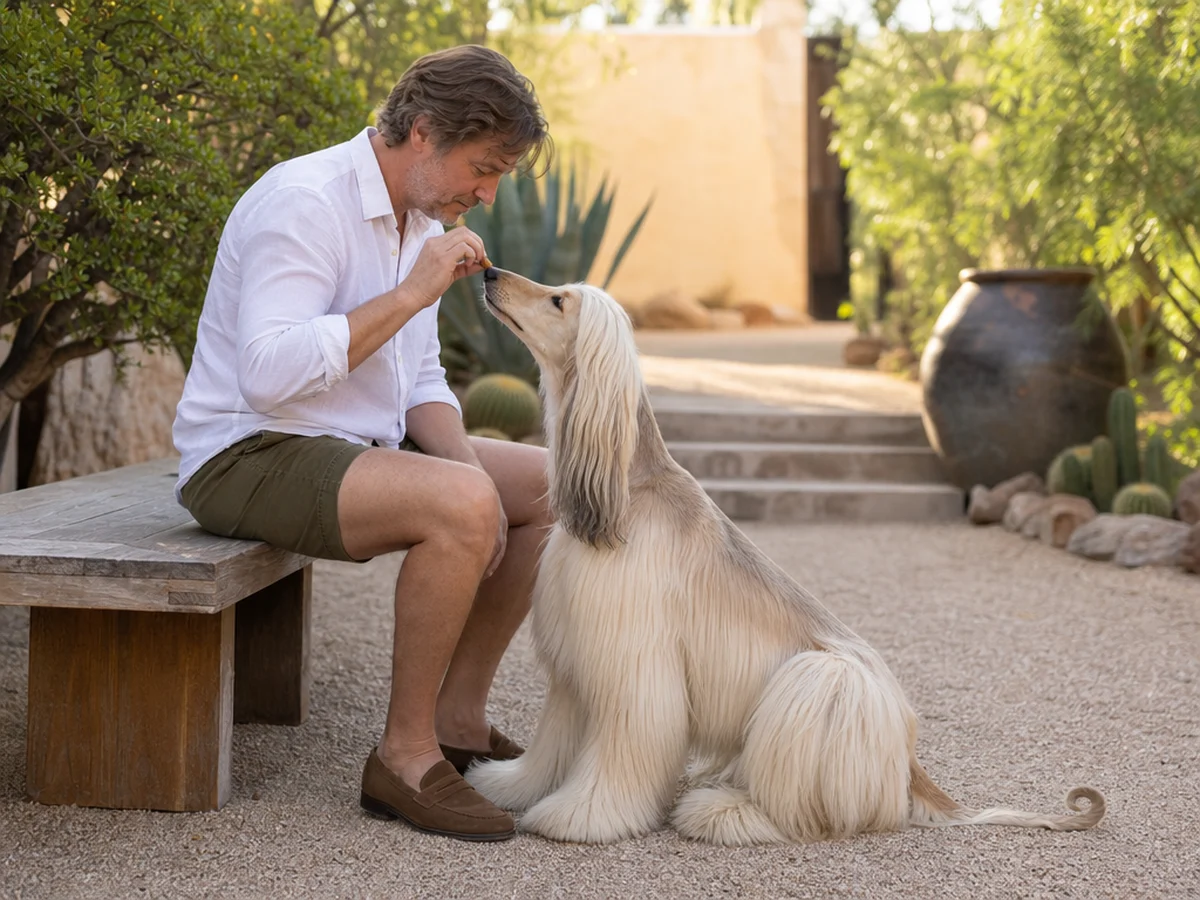
The general method is to guide one manageable movement, mark its completion and reward it. RSPCA sit guidance uses a lure to guide the action and rewards the completed position. The lure is information for the first movement, not a tool for pushing or trapping the dog.
- Show the route. Hold a small reward near the dog's nose without pressing it into the muzzle.
- Guide up and slightly back. Move slowly enough for the head to follow while the rear has space to lower.
- Mark the completed sit. Use the chosen marker as the rear reaches the floor, before the dog begins another movement.
- Reward in position. Deliver where the dog can remain balanced, then give the release and allow them to stand.
- Reduce the visible guide. Repeat with a smaller empty-hand motion, and add the spoken cue only when that motion reliably predicts the sit.
Precise timing distinguishes the posture from the movements around it. Battersea clicker guidance places the marker on the wanted behavior and follows it promptly with the earned reward. A verbal marker can serve the same job if the household uses it consistently.
Once the dog is responding to the smaller hand motion, say the sit cue once just before that known signal. Do not repeat the word while moving the reward around. Blue Cross training guidance supports pairing a clear marker with something the dog values, which keeps the lesson focused on what earned the outcome.
Troubleshoot the Sit Movement Before Repeating the Cue
When the Afghan steps backward, turns away or remains standing, pause before changing the word. The dog may need more room, a slower reward path or a surface with better traction. Reset in a neutral stand and change one part of the setup rather than following the dog with the lure.
When the Rear Does Not Lower
Check where the reward hand travels. A hand that moves forward can invite walking, while one held too high can encourage jumping or a stretched neck. Bring the next attempt closer to the nose, use a smaller arc and stop if the dog must strain to follow it.
Capturing is another option when the dog already sits comfortably on their own. Wait without giving the cue, mark a naturally offered sit and deliver the reward. After several clear opportunities, the smaller hand signal can be introduced before the movement, followed later by the spoken word.
When Comfort Changes
Stop the lesson if sitting becomes hesitant, uneven or different from the dog's ordinary movement. Do not use extra lure pressure to test the posture. Keep regular veterinary visits part of routine care and ask the veterinarian about a new or persistent movement concern before resuming the exercise.
Record what was observable: the surface, starting position, direction of the reward hand and the movement the dog chose. Do not guess the cause or assign intent. A short factual note helps the household avoid repeating the same difficult setup and gives the veterinarian useful context if advice is needed.
Afghan Hound Sit Questions for Daily Life
The method has covered setup, reward placement, marker timing and the later spoken cue. Three practical gaps remain about using more than one signal, keeping rewards fair and documenting a posture that suddenly looks different.
Can a hand signal and spoken sit cue coexist? Yes. Teach each signal against the movement the dog already understands, and introduce only one new signal at a time. Use the spoken word before the familiar hand motion, then gradually allow either signal to predict the same voluntary sit.
Does an Afghan Hound need to sit before every reward? No. Reward many useful choices without charging a sit as the entry price, especially when standing or moving is more comfortable. Sit is one clear cue for one posture, not a rule that controls every meal, greeting or valued activity.
What should the household record if sitting looks uncomfortable? Note the surface, location, starting posture and exactly what changed in the dog's movement. Pause the cue and share a new or persistent concern with the veterinarian rather than asking family members to repeat the sit for proof.
Sit as a Short Optional Skill
Use the cue in one calm context where the posture has a clear beginning and release, such as a brief indoor training turn on secure footing. The approved Afghan Hound trainability guide owns the broader question of reward-based learning. This page keeps the task narrow: one comfortable sit, one marker, one earned reward and a deliberate finish.
Judge the lesson by whether the dog can understand the signal and choose the movement without being positioned by hand. If the sit becomes slower or uncertain, return to the easier setup or stop. A useful cue preserves comfort and clarity instead of making the posture compulsory throughout the day.
 BehaviorHow to Teach an Afghan Hound to Jump Over Obstacles
 Exercise and jobsHow to Teach an Afghan Hound to Shake and High Five
 Training basicsIs an Afghan Hound the Right Dog for You? What Training Takes