 Afghan Hound
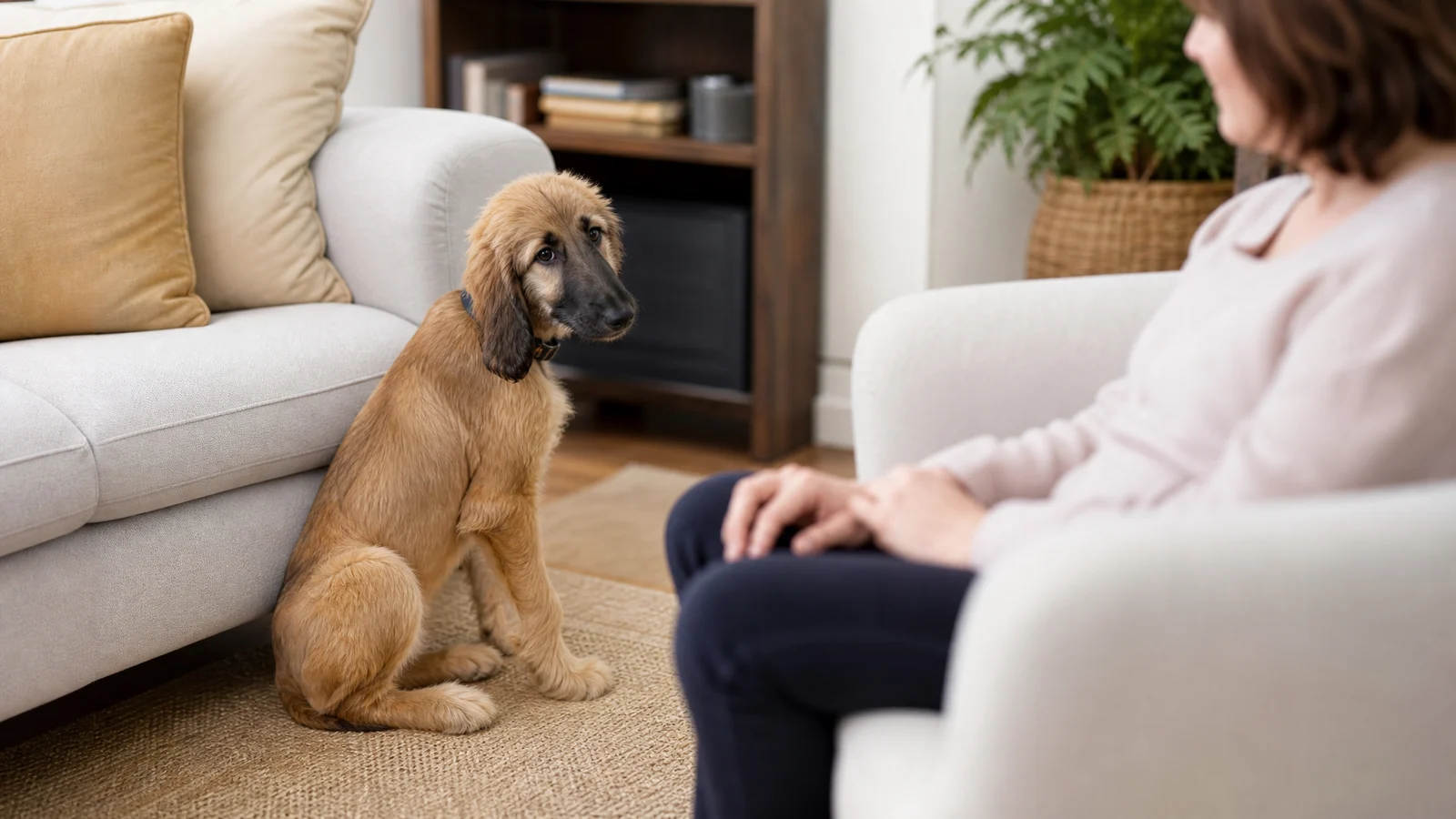
An Afghan Hound puppy's social calendar has a few dates that matter. A normal fear period can show up at 8 to 11 weeks, and adolescence can rattle a confidence you thought was settled as your puppy nears 6 months. Gentle exposure between those dates helps, so for an aloof breed the real question is when to do what.
Handled badly, a sensitive puppy slides from aloof into shy, and the breed standard counts sharpness or shyness as a fault. Handled well, the same puppy becomes a calm, self-possessed adult who tolerates the world and saves their warmth for you.
We'll walk you through the socializing window and what a good first exposure looks like, then strangers, children, other dogs, adolescence and adult upkeep, in the order they usually arrive.
Afghan Hound Puppy Training and the Socialization Window
A puppy who hangs back at the edge of a gathering, body loose and eyes soft, is doing what this breed is built to do. Whether that watching stays calm curiosity or hardens into worry depends on the early months, so timing matters more than the sheer number of new things your puppy meets.
Breed ratings put openness to strangers at 3 of 5, a middle score that reads as ambivalent. Your puppy will not greet everyone like a friend, and they are not wired to fear people either. Good early experiences pull them toward calm tolerance. Skipped experiences let the same sensitive nature drift toward worry.
Aloofness Versus Shyness
An aloof puppy notices a stranger, keeps some distance, and carries on with their own business. The breed is described as dignified and aloof with strangers, and that is a trait to keep. A shy puppy freezes, hides behind your legs, refuses food, or stares at a person long after that person has gone still.
Use food as the test. If your puppy takes a treat a few steps from a stranger, you are seeing reserve and can continue. If they refuse a treat they would normally grab, the distance is too short or the puppy is worried, so back up instead of pushing on.
Why the Standard Cares
The breed standard lists sharpness or shyness as temperament faults, and another major standard disqualifies extreme shyness. The reason is that a sensitive dog can tip either way, and your early exposure choices are your share of keeping the balance on the calm side.
Fear periods belong to the same story. Battersea notes that normal fear periods can appear at 8 to 11 weeks, with a second wave in adolescence from about 6 months, so keep experiences gentle during these weeks. If your puppy suddenly balks at something familiar, keep going but shrink the exposure and follow their pace.
What Makes a Good First Exposure
A good first exposure is short, calm, and over before the puppy has had enough. Judge it by your puppy's behavior, not by how many new things you ticked off a list.
- The puppy can see the new person, dog, or place and still eat, sniff, or glance back at you.
- The puppy can walk away whenever they like, since you let the puppy withdraw when uncomfortable, and you save your praise, play, and treats for calm, curious, or neutral interest.
- Something good happens during it, such as a treat, a soft word, or a gentle game.
- You stop while the puppy is still relaxed, not after the first sign of trouble.
Until your veterinarian confirms that vaccinations make public ground safe, bring the world to your puppy. Calm visitors at home, car rides, new floor surfaces, household sounds, and a carried tour of a quiet spot all count, and they suit a breed that does best when new things arrive one at a time.
This is general information, not veterinary advice. Ask your veterinarian when your puppy's vaccinations make parks, stores, and other dogs' spaces safe, and follow that schedule.
Meeting Strangers Early in Puppy Training
Most visitors do the same thing on meeting an Afghan Hound puppy: they lean over, reach for the head, and coo. For a sensitive dog who already studies newcomers carefully, that reads as pressure, and the usual answer is to back away. Common advice says to let as many people as possible handle your puppy, but for this breed fewer and better wins.
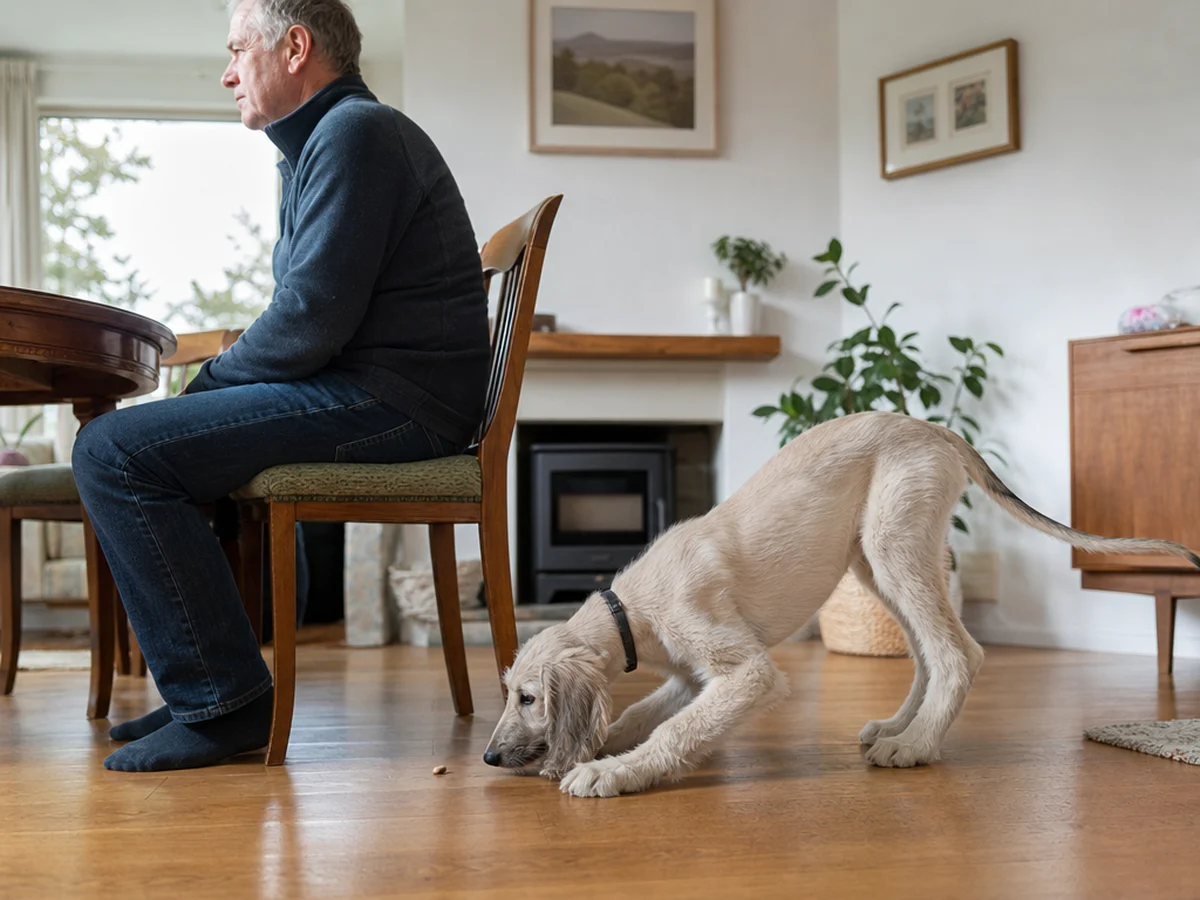
We specialize in how Afghan Hounds act and learn, and what works is steady: the puppy decides, and the people stay pleasantly boring.
Let the Puppy Approach
Ask guests to sit in a chair, turn slightly sideways, and ignore the puppy. If the puppy wanders over, the guest can drop a treat near their own feet or offer an open, low hand below chin height. If the puppy stays across the room, that is a fine visit too, and you can reward them for watching calmly.
Never carry the puppy over for a greeting or hold them still for petting. A puppy who learns that approaching is optional becomes a puppy who approaches more often.
Treat-Paired Distance
Find the distance at which your puppy notices a stranger but still eats. Feed a steady stream of treats while the person is visible, and stop when the person leaves. The stranger's appearance then predicts food, which turns a worrying event into a good one.
Over several sessions, let the gap shrink in small steps. If the puppy stops eating, you moved too fast. Return to the last distance that worked and stay there longer.
When to End a Visit
End while the puppy is still curious, not once they are clearly troubled. These signs mean a visit has run long enough:
- The puppy turns their head or body away from the person and keeps it turned.
- A treat that would normally vanish is ignored, or taken and dropped.
- The puppy freezes, tucks their tail, or presses against your legs.
- Yawning, lip licking, or sudden floor sniffing appears out of context.
If several of these show up together, calmly move the puppy away, let them settle, and plan the next visit with more space.
Kids in Puppy Training
A child sprinting across the yard can test an Afghan Hound puppy hard, because the breed has a very well-developed chase instinct layered over a sensitive temperament. A puppy who bolts after the running child and a puppy who scrambles away from the same child are saying one thing: this is too much movement for this stage.
The breed's rating for young children is the middle one, 3 of 5, which comes with a supervision caveat, and that is your plan. An adult stays within arm's reach every time, with no exceptions. Start with calm, older children who can follow instructions, and bring in younger ones as the puppy grows steadier.
Give children a few clear rules and repeat them before every meeting:
- Sit down and let the puppy choose to come over instead of chasing.
- Pet the shoulder or chest with an open hand and never grab the face, tail, or coat.
- Walk, don't run, and keep voices low around the puppy.
- Toss treats gently toward the puppy instead of dangling them over the head.
- Leave the puppy alone in their bed, crate, or pen, always.
If the puppy gets wiggly and mouthy, the session is too exciting. Ask the children to go still and quiet, then end with a calm treat scatter. If the puppy goes stiff or leaves, shorten the next visit. Use a gate or closed door whenever you cannot watch, since a growing sighthound covers ground fast.
Other Dogs in Puppy Training
The best first dog for an Afghan Hound puppy is a calm, vaccinated adult who politely ignores them. The worst is a boisterous young dog who barrels in. In the middle months, before adolescence arrives, your choice of partner shapes your puppy's opinion of every dog they meet later.
Afghan Hounds score 3 of 5 for getting along with other dogs, which means with supervision, so treat every meeting as something you manage rather than something you hope for. Once your veterinarian has cleared your puppy, build up in steps:
- Walk your puppy and a calm dog in the same direction with plenty of space, and reward relaxed behavior.
- Close the gap a little each outing, as long as your puppy keeps taking treats.
- Allow a brief greeting on a loose leash only when both dogs look soft in the body.
- Call your puppy away in a cheerful voice before things turn tense, and reward the recall.
Pick a neutral place over either dog's home turf. Skip rough play. Wrestling piles and chase games with fast dogs can feed the breed's pursuit instinct, and a squealing small dog may set off a real chase. If your puppy looks rattled, calmly interrupt, move away, and give a break. Leaving them to sort it out alone teaches a sensitive puppy that dogs are something to survive.
Afghan Hound Adolescence and Puppy Training
A puppy who greeted visitors with interest at five months sometimes starts backing away a couple of months later. That is usually the second fear period arriving on schedule, and a sensitive breed feels it keenly. The backslide looks alarming but is normal.
Diagnose before you react. If your adolescent retreats from things they used to accept, drop back one level: more distance, better treats, fewer new things per outing. Keep the outings coming, because stopping exposure altogether teaches nothing. Steady structure and routine help a sensitive teenager feel the world is still predictable.
Also separate fear from independence. The breed is rated 1 of 5 for trainability, self-willed, so an adolescent who ignores a cue but still eats and moves loosely is being independent, not afraid. A better reward or a shorter ask fixes that. An adolescent who refuses food and ignores you is afraid, and the answer is more distance.
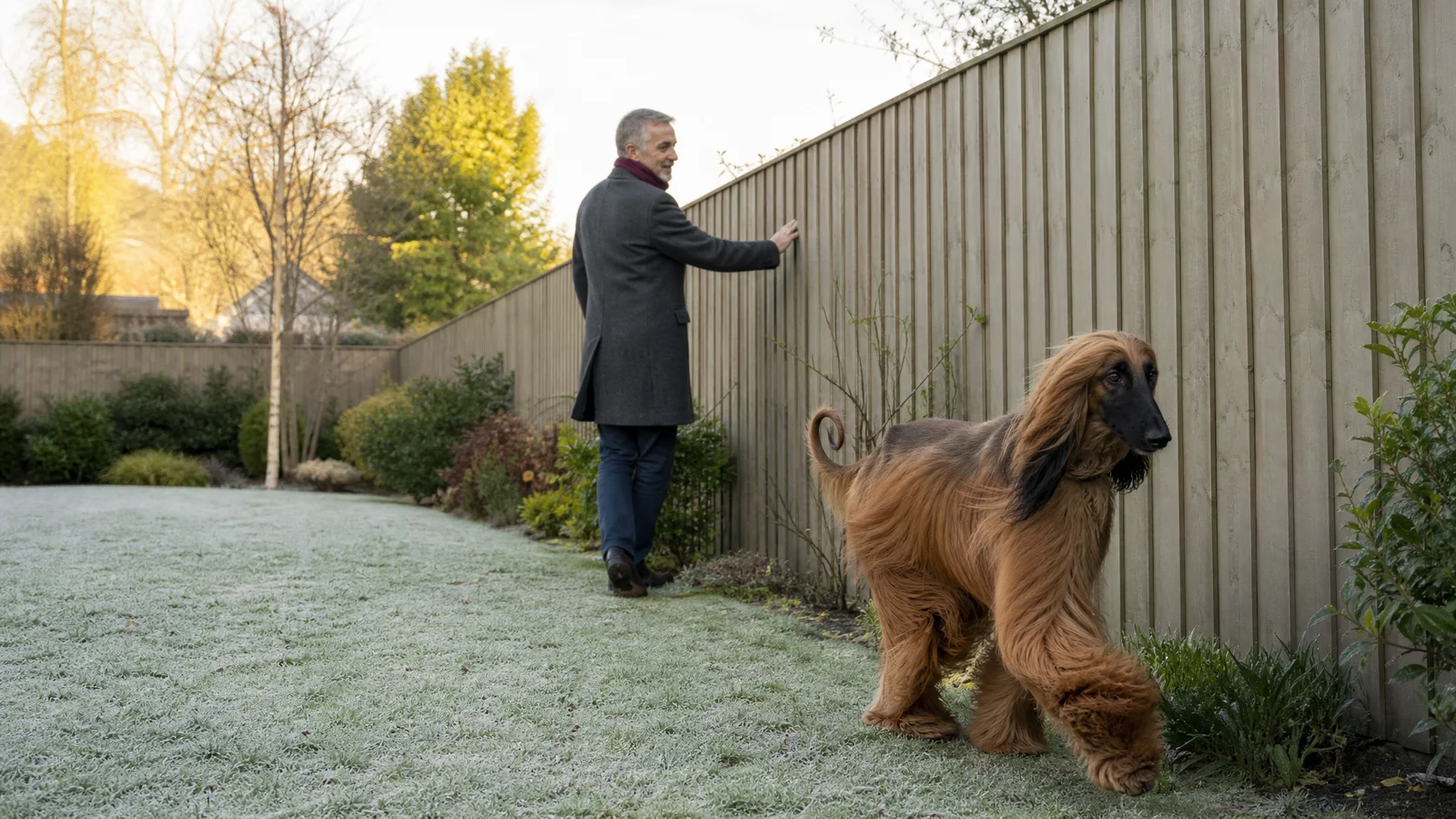
Keep safety tight in this stage. Afghans are tall, lean, and strong, which makes them excellent jumpers, and a startled adolescent can clear a low fence or bolt after anything that moves. Plan leashed outings in a secure harness, give them a high, secure fence at home, and do not count on off-leash reliability in a breed with this much chase drive.
Socializing an Adult Afghan Hound
A well-socialized adult Afghan Hound at a friend's cookout often looks like they are ignoring everyone. They lie near you, watch the crowd with a relaxed face, accept a calm hello, and drift off when they have had enough. That is the goal, not a dog who adores every guest. The adult is dignified and still reserved, and recovers quickly when something startles them.
Keeping Skills Fresh
Social skills fade without use, so keep offering short, pleasant encounters with new people, calm dogs, and new places. Reward the behaviors you built as a puppy: looking at the new thing, then looking back at you.
Grooming belongs here too. The coat is rated 4 of 5 for grooming frequency, so make handling and brushing a rewarded routine from the start, and it will feel like part of life instead of an ordeal.
Changes and New Homes
Adaptability rates a moderate 3 of 5, and the breed's loyalty can make an adult struggle to adjust to a new home. Introduce moves, new people in the household, and schedule changes gradually, using the same distance and treat work you used with a puppy.
Schedule regular veterinary visits, and call your veterinarian if a previously steady adult turns withdrawn or snappy, since pain and illness can change behavior. Beyond that, accept the reserve. An adult who stays aloof but comfortable has been socialized well.
Still Wondering About Puppy Training for Your Afghan Hound?
Aloof is the breed's natural setting, and shy is what pressure or neglect produces. Introduce people, children, and dogs early, let your puppy choose how close to come, reward calm, and slow down during fear periods, and you keep the dignity while avoiding the fear. Questions that tend to come next.
If training feels slow compared with other breeds, you can read about rewards for a self-willed Afghan Hound to see why patience pays off. And if you are wondering whether an Afghan Hound can live peacefully with a cat, you can learn how to build calm around cats in a dog bred to chase.
Whatever you tackle next, patient, early, positive exposure is what keeps a sensitive Afghan Hound from becoming a shy one.
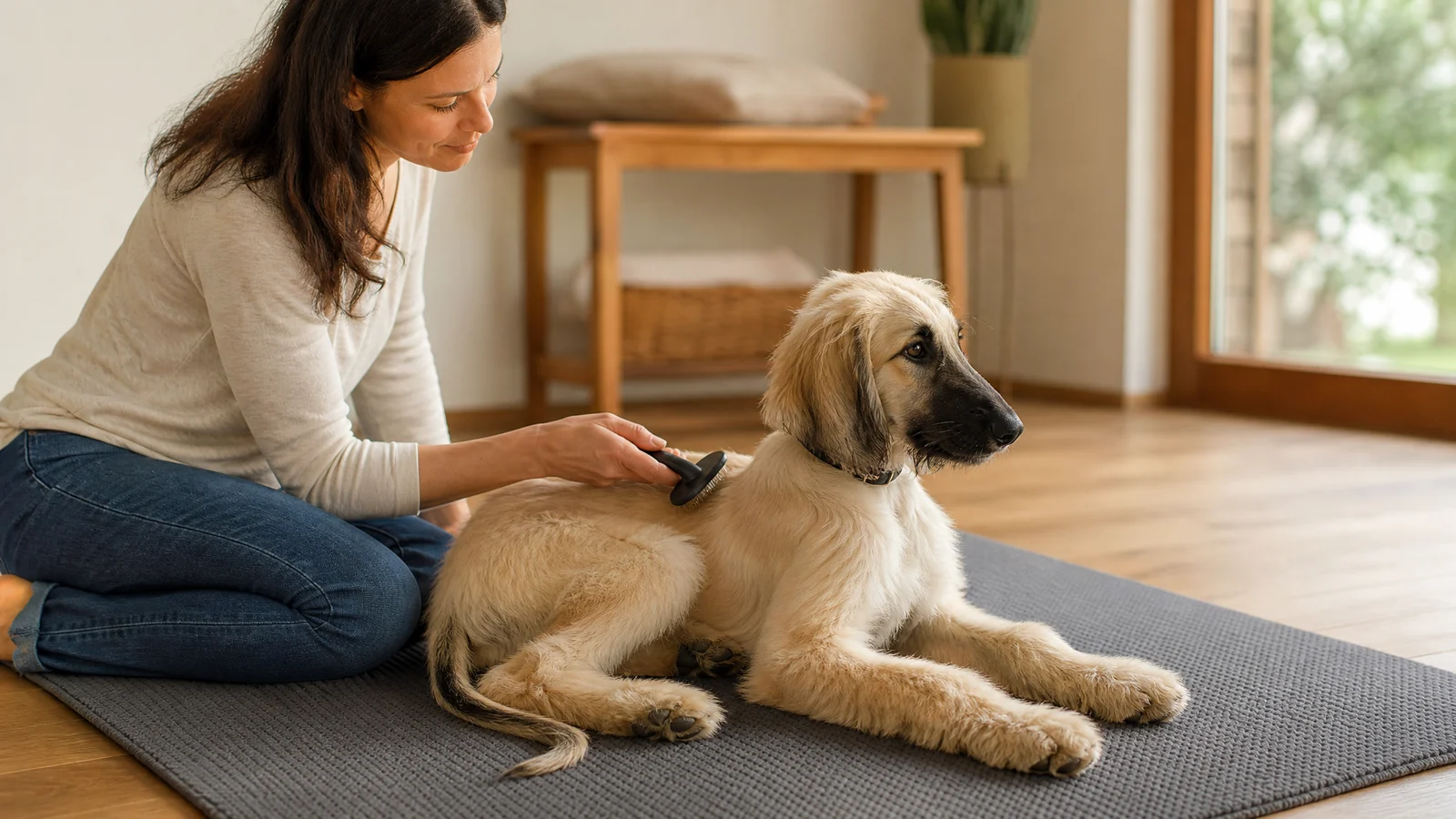 CareHow to Teach an Afghan Hound Puppy to Love the Brush
 BehaviorAfghan Hound: Sensitive to harsh tones
 BehaviorFence Rules for a Tall, Lean Afghan Hound Who Jumps