 Afghan Hound
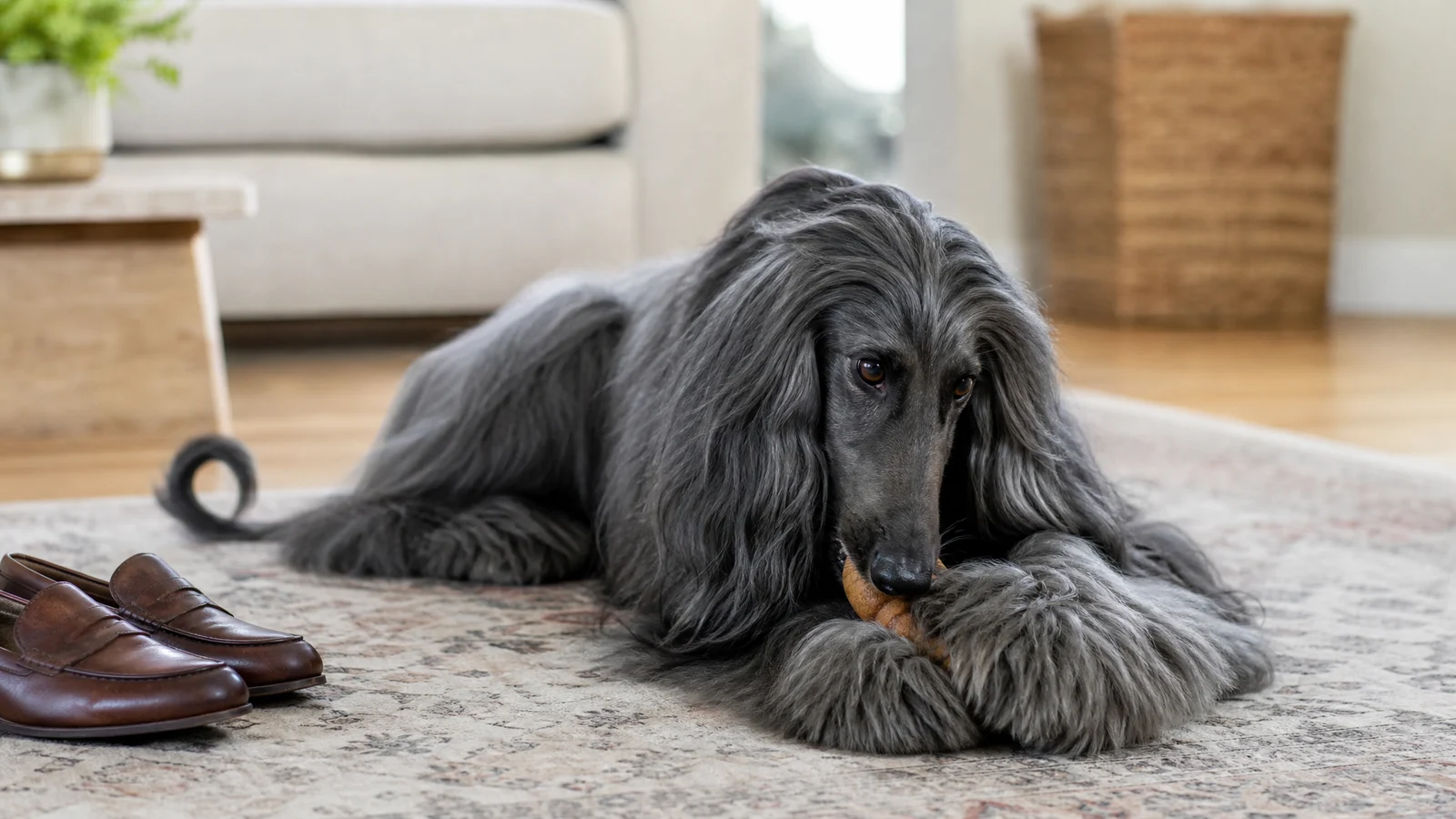
Why does your Afghan Hound keep destroying things, and what actually ends the habit? Most advice points to extra exercise and a basket of chew toys, and both help a little. Both also fall short for a sensitive, self-willed sighthound whose mouth is wired to grab things that move, because exercise alone does not give the chasing urge a target.
This guide covers destructive chewing, from the sighthound instincts behind the habit to the signs that your plan is taking hold, with the likely causes, a home setup for this week, reward-based skills, and a multi-week practice plan along the way. Handled well, you get an Afghan who settles beside you with the right chew. Handled badly, the habit hardens and the risk of a swallowed object grows.
Why an Afghan Hound's Mouth Seeks Things to Grip
Start with the job this dog was built for. Afghans are sighthounds bred to chase prey by sight, and for centuries they were rugged, fleet-footed companions to royals, tribal chieftains, and aristocrats in Asia's mountain kingdoms. None of that work involved resting on a rug while a household went about its day.
The breed's written standard describes a medium-sized sighthound who combines speed with power and agility, along with a very well-developed chase instinct. Add an energy level rated 4 of 5, put all of that in a living room, and the mouth becomes one of the few outlets available. Socks, towels, and tossed toys move the way quarry moves, and a grab leads naturally to a shake and a shred.
An Afghan's height and reach also put counters, laundry baskets, and coffee tables within range, so the menu is wider than a smaller dog's. This is instinct looking for a target, and it says nothing bad about your dog's character.
Temperament shapes the fix. Afghans are independent and dignified, loyal to the people they bond with, and sensitive, and trainability is rated 1 of 5, labeled self-willed. A hound like that will not chew less because you said no. They chew less when the right item is easy to find and richly paid for, the bargain explained in our piece on rewards for a self-willed Afghan Hound. Your job is to give the drive a better target.
How Destructive Chewing Changes From Puppy to Adult
Chewing arrives in waves, and each wave has its own cause, so a fix that worked on a puppy can miss an adolescent entirely. Dogs vary in how long each stage lasts, so read what follows as a map rather than a calendar.
Teething and the Puppy Mouth
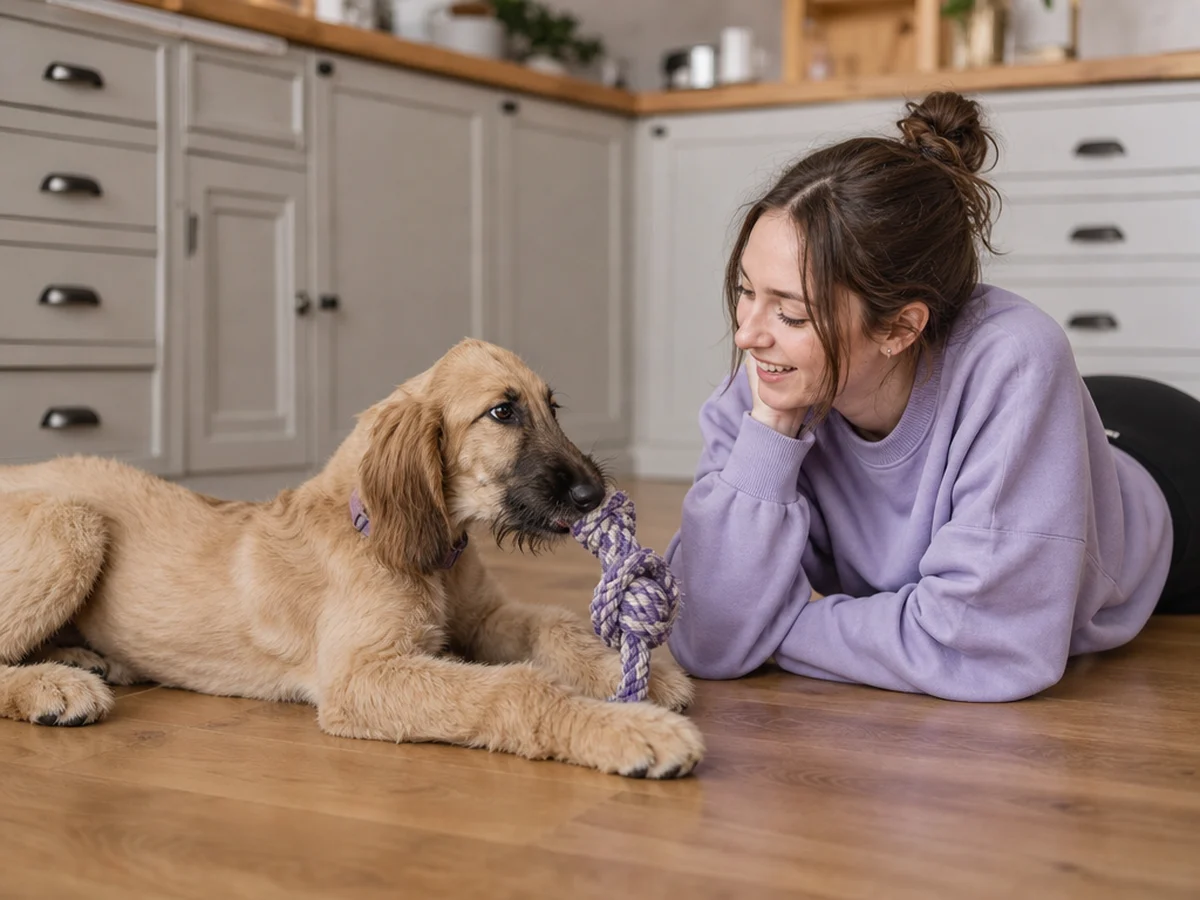
A teething puppy chews because sore gums make almost anything appealing. That is healthy, so steer it rather than trying to end it. Put sturdy puppy chews and rubber toys within reach, keep a few in rotation so something is always new, and make baseboards and table legs unavailable. Expect the most frantic chewing when the gums are at their sorest, and expect it to ease as that phase passes.
The Adolescent Afghan
The second wave surprises people because it arrives after the worst seemed over. An adolescent Afghan already stands tall and lean with real strength, yet has a young sighthound's energy, independence, and little impulse control. The puppy who settled so nicely may start sampling everything again.
With a self-willed breed this can feel personal, but the body has simply outrun the manners for a while. The answer is tighter management and more rewarded practice, and this is the stretch where gates and closed doors earn their keep. Short walks do not provide enough exercise for this athletic breed, so adolescence is also when a shortage of real running shows up in your furniture.
Adults and Chewing Around Change
Adults have a third pattern, chewing around change. An Afghan's loyalty to the people they have bonded with can make adjusting to a new home hard for an adult dog, and unfamiliar surroundings can bring chewing back in a dog who was fine for years. After a move or an adoption, keep routines predictable and dog-proofing tighter, and for longer than seems necessary.
Whatever the stage, managing the wave costs far less than repairing the damage after it. Match the setup to the stage instead of waiting for another incident.
Is the Destructive Chewing Boredom, Pain, or Stress?
Before you pick a fix, work out what is driving the chewing, because the usual causes call for different answers and often overlap. Timing, body language, and any recent change at home are your best clues, and you can gather most of them without special equipment.
Too Little Running or Mental Work
Short walks do not provide enough exercise for this athletic breed. An Afghan ideally gets to run full out several times a week in a large, enclosed area, and because they are excellent jumpers, that space needs a high, secure fence. Chase instinct makes walking off leash inadvisable, so a leashed stroll alone can leave plenty of energy unspent. Damage in the evening while you are home usually points here.
Mental stimulation needs rate a moderate 3 of 5, so you do not need an elaborate puzzle routine. A sniff-heavy outing, a few minutes of trading games, and a food-stuffed chew afterward usually cover it.
Discomfort in the Mouth or Stomach
Chewing that starts suddenly in a dog who never did it deserves a call to your vet before any training plan. A sore mouth or an unsettled stomach can send a dog gnawing, and your vet is the right person to sort that out. Regular vet visits also keep teeth and gums checked as your dog matures, which catches problems early. Once a checkup is behind you, you can move on knowing training is the right tool.
Stress and Loneliness
Afghans are independent in general, yet affectionate and extremely loyal to the people they bond with, so a long empty day can weigh on them. Damage soon after you leave, especially near doors and windows, points to stress or loneliness, as does a dog who paces, pants, or cannot settle even with a good chew. Ask a sitter, neighbor, or dog walker to break up long stretches, and keep departures calm and predictable.
Sorting out the cause first saves weeks spent on the wrong fix. Watch when and where the chewing begins before changing the plan.
Destructive Chewing Prevention That Works Right Away
Management is what stops the damage this week, while the skills are still being built. Each time your dog rehearses shredding a cushion, the chewing pays them directly, and the habit strengthens. Having trained this breed for many years, we put setup first every time, because it protects your home and your dog's stomach while the teaching catches up.
Remove the Targets
Get down to dog level, then remember that a tall Afghan reaches far higher than most dogs. Put away shoes, remotes, socks, children's toys, and anything with a cord, shut closet doors, and use gates to close off rooms you cannot watch. When something does get chewed, read it as information about what was within reach, not a verdict on your dog.
Build a Safe Place
When you cannot watch, your dog needs a gated, dog-proofed room, an exercise pen, or a crate they have learned to like. Introduce any of these slowly with food and chews, and present it as a calm retreat rather than a place of exile. A sensitive hound who links the space with calm will use it, while one who links it with being shut away may panic and chew harder.
Supervise Without Chasing
When you are home, keep your dog in the room with you, behind a gate or on a leash clipped to your belt, with a good chew within reach. If they pick up something off-limits, stay calm and offer a treat in trade.
Never chase a dog who has grabbed something. To a sighthound a chase is the best game in the house, and it teaches them to grab more, a pattern we cover in our piece on Afghan Hound behavior problems.
Skills That Redirect an Afghan Hound's Destructive Chewing
Skills turn management into habits, and with this breed everything depends on rewards your dog genuinely wants. Veterinary behavior specialists advise reward-based methods only, including for problem behavior, which suits an Afghan who prefers gentle teaching.
Our piece on Afghan Hound sensitivity to harsh tones explains why a calm voice carries further. Each skill below builds on the mechanism from the start of this guide: a hound who loves catching things needs better things to catch.
Trading Instead of Taking
Begin with a boring item your dog barely cares about. Offer a treat beside it, say your marker word the instant they let go, and hand over the treat. Repeat until releasing is a happy reflex, and sometimes give the item back so trading never feels like a loss. Then climb slowly toward things they value more, always paying better than what they give up.
Leaving Things Alone
Leave-it starts with still objects, because a moving sock is the hardest test for a chase-minded dog. Close your fist around a treat and wait until your dog stops nosing at it, then mark and reward from your treat pouch. Next, set an item on the floor under your shoe, then uncover it, and only much later let something slide or drop. Pay generously each time your dog chooses you over the object.
Settling With an Approved Chew
Begin by rewarding any paw on a mat, then standing on it, then a down, and stretch the time between treats. Once the mat is familiar, hand over a long-lasting chew while your dog lies on it, so the mat becomes the place where chewing and resting happen together.
Choose chews sized for your dog's mouth and durable enough not to break into swallowable chunks, and take them away once they are worn down. Rotate a few so they stay interesting, and save the best for busy times and for when you leave.
A Progressive Plan for Destructive Chewing Over Several Weeks
Give a good run or a chance to stretch out before each session, since a tired hound learns faster, and move up a stage only when your dog succeeds easily over several days in a row. There is no deadline, so take as many weeks as your dog needs. Calm, predictable practice goes much further with a loyal, sensitive dog than speed does.
Starting in the Same Room
Begin with your dog in your room, gated or on a leash attached to you, with a chew on the mat. Reward calm chewing of the right item, then start moving around the room and returning often to pay for staying settled. You are ready to move on when your dog chews the right item and ignores the wrong ones, even while you walk past.
Stepping Out of Sight
Now step out briefly and return before any trouble starts, rewarding your dog calmly when you come back. Build the time out of sight gradually and leave a stuffed chew each time, so your departure predicts something good. If your dog stops chewing and watches the door, you moved too fast, so shorten the gap.
Longer Unsupervised Stretches
Next, allow access to one dog-proofed room while you are home and listening from nearby. Once that goes well, leave for short absences with the safe space ready, and lengthen them slowly as damage-free days add up. Add rooms one at a time, and only after a stretch of quiet success in the last one.
When a Week Goes Badly
If your dog chews something they should not, stay calm and go back a stage. Then tighten management and look at what changed: less exercise, a visitor, a skipped outing, or a chew that was less appealing than the last.
Progress is rarely a straight line, and one chewed shoe does not undo the work. Return to the last successful level and build again.
Progress Signs and When an Afghan Hound Needs a Vet
An Afghan chews less when their need for running, company, and calm structure is met, because then the right chew is what they reach for. Look for incidents that fall week by week even if they have not vanished, a dog who picks the right chew without being asked, and quick drops or trades when you ask.
Calm stretches on the mat or in a room with you grow longer, even by small amounts, which is real progress for a dog bred for speed. Your dog also settles after exercise and greets you without frantic energy. When you see these changes, advance more slowly rather than faster, and keep up the running and company that made them possible.
Some situations need more than a better routine. Behavior modification guided by a qualified professional works by rewarding good behavior, and it is the safest, most effective route for stubborn problems. For severe or persistent cases, look for a board-certified veterinary behaviorist, since a veterinarian may use that title only with board certification, while trainers face no such restriction.
Reach out to your veterinarian, followed when needed by a qualified behavior professional when you see any of the following. These signs need more than another training repetition:
- Your dog has swallowed an object, or shows vomiting, appetite changes, or mouth pain after chewing.
- The chewing started suddenly in a dog who never did it.
- Your dog panics when you leave, with relentless destruction near doors or windows.
- Chewing has injured the mouth, teeth, or paws.
- The chewing keeps getting worse despite weeks of steady management and practice.
For a fast, sensitive, loyal hound, the lasting answer is a full life. Give real running in a secure space, company through the day, and a right chew that always pays better than your shoes, and the gripping instinct has somewhere good to go.
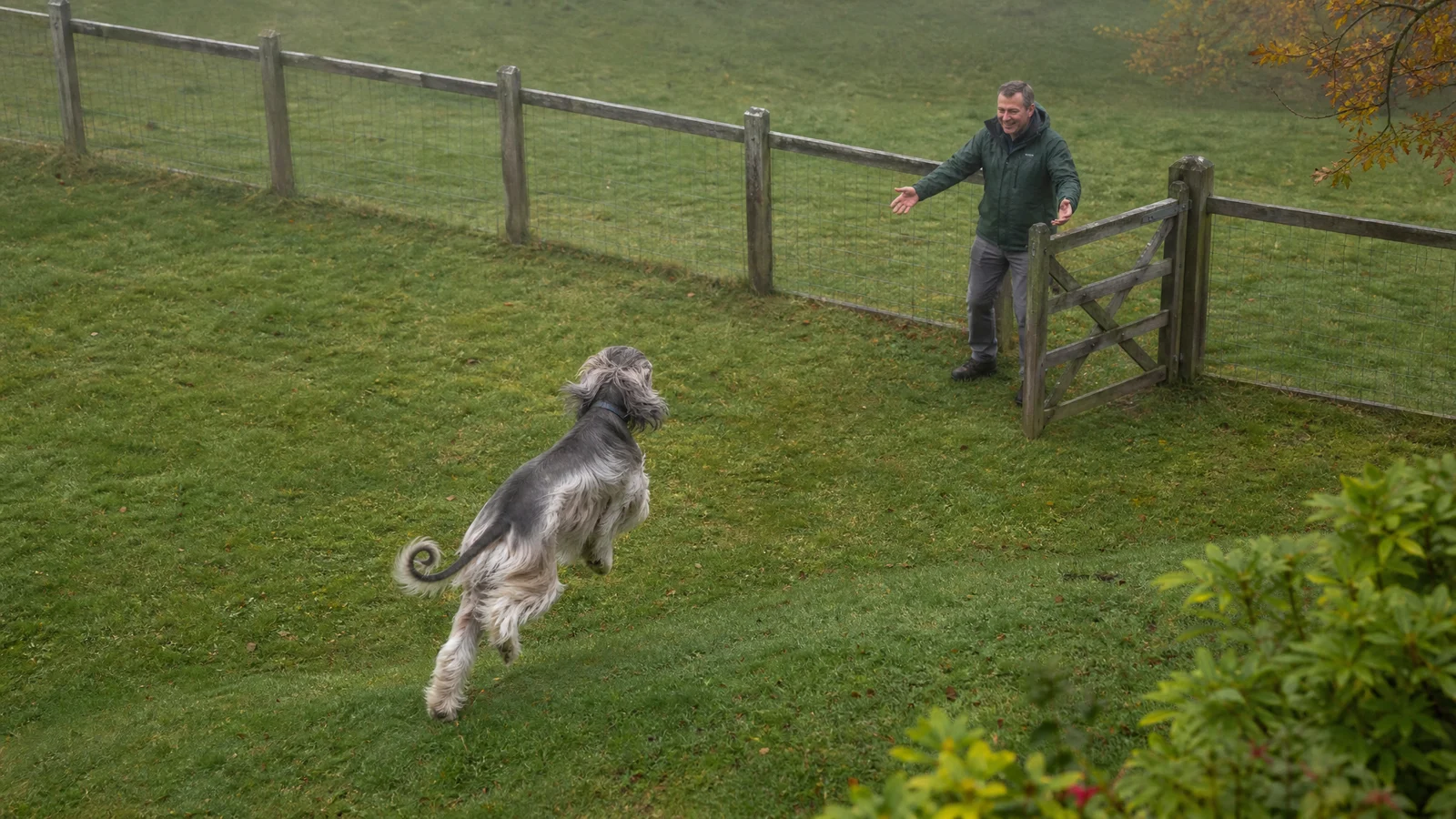 Exercise and jobsSetting Up Safe Sprints and Calling an Afghan Hound Back
 BehaviorAfghan Hound Behavior Problems: Chasing, Ignoring, Aloofness
 Training basicsAfghan Hound Training: Come, Sit and Stay Are Enough