 Afghan Hound
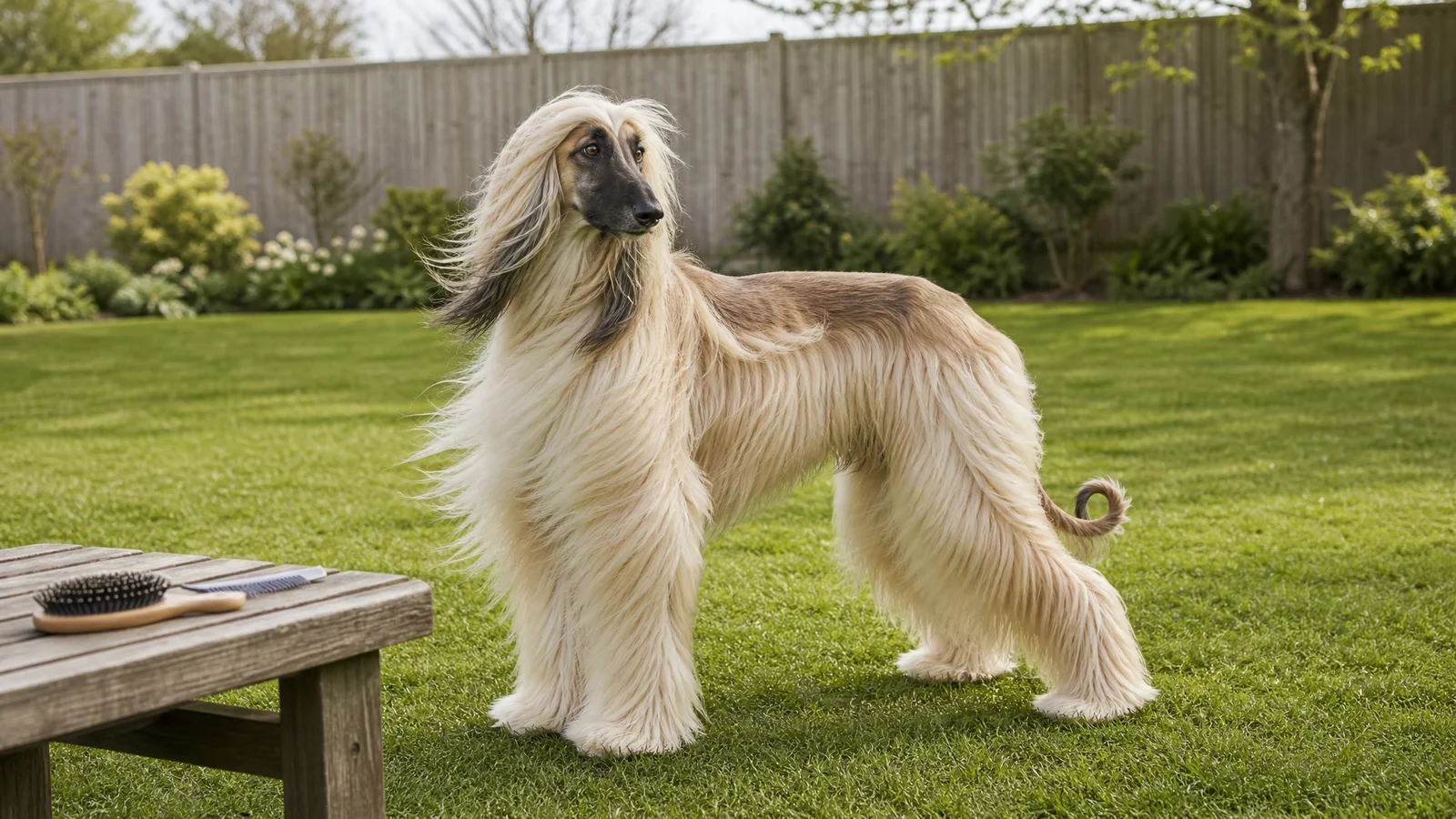
A training session rarely decides whether an Afghan Hound fits a home. The daily jobs do: keeping the outdoor space secure, finishing coat care on a difficult day, and protecting a resting dog from interruption. Those jobs repeat for years, and the dog's appearance does not do any of them.
That is why the decision belongs to the whole household, not to the one person who loves the breed's look. A large yard is not a secure boundary, working from home is not an alone-time plan, and enthusiasm for reward-based training does not make several people follow one set of rules. Read on for a way to find the arrangement most likely to give out, and to decide whether it can be fixed before a dog arrives.
Who Holds the Boundary in an Afghan Hound Household?
Two household jobs have nothing to do with cue words. The AKC Afghan Hound page describes a tall, lean, strong dog and excellent jumper whose exercise area needs a high, secure fence. It rates coat grooming frequency high, a measure covering bathing, brushing, trimming and other upkeep, notes that Afghans have a strong instinct to run off after perceived prey and walking off leash is not advisable, and says an adult's loyalty can make adjusting to a new home hard.
No cue word closes a fence or brushes out a coat. Each job needs a specific person, every time it comes up.
Reward-based training still earns its place. A dog can learn to wait and be paid for it, and that skill is worth building. But a learned behavior is offered under particular conditions, while a closed fence works whether or not the dog is paying attention. A boundary belongs in the household's setup, not in the dog's repertoire.
Ask the same question of every responsibility, not just fences. Who does it, who covers when that person cannot, and has the backup actually done it? A named backup who has never attached the equipment or followed the door rule is a hope rather than a plan, and having that person do it once before the dog arrives costs little.
Which Fit Is Easier, a Puppy or an Adult Afghan Hound?
A puppy brings a body, attention span and learning history that keep changing. The household has to hold its arrangements steady while the dog changes around them, and early success in one room says little about reliability in another. Adjust difficulty from what this puppy does today, not from a calendar. No source we reviewed gives an Afghan-specific deadline, so nobody can honestly promise one.
The Adult Dog's Unknowns
An adult brings a history that may be partly documented and partly guesswork. Cue words, comfort with handling, rest preferences and reactions to doors or unfamiliar places may all need an easier restart, even for a dog who has lived in a home before. None of that predicts any one Afghan Hound.
Humane World's new-dog guide says adjustment can take days, months or longer, especially for a dog who has lived in several homes or shelters. It advises agreeing household routines in advance, such as who walks the dog, where the dog rests at night and which rooms are off limits, keeping the first week or more quiet, and a vet check within the first week. That argues for a flexible arrival plan, and the Afghan Hound adult adjustment guide lays out the transition.
Neither stage guarantees an easier fit. The useful comparison is between what your household can sustain and the specific unknowns each stage brings, not between a blank slate and a finished product. Whichever you choose, start with a secure arrangement and keep it flexible enough to revise from what the individual dog actually does, because age alone will not tell you which unknowns matter most.
Handling and Rest in a Real Week at Home
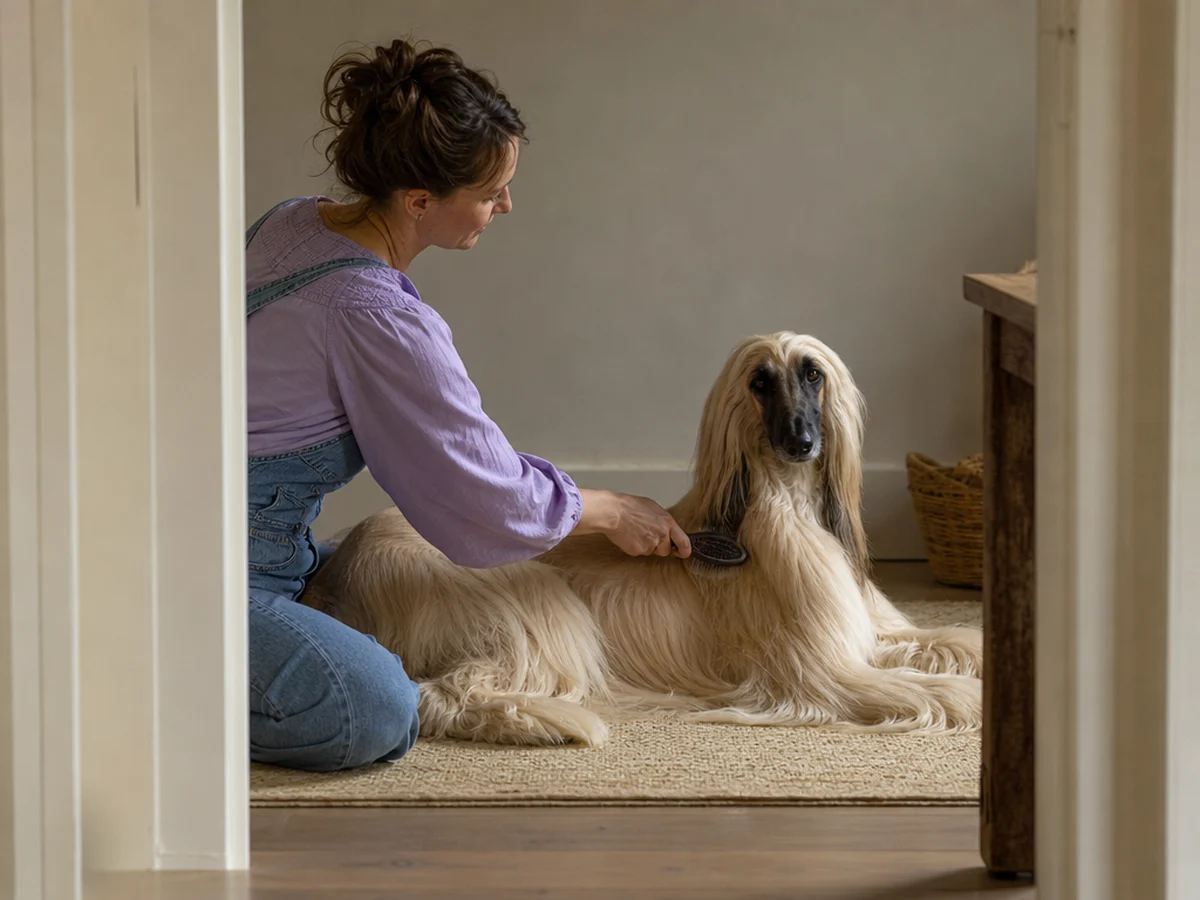
Handling is not a single grooming appointment. It is a continuing process of presenting the next small step, rewarding willing participation and stopping before discomfort or avoidance turns the task into a struggle. The Afghan Hound handling practice guide holds the progression. For the fit decision, the question is whether your household will learn that process, prepare the setting and ask qualified people for help when routine care cannot be done comfortably.
On an Ordinary Week
Map the week as it actually runs, not the one you hope for. Find where coat care, body checks, outings, learning and quiet rest can happen without competing for the same rushed hour. Count setup and cleanup too, because whoever is responsible has to prepare rewards and equipment and find a low-distraction place.
PDSA's exercise page for dogs asks owners to be sure they have the time and ability to give a dog the exercise needed, noting that fit, active dogs are less likely to suffer behavior problems. It says a good routine may improve unwanted behaviors but is unlikely to fix them completely, and that exercising a stressed dog in a busy place can make the stress worse. For behavior worries, it says to ask an accredited dog behaviorist.
An outing cannot stand in for a boundary or a lesson. The Afghan Hound exercise guide covers the movement itself. Here the only question is who can provide it safely.
Plan regular vet visits alongside the handling routine. If touch, movement or willingness changes unexpectedly, stop the care step and describe what you saw to the veterinarian, who can evaluate a new or persistent concern.
Coat Care and Quiet Rest
Coat care deserves its own honest look, since the AKC rating above points to a real commitment. Decide who does it, where it happens and what the dog is rewarded with. If a professional groomer will be part of the plan, ask how that person introduces a dog to the process and whether they will work at the dog's pace. A groomer who cannot answer is telling you something about the fit, too.
Coat and body care can be split into jobs the household recognizes. One person might prepare the space, another handle rewards, and the main carer complete only the comfortable step available that day. The plan should allow a pause instead of demanding that every task be finished in one sitting.
Rest needs a place and a rule. The dog should have an undisturbed spot with a clear route in and out, and everyone should understand that a resting dog is not an invitation to call, touch or start a lesson. A quiet space fails quickly if every visitor and family member treats it differently.
When the Usual Handler Is Out
Stress-test the arrangement with the main person unavailable, whether from illness, travel or a deadline. If nobody else can manage secure outings, protect the rest space and continue essential care without rushing, the gap exists before the dog arrives. It needs a concrete solution, not confidence that the week will stay predictable. Give the backup a short written note that covers:
- where the equipment is kept
- which doors and gates follow which rule
- the handling steps the dog already accepts comfortably
- the point at which to stop and leave the rest for the usual handler
The note is not a manual. Its job is to keep a changed person from also changing everything the dog depends on. Decide in advance which parts of the routine can shrink and which cannot. A shorter optional practice session is fine. An unsecured exterior boundary, or care pushed through after the dog needed a pause, is not.
Your Afghan Hound Fit Audit, Row by Row
Pull the threads together on paper. For each responsibility below, write the real person, the real backup and the setting, avoiding the word "everyone," because a job assigned to the whole household usually belongs to nobody. The table is a planning record rather than a score, and the row to test hardest is the one most likely to fail on a busy day.
| Responsibility | Who Covers It | What Usually Goes Unresolved |
|---|---|---|
| Secure outdoor access and outings | Primary handler plus a named backup | No reliable plan when the usual person is unavailable |
| Coat and body handling | People who use cooperative steps | Care depends on rushing or holding the dog in place |
| Reward-based learning | Household members using the same rules | Cues, access rules or consequences change by person |
| Quiet rest and recovery | Everyone who shares the space | Visitors, children or other animals repeatedly interrupt it |
Do not average a strong row with a weak one. Secure access cannot make up for a handling plan nobody can carry out, and excellent coat care cannot make inconsistent door management safe. Suitability depends on the weakest essential arrangement being credible.
The weakest arrangement is usually the one that depends on a single person. If one adult handles every outing, every coat session and every lesson, the household has not shared the load. It has only postponed finding out what happens when that adult is tired, sick or away. Count how many responsibilities pass through the same pair of hands before you count anything else.
When Guests Come to Visit
The learning and rest rows deserve a second look for homes with visitors. Decide before arrival how guests are introduced, where the dog can step away and who makes sure they are left alone there. Visiting children, other animals and relatives who drop in all count as guests, and each of them is one more person who can undo a rule without meaning to.
Fixable Gaps and Hopeful Ones
Sort each gap into one of two piles. Buying equipment, practicing a swap or agreeing on an access rule produces a visible change. Expecting the schedule to calm down once the dog arrives does not. Name what must change, who will change it and how you will confirm it works before relying on it.
Be wary of any row whose fix is a promise to try harder. Effort is real, but it is the first thing to run out during an illness or a crowded month. Arrangements that still work on a tired day hold up better than resolve does.
Afghan Hound Fit Questions
Can a first-time owner prepare with a reward-based professional? Yes, when the professional can explain specific methods and help the household practice the arrangements above. The Certification Council for Professional Dog Trainers publishes trainer-selection guidance noting that the field lacks consistent regulation and oversight. It suggests asking about methods, client references and relevant experience, and flags trainers who rely mainly on punishment.
Does working at home eliminate planning for time apart? No. Schedules change, people leave for errands and emergencies alter ordinary access. The fit plan should name who covers care and how the dog can stay comfortable when the usual person is unavailable, without assuming constant presence will continue indefinitely.
Should household members agree before an Afghan Hound arrives? Yes, on secure access, handling boundaries, the resting space and the basic learning rules. Agreement does not require identical personalities or movements, but it should prevent one person from undoing the management another person depends on.
Fix the Weakest Fit Row or Wait
Go back to the audit and find the weakest essential row. If it rests on future motivation, an untested property change or one person never getting sick, the arrangement is not ready, and the dog is the one who would pay for the gap. If it has a named person, a practiced backup, a place and a rule that survive a changed schedule, the household has something real to build on.
Waiting is a legitimate result, not a failure to appreciate the breed. A household that waits can still close the gap at its own pace. One that does not may discover the gap with an Afghan Hound already in the home.
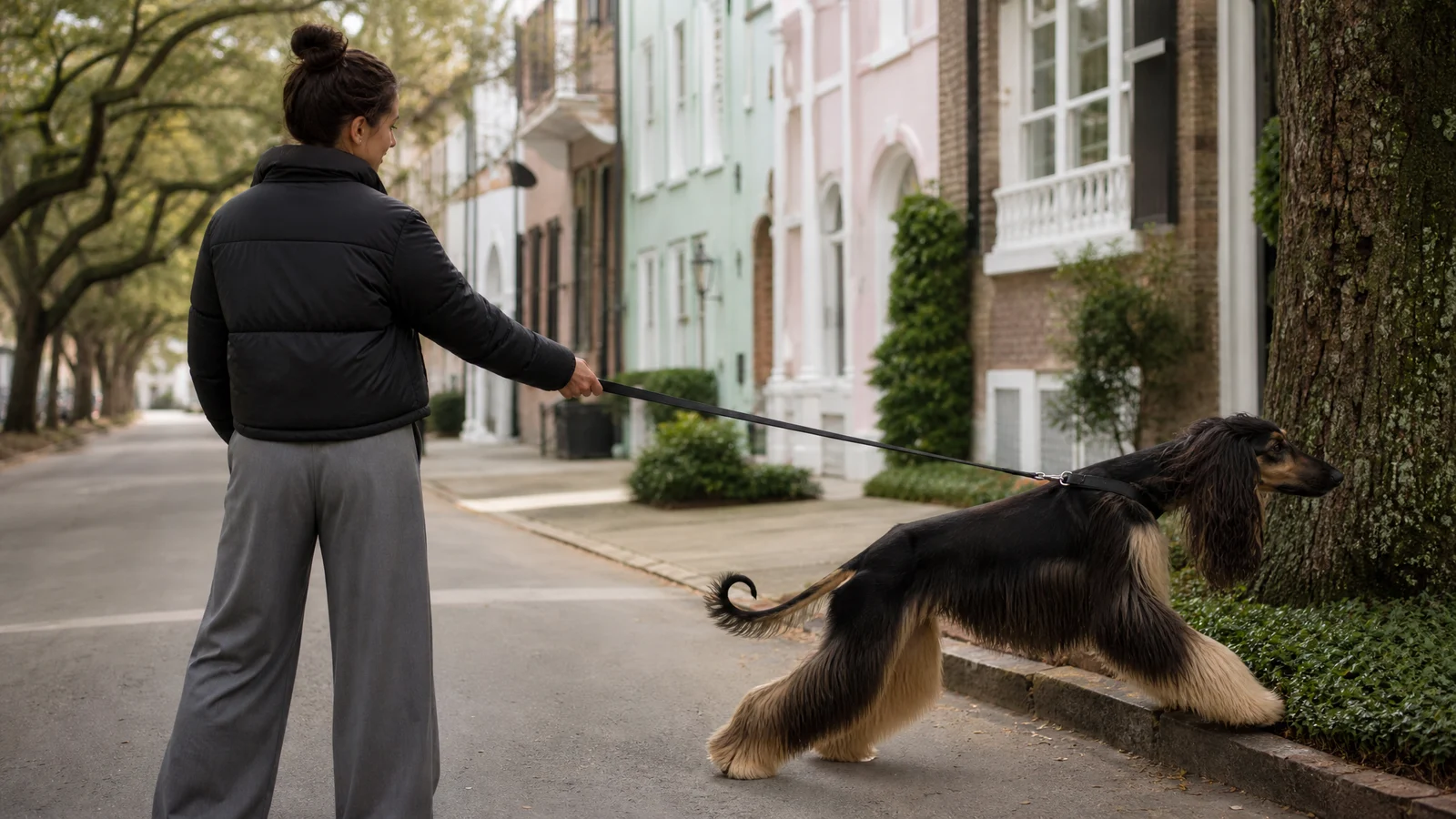 BehaviorHow to Stop an Afghan Hound Pulling on the Leash
 BehaviorHow to Stop an Afghan Hound Barking
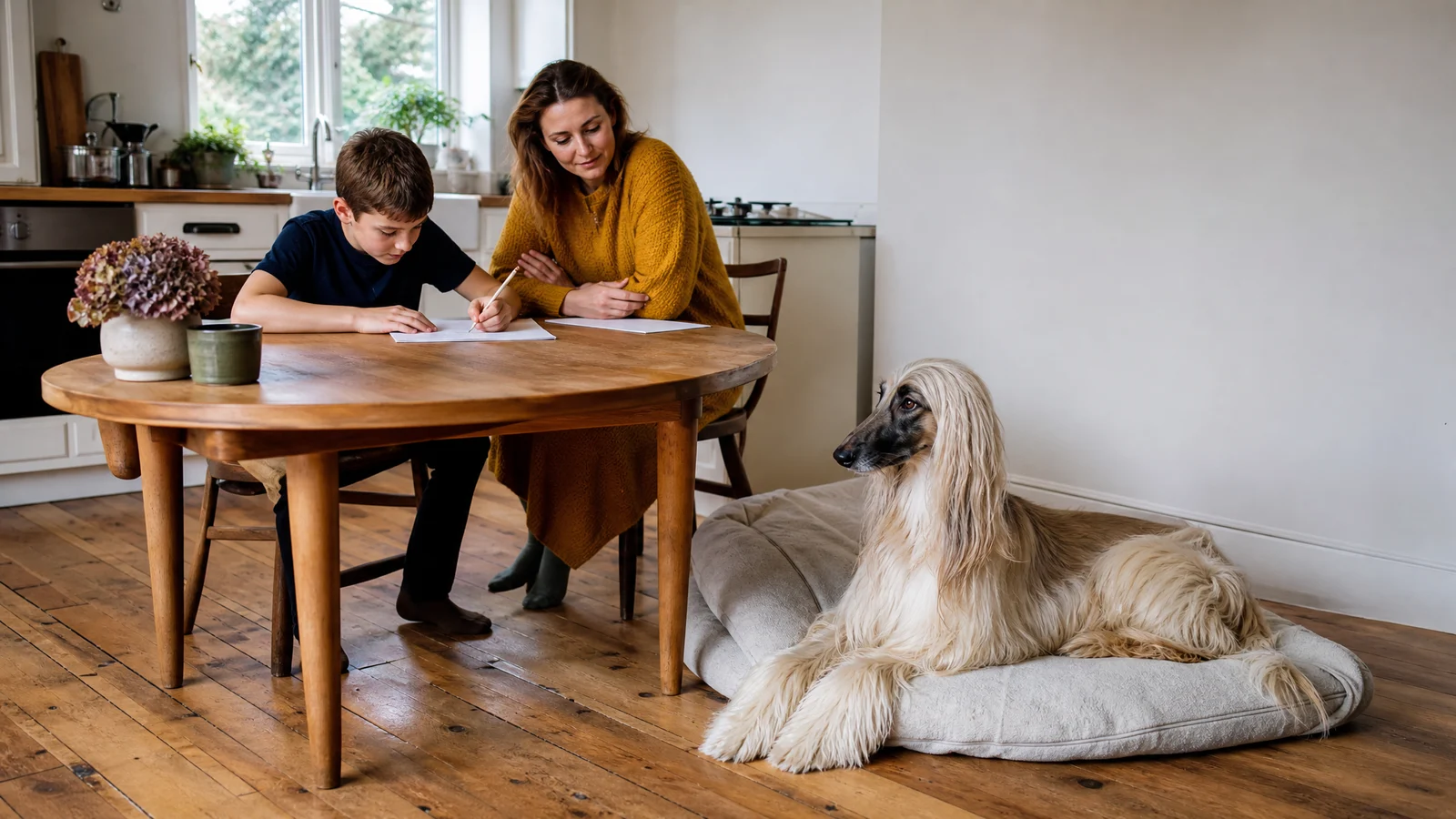 Training basicsAre Afghan Hounds Good With Kids?