 Afghan Hound
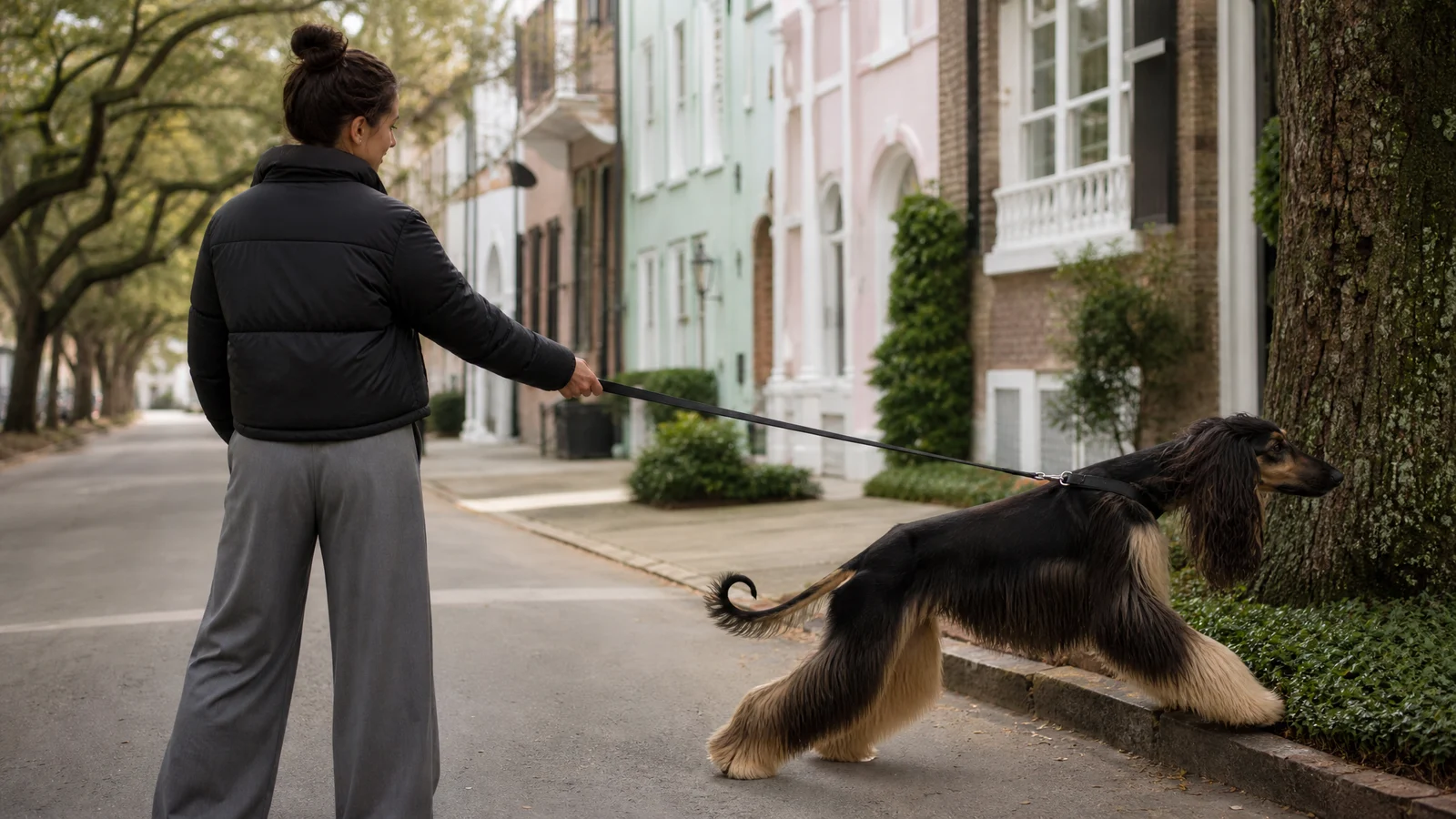
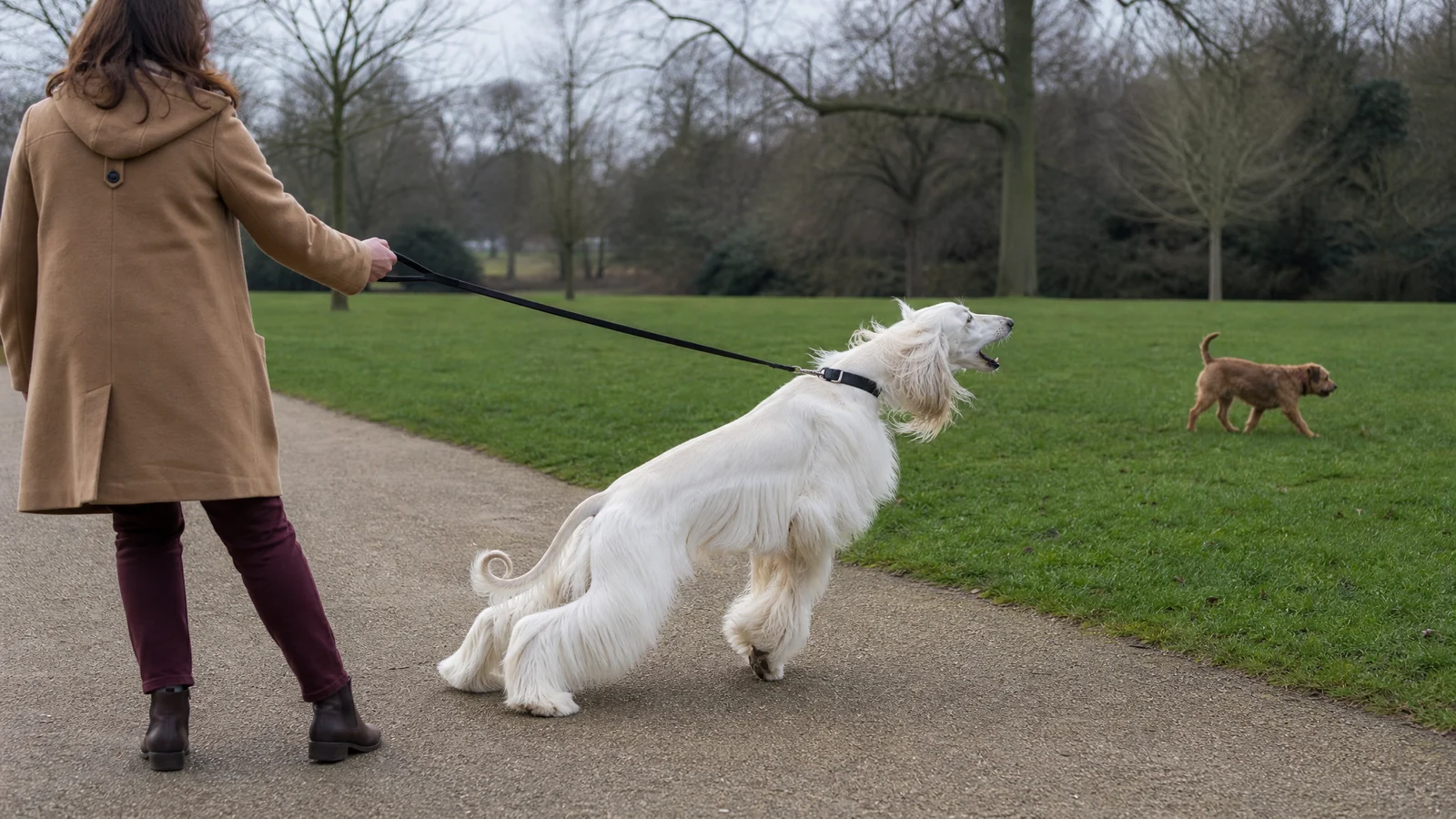
A tight leash only keeps working for an Afghan Hound when it gets them where they are going. Make slack the thing that pays.
The repair is simple to say. Let the walk move forward while the leash is slack, pause calmly at the first tension, and reward the moment a workable curve returns. Stay physically secure the whole time, never pull backward, and do not ask for a heel position for the entire outing. This page covers that practiced pattern only, so it does not replace an everyday walking plan or treat fear, frustration or pain.
The table just below sorts the awkward cases, such as traffic, a moving distraction or a sudden change in gait, so you can tell when this pause is the wrong tool for the moment.
What Happens at the First Pull?
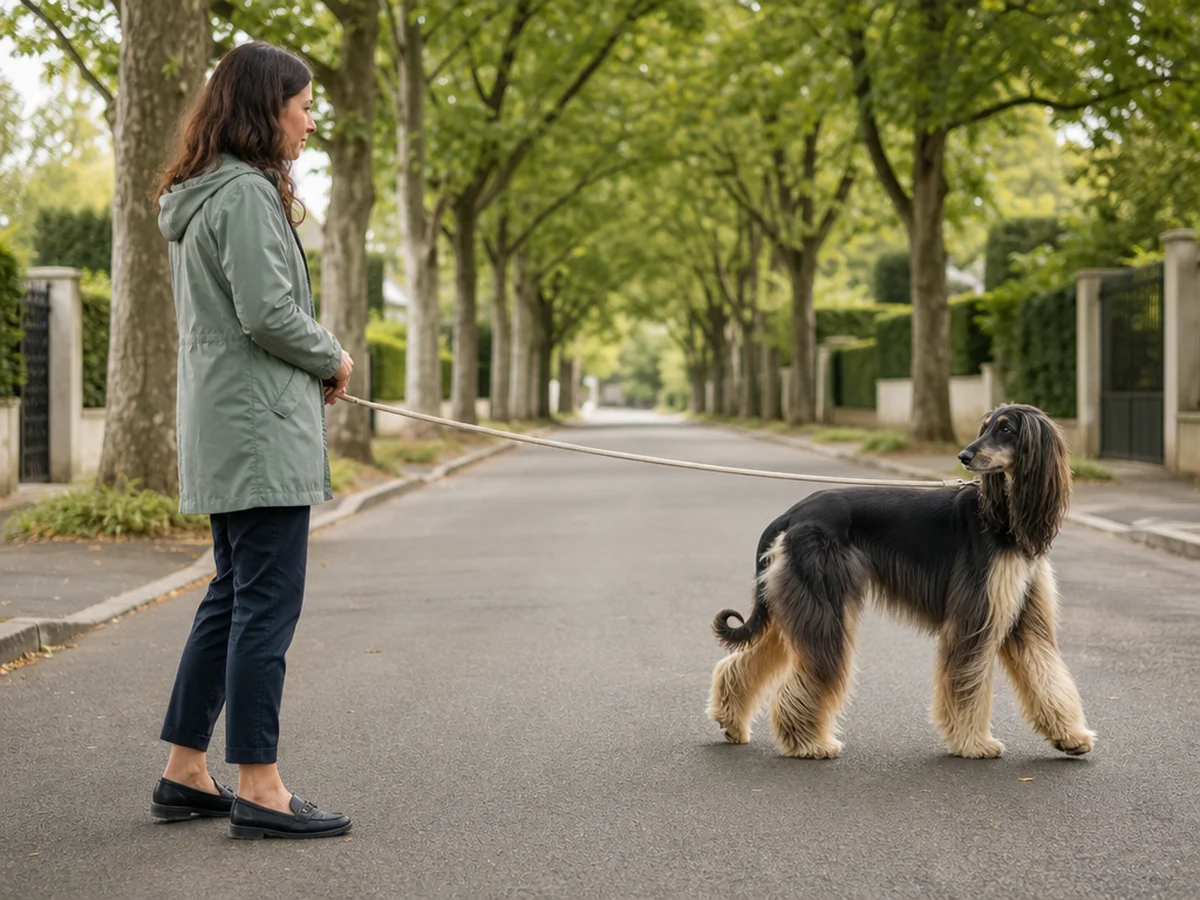
Stop walking. PDSA leash-pulling guidance advises stopping as soon as the dog pulls and waiting for the pulling to stop, without hauling the leash back toward you. Plant your feet, keep your hands quiet and let the pause become the result of tension.
Standing still only works where it is safe, and the same tight leash can call for different responses depending on what surrounds it. The table lays out four common situations and what to do in each.
| Leash and Context | Handler Response | Reason |
|---|---|---|
| Tension begins in a quiet, safe area | Stop forward movement and wait for the leash to soften | The dog can discover that slack restarts access |
| The leash tightens toward a moving distraction | Increase distance while maintaining secure handling | Standing close may be too difficult or unsafe |
| The dog surges repeatedly after every restart | Return to the easier starting point or end the route | The current step is not achievable in that context |
| Tension appears with altered gait or reluctance to move | Stop the walk and arrange veterinary guidance | A sudden physical change is not a leash-rule problem |
Where standing still is not safe, such as beside traffic or near a hazard, create distance or leave instead of waiting. A pause that puts the dog or the handler at risk is not the lesson, and a quieter place will teach the same thing with far less to go wrong.
Five Steps to Stop a Pull From Paying Off
The RSPCA walk-nicely guide frames the lesson as teaching the dog that not pulling is the fastest way to get where they want to go. The restart has to deliver on that: tension never advances the route, and slack always does.
- Pause safely. Stop when the leash first tightens and keep your hands steady without pulling the dog backward.
- Invite slack. Wait quietly or take one safe step away from the attraction when distance is needed.
- Mark the change. Identify the instant a curve returns to the leash.
- Reward the state. Deliver an appropriate reward where it does not immediately pull the dog across your path.
- Move again. Take one or a few steps, then repeat the pause if tension returns.
Run the five steps in a place where pausing and restarting are safe. Keep to the same short route until the exchange feels familiar, and add distance only after that.
Consistency decides whether the pause works. Best Friends Animal Society advises stopping every time the dog pulls, because stopping only four out of five times teaches that pulling can still result in moving forward. Be patient, since a dog with a leash-pulling habit may take a while to stop pulling forward, even once you are standing still.
Marking and Rewarding Slack
Access can be the reward too. The destination the dog is heading toward, a patch of grass or a gate, is only worth offering when it is safe to provide. Do not let forward motion follow tension simply because the place is close, since that teaches the very pattern you are trying to repair.
Timing the marker well matters here. The Blue Cross training guide advises pairing a clear marker with a valued reward, so the word or click should predict something the dog actually wants. Mark the curve in the leash, then deliver the reward without waving it ahead of the dog like bait.
Watch the leash rather than waiting for a perfect body position. A small curve can return when the dog pauses, turns slightly, steps back or shifts weight, and any of those is worth marking. Do not require eye contact or a sit unless you have taught them separately and they help in that spot.
Reward placement is part of the picture. A treat delivered behind you can create a useful reset, while one placed beside the walking line can support another forward step. Watch what the placement does to the leash instead of assuming the reward type alone caused the change.
Change only one part of the exchange at a time. Add a step, visit a slightly busier place or swap the reward, but never all three together. A clear result then shows which part made slack harder to hold.
Plan the Afghan Hound's Start Before Pulling Begins
Choose a starting point with room to stand and few immediate reasons to rush. A quiet indoor threshold, a secure yard or the calm edge of an outdoor route makes the leash state easier to notice. Avoid beginning in a doorway where opening the door automatically launches the walk.
Stand with enough leash length for a comfortable posture, but not so much that it trails or tangles. Wait for one moment of slack and mark it before taking the first step. The reward can be food from the dog's normal plan, permission to move or access to a safe sniffing spot.
Map the First Steps
Map the first few steps before you open access to the route. You need somewhere to pause without blocking a doorway, stepping into traffic or being pulled toward a hazard. If that spot does not exist, move the starting point instead of hoping the dog stays slack through a difficult stretch.
Notice how tension tends to begin. Some dogs drift gradually to the end of the leash, some accelerate after spotting movement, and some brace when the handler changes direction. The pause rule stays the same for all three, but each pattern tells you something about where to start the next attempt and which reward placement might help.
Chase Interest and Equipment
The United Kennel Club Afghan Hound standard identifies chasing as a strongly developed breed tendency. That does not explain every pull, but it supports keeping a secure leash, a secure enclosure and generous distance around moving opportunities rather than relying on attention alone.
Check that clips are closed, the leash is not wrapped around legs and you can hold on without bracing the dog in place. Use the ordinary walking equipment that suits the dog's established safe plan. Equipment is for safety here, never for forcing a position.
Decide the first achievable movement in advance. One step with slack is enough to begin, and if the dog is already leaning into the leash before the marker, move farther from the doorway or the visible attraction and rebuild the start where standing is possible.
Slack Is Not Heel
Keep the lesson separate from heel work. The dog may walk ahead, beside or slightly behind as long as the leash stays workable and the route is safe. Precision beside one leg is another skill, not the standard for every relaxed step.
When Afghan Hound Pulling Is a Different Problem
Not every tight leash is a practiced way to reach a destination. A dog may be trying to open distance, follow movement, reach someone or cope with discomfort. If they can pause, take a reward and restart softly, the exchange above fits. If they fix on a trigger, refuse food, vocalize, freeze or surge again with no recovery, it does not.
Speed, direction and recovery all matter. The ordinary pause should not be applied as if every tight leash were the same problem. Notes on what you saw are useful for safety planning and for any professional you consult, and they are not a contest over who controls the leash.
Trigger Encounters
Track trigger distance separately from ordinary leash tension. Move away early when another dog, person, vehicle or animal changes the Afghan Hound's ability to respond. Note when they first change pace, posture, breathing or willingness to take a reward, then pick a route that stays outside that point. The priority is a workable distance, not finishing the planned street or proving the dog can stand still.
Once ordinary movement and choice return, decide whether one simple known response is possible. If the dog still cannot engage or the reaction is escalating, end the training attempt and contact a qualified reward-based professional. A pulling lesson cannot fix defensive or distressed behavior. For the everyday plan, including relaxed walking and movement around triggers, see our Afghan Hound leash walking guide.
Sudden Changes in Movement
End the walk when tension appears with limping, reluctance to bear weight, an unusual stride or sudden resistance to equipment contact. Do not keep restarting to test whether the dog will walk through it. Contact your veterinarian about the change and note when it appeared.
Regular veterinary visits stay part of ordinary care. Bring details about surface, route, duration and any change in appetite, energy or tolerance, and leave the question of cause to your veterinarian, since pulling alone cannot tell you. Training can resume when your veterinarian's plan for the dog supports it.
Questions About Sharing Afghan Hound Leash Walks
Three questions tend to surface once the basic exchange is working, especially in households where several people take turns or the walks pass through different kinds of places.
Can different walkers use the same slack-leash rule? Yes. Agree that tension pauses progress and that the first workable slack earns the next safe movement. Each person can hold the leash differently or use different rewards, because the consequence is what has to match. A note by the door listing the easiest starting place, the release word and the usable rewards keeps everyone aligned.
Can sniffing sometimes reward a loose leash? Yes, when the sniffing spot and the route are safe. Mark the slack, walk together to the spot, allow access, then resume the ordinary plan when the dog is ready to continue. Do not let access pull you into an unsafe area, and if the dog drags you toward a spot, pause again and let slack earn the way there.
Does the reward have to be food? No. The RSPCA training advice says all training should be reward based, and that giving the dog something they really like, whether food, a toy or praise, makes the behavior more likely to happen again. Hand it over for slack and nothing else, so the Afghan learns what earned it.
Take One Leash Detail Into the Next Walk
Afterward, jot down where slack first appeared, what set off the first tension and which reset got the walk moving again. Add the surface, the distance from distractions and the reward that still worked. Read those notes before the next outing rather than after tension has begun, because they give you an achievable starting point to choose on purpose.
Compare like with like. A quiet first block, a crowded crossing and the trip home ask different things, so judge each stretch on its own instead of grading the whole outing.
Before the next walk, pick one repeatable segment, decide in advance where you will first pause and change a single condition, such as starting farther from the doorway. If the final steps went well, resist adding distance. A shorter route with repeated slack tells you more than a longer one spent leaning into tension.
 BehaviorHow to Stop an Afghan Hound Barking
 Training basicsAre Afghan Hounds Good With Kids?
 BehaviorAfghan Hound Leash Reactivity: What Helps