 Afghan Hound
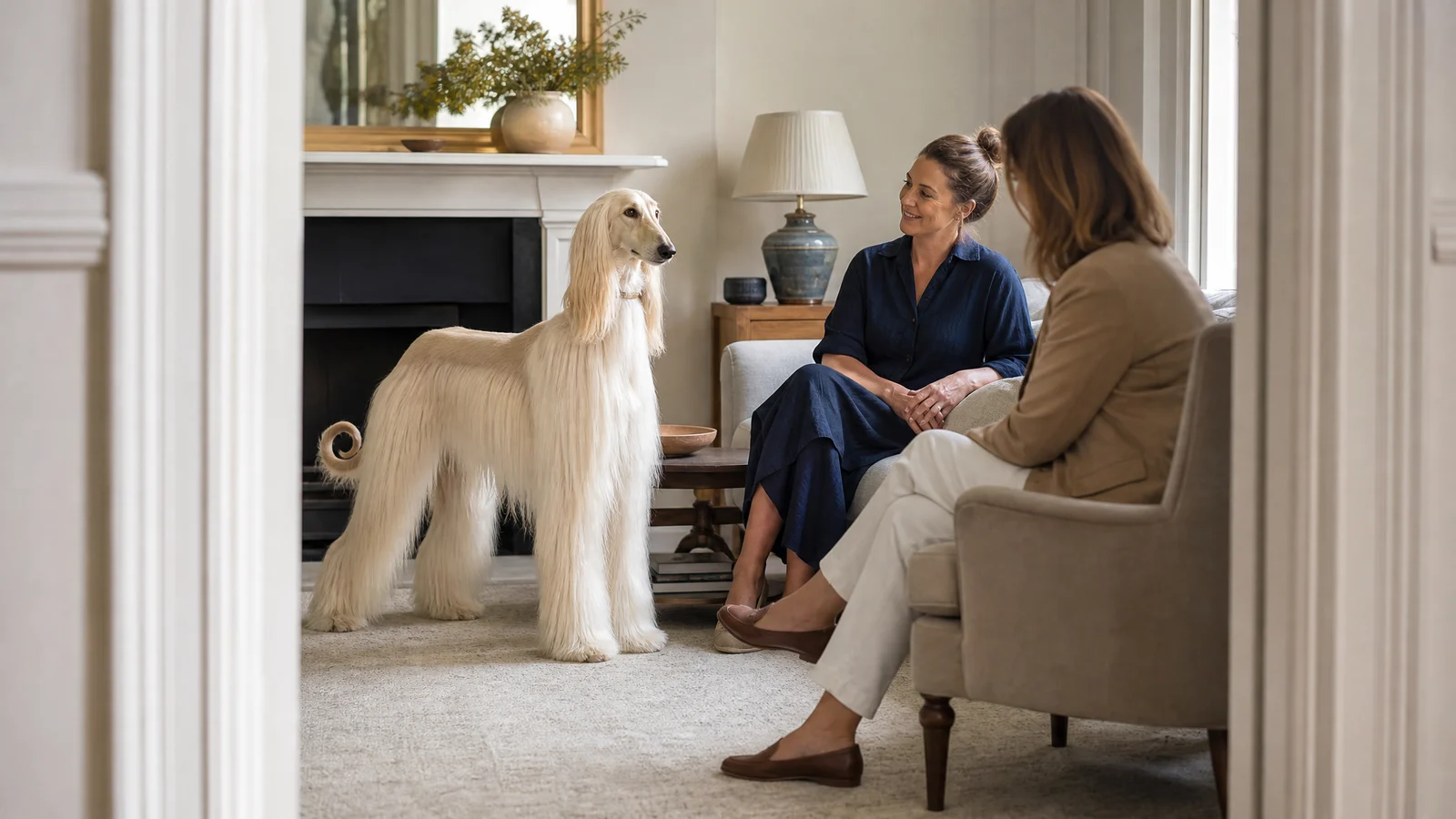
Behavior problems in this breed arrive in a rough order. Chasing starts in puppyhood, ignoring peaks through the adolescent months, and aloofness with visitors firms up as the dog reaches maturity. Some of it eases with age and practice. Some of it stays for life.
This guide covers the behavior problems owners meet most, from bolting after small animals to howling when left alone, with the cause behind each and a reward-based fix. Handled badly, these traits mean an escaped dog, a shut-down dog or a dog who avoids people.
Handled well, they leave you the playful, loyal hound the breed shows their family. Our team has long worked with Afghans and focuses on their behavior and training, so we will tell you which traits are phases and which are simply the dog.
Chase-Driven Behavior Problems in Afghan Hounds
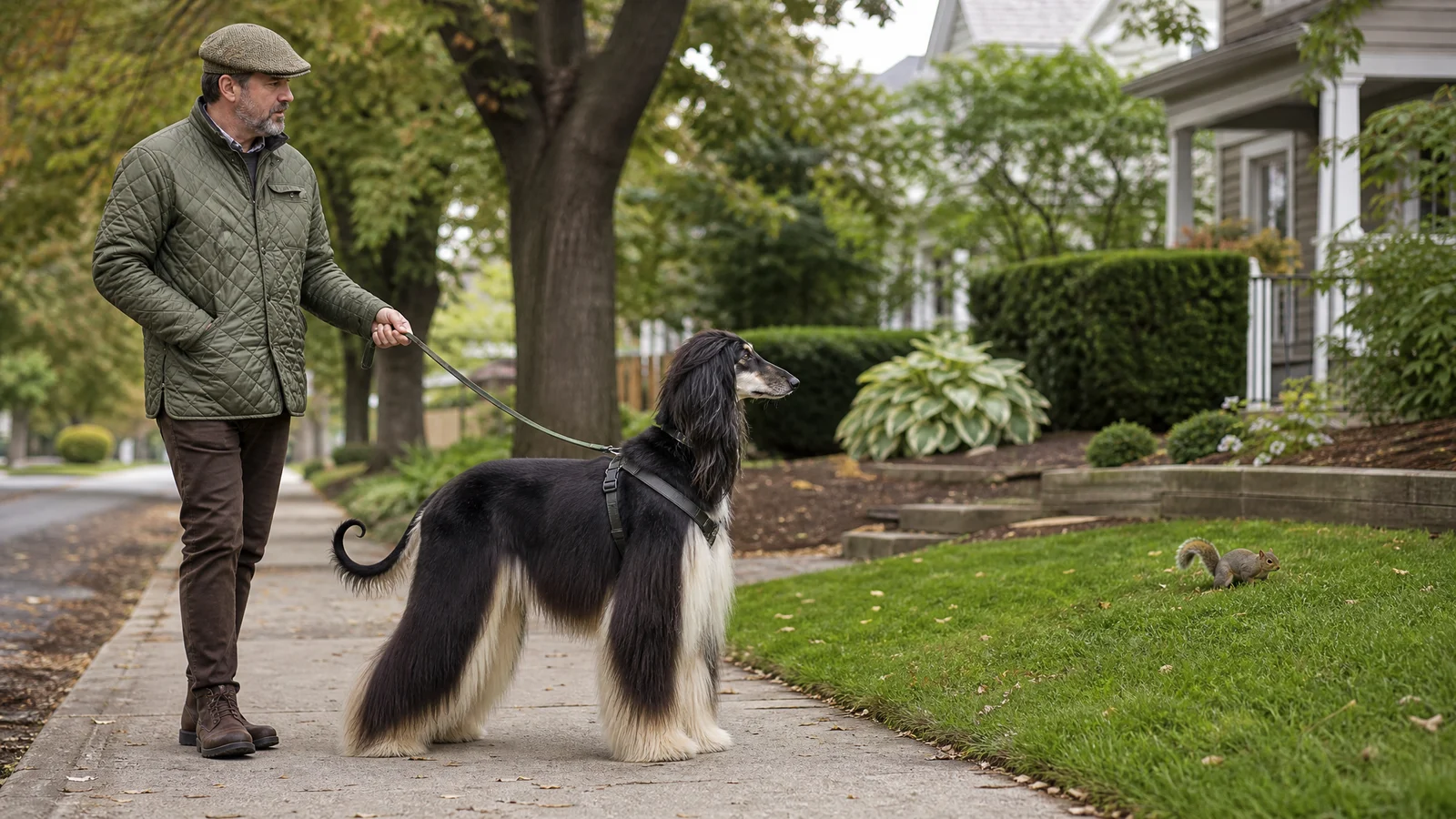
A squirrel, a neighbor's cat, a blowing bag. Your Afghan is gone before your hand closes on the leash. Of all the behavior problems here, this one carries the highest stakes.
What the Dog Sees
Afghans are sighthounds, bred to hunt and chase prey by sight, and the breed has a very well-developed chase instinct. Movement starts the response before any decision happens. Calling a dog back at that moment asks them to override what they were built for.
The common advice is to build a rock-solid recall and then enjoy off-leash walks. Don't bet the dog on it. Walking off leash is not advisable for this breed, because the urge to run after perceived prey is strong, and a recall that holds in the kitchen can fail at the first bolting cat.
What to Do Instead
Start with containment. Afghans are tall, lean and strong, which makes them excellent jumpers, so the yard needs a high, secure fence. Outside it, the dog stays on a leash.
Then give the instinct a legal outlet. Ideally an Afghan runs full out several times a week in a large, enclosed area. A dog who gets that has less pull toward the next squirrel. Then teach a better option than the chase:
- Reward every glance at you on walks, starting far from any trigger.
- When the dog spots something and then looks back at you, mark it with a word and pay generously.
- Close the distance to triggers only while the dog stays loose and keeps taking treats.
- Use a release into a run inside the fence as a life reward for coming when called.
- Keep the leash on in every unfenced place, however good the response looks.
Our guide to managing the prey drive goes deeper on walks. Use that plan when movement, rather than the leash itself, drives the behavior.
Are Ignored Cues Behavior Problems?
The dog hears you perfectly well. They glance over, look away and carry on. It happens on walks and it happens on the couch.
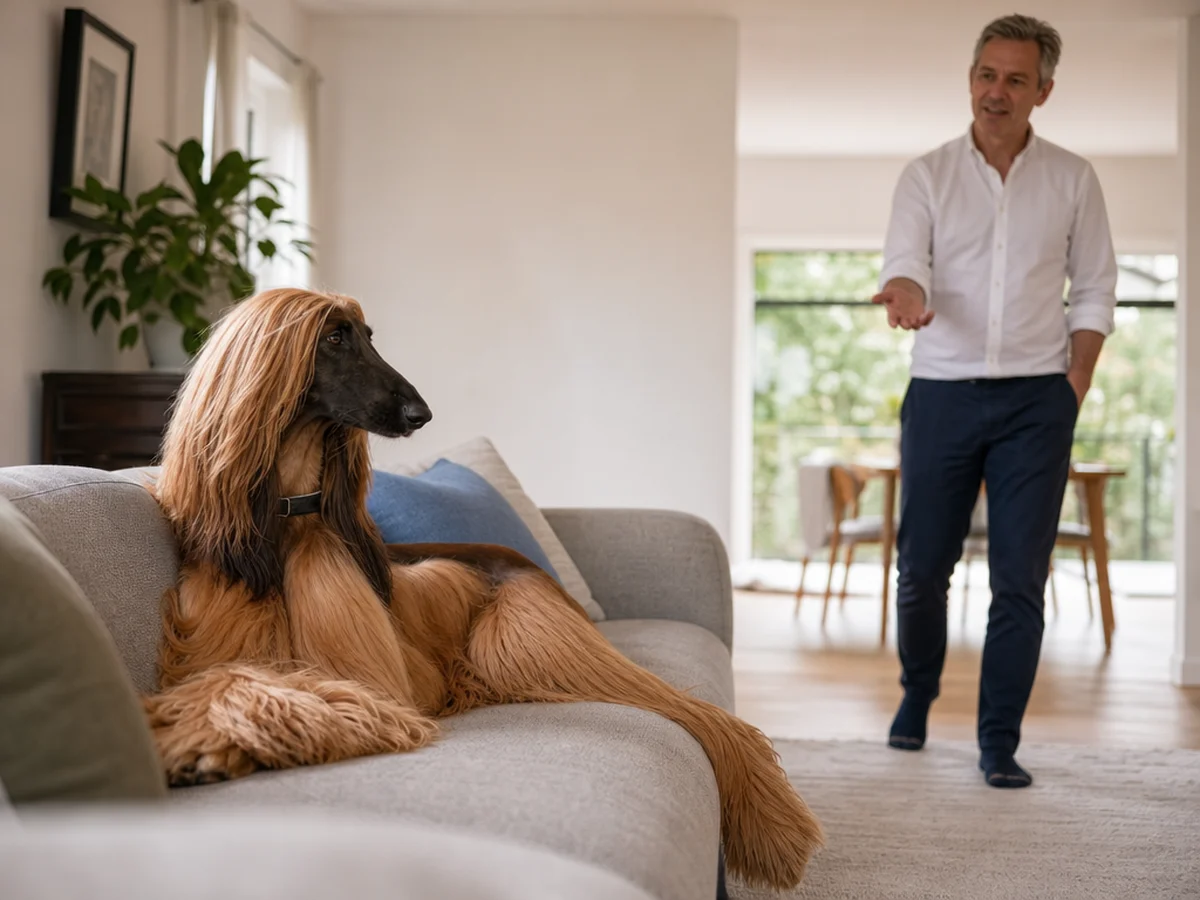
The lazy verdict is that Afghans are untrainable. The evidence says otherwise. The breed rates 1 of 5 for trainability, labeled "Self-Willed." That describes a dog who wants a reason, not a dog who cannot learn. It is independence, not defiance, and it has more than one cause.
Sort the Cause First
Run this test before you change anything. The answers separate a weak cue from a poor reward or an overwhelming distraction.
- If the dog ignores a simple cue in a quiet room, they were never taught it well, so go back and teach it with generous pay.
- If they respond indoors but not in the yard, the gap is distraction, so raise the difficulty in small steps.
- If they respond everywhere but only for a boring reward, the gap is payment, so find something they truly value.
- If they tune out only when something moves, you are looking at chase instinct, not stubbornness.
- If the tuning out is new, or comes with stiffness or reluctance, see your veterinarian before you train further.
Make Responding Worth It
Ask once. Repeating a cue is the usual response to a dog who isn't answering, but that habit teaches them the first request is negotiable. If nothing happens, make the task easier and ask again.
Pay for the first response, and pay well. Reward-based training works because rewards such as treats, play or praise make the behavior more likely to return. A sniff break counts, and this breed's silly streak makes play a strong payment.
Then ask for less. Unless competition is a goal, basic commands such as come, sit and stay are generally sufficient. Pressure backfires on a sensitive hound, and veterinary behaviorists hold that only reward-based methods belong in training. In one study, dogs from schools that used rewards had fewer stress behaviors, plus lower cortisol once their training sessions ended.
Visitors Meet Afghan Hound Reserve
The doorbell rings, the guest steps in, and your dog turns and walks to another room. The breed is dignified and aloof with strangers yet exuberant and playful with family, so the same dog who snubs your cousin may be silly with you an hour later.
Reserve and fear can look alike from across the room. The difference lies in the body and in how fast the dog recovers.
Reading the Difference
Use this table as a quick check when a guest arrives. It separates normal reserve from behavior that needs more distance and support.
| Signal | Normal reserve | Fear |
|---|---|---|
| Body | Loose, tail carried naturally | Stiff, crouched, trembling or panting |
| Distance | Strolls away calmly | Hides, corners themselves or tries to flee |
| Treats | Takes them once the guest is still | Refuses food entirely |
| Recovery | Settles soon after the visitor leaves | Stays tense long after |
| When approached | Walks around the person | Freezes, growls or snaps |
Helping the Reserved Dog
Respect the reserve. Some advice says to hold the dog still while a guest pets them so they learn strangers are fine. For an Afghan that teaches the opposite. Socialization means good experiences, not forced ones, and our guide to socializing an aloof Afghan Hound puppy shows how to build them.
Aim for a dog who tolerates guests politely, not one who adores them. Fear is another matter: widen the distance, pause visits and work below the point where the dog worries. Growling, snapping or hiding that does not ease calls for your veterinarian first and then a reward-based behavior professional.
Is Touch Stiffness a Behavior Problem?
Your hand lands on the dog's back and they go rigid, or they slide out from under your arm. Usually this is not a problem. It is a dignified, sensitive dog who likes affection on their own terms, and the breed rates only 3 of 5 for affection with family.
Still, three causes are worth separating. Each one points to a different first step.
Three Causes to Check
First, temperament. A dog who bonds deeply to their people can still dislike being handled whenever it suits you. Second, grooming. This coat needs frequent care, rated 4 of 5, so a dog who has had long, unpleasant sessions learns to brace for hands. Third, pain. A dog who suddenly stiffens or flinches in one spot needs a veterinary exam before any training plan.
Regular vet visits catch the third cause early. For the first two, teach that touch predicts something good.
- Offer a hand, let the dog sniff it and pay a treat. Stop there.
- Add one gentle stroke on a shoulder or chest, then pay, and let the dog leave whenever they want.
- Build to the places that worry them, one at a time, only while the body stays loose.
- Let the dog sniff each grooming tool, then do a few brush strokes, treat and stop before they protest.
- Lengthen sessions slowly over days and weeks.
Always keep an exit open, because trust grows when leaving is allowed. If stiffening turns to growling or snapping, stop and call in professional help.
Alone-Time Behavior Problems and Howling
You close the door and hear howling. You come home to a dog who has paced a path through the house. For a breed known for deep loyalty to the people they have bonded with, this is predictable, and it is also fixable.
Why They Do It
Several causes stack up, and you can often remove some of them. Start with the factor that is easiest to change.
- A strong bond with no practice at being apart, so departures feel like a crisis.
- Too little exercise, because short walks do not satisfy this athletic breed and energy rates 4 of 5.
- Boredom in a dog bred to scan the landscape, with nothing to watch or do.
- A recent move or change in routine, which hits a loyal dog hard.
Teaching Calm Alone
Exercise comes first. A dog who has run full out in a secure area is far more ready to rest than one who got a quick stroll.
Then teach alone time in small steps. Step out for seconds, return before the dog fusses and pay calm behavior. Add time slowly. Keep departures and returns boring, with no long goodbyes. A chew or food puzzle left at the start of absences gives the mind a job.
The breed's barking level is occasional, so constant noise, drooling or damage signals real distress, not habit. Talk to your veterinarian and a reward-based behavior professional.
Afghan Hound Behavior Problems by Age
No source publishes a calendar for this breed, and individual dogs run early or late. Read the table below as a sequence, not a schedule. The useful question is which behavior belongs to which stage, because that tells you whether you face a phase or a permanent feature.
| Stage | What you see | Outlook |
|---|---|---|
| Puppyhood | Sudden dashes after anything that moves, little interest in strangers | The chase instinct stays, so habits paid for now carry forward |
| Adolescent months | Cues ignored, bolder bolting, more energy | Improves with a long record of rewarded responses |
| Maturity | Dignified reserve with guests, affection on the dog's terms | This is temperament, so expect it to stay |
| Adult life | Predictable habits, good or bad, in a body built for speed | Chase and independence persist, while management becomes routine |
Changes With Age
The popular claim is that adolescence is a rebellion phase and the dog settles if you wait. Weigh it. The breed standard calls the Afghan a strong-willed, independent thinker, and that describes the adult, not a stage.
Verdict: waiting changes nothing. Paying for good choices does.
An adult who arrives in a new home is a special case. Their loyalty to the old family can make adjusting hard, so expect a withdrawn, slow-to-settle dog and read our guide to helping an adult settle in.
Long-Term Afghan Hound Behavior Problems
So, when does it end? Some problems do ease, and they ease because of what you paid for, not because the calendar turned. Adolescent ignoring improves once the dog has a long history of rewarded responses. Handling tolerance grows with gentle practice. Time alone gets calmer with exercise and repetition.
The instincts stay. The chase drive will be there in every year of life, so the fence, the leash outside it and the habit of checking latches never retire. Aloofness stays too. A dignified, stranger-wary hound is the breed, not a flaw. Independence stays as well, though it gets easier to live with when cues are few and well paid.
What changes is you. Management stops feeling like a rule and becomes routine: a secure yard, full-speed runs several times a week, treats in your pocket, guests briefed at the door. Some owners take their leashed Afghans on long runs once they reach maturity, and for the right adult this is a good outlet. Keep the regular vet visits as well, because a change in behavior is sometimes the first sign of something physical.
Stop waiting for this dog to outgrow being an Afghan Hound. Give the chase a safe outlet, such as the sports in our guide to Afghan Hound lure coursing and other jobs. With steady management the problems shrink, and what remains is the calm, loyal and silly companion you chose.
 Training basicsAfghan Hound Training: Come, Sit and Stay Are Enough
 Training basicsWait at the Door: Gate Manners for an Afghan Hound Who Bolts
 BehaviorBred to Chase by Sight: Managing the Afghan Hound's Prey Drive