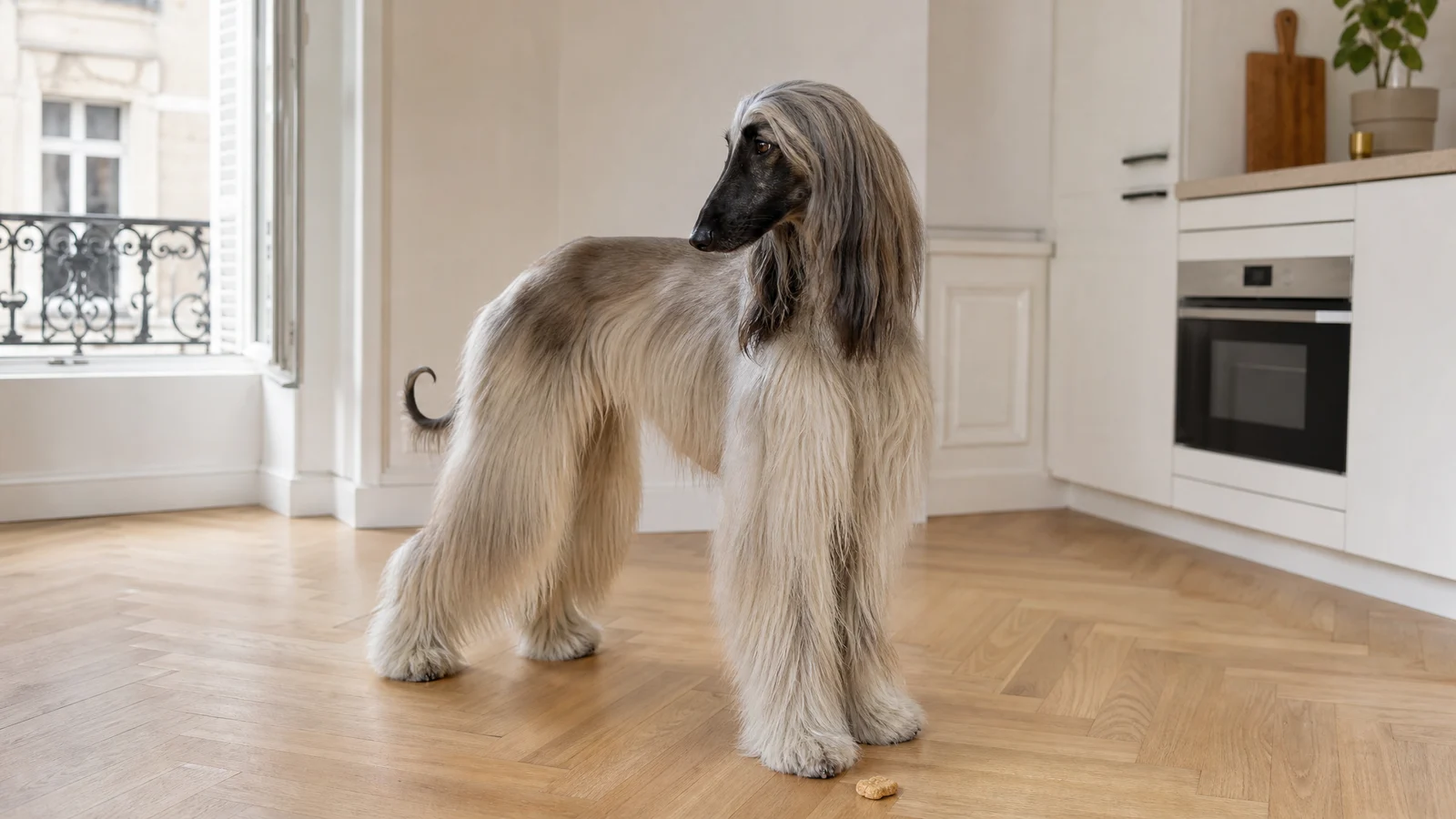
 Afghan Hound
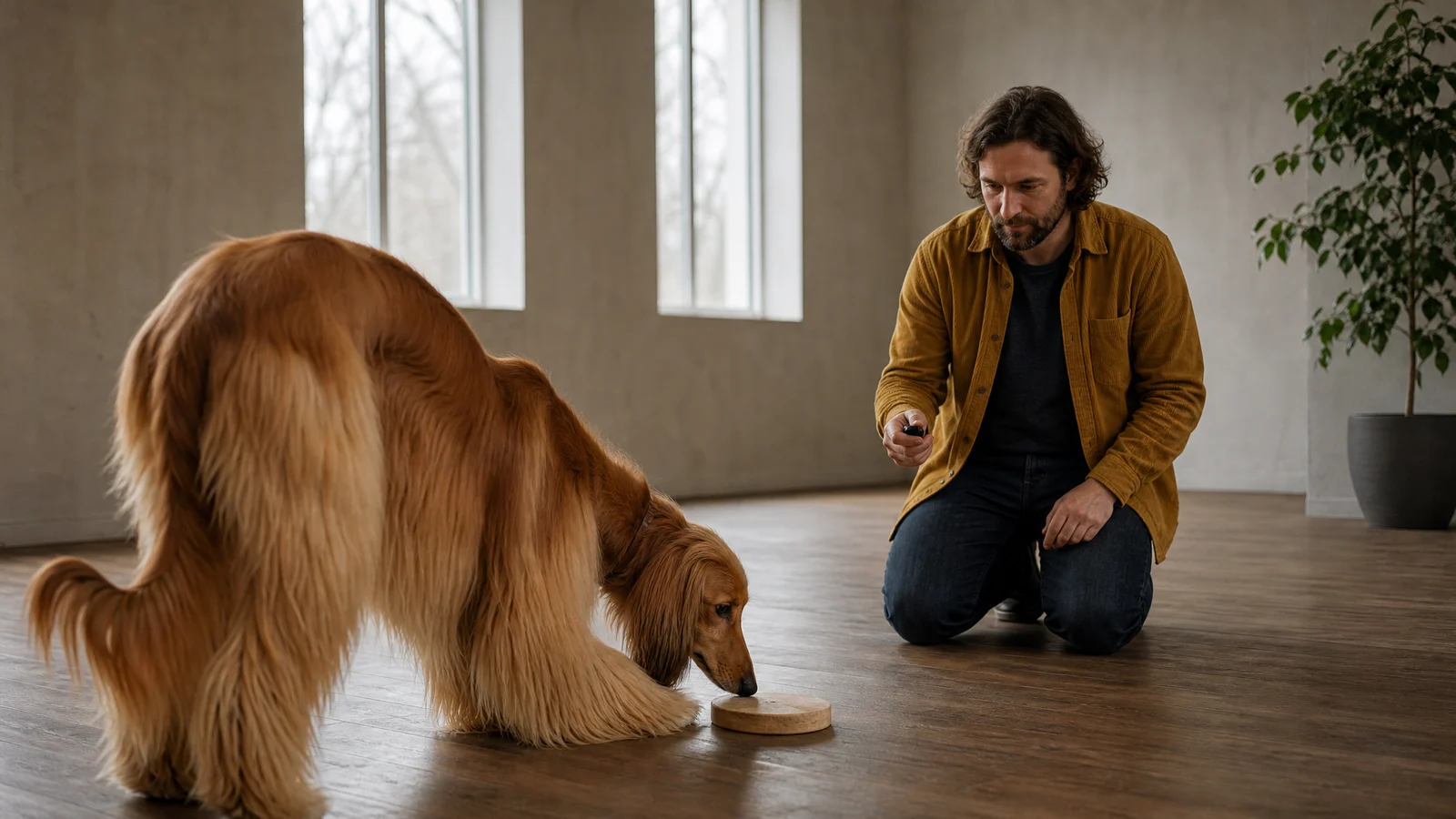
Most clicker problems begin in the handler's hand. The reward comes out of the pocket, the dog's eyes follow it, and the click lands a moment later on whatever the dog happened to be doing. A dog who learns from the hand learns about the hand, not about the action the sound was supposed to mark, and that is a hard habit to untangle later.
Below, you'll find the common timing slips that cause this, a way to give the sound one meaning, and a plan for moving visible rewards out of sight while the click keeps its promise. We keep it free of deadlines and repetition counts, because no source we use sets one.
Timing Slips That Blur the Afghan Hound Click
Three handler habits blur a click more often than anything the dog does. The click comes early, while the dog is still moving toward the wanted position. It comes late, after the dog has already moved on.
The third slip is a click that follows the reward hand instead of leading it, so the food is already traveling toward the dog's nose when the sound happens. Each slip marks something other than the action you meant to mark. Spotting the slip is half the repair, and the table pairs each one with a smaller adjustment for the next attempt.
| Slip | What the click may have marked | Adjustment |
|---|---|---|
| Click arrives early | An approach or a partial movement | Wait for the full action, or choose a smaller action on purpose |
| Click arrives late | The movement that followed success | Pick an action that stays visible long enough to catch |
| Hand moves first | Following the food rather than the action | Hold both hands still until the sound happens |
| Click happens by accident | Whatever the dog was doing at that instant | Deliver the reward anyway, then reset your hands and begin again |
Charging the Marker Without Asking for Anything
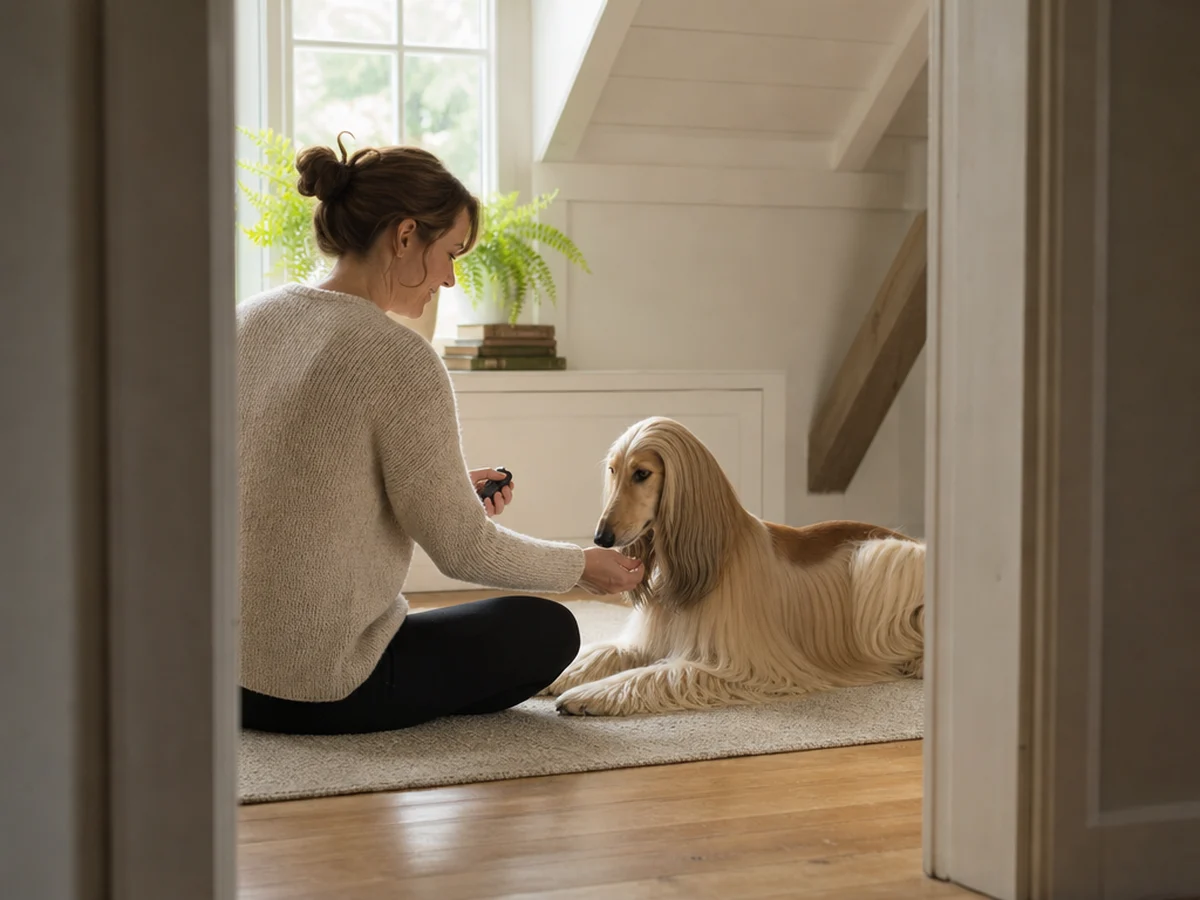
A click only means something after the dog has learned what follows it. Battersea's clicker lesson starts in a calm, quiet place: click while the dog is relaxed, then follow with a treat, and repeat that several times. It also says the click must land exactly on the wanted behavior and that the reward follows it promptly.
In this first stage there is no cue, no sit and no look. Only the order of sound and consequence is being taught.
The Blue Cross training advice frames the same idea as pairing a clear marker with a reward the learner values. That framing matters for sound choice too.
Hold the clicker away from the ears and watch the first response. Easy reward taking is a good sign, while startling or leaving is a reason to soften the sound, add distance or switch to a short spoken word paired the same way. Regular vet visits belong in the care plan, and if familiar sounds start producing a new reaction, stop and ask the veterinarian.
The UKC standard calls the Afghan Hound strong-willed and independent, and exuberant and playful with family. It does not predict how any one dog will respond to a clicker. It does support picking a reward this individual wants instead of hoping the sound alone will carry the lesson.
Mark the Click on One Action
Choose one small voluntary action that is easy to see, such as a head turn toward you or a nose touch to a still target. Wait without guiding the body, click while the action is happening, then deliver the reward even if the dog moves after the sound.
RSPCA guidance says that giving a dog something they really like, such as food, toys or praise, makes a behavior more likely to happen again. The marker identifies the action, and the reward does the reinforcing, with no promise about how quickly an Afghan will offer it again. When this pairing is steady, the Afghan Hound handling practice guide applies the same marker to cooperative care.
Afghan Hound Clicker Questions Worth Settling Early
A few doubts tend to surface once the pairing is under way and the food has started to disappear. Each has a short answer, and none needs a change to the steps above.
The Click Is Not a Command
A cue asks for a behavior, the click marks it, and the reward pays for it. These are three separate jobs, and mixing them is how a click ends up requested instead of earned. The click answers something the Afghan Hound has already done, while asking for an action belongs to the cue, which comes before it.
Does the Reward Have to Be Food?
Food is what the steps above use, but a toy or praise can serve if this dog truly wants it. What matters is that the reward is ready before the click and follows every click. Test what this dog works for instead of assuming.
Can Family Members Use Different Sounds?
A click only means something because of what reliably follows it, so every sound or word an Afghan Hound hears needs a separate pairing before the sound carries any meaning. Different sounds from different people mean several pairings to teach, and the sources we use do not say how quickly any dog sorts them out. One sound, with everyone delivering the reward the same way, is the simpler choice.
Fading Visible Rewards Behind the Afghan Hound Click
A visible reward is food in the hand, a treat held out as the dog works or a lure shown before the action. These help in the first sessions because the dog can see what is on offer. They also tempt the handler into clicking while looking at the food rather than at the dog, and they teach the dog to check the hand before trying anything. Fading means the reward stops being on display, while the click still always leads to a reward.
The sources we use do not give a schedule for this, so we describe the sequence without numbers or deadlines. Stay at each stage until the dog works comfortably there. If motivation seems to fade along with the visible food, the Afghan Hound trainability guide covers the wider picture.
Out of Sight, Still in the Deal
The dog should never conclude that a hidden reward means no reward. After every click, the food still appears, from a pouch, a pocket or a nearby shelf, and it is the same kind of reward the dog was getting when it was visible. Only the place it waits changes.
Moving the Reward Out of View in Stages
Change one thing at a time so the dog can follow what moved. Each stage below moves only the reward's waiting place, while the click and the action stay exactly as they were. Delivery changes only at the last stage, where you walk to the reward.
- Hold the reward in an open hand against your body, click the action, then deliver from that hand.
- Close the hand around the reward and hold it still at your side before and during the action. Click, then open the hand to deliver.
- Put the reward in a pouch or pocket so both hands are empty. Click the action, then take the reward out and deliver it.
- Place the reward on a nearby surface out of reach. Click, walk to it and deliver, so the dog learns the sound still leads to food even when it is not on you.
An Honest Click Over Time
The click works because it means one thing every time: this instant earned a reward, and the reward is coming. Each shortcut, such as an empty click, a hand that jumps early or a reward that fails to appear when the food is out of sight, makes that meaning harder to read.
That is why the setup and the fading are one skill, not two. A prepared reward, a calm start and a marker the dog can hear comfortably give you the freedom to move the food out of view later without losing the dog's trust in the sound.
 Training basicsAfghan Hound at 1 Year and Up: When Do They Calm Down?
 Training basicsAfghan Hounds With Cats and Other Dogs
 Training basicsHow to Teach an Afghan Hound to Leave It