 Afghan Hound
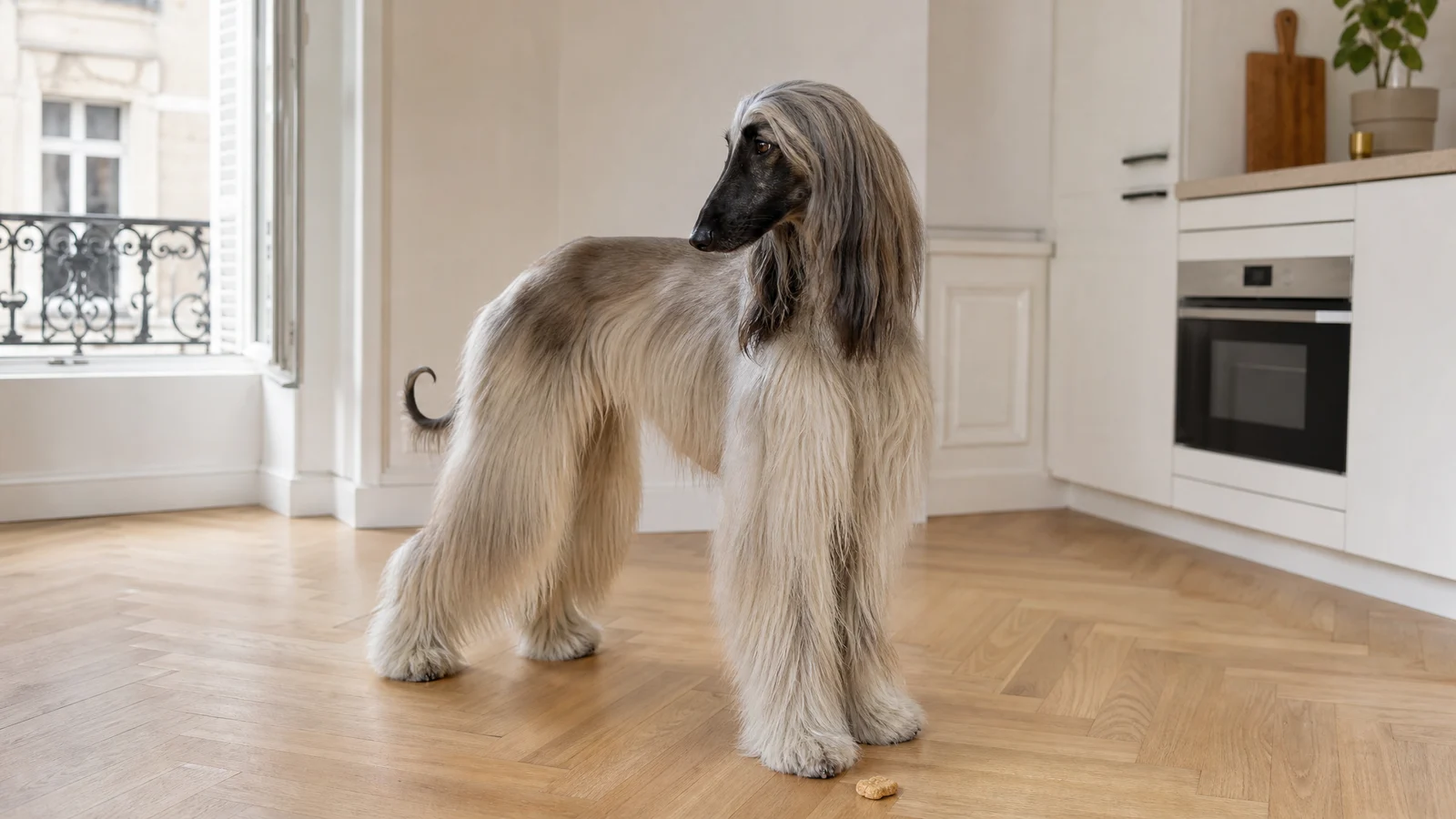
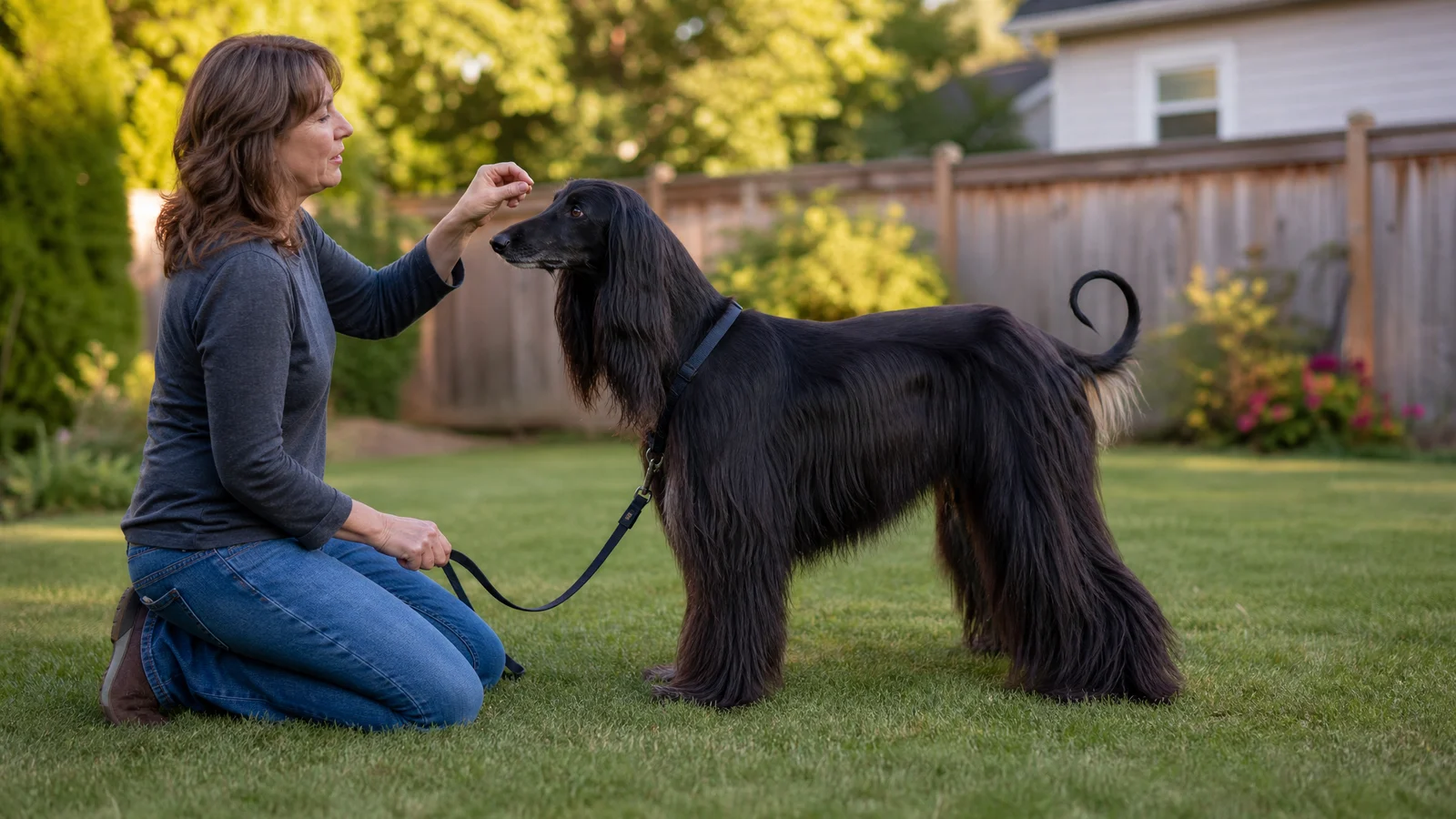
Teach an Afghan Hound to leave it by blocking access to an untaken practice item, then marking and rewarding the moment they turn away voluntarily. The protected setup prevents the lesson from becoming a race between the dog and the handler.
This cue applies before an item enters the dog's mouth. It does not retrieve a held possession or treat resource guarding, and it never replaces barriers around a real hazard. The household also needs one cue and consistent reward placement so practice never becomes a contest over the object. This guide starts with protection, builds one disengagement sequence, routes other item situations to the right response and keeps management in place at the end.
Protect the Item Before Teaching Leave It
Choose a low-value object that the dog has no history of defending and place it where they can notice it but cannot take it. A closed hand, covered container or barrier can protect the object while leaving enough distance for the Afghan to look and make another choice.
Do not begin with an unsafe household item, questionable food, wildlife or another genuine hazard. Put those things out of reach first. A training cue is a practiced response under arranged conditions, not permission to leave dangerous material available as a test.
The UKC Afghan Hound standard describes a well-developed chase instinct. That does not predict one dog's response to every object, but it supports using a leash and physical boundaries around moving outdoor targets instead of testing leave it against pursuit.
We recommend deciding how the practice object will stay protected before bringing the dog into the area. The handler should be able to end the lesson by removing the setup without reaching toward the dog's mouth or competing for possession.
Teach an Afghan Hound to Turn Away Voluntarily
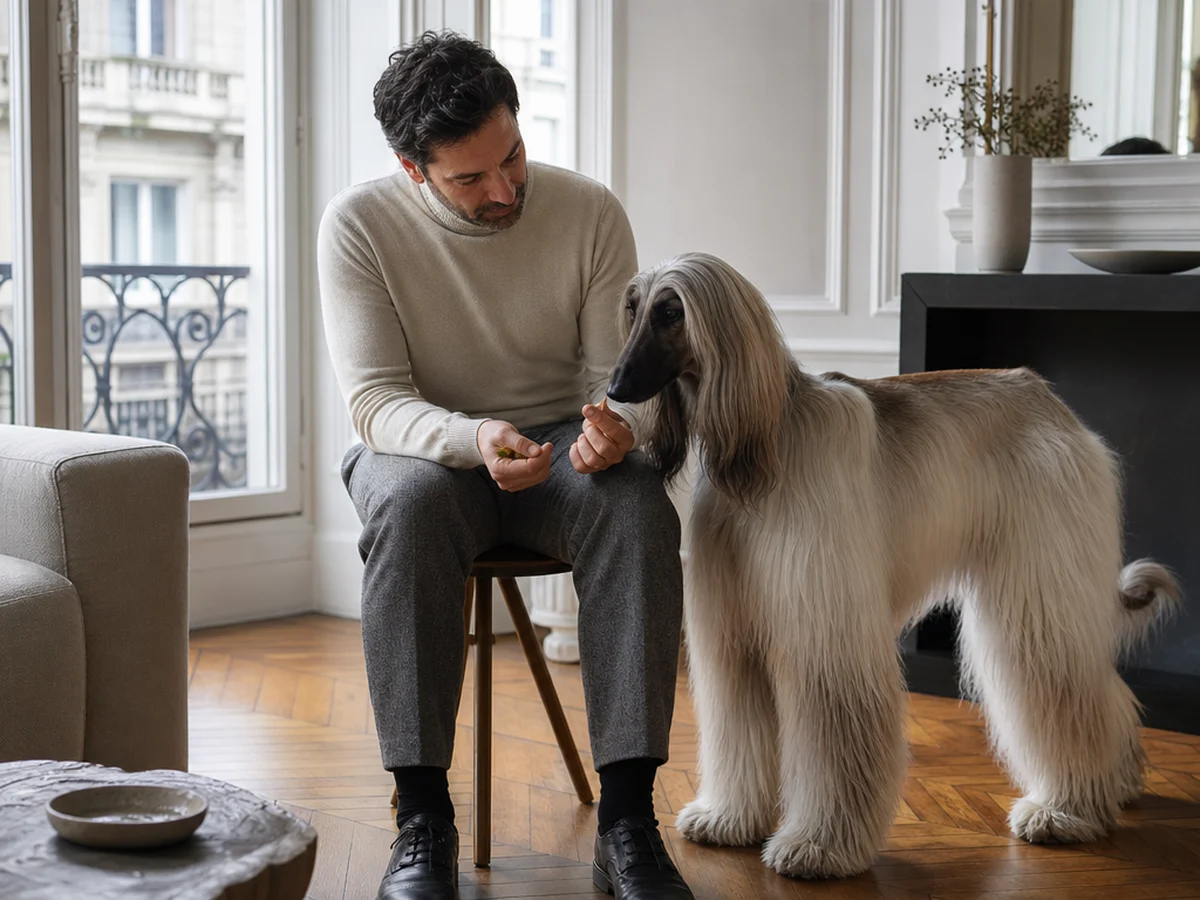
Dogs Trust leave-it guidance supports protecting a low-value item, marking movement away and rewarding from the other hand. Add the verbal cue only when disengagement has become predictable in that easy setup.
A marker identifies the instant the Afghan stops investigating or turns their head away. Blue Cross training guidance supports building a clear connection between a marker and something the dog values. Deliver the reward away from the practice item so the dog's movement has a useful destination.
Use this general method with the practice item still inaccessible. The goal is a voluntary turn, not endurance beside temptation:
- Protect the low-value item and wait at a distance where the Afghan can observe without taking it.
- Stay quiet while the dog investigates, then notice the first look or movement away.
- Mark that disengagement precisely without moving the protective hand toward the dog.
- Deliver a separate reward from the other hand and away from the practice item.
- Add the leave-it cue just before the now-predictable turn, while the setup remains unchanged.
Reset only after the reward is finished and the protected item is ready again. If the Afghan keeps pressing toward it, increase distance or make the object less interesting rather than repeating the cue or waiting for a struggle.
When Leave It Is the Wrong Task
Pause before choosing a response to an item problem. The location of the object and the dog's behavior determine whether this lesson applies, whether a separate exchange is needed or whether the priority is creating distance and preventing access. The table routes common situations without asking leave it to do every safety job.
| Item Situation | Correct Route |
|---|---|
| Low-value item is protected and not yet taken | Practice voluntary disengagement, then add leave it |
| Possession is already in the dog's mouth | Use a separately taught exchange or drop-and-trade plan |
| Dog freezes, hovers, stiffens or guards access | Create space, avoid testing and seek qualified reward-based help |
| Urgent hazard or moving outdoor target | Block access, attach equipment or leave the area rather than relying on the cue |
Humane World guarding guidance distinguishes giving an item up from leaving it and says to make a rewarding exchange whenever the handler needs the possession back. Do not reach into the dog's mouth or use the protected practice exercise as a training test around a defended resource.
The Afghan Hound recall training guide owns returns around movement inside secure arrangements. Leave it can support a practiced choice near an untaken item, but it is not an off-leash safety guarantee when pursuit begins.
Leave-It Questions Before Real-World Practice
The body has covered protected access, voluntary disengagement and the boundary with held or guarded items. Three household details remain about reward placement, cue consistency and what happens to the practice object after the dog turns away.
- Can the reward come from a different hand?
- Yes. A separate hand helps deliver the reward away from the protected object and keeps the object itself inaccessible. Mark the turn first, then deliver the reward at a separate finish point away from the protected object.
- Should every household member use the same cue?
- Yes. Agree on one word and use it only for disengaging before an item is taken. Everyone should also follow the same protection and reward setup instead of using the cue while an object remains available.
- Should the dog receive the practice item afterward?
- No access is required for this exercise. Remove the protected item while the dog is elsewhere and use the separate reward as the consequence for disengaging. Another training plan can teach access on a different cue when that is appropriate.
Keep Afghan Hound Leave-It Practice Behind Safe Boundaries
Keep hazards inaccessible even when leave it works well in arranged practice. Use closed storage, attached equipment and distance as the safety layer, then treat a successful cue response as useful training rather than proof that management can disappear.
Maintain regular vet visits and pause training when willingness or behavior changes unexpectedly. For guarded items, create space and seek qualified reward-based help. For ordinary practice, return to the protected low-value object whenever the cue becomes slower or the Afghan starts competing for access.
 BehaviorCan an Afghan Hound and a Cat Really Be Friends?
 Exercise and jobsSafe Lure Coursing and Sports Jobs for an Afghan Hound
 Training basicsTraining an Independent Afghan Hound: An Owner's Roadmap