 Afghan Hound
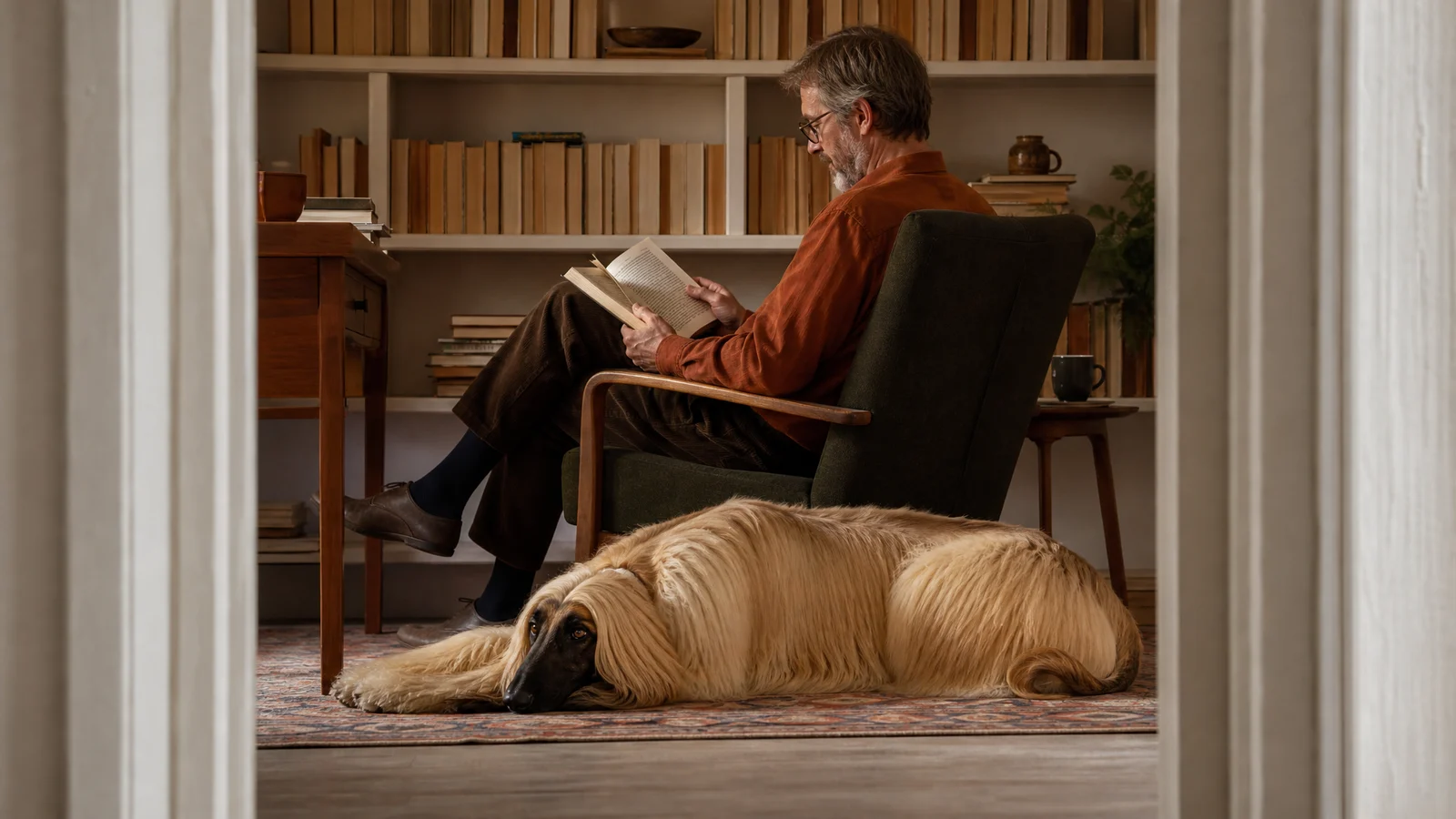
An Afghan Hound does not have a known calm-down date at one year old. The first birthday is better treated as a review point, because a dog can look adult while familiar behavior still changes with the room, activity, rest and recent experience.
Ask what calm would look like in the part of the day that matters. Resting while people move around, recovering after an outing and responding to a familiar cue are separate observations, so one quiet hour cannot grade the dog's overall maturity.
This guide separates the calendar question from the adult routine you can evaluate. We will retain one useful skill, keep activity and rest in different roles, compare repeatable observations and finish with a routine worth keeping instead of a deadline to beat.
One Year Does Not Set an Afghan Hound Calm-Down Date
Cornell veterinary guidance says adolescence generally ends around 18 months and can continue until two years depending on the breed or individual dog. That is broad guidance for dogs, not an Afghan Hound promise or a date when household behavior becomes settled.
Physical appearance, learning history and behavior in one setting answer different questions. A first birthday does not show that growth is complete, that a cue will transfer everywhere or that activity should increase. Use the date to review the routine while letting the dog's current response guide each decision.
Compare ordinary parts of the day before choosing a next step. Note where the dog rested, what activity came before it and whether a familiar request was available. That record cannot establish maturity, but it can show which setup the household can repeat.
A change also needs context. If settling, appetite, movement, sleep or willingness changes suddenly, record what you see and speak with the veterinarian instead of waiting for another birthday or assigning the change to maturity.
Retain One Useful Skill After One Year
The AKC Afghan Hound profile describes the breed as independent, dignified and aloof in general, while affectionate and loyal with bonded people. Those sourced traits can shape expectations about presentation, but they do not predict one dog's response or make reward-based teaching unnecessary after age one.
Choose a familiar behavior that helps the adult day, such as going to a resting mat before the household becomes busy. Use the Blue Cross marker principle: identify the correct response clearly, then follow it with something this dog values. Keep the request narrow enough to compare under ordinary conditions.
General method for retaining one familiar skill: use the same cue and success criterion while changing only what the next observation justifies. This is a review sequence, not a timetable for adult reliability.
- Choose one behavior that already has a clear use in the adult routine.
- Arrange the easiest current setting where the Afghan Hound can participate comfortably.
- Give the familiar cue once, mark the useful response and deliver the valued reward.
- Record the context, then repeat it or simplify one condition at the next practice.
If the response disappears, restore the last workable setup before changing the cue or adding pressure. The result tells you about that place and difficulty, not whether the Afghan Hound has reached a permanent stage of maturity.
Compare the same cue in two fair settings only after the first is stable. Change the room, handler position or background movement, but not all three. If the Afghan responds differently, the contrast identifies a context to simplify instead of a reason to judge the dog's adult character.
Adult Rest and Activity After One Year
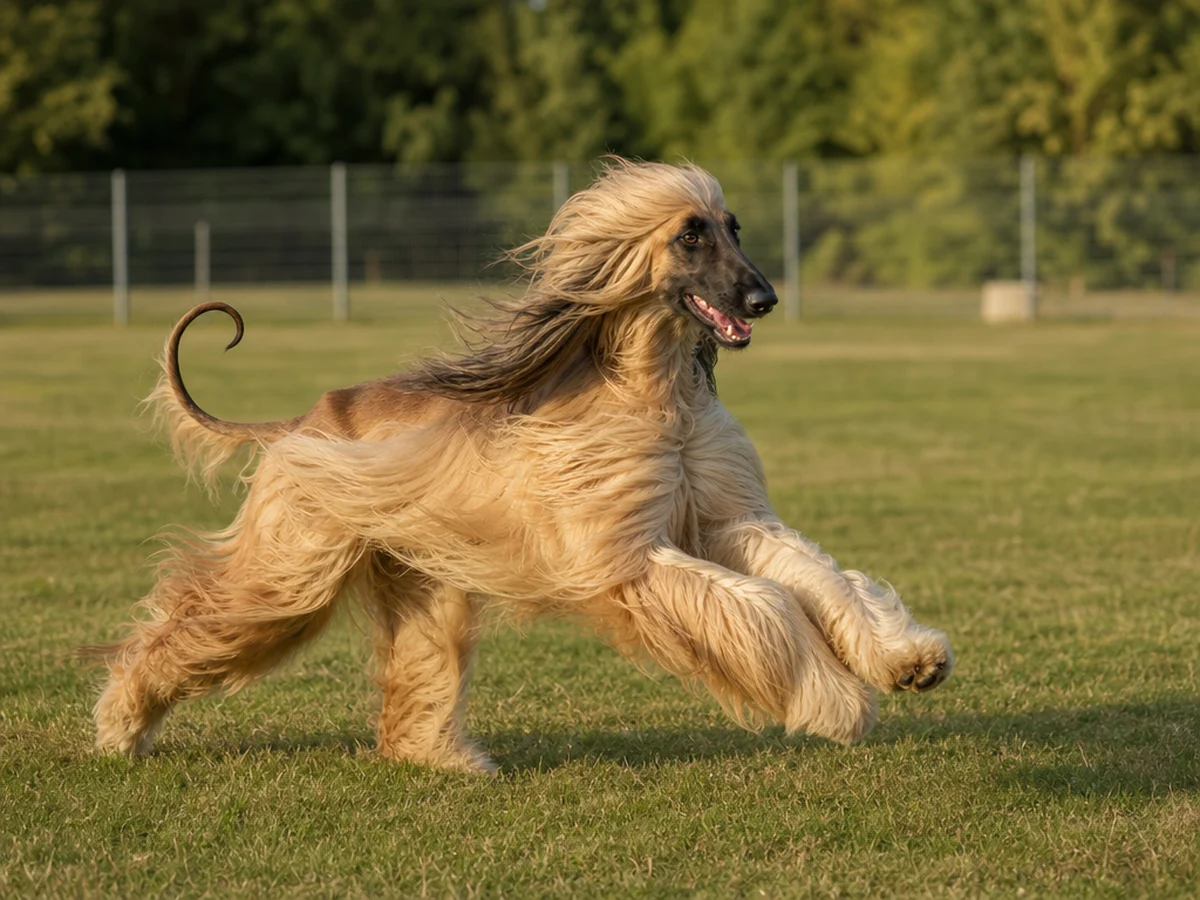
An adult routine needs room for comfortable movement, learning and undisturbed rest. Activity can meet movement and exploration needs, while rest allows the dog to disengage. Neither role proves that the dog is calm everywhere, and tiring a dog is not a reliable behavior solution.
The PDSA adolescent dog advice says not to punish missed listening and to continue with patient, reward-based work. Carry that principle beyond the first birthday by lowering lesson difficulty when the response is unavailable instead of using adult appearance as a reason to insist.
Do not trade one need for the other. A dog who had an active outing still needs a usable place to rest, while a quiet day does not automatically call for a harder session. Keep the parts of the routine visible so activity, learning and sleep can each be adjusted for their own purpose.
Use the separate Afghan Hound exercise guide for the full activity discussion. Here, compare how the dog moves, settles and recovers under similar conditions. Keep regular vet visits in the care plan, and pause activity or training when movement or willingness changes unexpectedly.
Compare Adult Routines Without Grading Maturity
Choose observations another household member could recognize, then compare them in the same context. The table is a management record, not a health or birthday judgment. Its last column identifies a useful question rather than claiming why the behavior occurred.
Make like-for-like comparisons when possible. A calm room after an ordinary walk cannot be compared fairly with a busy room after visitors, and a cue offered from a new position is not the same setup. Record the differences before interpreting the response.
| Observation | Context to Record | Appropriate Help Question |
|---|---|---|
| Settles in the usual resting area | Household movement, noise and access were familiar | Can the same setup be repeated before one detail changes? |
| Recovery takes longer than usual | Note the outing, visitor or schedule change that came first | Would a trainer simplify this routine or its transition? |
| A familiar cue works in one room only | Record surface, distance, handler position and distractions | Which single context change should be made easier? |
| Movement or willingness changes suddenly | Describe when it appears and what ordinary action is affected | What should the veterinarian assess before practice resumes? |
Review several comparable entries before making the routine harder. A workable pattern is one the household can reproduce without forcing contact, adding physical demands or treating silence as proof of comfort.
Afghan Hound Questions After the First Year
Once a dog is past a first birthday, owners stop waiting for puppy behavior to fade and start judging the routine they actually have. The questions that follow come up most often at that point, and they involve a changed home, an unusually quiet day and learning that does not require harder physical work.
Can a newly adopted adult Afghan Hound need an introductory class? Yes, when the format and environment fit the individual dog. A changed home can make familiar responses look different, so use the Afghan Hound adult adjustment guide for arrival priorities and ask a reward-based professional how to keep the class setup manageable.
Should one quiet day change the Afghan Hound's whole routine? No. Record sleep, activity, appetite, movement and household changes, then compare the same part of another ordinary day. A sudden or persistent difference belongs with the veterinarian rather than a guess that the dog has finally calmed down.
Can an adult Afghan Hound learn tricks without harder physical work? Yes. Choose a comfortable low-impact behavior and teach it through small rewarded choices without assuming that learning must add speed, jumping or duration. Stop when the dog disengages or the movement no longer looks easy.
Choose the Adult Routine to Keep, Not the Deadline to Beat
Keep the routine that produces clear, repeatable participation now. That may be one familiar cue in an easy room, an activity followed by comfortable recovery or a resting setup the dog chooses while the household moves normally.
Raise one demand only when the comparison supports it, and restore the easier version when the response changes. One year is a useful time to review what works, but the honest adult plan keeps learning, rest, activity and professional assessment in their proper roles instead of promising a calm-down date.
 Training basicsAfghan Hounds With Cats and Other Dogs
 Training basicsHow to Teach an Afghan Hound to Leave It
 BehaviorCan an Afghan Hound and a Cat Really Be Friends?