 Afghan Hound
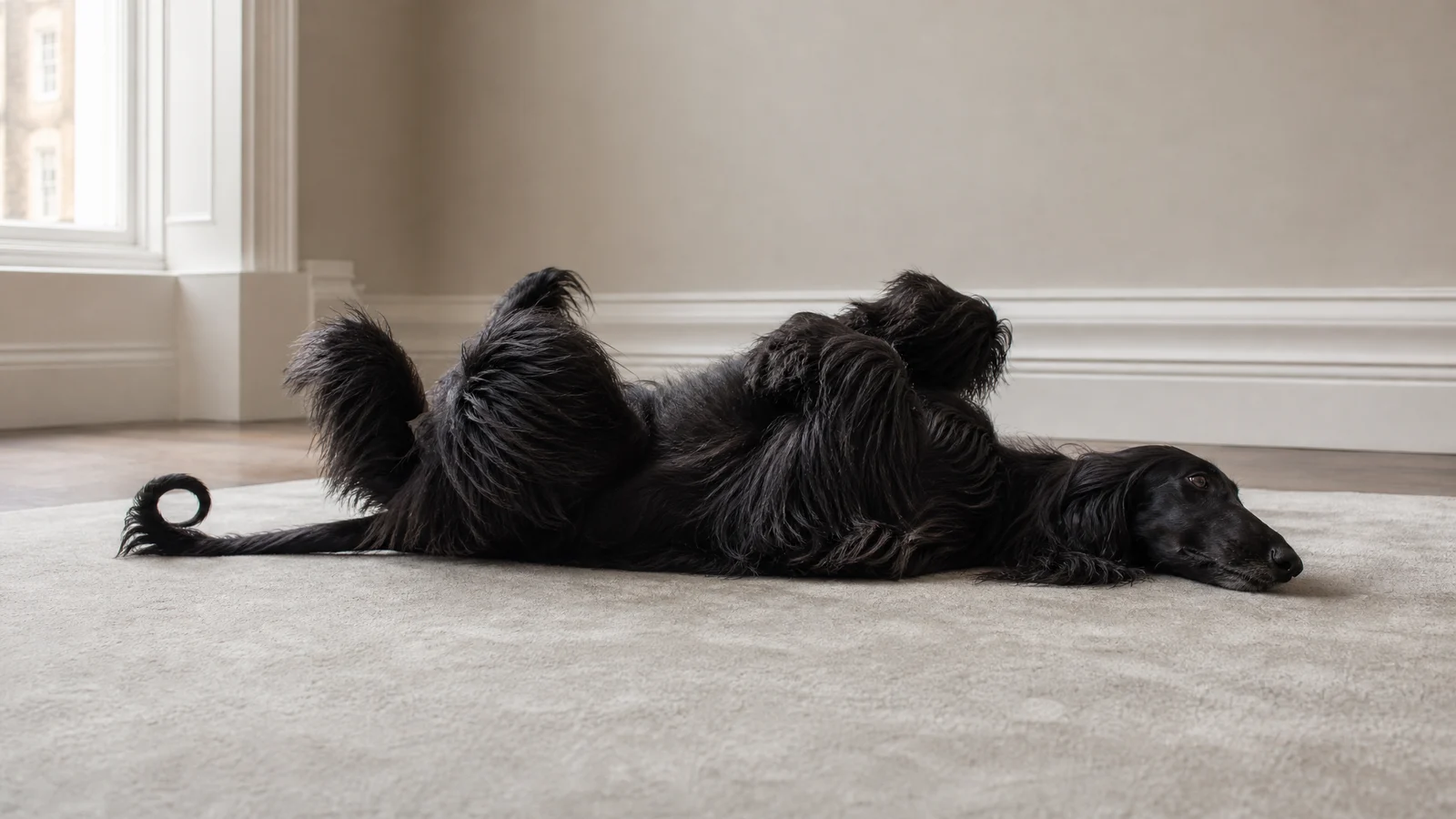
Start roll-over training from a comfortable down and reward one voluntary shift toward the Afghan Hound's side. A complete rotation is optional. Stop when the dog resists the movement, changes gait, protects a body area or appears uncomfortable.
The first lesson is an assessment of surface, space and willingness, not a test of whether the dog can be guided through the whole trick. Use a non-slip area with enough room for the legs and coat. Keep hands off the body and let the dog choose each change in position.
Build only from movement the Afghan Hound already offers comfortably. Mark the small side shift, deliver the reward where it supports that position and pause before asking again. A relaxed side rest can remain the finished trick when a full roll adds no useful benefit.
Check the Afghan Hound's Resting Surface First
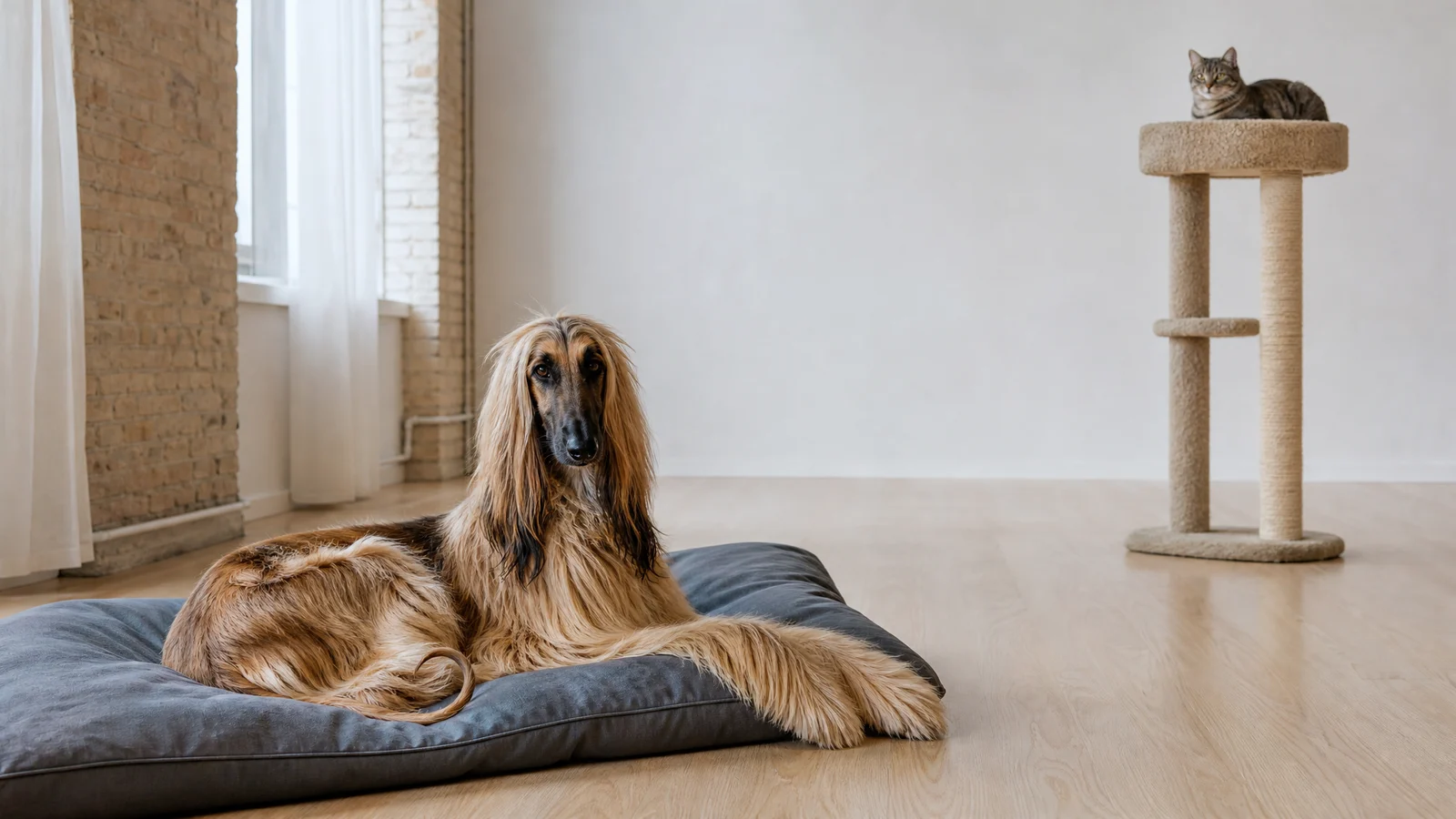
Choose a level surface that provides traction without crowding the Afghan Hound against furniture or a wall. Clear objects that could catch the coat or block a shoulder. The dog should be able to stand up and leave without stepping across the handler.
While a puppy is still growing, PDSA exercise advice calls for traction, rest and limits on twisting, jumping or skidding. Ask the veterinarian what movement suits the individual because the source does not set an Afghan-specific clearance age for this trick.
Watch how the dog enters and leaves an ordinary down before moving a reward. If lowering one shoulder looks uneven, hurried or reluctant, do not use food to pull through that hesitation. End the lesson and seek veterinary guidance about a new or concerning movement change.
Keep regular veterinary visits part of the dog's care. The handler can describe the surface, direction of movement and moment the change appeared, but should not diagnose the cause from a refused trick. Resume only when the individual care plan supports that movement.
Skip the Trick When Movement Changes
Do not physically place the Afghan Hound on their side, hold a leg or roll the body with the hands. Physical completion hides whether the dog chose the movement and can add pressure to a position that is already uncomfortable.
Separate trick practice from cooperative body handling. The approved Afghan Hound handling practice guide owns voluntary paw and ear checks. Neither lesson is permission to restrain the dog or continue through avoidance.
Build Roll Over From One Rewarded Side Shift
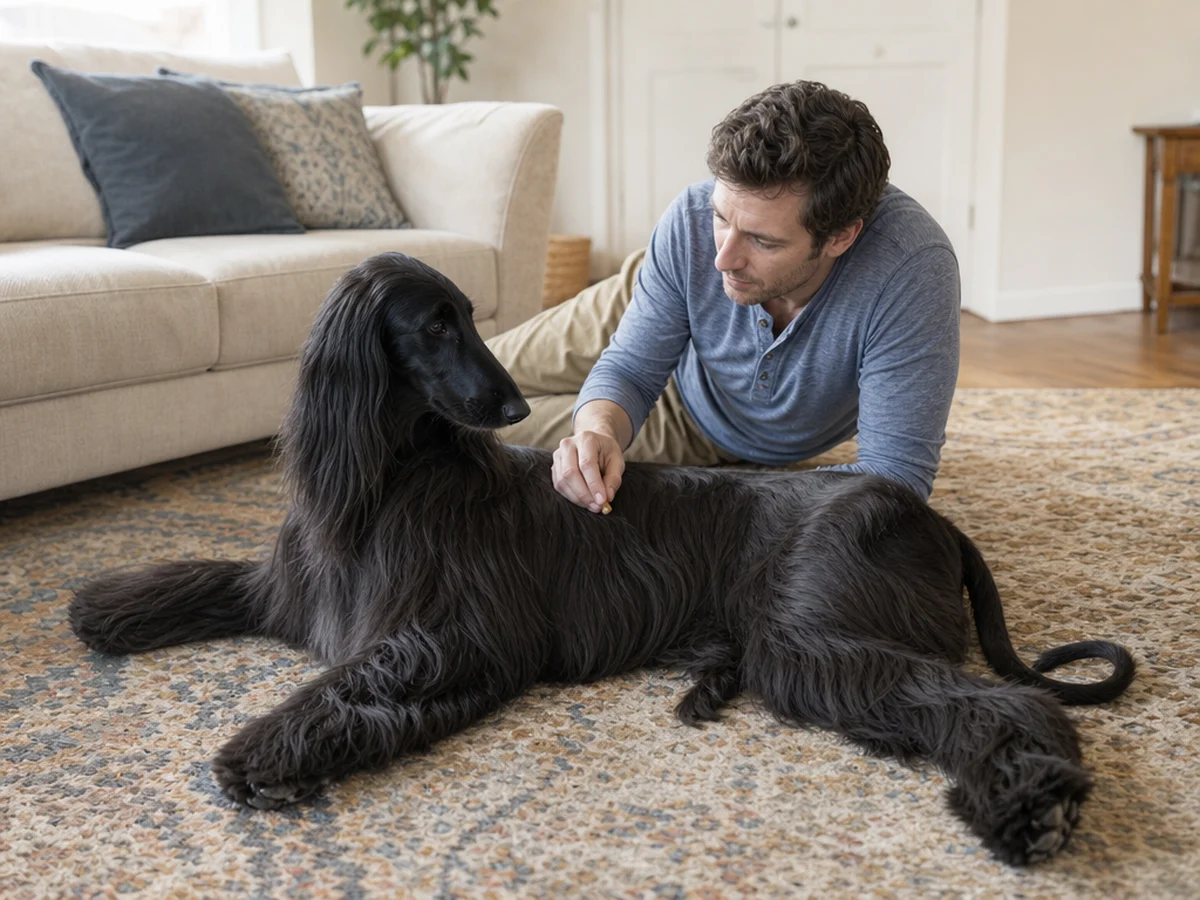
The American Kennel Club roll-over method begins after the dog is lying comfortably. It moves the guide toward one shoulder, pays the first side shift and expands from there toward a voluntary rotation. Use that progression as small choices, not as a reason to insist on the final rotation.
Choose a reward the dog can take without springing to their feet. The RSPCA training guide supports reward-based work and says food, toys or praise can increase the chance that a rewarded action happens again. Food, a toy or praise can serve that job when it fits this dog and position.
Use the following general approach only while the Afghan Hound remains loose and willing. The reward guide should invite a small head and shoulder change, not pull the nose into a tight arc. Stop the sequence as soon as the dog stands, braces or moves away.
- Begin in a comfortable down. Wait until the dog settles with room to move on either side.
- Guide slightly toward one shoulder. Move the reward only far enough to invite a voluntary weight shift.
- Mark the side movement. Identify the first chosen lean or side rest rather than waiting for a full rotation.
- Reward that position. Deliver the outcome where the dog can remain comfortable without twisting back.
- Pause and release. Let the dog stand, reset or finish instead of immediately repeating the arc.
A clear marker helps separate the chosen movement from the reward delivery. Blue Cross training guidance connects an unambiguous marker to something the dog values. Mark the instant the shoulder shift happens, then provide the reward without moving the dog farther.
Add a spoken cue only after the same comfortable movement is offered predictably in response to the guide. Say the cue before the familiar guide, then reduce the guide gradually. If the movement disappears, return to the last small choice rather than repeating the word.
A full roll should emerge as a voluntary continuation from the side, not from momentum created by the handler. Reward the side rest repeatedly before inviting a little more arc. If the Afghan Hound prefers to stop there, the lesson has still produced a clear and useful behavior.
Cue and Alternative Questions About Roll Over
The body covers surface choice, movement concerns, a general side-shift sequence and later cue timing. Three practical gaps remain about keeping the smaller behavior, naming the cue and interpreting rolling that happens outside a lesson.
- Can a rewarded side rest be the finished trick?
- Yes. Give the smaller behavior its own cue if it is comfortable and useful to the household. A full rotation is not required to make the training successful.
- Should I name the cue before the dog offers the movement?
- No. First build a predictable voluntary side shift from the guide, then say the cue before that familiar setup. Repeating a word while the dog is uncertain does not make the movement clearer.
- Does rolling during play prove the dog wants to roll on cue?
- No. Play occurs in a different context and does not guarantee comfort with the handler's setup. Use the same surface check and voluntary progression instead of assuming the playful movement transfers automatically.
Keep the cue distinct from any word used for grooming, veterinary handling or a resting position. A separate cue helps the dog predict this optional trick and makes it easier for the handler to stop when the response changes.
Finish With the Comfortable Side Rest
End the lesson after one clear, comfortable choice. Release the Afghan Hound to stand or rest normally, and record which side, surface and reward supported the movement. Do not increase the arc simply because the smaller behavior looked easy.
If the dog continues into a voluntary roll, mark and reward it without grabbing the legs or repeating the motion immediately. If they remain on their side, accept that result. The trick succeeds when the dog understands an optional cue and stays comfortable, not when every Afghan Hound completes a full rotation.
 Training basicsClicker Training an Afghan Hound
 Training basicsAfghan Hound at 1 Year and Up: When Do They Calm Down?
 Training basicsAfghan Hounds With Cats and Other Dogs