 Afghan Hound
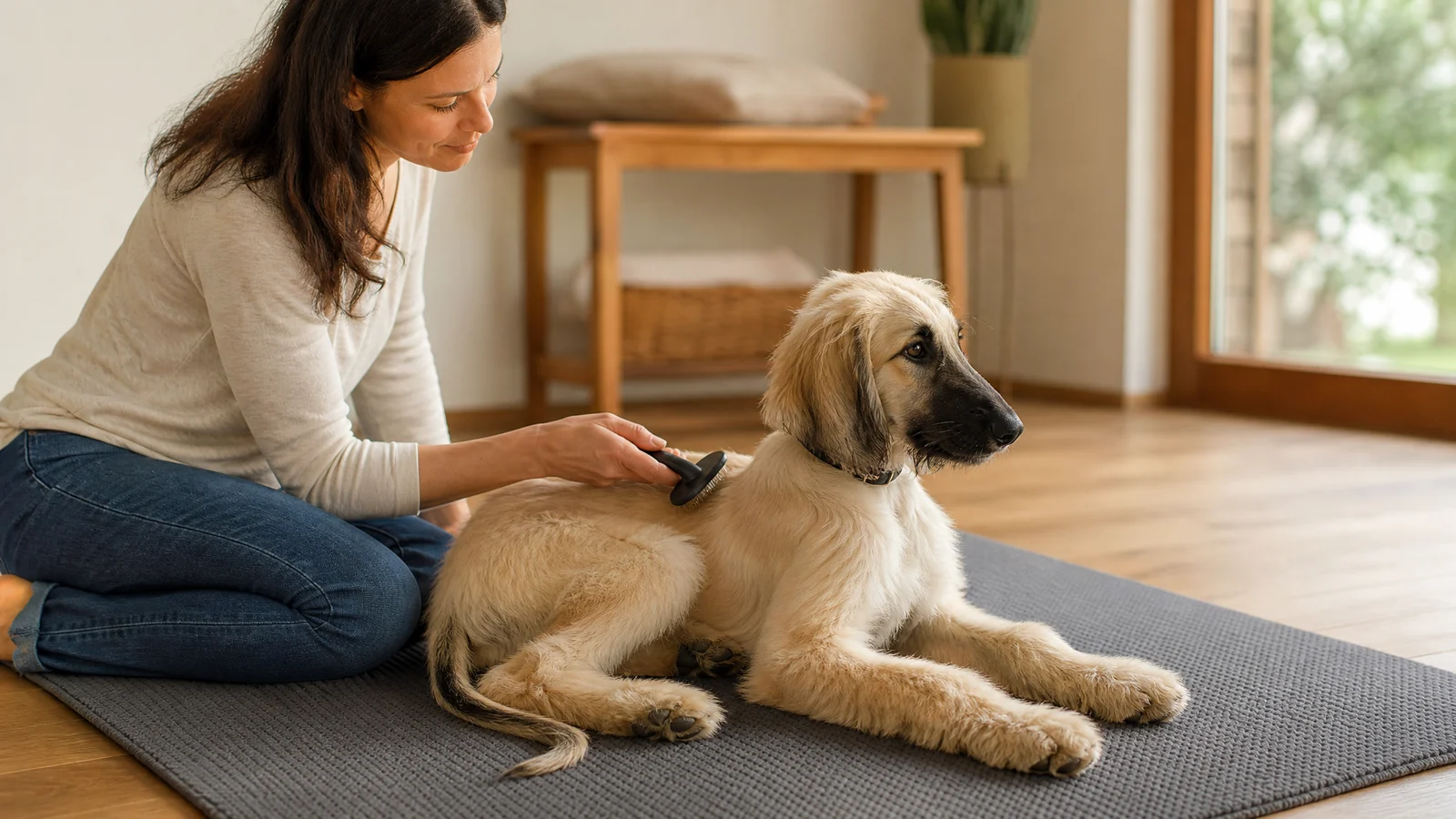
The brush comes out of the drawer and the puppy reacts at once: a spin, a squeal, and a bolt under the sofa, leaving you holding the brush and wondering how you will ever manage a floor-length coat. It looks like a dramatic personality, but it is mostly inexperience. The puppy has not yet learned that being handled is safe and that it pays well.
We specialize in Afghan Hound behavior and training, and the brush is one of the first skills we would teach. This article looks at puppy training for grooming through the symptoms you will actually see, from wriggling and mouthing to freezing and growling, so you can match each one to its cause and fix it with treats and very short sessions. Done early, it spares you knots and wrestling matches. Done well, it gives you an adult who offers their body for care.
Why Afghan Hound Puppy Training Starts With the Brush
The breed's coat grooming frequency is rated 4 of 5, where 5 means daily, yet shedding is rated just 1 of 5. Those two numbers look like they disagree, but they describe the same coat. Long, fine hair that sheds very little does not fall away. It stays on the dog and twists into tangles, so the daily work is brushing out hair that would otherwise knot, not sweeping fur off the floor.
That coat once protected the breed in the harsh climate of the mountains where they earned their keep. The standard, which received final approval in its clarified form in 1948, asks that the Afghan Hound be shown in a natural state, with the coat not clipped or trimmed. So the aim is never a short haircut for easy care. The aim is a long coat kept free of tangles, and that depends on a dog who stands for the brush.
Why Early Handling Matters
Handling has to be taught in puppyhood because the alternative is slow. A dog who has not been groomed since puppyhood will likely need several months of gradual exposure before being comfortable with shears or clippers, and a full-length Afghan coat leaves little room for that delay. Teach it while there is still little hair to tangle and mistakes are cheap.
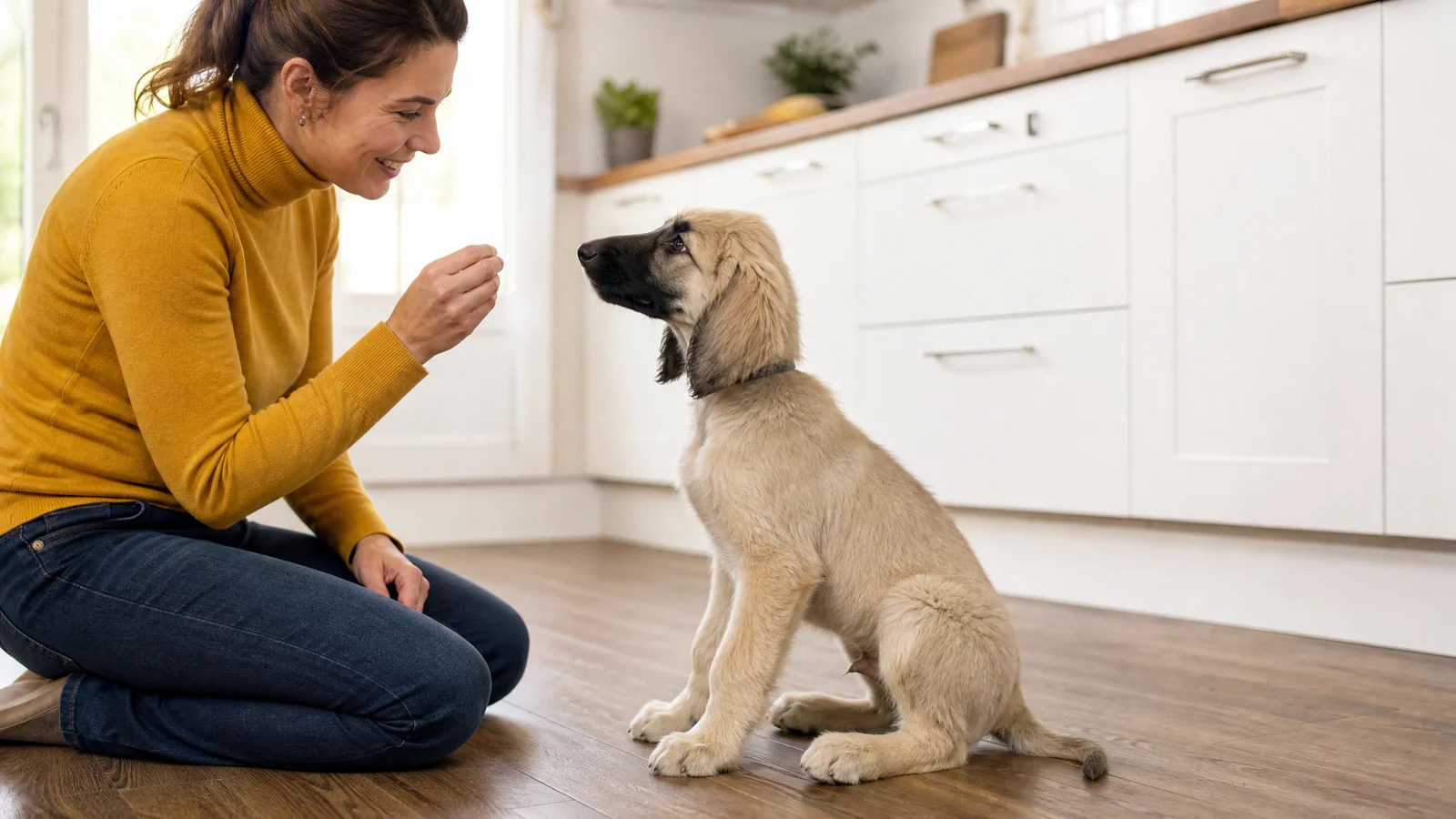
Temperament shapes the method. This is a dignified, aloof sighthound whose trainability is rated 1 of 5, self-willed, so holding a puppy still wins nothing. Treats, a marker word such as a bright yes, and sessions that end before the puppy tires of them make cooperation the best deal in the room. Short, happy, and rewarded beats long and thorough.
Wriggling and Flopping in Afghan Hound Puppy Training
Spinning, sliding out from under your hand, or flopping onto the floor like a rag are the most common brush protests, and they usually trace to one of three causes. The session ran longer than the puppy can bear. A hand is holding them in place, and a long-legged sighthound with a dignified streak resents being pinned. Or the puppy is bored and full of energy, which the breed rates 4 of 5.
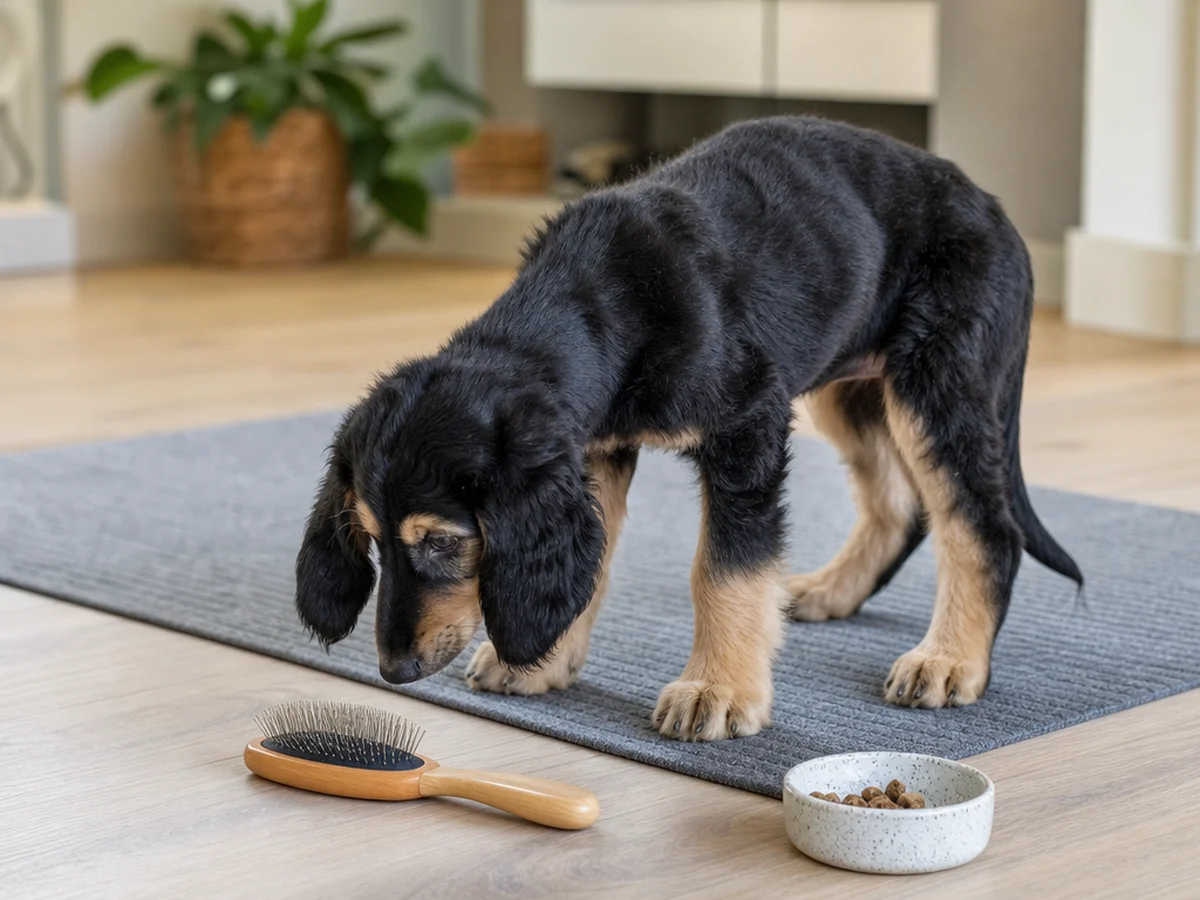
The fix is to shrink the job until it is easy to win. Use reward-based training to get the puppy used to the brush and the setting, and begin with a single stroke along the back, followed at once by the marker and a tiny soft treat. Stop after a handful of strokes while the puppy still wants more. Brushing after a walk takes the edge off without dulling the nose for treats.
A settle mat gives a wriggler somewhere to be. Build it in this order:
- Put a non-slip mat in the same quiet spot every time, away from other pets and traffic, and drop a treat on it whenever the puppy steps on.
- Reward sitting or lying down on the mat, then feed several treats in a row while the puppy stays.
- Rest the brush on the floor beside you, then lift it, show it, and set it down while the treats keep coming.
- Add one gentle stroke, mark, and treat, and let the puppy step off the mat if they want to. Invite them back with another treat.
Letting the puppy leave is part of the lesson, because a dog who is free to go learns that staying is safe. Afghan Hounds are only moderately adaptable, so the same spot, the same basket of supplies, and the same order of steps do a lot of quiet work. One stroke, one treat, one happy exit.
Mouthing and Grabbing the Brush in Puppy Training
A puppy who snatches the handle and races off is usually playing, and playfulness in this breed is moderate, which is plenty for a game of keep-away. Mouthing can also be frustration when treats come too slowly, or simple curiosity, since a puppy explores with their teeth. A chase makes things worse, because your running after them turns grooming into the best game of the day.
Give the mouth a job. A lick mat or a chew held by a helper, or stuck to a wall at puppy height, keeps the mouth busy with something good while you brush with your other hand. Offering a smear of something the puppy adores on the mat is plenty. Keep a treat in your free hand as well, so there is always a second source of rewards and the puppy never has to grab to get your attention.
If the brush is already in their teeth, stay calm and stay put, show a treat, and trade. When mouthing turns hard on your fingers, stop the game for a short pause, withdrawing your hands and the brush, then restart with easy sniffing rewards. That mild consequence tells the puppy the fun ends when teeth land, with no drama attached. Hold the brush so the bristles face away from the mouth until grabbing fades.
A mouth that is busy with a good chew cannot also be grabbing the brush.
An Afghan Hound Puppy Who Freezes or Hides
Freezing is different from wriggling, and it deserves a gentler response. A puppy who goes stiff, trembles, turns away, licks their lips, refuses treats they normally love, or slips behind furniture is telling you they are afraid, not stubborn.
Because Afghan Hounds are aloof by nature, worry often shows up quietly in this way instead of loudly. The usual causes are a strange object, a past tug on silky hair, or being cornered. The standard lists shyness as a fault, which is one more reason to build confidence now.
The fix starts with distance. Put the brush on the floor across the room, and feed treats for the puppy being calm there, without approaching it. Over several sessions, move it closer, but only after the puppy is eating happily at the current distance. If treats are refused, you are too close, so back up. Food that arrives while the brush is visible builds a link that pressure never will.
Rebuild in tiny steps, moving on only when the puppy looks relaxed:
- The brush lies on the floor while the puppy eats treats nearby.
- The brush is in your hand, still, while treats keep coming.
- The brush touches the mat, then your own arm, then the puppy's shoulder for a moment, each with a treat.
- A single stroke is followed by a treat and an immediate exit.
Going back a step is never failure. It is how a sensitive dog keeps their confidence.
Puppy Training for Ears, Legs, and Armpits
Some puppies accept the brush on the back and object everywhere else. That map is not random. The ears carry long, silky hair that snags. The feathering on the legs and the hair behind the elbows tangles as it grows.
The armpits, chest, belly, and tail are often sensitive spots, so a tug there may be unpleasant. A puppy who pulls away from one spot is often remembering a pull, or avoiding a small knot you cannot see. Let your hands introduce each area before the brush does.
Ears and Muzzle
Stroke the outside of the ear with your fingers, lift the flap lightly, release, and reward each time. For the face, borrow an idea from dental care: a gentle lip massage lasting 30 to 60 seconds, once or twice daily over a few weeks, gets a dog comfortable with mouth handling, and the same slow, daily pace suits ears and muzzle.
Legs, Feathering, and Armpits
Run a hand down the back of one leg, mark, and treat, then touch the paws, then add a single brush stroke. Many puppies pull a foot away at first, so keep each touch brief. To prevent mats, hold the hair near the skin with your free hand so the pull never reaches the puppy, brush in small sections from the ends toward the roots, and work any small knot apart with your fingers first. Check the armpits as part of every session.
Tail and Underside
Work with the puppy standing, not rolled onto their back, since lying belly-up can feel exposed to a reserved breed. Slide a hand under the chest, mark, treat, and add one light stroke. Finish by running a wide-toothed comb gently through to find any tangle you missed, rewarding as you go. Little and often keeps knots small.
Growling or Snapping in Puppy Training Sessions
Squealing, squirming, and sulking are normal protests from a puppy who has not yet learned the routine. A growl, a stiff freeze, a lifted lip, or a snap is a different kind of message. It is a warning, and it is useful because it tells you exactly where the puppy's comfort ends. Take it as information. Stop the brushing, stay calm, and give a little space. Silencing the growl removes the warning without removing the worry behind it.
Then ask what changed. Was the session too long, were you rushing, or did the brush catch a tangle? Was the puppy held in place? Does the reaction come only at one spot, such as an ear or a hind leg? Go back to whichever step was easy for them, shorten the sessions, keep the rewards generous, and give that area extra hand-only practice. A time-out from the game costs nothing and teaches the puppy that backing off works.
Some reactions are beyond home practice. If growling continues after you have slowed right down, if a snap lands, or if one area seems painful, pause the brushing and get help. A puppy who is suddenly defensive about a spot may be hurting, and the standard lists sharpness as a temperament fault, so repeated defensive behavior deserves a professional's eye early. Look for a reward-based trainer who can observe a session and help you set the pace.
Signs Your Afghan Hound Puppy Training Is Working
With a self-willed breed, progress shows up first in attitude and only later in how much hair you get through. These signs say happy brushing is taking hold:
- The puppy fetches the brush, or trots to the mat the moment you pick it up.
- Their body looks soft and loose during strokes, with relaxed eyes and a resting or gently wagging tail.
- They step back onto the mat after a pause, or nudge your hand to ask for more.
- Ears, legs, and belly are accepted in quick, easy steps, and any tangles stay small and simple to remove.
- The puppy relaxes on a table or grooming surface instead of bracing against it.
Now the red flags. Call a trainer, groomer, or veterinarian if you see any of these:
- A growl, a stiff freeze, or a snap when you touch one particular area, even after you have slowed right down.
- Trembling or hiding at the sight of the brush that does not ease with distance and food.
- Redness, sores, scabs, a bad smell, or constant scratching under the coat.
- Mats that sessions cannot resolve, since tight mats are best removed by someone skilled and not pulled out at home.
Groomer visits can begin as soon as a puppy is fully vaccinated, and a groomer who uses reward-based methods can be a real partner for a long coat. Keep up regular veterinary visits too, because a vet can spot skin and coat changes that hide under long hair.
This is general information, not medical advice. Check with your veterinarian about vaccination timing, skin or coat concerns, and any sign of pain before you rely on home handling practice.
The Afghan Hound coat will need care almost every day for the whole of the dog's life, and a proud, sensitive hound accepts that care only once they have learned it is safe and pays well. Build that trust now with tiny steps, treats, and happy endings, and the daily brush becomes a calm few minutes you both look forward to.
 BehaviorAfghan Hound: Sensitive to harsh tones
 BehaviorFence Rules for a Tall, Lean Afghan Hound Who Jumps
 Puppy trainingWhat to Teach Your Afghan Hound Month by Month to Age Two