 Afghan Hound
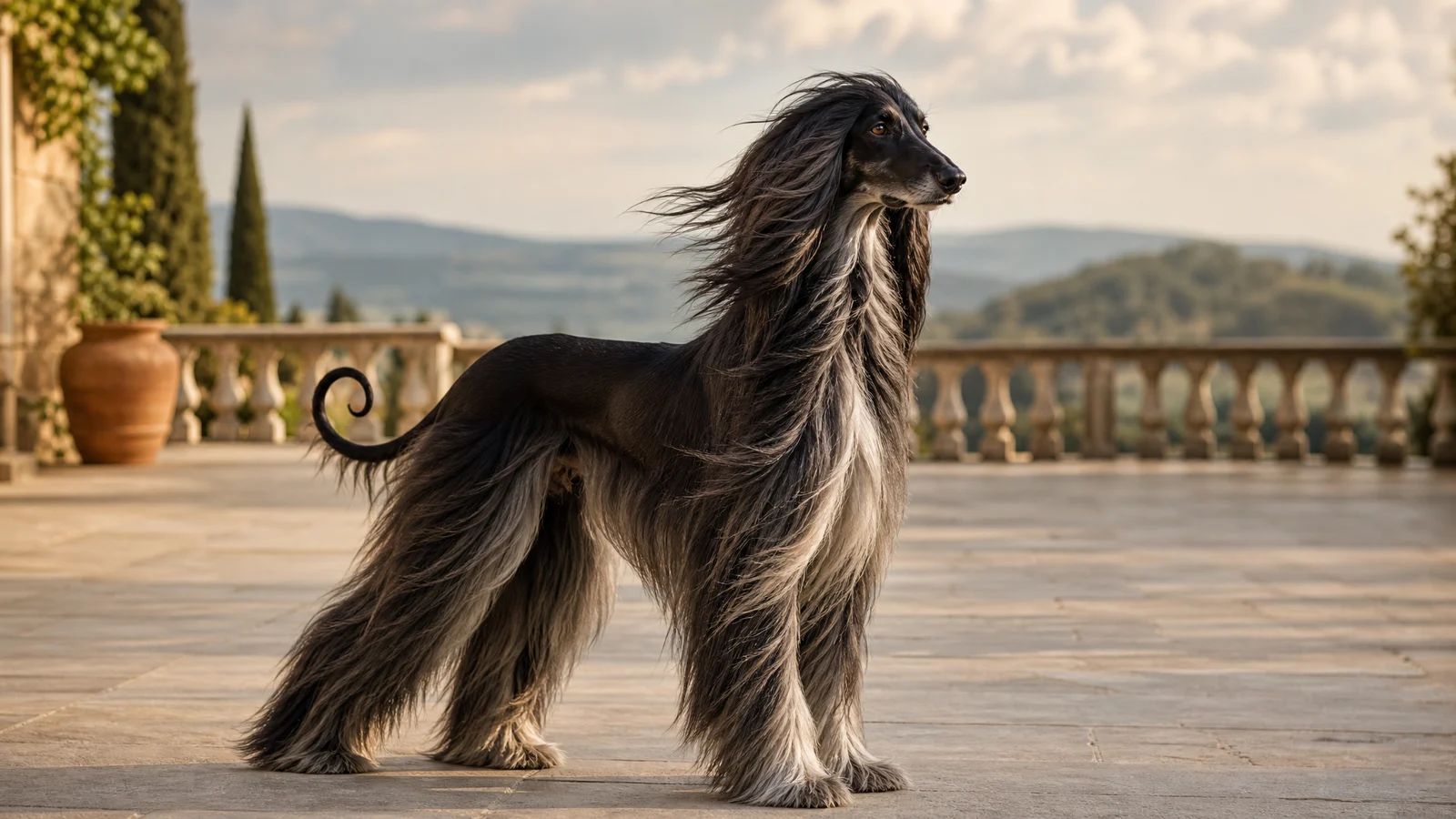
Afghan Hound temperament is a starting question, not a prediction. The words used for the breed describe tendencies seen across many dogs, and none of them tells you how the Afghan beside you will handle a visitor, a treat or an open field tomorrow.
That matters because a missed response is easy to label: stubborn, shy, snobbish. A label ends the thinking, while a description kept as a question keeps your attention on the cue, the reward, the setting and the dog's comfort, which are the things a person can actually change.
Below, you'll find a way to turn each temperament word into something you can test with your own dog, plus the one area where the breed's pursuit instinct changes the plan before any training starts.
Afghan Hound Temperament Words and What They Leave Out
The United Kennel Club Afghan Hound standard calls the breed a strong-willed, independent thinker who is dignified and aloof with strangers, and says that with family the breed can be exuberant and playful. Notice the contrast built into that sentence. The same description holds reserve and exuberance, which already tells you that setting and relationship matter.
A standard speaks about the breed as a whole. It says nothing about one dog's learning history, health, earlier handling, current stress or bond with the person holding the treat. Independence therefore does not prove that a dog understands a cue and has decided to ignore it, and aloofness does not prove fear. Family playfulness does not promise a happy response to every familiar person either.
Replace the broad word with a plain account of what happened. Note the distance, the posture, where the dog was looking, what moved nearby and what came just before the response. Five details about a moment tell you far more than one adjective about a breed.
Context changes meaning, too. Looking away as a visitor arrives, walking off from a lesson that has repeated too many times and staring at fast movement on a walk are three different events. Describe each one on its own terms, because a single personality word cannot name the adjustment all three need.
Where a Breed Description Stops
Breed language helps you prepare. If an Afghan may value space around strangers, you can protect an exit route and stop treating a greeting as the price of getting through the front door. The dog's actual response then decides whether that preparation fits.
Temperament is also only part of the trainability picture. Our Afghan Hound trainability guide takes the fuller reward and learning discussion, so this page stays with the narrower question of which observed trait changes today's setup. If the dog responds differently after you add distance or shorten the session, write that down. It may explain more than the breed word that first caught your eye.
Is It Motivation or Understanding When a Cue Is Missed?
When an Afghan does not respond, describe the event before you assign a motive. Write down the cue, the place, how far the dog was from you, which reward was on offer and what else was going on. Then repeat the exercise only in an easier setting, one where you can separate a lesson the dog has not learned from a room that is simply too demanding right now.
The RSPCA's dog-training advice recommends breaking training into short but regular sessions so the dog is not overwhelmed. Short work also makes observation cleaner, because you can change one condition, watch what follows and finish before a murky attempt turns into a long contest of wills.
What to Note and What to Ask
Each row below pairs something you might see with the question it suggests and the part you cannot know yet. The third column is the important one, because it stops a single observation from turning into a verdict.
| What You Observe | Possible Training Question | What Remains Unknown |
|---|---|---|
| The dog responds in the kitchen but not in the yard | Has the cue been practiced in that setting with manageable distractions? | Whether the cue is understood in other places |
| The dog takes one reward and then leaves | Is that reward still worthwhile, or does the dog need a pause? | Whether food value, stress, fullness or the setting changed the choice |
| The dog watches movement instead of you | Can more distance make attention possible? | Whether interest, concern or chase tendency drives the watching |
| The response slows during repeated practice | Would one successful repetition and a clear finish be enough? | Whether fatigue, confusion, discomfort or repetition affected performance |
Reward Choices and Household Habits
Change one variable at a time. Move indoors, add distance from movement, offer a different reward or shorten the lesson, but never all at once, because a clearer response after a single change is information you can reuse at the next practice.
A cue the dog knows can still be new in a different place, so start with a version the dog can complete, reward it and raise difficulty only while the response stays available. If the dog can turn toward you for a single moment in the easier setup, mark and reward that choice and end while the observation is still clear.
Reward the behavior you want to see rather than arguing with the one that did not happen. Afterward, jot down the condition that made success possible, whether that was a quieter room, a bigger gap from a moving object or a reward the dog picked over the others. That note becomes the starting point for the next short session.
People in the same household need only agree on the cue, on which response earns the reward and on the word that ends an attempt. Different people may use different rewards. What they should avoid is repeating a cue, crowding the dog or reading a pause as stubbornness.
A Reserved Afghan Hound Does Not Owe Visitors a Greeting
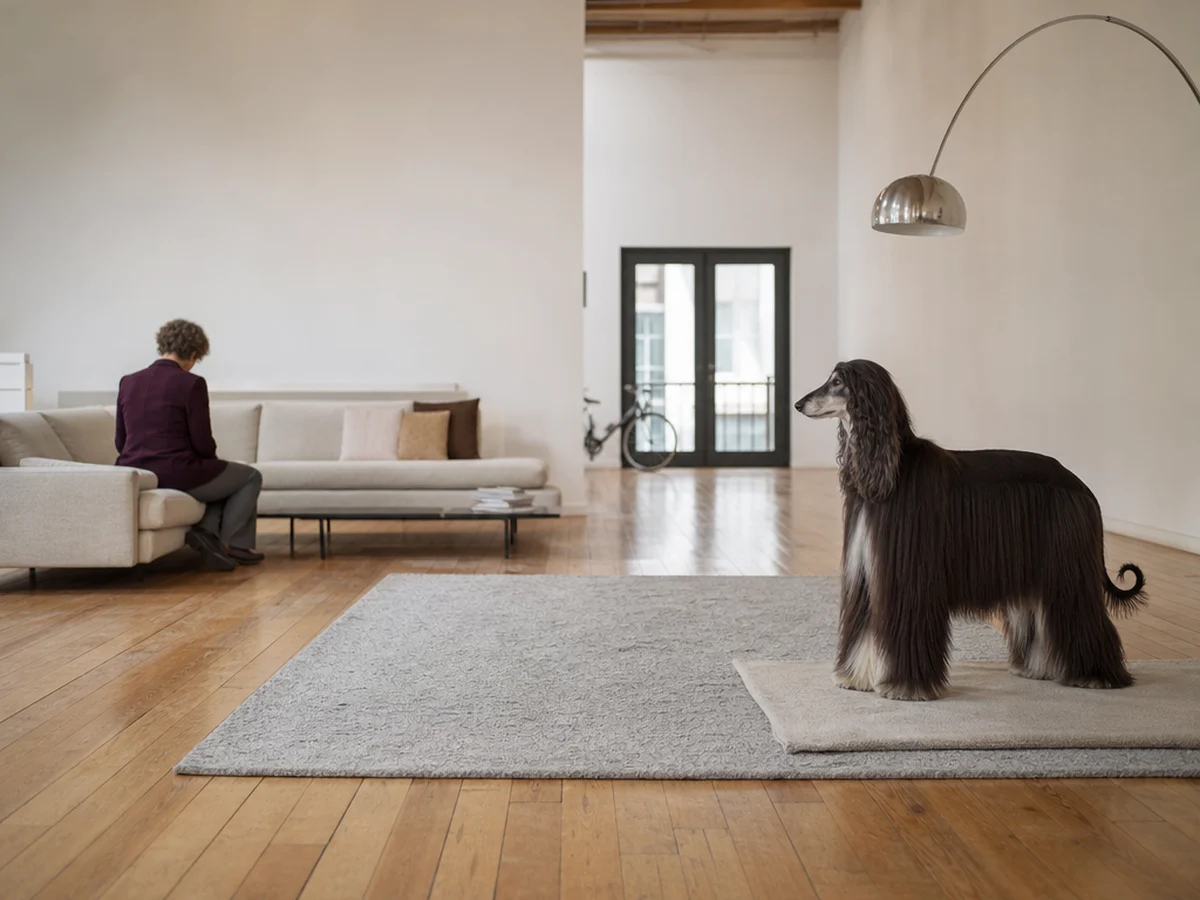
A dog can notice a visitor without approaching, accepting touch or performing a welcome routine. Give your Afghan a secure place to stand or move away, and ask the visitor not to reach over the dog. Calm observation from a comfortable distance counts as a good outcome.
Ask visitors to stay still and let the dog decide whether to come closer. A dog who is allowed to choose tells you more about their comfort than one who is steered into a greeting, and the choice itself is something you can reward when it is neutral or positive.
Signals That Ask for Space
Watch the whole response instead of a single feature such as a turned head. Battersea's body-language guidance lists tension around the face, a tail held down between the legs and a lifted front paw among the signals that ask for a situation to stop. When you see them, make more space rather than testing how much the dog will tolerate.
For puppies, the American Veterinary Medical Association's socialization guidance supports rewarding positive or neutral engagement, allowing a puppy to withdraw when uncomfortable and moving at the puppy's own pace. Nothing in that approach requires an encounter to end in touch or play.
The full exposure sequence lives on our Afghan Hound socialization page. On this page, the useful record is smaller: did the dog choose distance, recover once the person moved away, approach again voluntarily or relax when the room got quieter? Those details say more than calling a dog friendly or unfriendly.
A sudden change deserves a different response from a settled preference. If a dog who usually seeks familiar contact starts avoiding touch, moves unevenly or reacts as though handling hurts, pause the social or training request and contact your veterinarian. Regular veterinary visits belong in the dog's routine either way.
Afghan Hound Temperament Questions
Rewards, adopted adults and play all raise their own temperament questions. Each answer here stays tied to what you can see in the dog instead of fixing a personality in place.
Can two Afghan Hounds prefer different rewards? Yes. One dog may work readily for food in a quiet room while another prefers play, a chance to sniff or a different food in the same room. Reward value shifts with place, distraction and the dog's state, so watch what the individual chooses instead of ranking the breed's motivation.
Does a breed standard describe an adopted adult's learning history? No. A standard cannot show which cues the dog has learned, how they were taught or where they were practiced. Start with one simple request in a low-distraction place and do not assume a familiar word carries a familiar meaning.
Can a reserved Afghan Hound still enjoy play with familiar people? Yes. Both behaviors can show up in one dog depending on who is in the room, so judge the dog by what they do with each person. Let the dog start or accept play, stop when they disengage, and do not use that comfort to push a greeting with someone new.
Afghan Hound Chase Interest Needs a Security Plan
The same UKC standard notes a very well-developed chase instinct in the breed. Treat that as a reason to plan physical security around moving animals and open space. It does not prove that one dog will chase everything, and it gives no permission to test a recall somewhere a failed response could put the dog or other animals at risk.
Management and training answer different questions. Distance from a trigger and secure equipment reduce the cost of a sudden pursuit, while a reward-based cue can be practiced inside that safe arrangement. A good session does not remove the arrangement, because the environment can stay risky no matter how well the cue went. Use this general approach before each practice:
- Check that gates, clips and the practice boundary are secure before anything starts moving.
- Pick a distance that lets the dog notice the scene and still take part.
- Reward an available response without stepping closer to see whether it survives more pressure.
- Leave or reset when movement has made the planned response unavailable.
Scan for traffic, wildlife and fast movement beforehand, and stand where you can leave without pulling the dog through a crowded path. If the Afghan fixes on movement and cannot take part, add distance or end the attempt instead of repeating a cue the setting has already made impossible.
Early Signs Worth Recording
Note the earliest change you can see, such as a head turn, a forward shift of weight or a lost response to a familiar signal. One sign cannot tell you the cause, but it shows you when the plan needs more distance, fewer moving distractions or a different location. A label never excuses unsafe access, and an Afghan may show little interest in one place and intense interest in another.
Share what you notice with everyone who handles the dog. If one person sees the dog lock onto movement at a particular corner of the walk and another does not, both observations are useful, and a plan built on all of them will hold up better than one person's impression.
Keeping a Temperament Label Open as Your Afghan Hound Changes
Write one neutral sentence about each event worth remembering: the dog watched a runner and missed the cue, stepped back when a visitor reached forward, or stopped taking food after two repetitions. Pair it with one matching adjustment, such as more distance, no reaching or a shorter lesson, and test only that change in an easier setting.
Keep each conclusion as narrow as its evidence. A better response shows the adjustment helped in that moment, and an unchanged one may mean the question was too broad. Either result beats calling an Afghan stubborn, shy or unreliable, and a notebook of small observations will outgrow any breed adjective within a few weeks.
Breed temperament remains useful as preparation: protect social choice, keep chase-related security in place and make training worth joining. The individual dog then fills in the rest, one observation at a time.
 Training basicsHow to Teach an Afghan Hound to Focus on You
 Training basicsHow to Teach an Afghan Hound to Lie Down
 Training basicsHow to Choose an Afghan Hound Trainer