 Afghan Hound
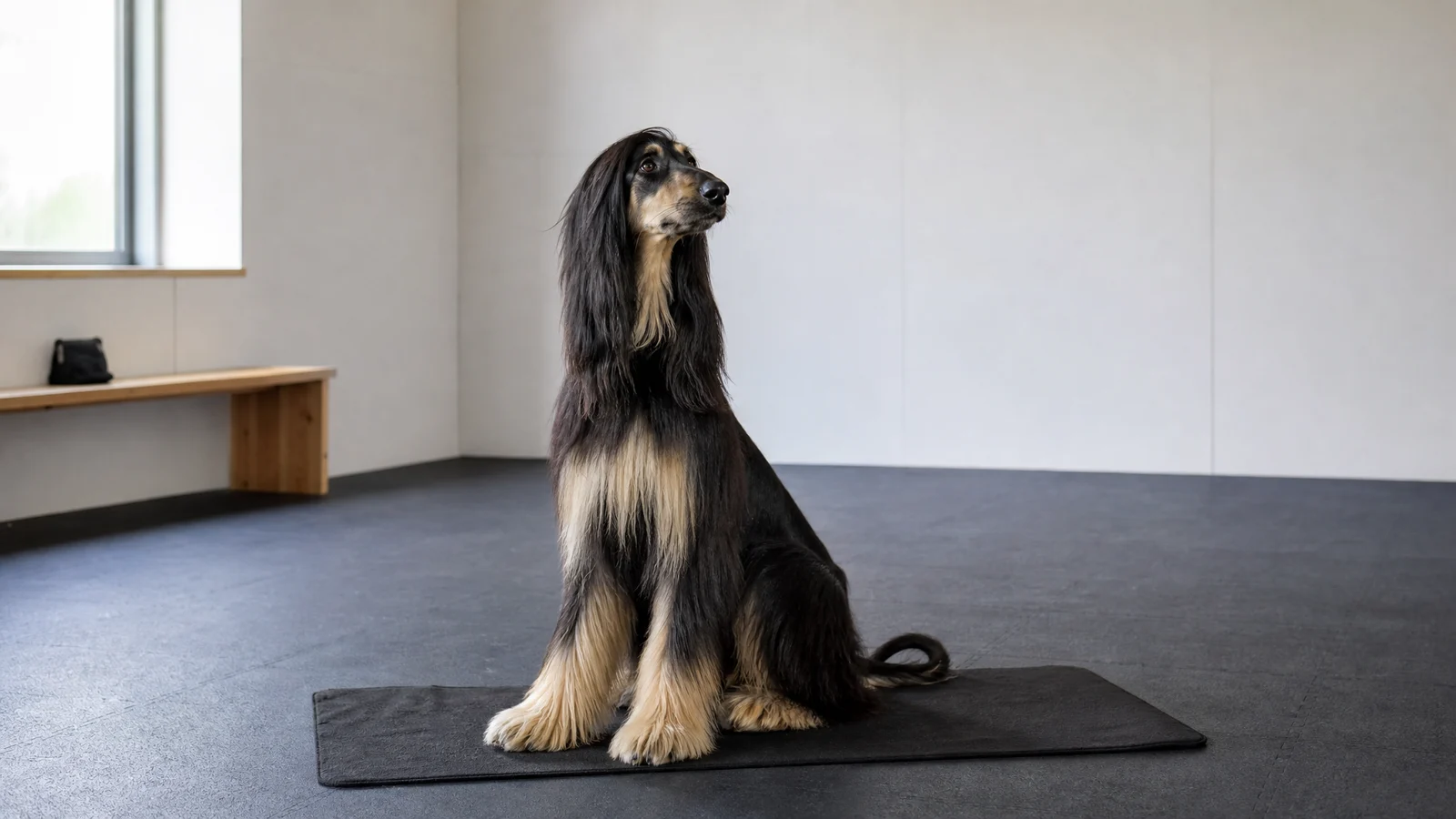
Before you call anyone, decide what you want the call to settle. Write one sentence describing the help you need in terms another person could picture, because a trainer can only be judged against a goal, and a goal on paper is easier to hold onto than one in your head while a confident stranger is talking.
Hiring help well is mostly a matter of knowing which questions separate a careful professional from a confident one, and which problems belong with a veterinarian before they belong with anyone who teaches. We keep the advice to what you can check yourself. The sections below work as a screening checklist you can use before paying a deposit.
The Five-Minute Call Before Booking an Afghan Hound Trainer
Write down one goal in observable terms before you phone anyone. "Walks from the front door to the sidewalk without pulling" gives a professional something to picture and measure. "Better behavior" does not.
Then separate the kind of help you want. Teaching a new skill is one job. Looking into fear, aggression or a sudden change in how the dog moves or acts is another, and a change that arrives abruptly deserves a veterinary visit before anyone treats it as a training problem. A good trainer will tell you which job they are bidding for.
The Best Friends trainer advice says to ask which specific techniques the trainer uses, and to move on to someone else if they cannot answer or skirt the question. That single rule carries most of the weight on a screening call, because a vague answer about methods tells you to keep looking.
Prepare Before You Dial
Prepare a short record before you dial: dates, places, distance from whatever bothers the dog, how quickly they recover, and any physical changes you have noticed. Include what made things easier as well as what came before the difficulty. A bounded record gives the professional context without asking you to guess the cause, and it keeps the call from drifting into a general chat about the breed.
While you are choosing, use management. Prevent access to known hazards, add distance from hard situations, and do not recreate the worst moment on purpose for a video. The first appointment is more useful when the Afghan arrives without a fresh forced rehearsal.
What to Ask on the Call
Keep the call short and write the answers down so you can compare candidates later. The questions below are a starting set, and the order does not matter much as long as the method questions come before any talk about price.
- Which exact reward-based techniques would you start with for this goal, and why?
- How will you tell that the dog is comfortable enough to continue?
- What do you change if the dog moves away, freezes or stops responding?
- Can everyone in the household watch, ask questions and practice under your coaching?
- What would make you pause and refer us to a veterinarian or another specialist?
Be cautious with anyone who guarantees a result or a timeline. A professional who promises a fixed number of weeks is selling certainty no one can have. A better sign is a plan that names what will be measured and when it will be reviewed.
Listen for an answer that fits the stated goal rather than a fixed package applied to every dog. A professional may need more information before proposing a full plan, and that is fine. They should still be able to describe how they decide.
Credentials for an Afghan Hound Trainer, Read in Plain Words
The Certification Council for Professional Dog Trainers describes dog training as an industry that is unregulated, with no licensing requirements or regulatory oversight. We read that as a reason to check for yourself: the letters after a name do not carry the same meaning everywhere, and nobody is guaranteed to have looked at them for you.
Titles and Directories
Ask for the full name of any certification and the group that issued it, then confirm it with that group and read what it covers. A directory listing can show that someone is listed. It cannot show that they suit your dog or your problem.
Trainers, Behaviorists and Veterinarians
Veterinary titles work differently, and one word causes trouble. The American College of Veterinary Behaviorists explains that a veterinarian may call themselves a behaviorist only after board certification by the college, while trainers and others are not required to have any education to use the same word. Read the exact credential and the exact role instead of trusting the word.
| Who You Are Talking To | What to Verify | When to Hand the Case On |
|---|---|---|
| A trainer teaching skills | Name of each certification, who issued it, what it covers, and relevant references | Fear, panic, aggression or a sudden change in behavior or movement |
| Someone calling themselves a behaviorist | Whether they hold veterinary board certification or a different credential entirely | Anything that looks like pain or illness |
| Your veterinarian | Records you can share, and which findings they want passed to the trainer | Questions about method, practice setup or household coaching |
Experience, References and Fine Print
Request references that relate to the service being proposed, then ask limited questions about communication, coaching and whether the written plans matched the sessions. A reference cannot promise the same outcome for another dog, but it can confirm that the described process is real. Ask, too, how the professional keeps their knowledge current and who they turn to on difficult cases.
Experience should also match the work. Someone who runs excellent group manners classes may not be the right person to assess panic or a sudden change, and saying so is a strength. Honest limits protect the dog from work outside the provider's competence.
Finally, get fees, cancellation terms, privacy, who may attend and record handling in writing. These details do not prove quality, but ambiguity here makes it hard for a household to follow a plan or move useful notes to another professional later.
Methods an Afghan Hound Trainer Should Be Able to Explain
The AKC Afghan Hound page calls the breed independent, dignified and aloof in general, yet affectionate and extremely loyal to the people they have bonded with. That is background, not a verdict on your dog. Hold out for a professional who watches the individual Afghan Hound instead of explaining every hesitation by breed character.
Ask them to walk through a typical first exercise from setup to finish. What prompts the behavior, what can the dog do, how is success marked and rewarded, and what changes if the dog disengages? A concrete example beats any slogan.
Handling and Choice
Ask how the trainer protects a dog's choice during handling, close contact, unfamiliar places and hard moments. When the dog cannot take part comfortably, the plan should make the task easier. It should not push the dog through so a session can run to schedule.
The same goes for observation. A trainer may watch an ordinary routine or a gentle version of the concern, but nobody should be told to provoke fear or conflict simply to prove it happens.
Rewards and Practice Between Visits
Settle reward logistics ahead of time. Who supplies the food or toys, how are allergies and dietary limits handled, and what happens if the dog will not take the planned reward in that room? A trainer should be able to adjust the setup without turning the reward into a contest.
Ask how the trainer decides what the dog is allowed to skip. If a task proves too hard, the sensible response is a smaller step rather than a longer session. Watching how a candidate talks about a dog who says no, even in the abstract, shows you a great deal about how they will treat yours.
Someone also has to practice between meetings. A polished demonstration that leaves the household unable to repeat it has left the main learning environment unchanged, so ask for instructions family members can follow consistently and safely.
Before the consultation, it can help to read our guide to Afghan Hound trainability. Use it to sharpen your questions about how a trainer would motivate this particular dog, not to excuse a method that ignores the dog in front of you.
Format Questions: Classes, Remote Help and Records
Group, private and remote sessions are delivery choices rather than quality grades. The three topics below are worth settling before you commit to any one of them: class enrollment, remote sessions and what records to keep.
- Should a class know about leash reactions before enrollment?
- Yes. Describe what the dog does, the distance and context involved, and any current management before joining. The class provider can then explain spacing, participation rules and whether an individual consultation should come first.
- Can remote training help an Afghan Hound household?
- It can support observation, coaching, setup review and record discussion when the format fits the concern. Ask what the professional cannot assess remotely and how they will change the plan if an in-person or veterinary evaluation is needed.
- What should a new trainer receive from a previous professional?
- Share the records you are entitled and comfortable to provide, such as goals, management, setups that worked, difficulties and referral notes. Ask both professionals what context is missing, and do not assume an old plan transfers unchanged to a new place.
Planning the First Training Session
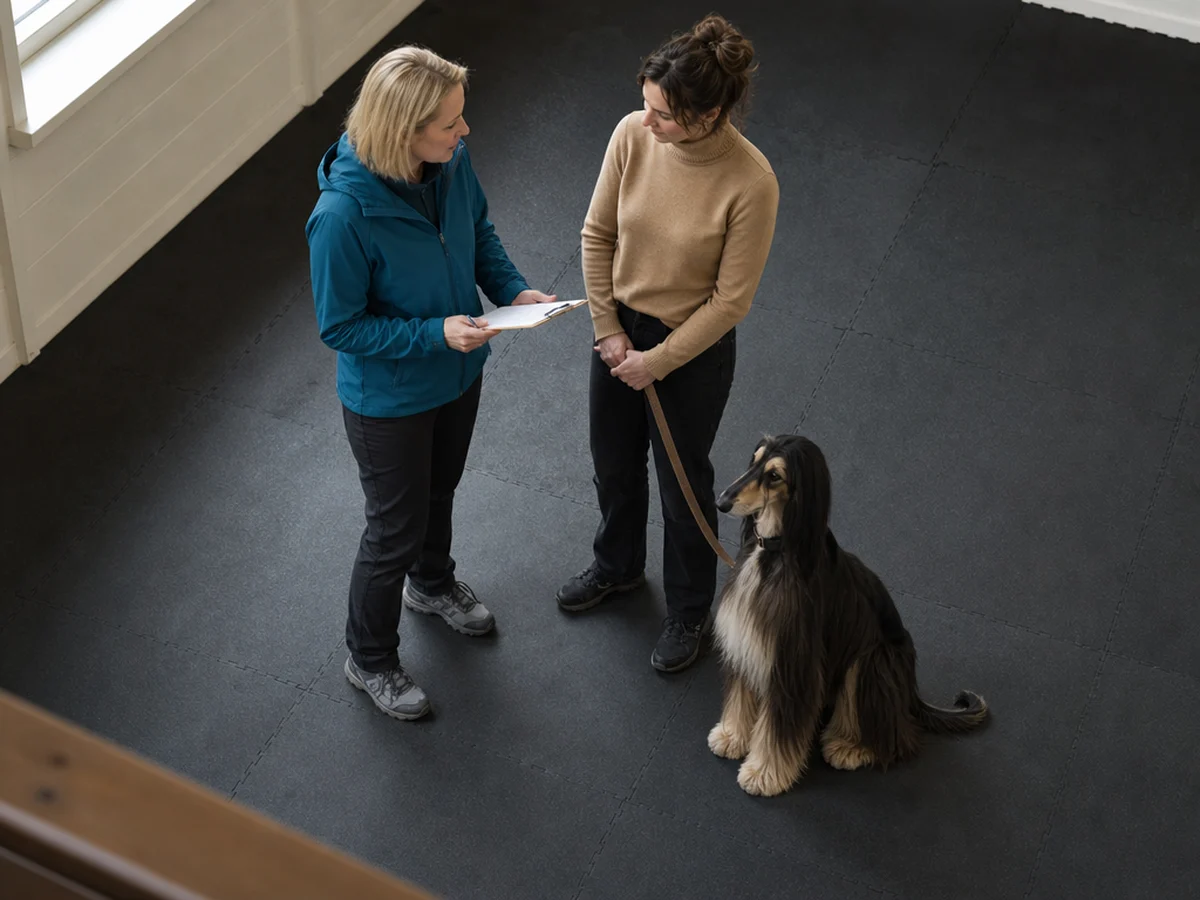
A first meeting should build a workable starting picture, not stage a difficult test. Bring your stated goal, any veterinary information that is relevant and appropriate to share, a short history, known triggers and the rewards your dog takes comfortably. Keep regular veterinary visits going alongside it, and arrange an extra check when a change is abrupt or comes with physical signs.
The professional should ask where and when the concern happens, what comes right before and after, and what has already been tried. Expect them to create enough distance and predictability to observe without provoking the hardest version of the problem, and to begin with something the dog can already do. That might be entering the space, turning toward you or taking a reward.
Who Handles the Dog
Agree on what the first plan is meant to change. A measure might be the distance at which the Afghan can notice something and still turn away, the number of routine steps the household completes calmly, or one cue practiced in a quiet setup. Decide when you will review it. Progress can mean easier recovery or more voluntary participation, and it does not need to look dramatic in the first hour.
Name the person who will hold equipment, deliver rewards, record observations and stop an exercise. If the trainer demonstrates, ask how control returns to the household and how the dog's participation is protected during the handover.
Children and visitors should not be handed training roles just because they live in or enter the home. A good professional helps the household pick adult responsibilities that stay realistic when attention is divided.
What the Household Practices
Leave with a small setup you can reproduce. Written steps should name the place, the equipment, any cue, what a good response looks like, where the reward goes, when to stop and an easier fallback. "Practice more" is not an instruction.
Record both success and difficulty, including location, distance, recovery and willingness. Those notes are more useful than a good-day or bad-day label, and they give the trainer material for the next adjustment. Agree on how progress will be reviewed and what shows a setup is too hard, without any deadline or guarantee.
When a Trainer's Answers Stay Vague
Lay your notes side by side and compare candidates on the clarity of their methods, their plan for your household, the evidence behind their credentials and their willingness to refer. If an answer stays vague after you have asked twice, treat that as a reason to look at someone else.
The right next step might be a lesson, an assessment, a veterinary visit or simply more information before anyone asks the dog to perform. A trainer who can say which one, and why, has already shown you more than a long list of titles would.
Whichever route you take, keep the veterinarian in the loop. Training observations can help describe context, but they cannot tell anyone whether pain, illness or another health factor is involved, and that question always belongs to a vet.
 Puppy trainingAfghan Hound at 6 to 12 Months: Adolescence Begins
 Puppy trainingAfghan Hound Puppy: What to Expect and How to Start Training
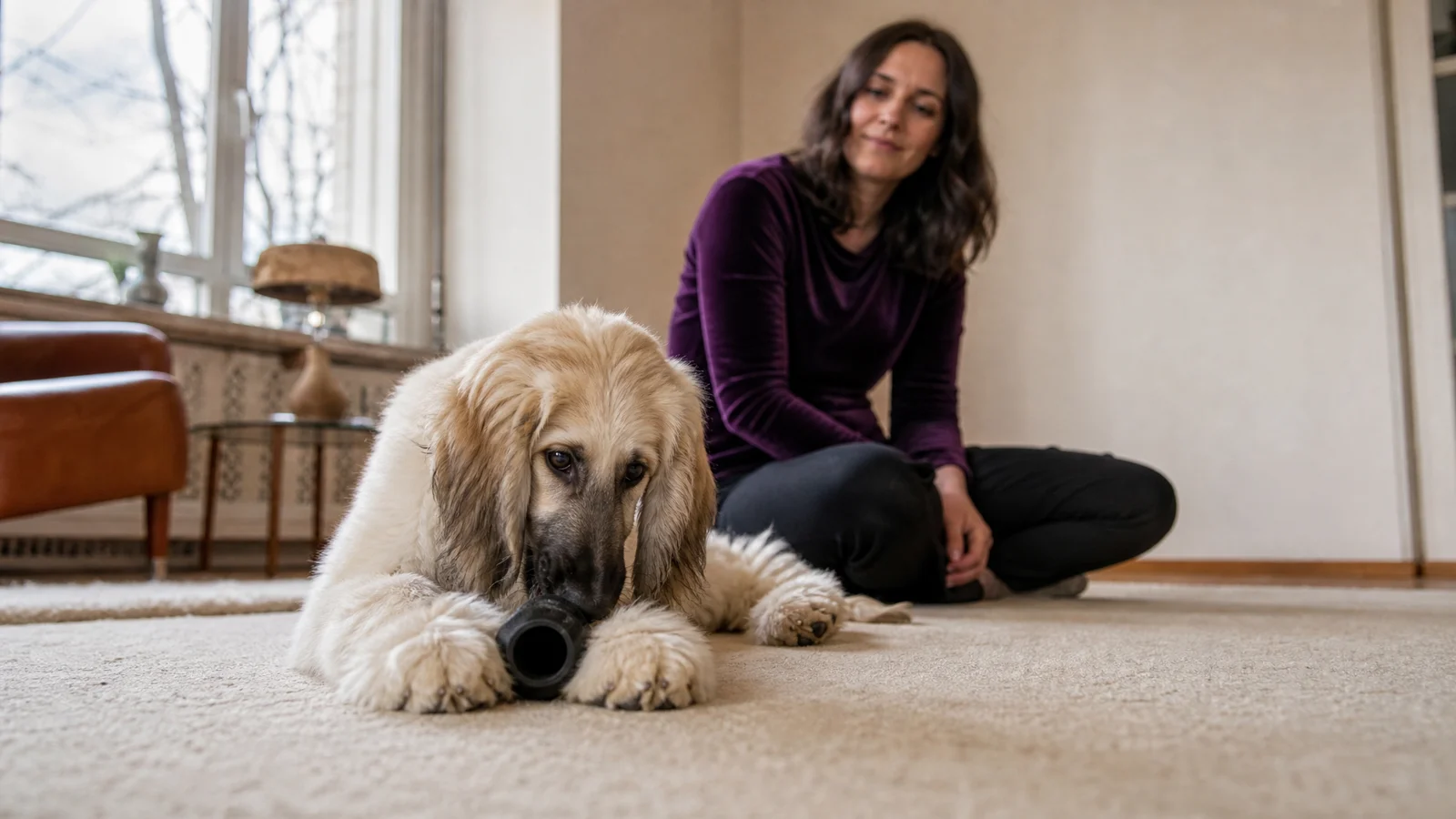 Puppy trainingAfghan Hound Puppy at 3 to 4 Months: Teething and Mouthing