 Afghan Hound
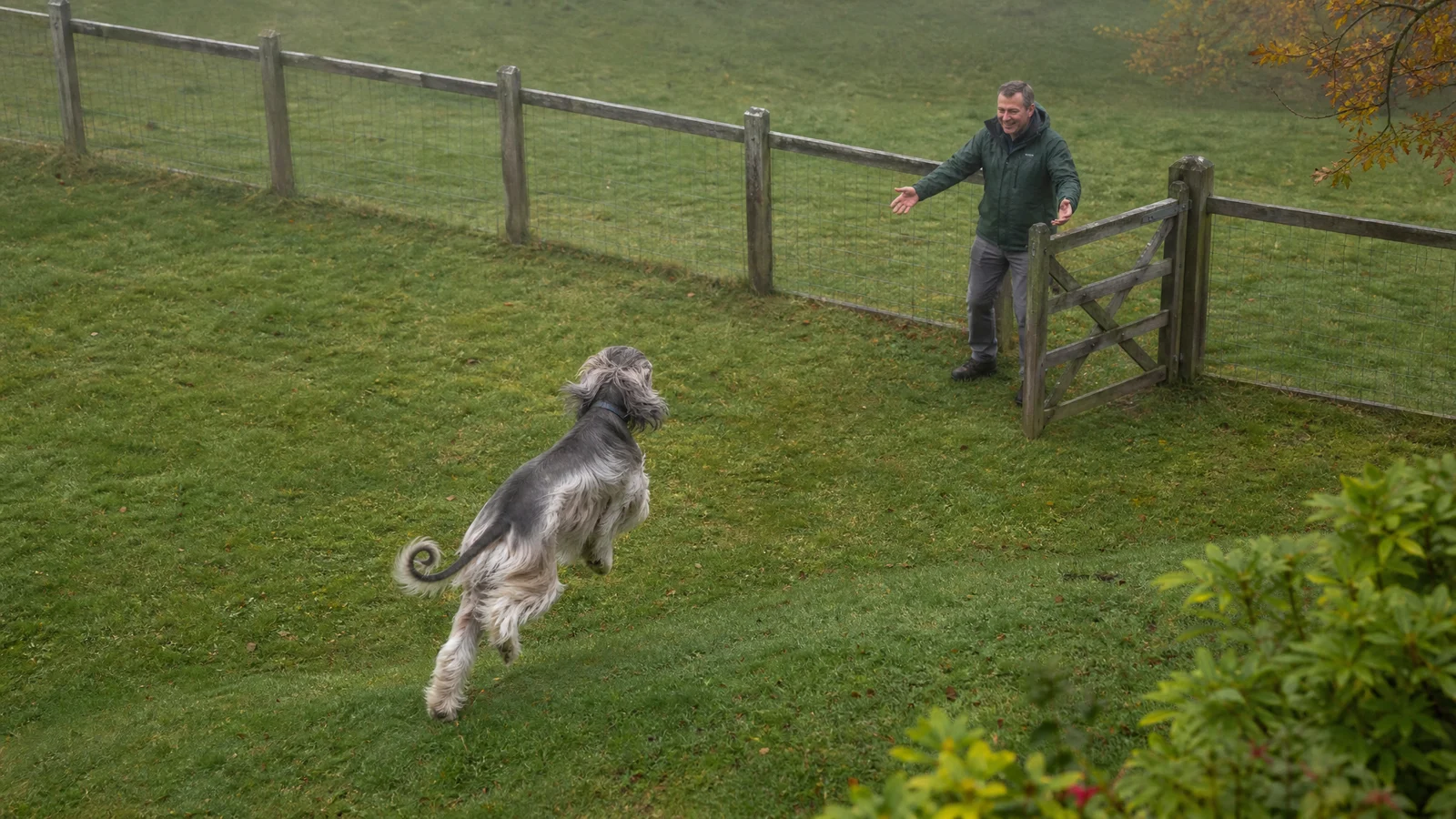
Can you ever let your Afghan Hound run off leash and still get them back? The usual answer is to just train a solid recall, and for a retriever that is fair advice. For a sighthound it falls short, because a recall learned in the kitchen has to beat something small and fast at full gallop, and the small fast thing wins more often than anyone admits.
Our work centers on this breed's behavior and training, and our answer splits the job in two. The fence handles safety, and the recall gets built inside it, where a missed call costs a few extra laps instead of a lost dog. Done right, the gallop belongs to your hound and the return belongs to you.
In this article, we'll go through the fenced space a sprinting Afghan needs, how to pay for a come-when-called, what changes between puppy and adult, and a two-week plan to start with.
Why Retriever Recall Fails an Afghan Hound
A retriever on a walk keeps glancing back to see where you went, because that breed was shaped to work alongside a person. Your Afghan skipped that class. The breed is described as a strong-willed, independent thinker who prefers to do things their own way, and anyone who has watched one politely decline a perfectly good cookie knows the description is fair. Advice written for dogs who check in constantly assumes a habit your hound never developed.
None of this makes them cold. With family the breed can be exuberant and playful, and the loyalty to people they have bonded with runs deep. The trouble is that loyalty does not switch on mid-gallop. Add a very well-developed chase instinct, and your cheerful call competes with the one thing the breed does best, whether the target is a rabbit, a cat, or a plastic bag caught by the wind.
Why Practicing in the Park Backfires
The standard advice says to practice in a park until the dog is reliable. For an Afghan that plan teaches the wrong lesson at the highest price. They have a strong instinct to run off in pursuit of perceived prey, and walking off leash is not advisable, so every park rehearsal is a coin toss with a road somewhere on the far side of it. Nobody learns well when the exam is also the practice.
So reset what success means. A good result is a hound who turns back quickly and happily inside a secure space, not one who ignores a squirrel on open ground. Basic commands such as come, sit, and stay are generally sufficient unless you plan to compete, so put your effort into making come excellent instead of collecting party tricks that nobody asked for.
Enclosed Sprint Space Versus Open Ground for Recall
Ideally, an Afghan gets to run full out several times a week in a large, enclosed area, and that one sentence hides two requirements. Large, because a gallop needs room for curves and long straights. Enclosed, because open ground is where a chase instinct turns into a lost dog. The natural gait of the breed is the double suspension gallop, which eats the length of an ordinary yard in a few strides, so a postage-stamp lawn gives you a hound who mostly turns.
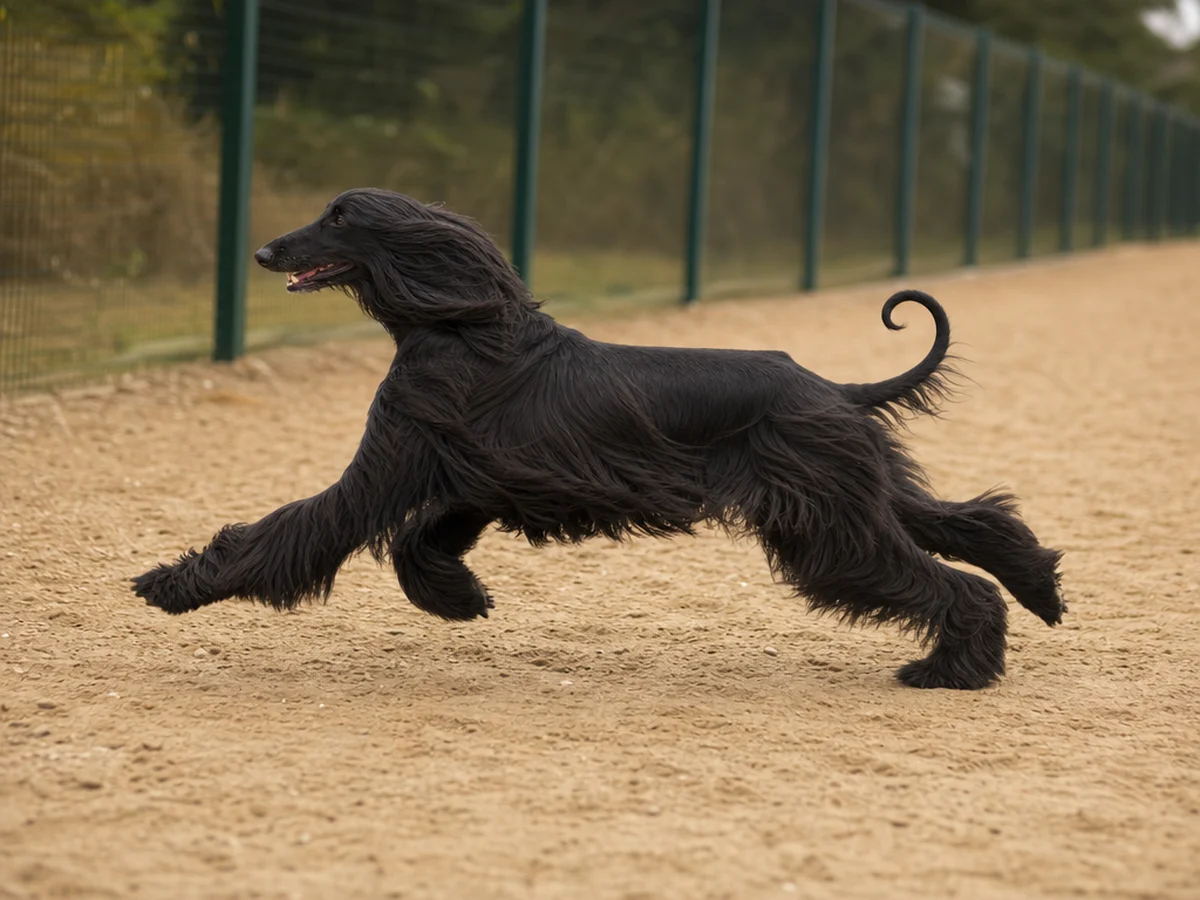
The fence needs to be taller than you think. Afghans are tall, lean, and strong, which makes them excellent jumpers, so the fence must be high and secure. A fence built for a small dog is a polite suggestion to this breed. Before each session, walk the line and check:
- Gates and latches close firmly on their own, since a gate left ajar undoes every lesson in this article.
- The base of the panels has no gaps or dug-out dips, because a lean hound squeezes through less room than you would expect.
- Nothing sits near the top as a launch point, such as stacked firewood, a bench, or a compost bin pushed against the boards.
Until the recall is dependable, let a longer training line trail behind your dog inside the fence. You can lengthen it to 20 to 30 feet over time, and the guidance behind that advice adds that a dog should come perfectly on leash before anyone asks for the same off leash. With an Afghan, treat that as the starting line, not the finish.
Outings Beyond the Fence
Outside the fence, use a leash and let them trot at a fast pace on a loose one. Short walks do not provide enough exercise for this athletic breed, as our piece on why short walks fall short explains. Once they are mature, some owners add long runs on a leash, but treat those as an extra and not a replacement for the sprint.
If your hound's chase drive needs more outlets than the yard offers, a structured activity such as safe lure coursing is a better answer than a gamble in the park. A great week of yard sprints is not a reason to try open ground. Inside the fence, a missed call costs some extra laps and a little wounded pride. Outside it, the same miss can cost far more.
Rewarded Recall Beats Repeated Calling
Most of us answer an ignored call by calling again, louder, then again with feeling. With an Afghan that habit backfires. Each extra shout tells your dog that the first word was merely an opening bid, and a sighthound who reads movement far better than words soon files your voice under background noise. Meanwhile a fun game has turned tense, and tension is a poor recipe for a sensitive, loyal hound.
Build One Bright Return at a Time
A dependable recall keeps a dog safe and lets them enjoy their exercise, so make it the best deal in the yard. Loyal hounds answer a happy voice and a fast party far better than volume. Build it in this order:
- Pick a marker word and pair it with a treat many times inside the fenced area, asking for no recall at all, until the word makes their ears lift.
- Call only when your dog is already drifting your way, so the early repetitions are close to guaranteed wins, and pay on arrival with several treats and warm praise.
- Release them to run again at once, because a call that always ends the game teaches a hound to dodge it.
- Add distance a few steps at a time with the line trailing, and call once in a bright, friendly voice.
- Mix in calls mid-sprint and while they sniff, so coming pays well in every situation.
If your hound stays put, resist the second call. Jog away, crouch, rattle the treat bag, and mark the first step toward you. Then guide them in with the line and make the arrival a party. A biscuit competes poorly with a gallop, so the best payment is often more running: call, pay, release, call again. A game where you are the one being chased pays handsomely too.
Watch their face while you do this. Subtle fear signs such as lip licking, whale eye, and ears pulled back come first, and a hound showing them is telling you the game got too heavy. Shorten the distance, soften your voice, and pay better. Reserve your very best treat for recall and nothing else, whether that is cheese, chicken, or something smellier.
Puppy Recall Versus the Adult Afghan Hound Sprinter
A puppy who follows you into the bathroom has not mastered recall, only proximity. The adult version of the same dog is faster and stronger and far more interested in the horizon, so each stage needs its own handling. What you can safely teach a puppy and what a grown sprinter needs are two different jobs.
Banking Deposits With a Puppy
A young puppy follows because you are the safest thing in the yard, and that flatters you into thinking the work is done. Use the window to make deposits. Hand over a treat every time they turn toward you, back away so they chase you, play name games, and make your arrival the best event of the day. Keep sprints short and let the puppy decide when they are finished.
Adolescence is when the account gets spent. The pup who trailed you everywhere now glances at the horizon first and at you second. Keep the line on, keep the games coming, and do not test the recall just because it worked yesterday. At regular vet visits, ask how much running suits each stage of a growing body, since the gallop will still be there next month.
Adults Are Faster and Harder to Impress
An adult covers the length of the fence in moments and notices everything beyond it, so the same yard has to work harder. Keep the line trailing until the pattern holds in every corner, and practice calls while they sniff, rest, and run, not only when they are already coming your way. The farther away you call from, the better the payout should be.
A newly adopted adult needs extra patience. An Afghan's loyalty can make a move to a new home hard on them, so spend the first days building the relationship with food, quiet company, and easy games before you ask for any recall at distance. A hound who trusts you comes back faster than one who is still working out who you are.
Why a Saluki's Recall Routine Misleads Afghan Hound Owners
Another lean, long-legged sighthound may share your dog's silhouette, and it is tempting to borrow whatever routine that dog follows. We would resist. Looks tell you about speed, not about how a particular breed learns, settles, or leaves a yard. A Saluki owner's plan may suit a Saluki perfectly well, but your Afghan's own description is the only checklist that counts.
Run through what that description says. They are tall, lean, and strong, so a fence that seems generous for another dog may not be enough. Their gait is a gallop, so a sprint covers ground in moments. They are aloof and dignified with strangers but affectionate and extremely loyal to the people they have bonded with, which makes your relationship the main lever for recall. A routine that treats them like any lean runner skips all three.
Build around what the breed gives back instead: a playful streak with family and a real wish to please the people they love. A happy voice, a fast payout, and a release to run again fit that temperament.
Judge any routine, from a friend, a book, or a neighbor's dog, by one test. Does it keep the sprint inside a large, enclosed space with a high fence, and does it make coming back worth it?
Two Weeks to a Rewarded Recall
Week one is about the fence and the payout. On the first day, walk the whole fence line and fix any gap, loose latch, or launch point before your dog sets a paw inside. Then say your marker word, follow it with a treat, ask for no recall, and let them take a short sprint with the line trailing.
On the next sprint days, call once when your hound is already drifting toward you, pay generously, and release them to run again. Fill the days in between with easy leashed walks and name games.
Week two adds distance and distractions, still inside the enclosure. Lengthen the line a little and call from farther away, then call mid-sprint, while they sniff, and while something interesting is happening along the fence. Shorten the distance whenever the recall slips, and pay better instead of calling louder. Keep sessions brief enough that your dog is still keen at the end, then walk home on the leash.
With a chase instinct this strong, the fence is the safety plan and the recall is the reward that makes the sprint run smoothly. A hound whose need for speed is met several times a week in a secure space has little reason to go looking for it elsewhere. Keep regular vet visits on the calendar for an athlete like this, and start this weekend by walking that fence line.
 BehaviorAfghan Hound Behavior Problems: Chasing, Ignoring, Aloofness
 Training basicsAfghan Hound Training: Come, Sit and Stay Are Enough
 Training basicsWait at the Door: Gate Manners for an Afghan Hound Who Bolts