 Afghan Hound
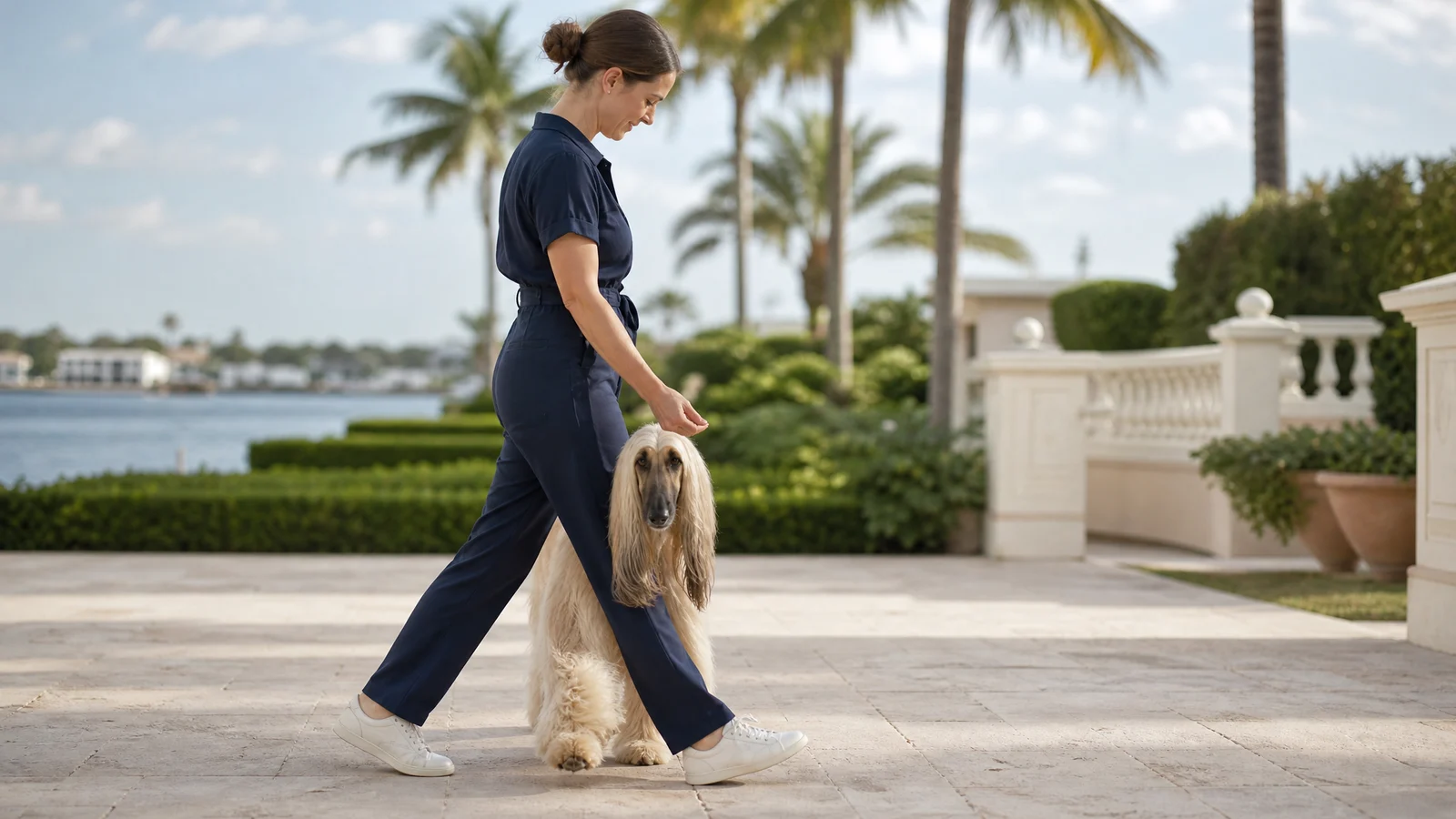
A comfortable Afghan Hound leg weave begins with one voluntary pass through a path that suits both the dog and handler. Stand on secure footing, leave enough room for an easy entrance and exit, and reward beyond the far side. A tight turn or full figure-eight is not required.
Choose the route before adding a cue. The dog should be able to approach without being pulled, pass without brushing against a knee and continue forward without being trapped between the handler's legs. If that path is awkward, select a different trick.
This guide covers one guided pass, then asks whether connecting another pass remains comfortable. We keep physical setup separate from the training steps so a successful reward does not override a poor fit.
Check the Afghan Hound Weaving Path First
Use a level, non-slip surface with no furniture, leash loops or loose objects in the exit route. The PDSA's puppy exercise guidance emphasizes secure footing and limiting twisting, jumping or skidding while puppies grow. Ask the veterinarian what movement suits the individual, because there is no Afghan-specific clearance age for this trick.
Observe the dog walking a straight route through the open room before placing a person around that route. Long coat, body size, current movement and the handler's balance can all change the available space. Keep regular veterinary visits part of the dog's care, and pause the trick if movement changes or appears uncomfortable.
The Handler's Stable Stance
Stand with feet far enough apart for personal balance without stretching into an unstable position. Keep knees soft and upper body quiet while the dog approaches. If the handler must wobble, step over the dog or close the path to stay upright, the setup does not support a safe pass.
Practice moving one guiding hand from the entrance to the exit while the dog is elsewhere. That rehearsal should feel smooth and should not require a sudden turn. The reward can then travel along a predictable route instead of circling above the dog's head.
The Dog's Unobstructed Exit
Look beyond the handler's legs to the place where the dog will receive the reward. Leave enough open floor for the Afghan to continue straight, turn gradually or stop without colliding with a wall. A doorway, another person or a second dog should not block that choice.
The AKC Afghan Hound profile describes the breed as independent and dignified, but that general description cannot decide whether this individual likes close body movement. Let willingness and clearance answer the setup question.
Guide One Afghan Hound Weaving Pass
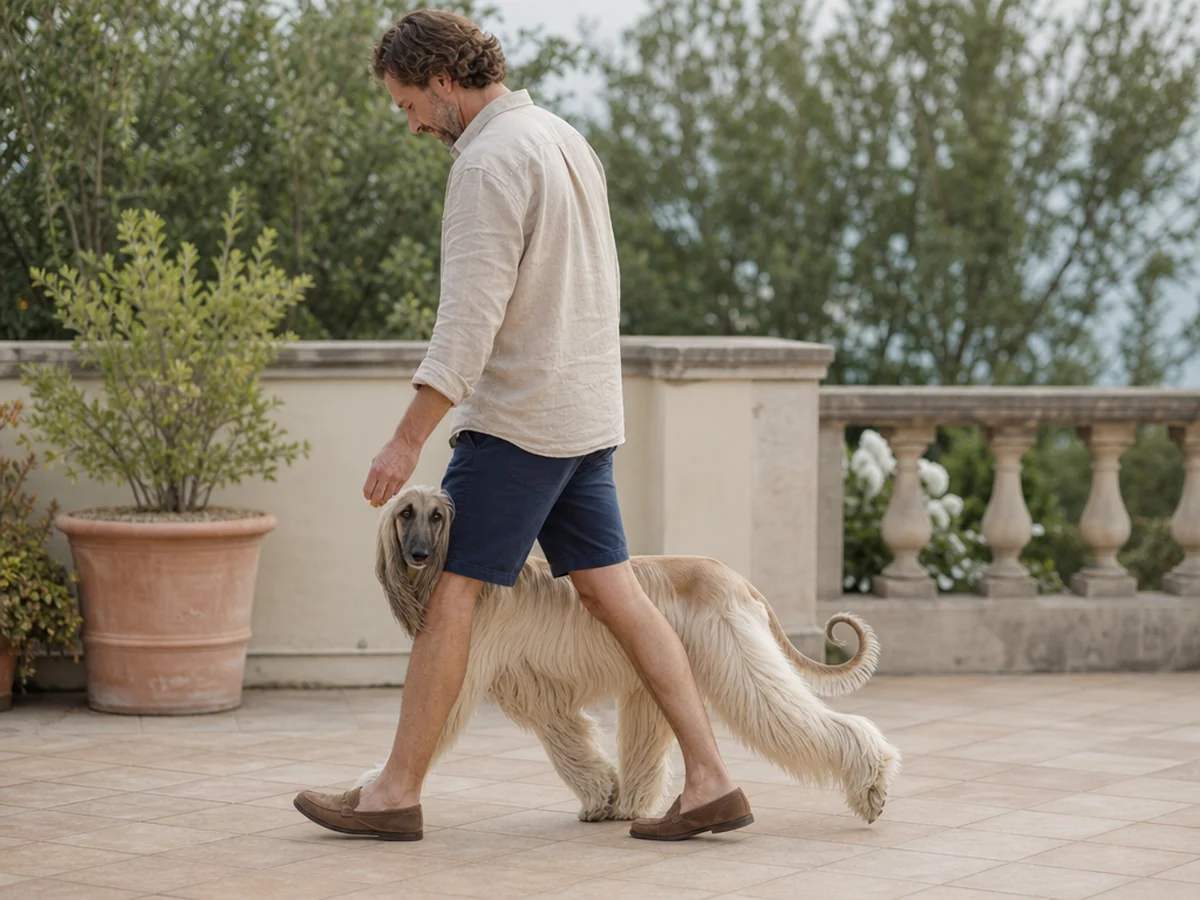
Begin with the dog facing the entrance from a short, straight approach. Show the reward low enough to invite forward movement without making the dog crouch or twist. The AKC leg-weave method starts with a guided single pass and rewards at the exit before building connected passes.
Use this general weaving method while the route remains open and comfortable. Keep every step voluntary, and finish beyond the handler’s stance so the dog can continue forward:
- Set the entrance and exit so the dog can see a clear forward path.
- Guide the Afghan voluntarily through one pass without touching or steering the body.
- Mark as the dog's shoulders clear the far side of the handler's stance.
- Deliver the reward beyond the exit so forward movement stays available.
- Reset outside the path, then decide whether another single pass belongs in the lesson.
A marker tells the dog which part of the movement earned the reward. Battersea's clicker-training guidance supports marking the wanted behavior precisely and following with the reward promptly. A verbal marker can serve the same clear job when it has already been paired with a reward.
The Blue Cross training guide also supports pairing a clear marker with a valued reward. Place that reward beyond the legs rather than beside a knee. This keeps the exit visible and avoids drawing the dog back into the narrowest part of the path.
After a few comfortable passes, reduce the obvious hand guide in small stages. Move the same hand along a shorter path, then begin the motion without displaying the reward. Add a spoken cue only after the dog is reliably following the familiar hand path.
Choose One Pass or a Connected Weaving Path
A second pass should be a new decision, not the automatic price of the first reward. Reset with the dog outside the stance and look at posture, pace and willingness to approach again. One easy pass can remain the finished trick.
A connected figure-eight asks the dog to turn around one leg and enter from the other side. That route may be too tight for the available space or the individual dog's movement. Do not pull the dog around the leg, crowd the shoulder or use the reward to draw them through hesitation.
| Movement Observed | Simpler Option |
|---|---|
| Straight pass with an easy exit | Reward and reset for another separate pass |
| Wide voluntary turn after the reward | Guide a second entrance only if the route stays open |
| Hesitation at the handler's knee | Widen the stance or return to an open hand target |
| Skidding, twisting or changed gait | Stop the trick and seek veterinary guidance when the change is new or concerning |
Keep broader movement needs on the Afghan Hound exercise page. This lesson owns only the close weaving path. It does not turn one successful pass into evidence that an agility course or faster sequence suits the dog.
Questions About Afghan Hound Leg Weaving
These questions cover signals and household roles that the movement plan does not decide. Each answer keeps the dog free to leave and preserves the single pass as a complete result.
Can the trick stop after one pass? Yes. Mark and reward beyond the exit, reset outside the stance and use the single route as the finished trick. A figure-eight adds turns and close movement that are optional, not a higher grade of success.
Should a helper hold the dog during the guided pass? No helper needs to hold the dog in the entrance. A helper can keep the wider room clear or place rewards, but the Afghan should choose to approach and should retain an open route away from the handler.
Can a hand signal stay in the finished trick? Yes. A clear hand path can remain the cue if it does not crowd the dog or hide the exit. Fade only the displayed reward, then use the familiar signal and deliver the earned reward after the marked pass.
Leave the Afghan Hound Weaving Exit Open
Finish each pass beyond the handler's stance, where the dog has room to collect the reward and choose the next movement. End the lesson if the path narrows, balance changes or the Afghan stops volunteering the approach. One comfortable pass with a clear exit is a complete weaving trick.
 Training basicsHow to Teach an Afghan Hound to Stay
 Puppy trainingAfghan Hound Puppy at 8 to 12 Weeks: The First Month Home
 Exercise and jobsHow to Teach an Afghan Hound to Roll Over