 Afghan Hound
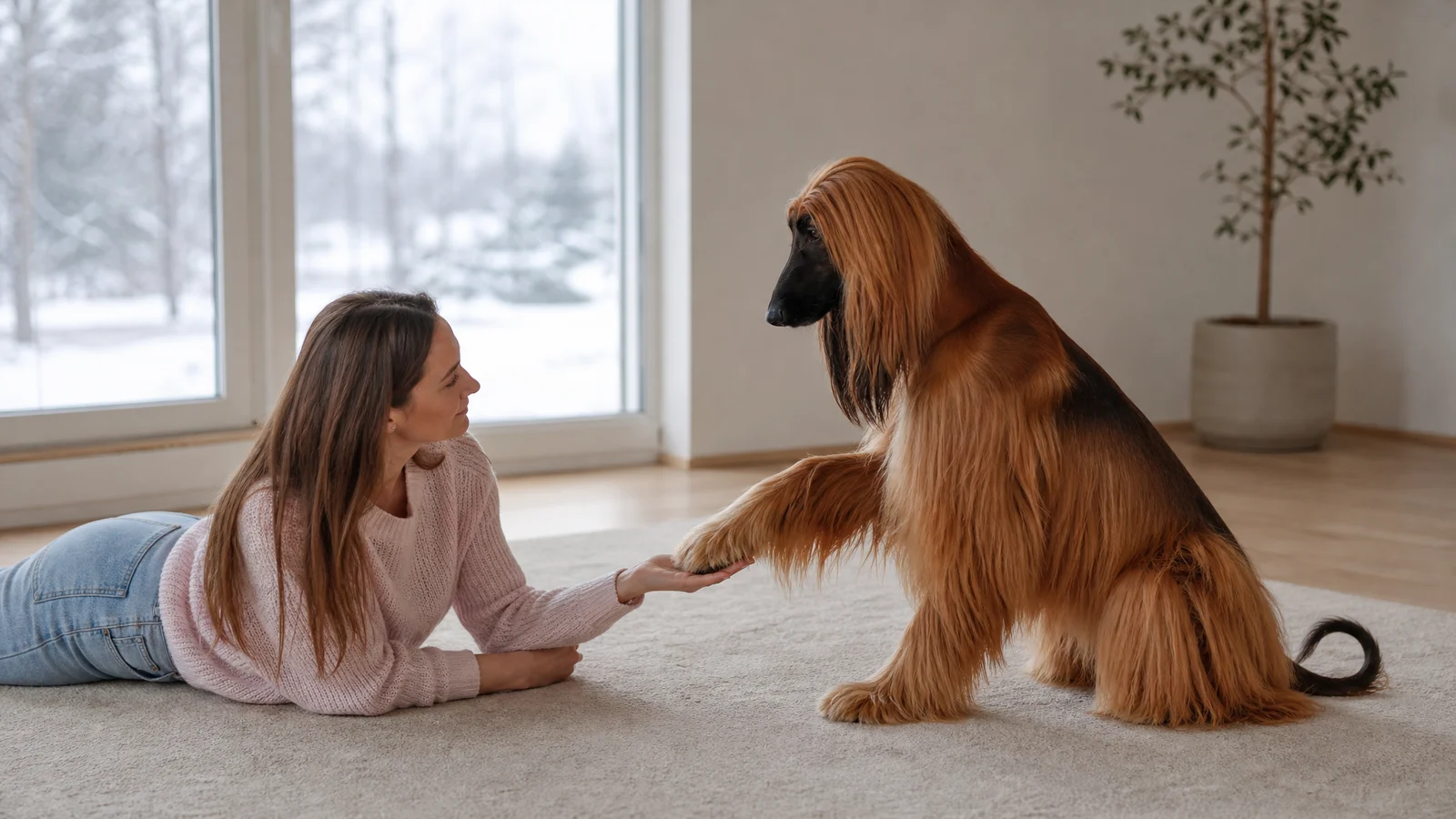
A comfortable shake begins when your Afghan Hound chooses to lift a paw toward a low hand. Mark that first voluntary movement, reward it, and release the dog before asking for more height or duration.
High five can grow from the same paw offer, but it needs a different hand target. Keeping the low receiving hand for shake and the upright palm for high five makes each cue easier to understand.
Check balance and surface comfort before either trick. The lesson should stop if the dog shifts away, braces, repeatedly lowers the paw, or moves differently from usual. This guide builds one low paw touch, separates the two targets, and keeps routine foot handling in its own consent-based plan.
Prepare for an Afghan Hound Shake
Practice on a nonslip surface while the dog is standing or sitting in a position they chose comfortably. Keep the receiving hand low enough that the paw can move a small distance without the dog leaning, twisting, or rising onto the hind legs.
The ASPCA grooming guidance notes that some dogs dislike having their feet touched. A paw trick is therefore not permission to hold toes, inspect pads, or clip nails. Use the separate Afghan Hound handling practice for cooperative care.
AKC breed information describes Afghan Hounds as independent and dignified. That broad description cannot predict one dog's response. For the Afghan in front of you, posture and willingness should determine whether the session continues.
Shape the First Afghan Hound Shake
Blue Cross high-five instructions use a marker at voluntary paw contact, followed by a reward. Begin without taking the leg in your hand. The general method below turns a small offered movement into a clear, repeatable touch:
- Present an open hand below the dog's chest and wait quietly for any paw movement toward it.
- Mark the instant the paw lifts or reaches toward the hand, even if contact does not happen yet.
- Deliver a reward with the other hand so the receiving hand stays still and easy to find.
- End the repetition by lowering the target and giving the dog room to place all four feet comfortably.
- Add the shake cue just before presenting the low hand once the paw offer is predictable.
If no paw movement appears, reset rather than tapping, lifting, or holding the limb. A smaller change can be enough, such as marking a weight shift that frees one front paw before waiting for a brief lift.
Give Shake and High Five Separate Targets
The AVSAB training statement describes reward-based training that uses a cue, a marker for the wanted behavior, and a valued reinforcer. Clear target pictures help that sequence stay consistent when two tricks use related movement.
| Skill | Hand Target | Voluntary Contact | Release |
|---|---|---|---|
| Shake | Low, open receiving hand | Paw settles lightly onto the hand | Lower the hand before the dog strains |
| High five | Upright palm near comfortable chest height | Paw taps the palm and returns to the floor | Move the palm away after the marked tap |
| Foot care | No trick target | Handled through a separate cooperative-care plan | Dog can pause or withdraw |
Use different verbal cues only after each hand picture reliably produces its own response. If the dog offers shake to the upright palm, lower the target and rebuild the distinction instead of repeating both cue words.
Raise the Target Without Pulling the Paw
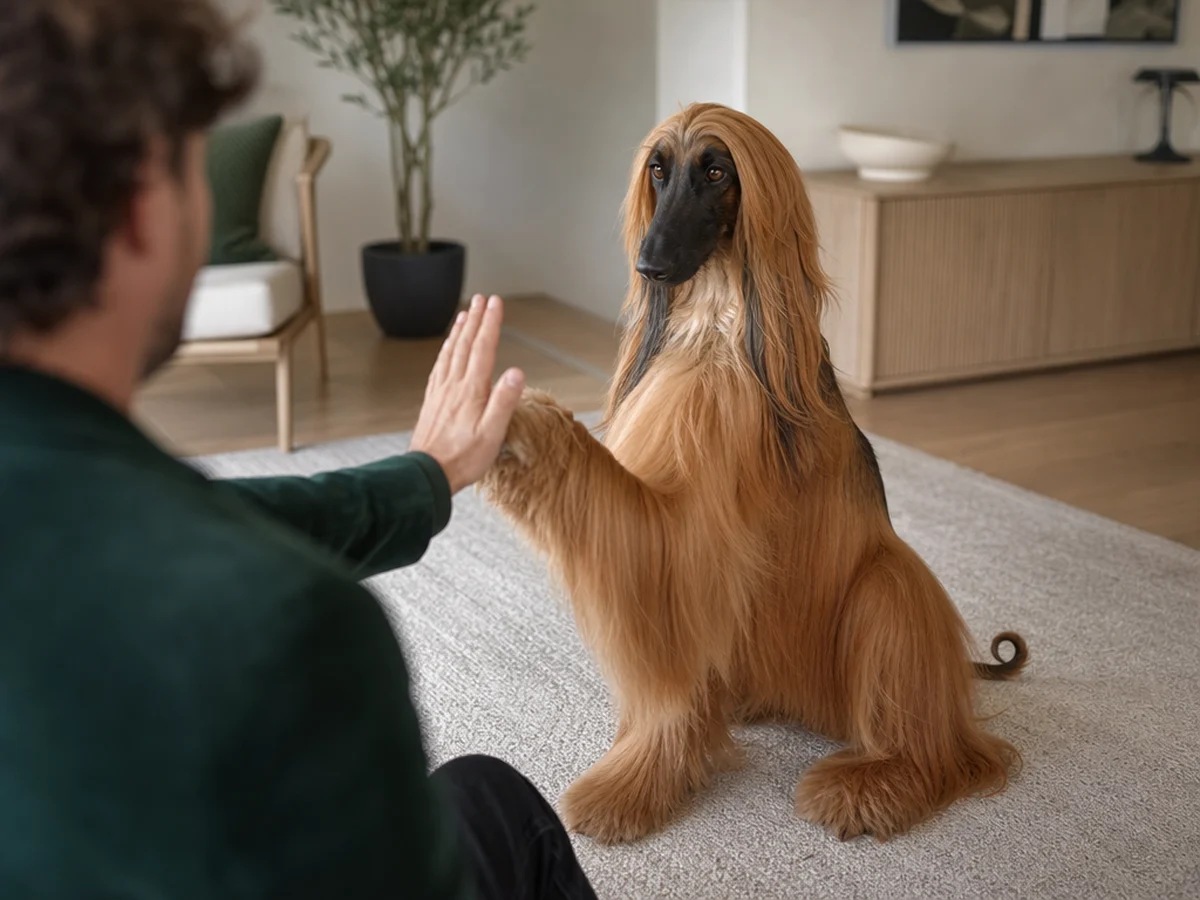
Transfer to high five by rotating the familiar target a little at a time. Mark a light tap while the palm is still low, then reward and let the paw return to the floor. Raise the next target only if balance and movement remain easy.
We recommend rewarding the voluntary tap rather than a paw placed into position by the handler. This keeps the dog's own movement connected to the marker and reward. If the dog withdraws, misses repeatedly, or reaches by standing up, lower the palm and shorten the movement.
A high five does not need dramatic height. For a tall Afghan Hound, a modest palm position can still create a distinct picture while keeping four feet available for balance.
Afghan Hound Paw Trick Questions
The method covers the first paw offer and the transfer between hand targets. Three practical gaps remain about cue choice, body position, and what the trick means outside a training session.
- Can the two paws have different cues?
- Yes, after one side is predictable and comfortable. Present the target where that paw can reach without crossing the body, then add a distinct cue only when the movement is consistent.
- Should high five require standing on the hind legs?
- No. Keep the palm within easy reach while the dog remains balanced. Lower the target if the front end lifts or the dog stretches to make contact.
- Does a paw trick give permission to handle the feet?
- No. Shake and high five are cued performance behaviors, not blanket consent for grooming or examination. Teach foot handling separately and pause when the dog withdraws.
End Afghan Hound Shake Practice Comfortably
Finish after a light voluntary touch rather than extending the hold. Put the target hand away, let the dog return to a neutral stance, and keep the last repetition easy enough that walking away is always available.
Maintain regular veterinary visits and pause the trick if paw use, balance, gait, or willingness changes unexpectedly. A comfortable low shake remains a complete skill even if a higher target never suits this dog.
 Training basicsIs an Afghan Hound the Right Dog for You? What Training Takes
 BehaviorHow to Stop an Afghan Hound Pulling on the Leash
 BehaviorHow to Stop an Afghan Hound Barking