 Afghan Hound
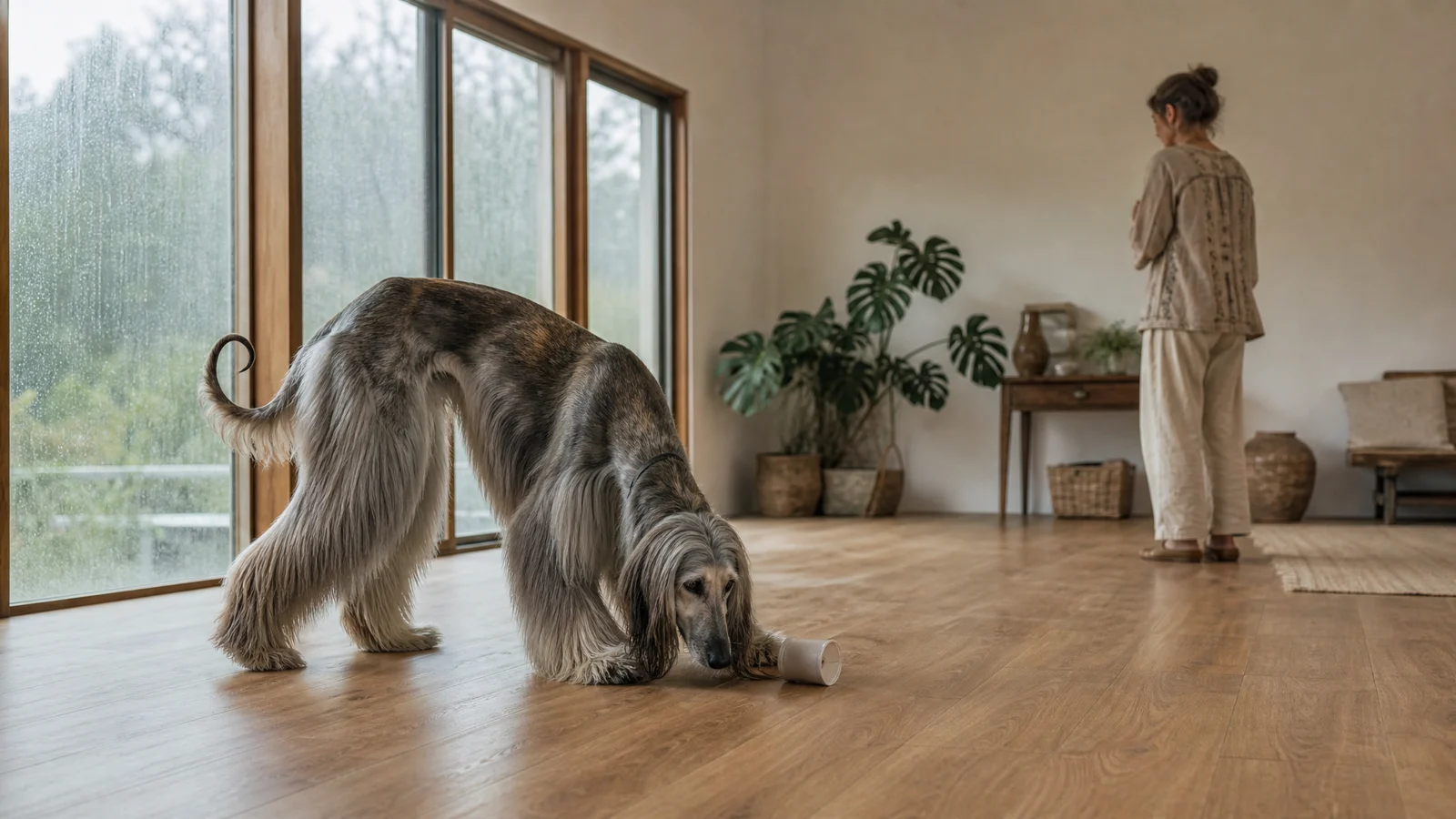
A rainy afternoon does not have to mean a restless Afghan Hound pacing the hallway. One treat on a clear floor and a quiet invitation to look for it is a complete indoor activity, and it asks for patience from the dog rather than speed. It is a short learning game, not a promise to tire anyone out or to stand in for outdoor time. You'll see how a single placed reward grows into a calm search the dog can finish without any rush.
Food for the search should fit the dog's ordinary feeding plan. Everything here favors calm pacing and clear endings, and the whole game needs nothing more than one treat, a clear floor and a few quiet minutes.
The Indoor Afghan Hound Find-It Game in Four Moves
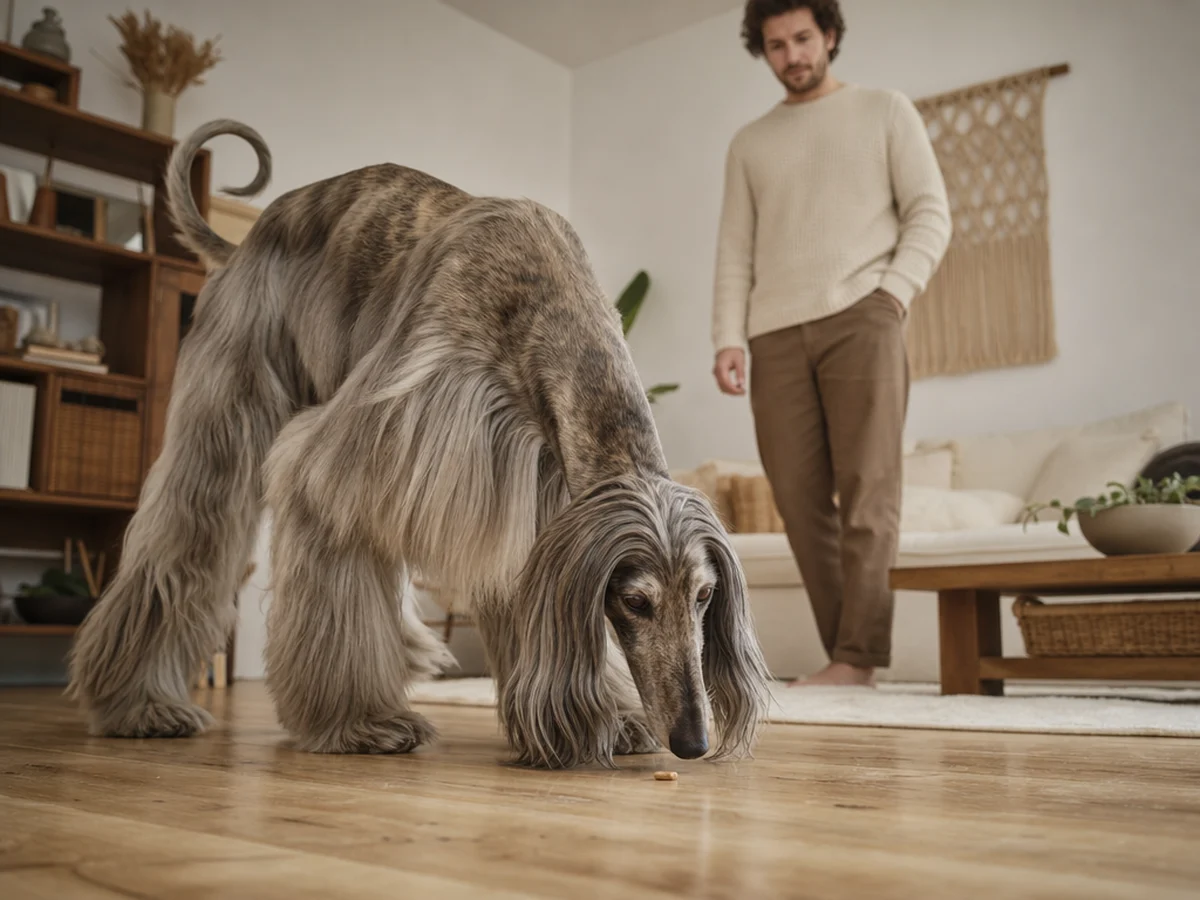
Every version of this game starts with an easy win. The Blue Cross indoor-games guide begins find-it with a food reward the dog can plainly see, uses a marker to say "yes, that was it," and only then makes the hiding spot harder, a little at a time. Pairing a clear marker with a reward that the dog values keeps the message simple. The same guide says indoor play needs suitable space and nonslip footing, which is why the room matters as much as the reward.
- Place an easy find. Put one reward on the open floor where the dog can notice it without searching furniture.
- Invite the search. Give the chosen find-it signal once and let the dog approach at a comfortable pace.
- Mark the discovery. Mark the moment the dog reaches the reward, then let the placed treat finish the job.
- Change one detail. Put the next find partly behind an open object or a little farther away, with the room still quiet.
Repeat the easy placements several times before adding any concealment. Pointing, racing the dog to the spot or moving the reward once the search has started all muddy the picture. If the dog stops investigating, go back to a visible placement instead of adding excitement. The effort is worth it, since ASPCA enrichment guidance says sniffing, indoors or out, can be both stimulating and calming and lets a dog gather information about the surroundings.
Choosing the Indoor Room for the Search
The room is part of the lesson. Pick somewhere with secure access and enough width for the Afghan Hound to turn without brushing furniture. A clear floor lets the dog sniff and turn without tight-space jumping or fast pursuit, and nothing about this game needs either. Run a short check before the first placement, because the aim is to make slow searching easy and accidental speed unlikely:
- Confirm that rugs and flooring stay put under ordinary walking and turning.
- Remove cords, breakable objects and anything the dog should not investigate.
- Close off narrow routes that would invite jumping across furniture or people.
- Choose spots that are easy to inspect and clear when the game ends.
Indoor Search Questions Worth Settling
The find-it game raises three practical points: how a second dog fits into the room, how to keep the find-it cue separate from leave it, and where one short game belongs in the day.
Can a second dog use the room at the same time? Begin with one dog so each search stays clear and food does not create competition. Give the second dog a separate safe activity elsewhere, then reset the room before switching.
Should a find-it cue be different from leave it? Yes. Use one signal that invites searching for the placed target, and keep the existing leave-it signal for disengaging from something. Two distinct meanings reduce guessing when an ordinary household object turns up near the search area.
Can a brief learning game replace all outdoor activity? No. Indoor search is one mental activity, not a full schedule. Our Afghan Hound exercise guide covers the wider daily balance for the individual dog.
Keeping the Afghan Hound Brain Game Gentle
A harder game does not need more speed. Change how visible the find is, how much household movement surrounds it, or how large the search area is. The United Kennel Club Afghan Hound standard describes the breed as an independent thinker that can be exuberant and playful with family, so an individual dog's response, not the breed label, decides whether the room is workable.
When the Search Stalls
Return the reward to an open spot when the dog circles without finding it, wanders off or starts checking unsafe objects. Stand quietly and let the easier placement do the explaining. One successful visible find teaches more than a stream of verbal hints around a hidden one.
Pause when sniffing turns into fast pacing, grabbing or attempts to climb. Collect the materials and offer an ordinary break rather than letting the search become a chase. Regular veterinary visits stay part of normal care, and a sudden change in appetite, energy or willingness to use the nose is a reason to call the veterinarian.
When the House Is Busy
Move people and other animals out of the search room if their movement keeps interrupting. A closed door or an agreed quiet period can make the same visible placement easier without changing the reward. Bring back one source of movement later only if the dog keeps searching comfortably.
Ending the Search and Resetting the Room
Give a clear finished signal, check every placement and collect unused food or containers before reopening the room. Let the Afghan drift into the next ordinary household activity without a last hidden find that could keep the search going unexpectedly.
The PDSA activity guidance says training belongs in a dog's daily routine because it keeps the mind active, reinforces cues, prevents boredom and builds the bond. Treat this game as one bounded option among several, then hand the room back to rest, walking or family use.
 Exercise and jobsEasy Tricks to Teach an Afghan Hound
 Training basicsAfghan Hound Temperament: What It Means for Training
 Training basicsHow to Teach an Afghan Hound to Focus on You