 Afghan Hound
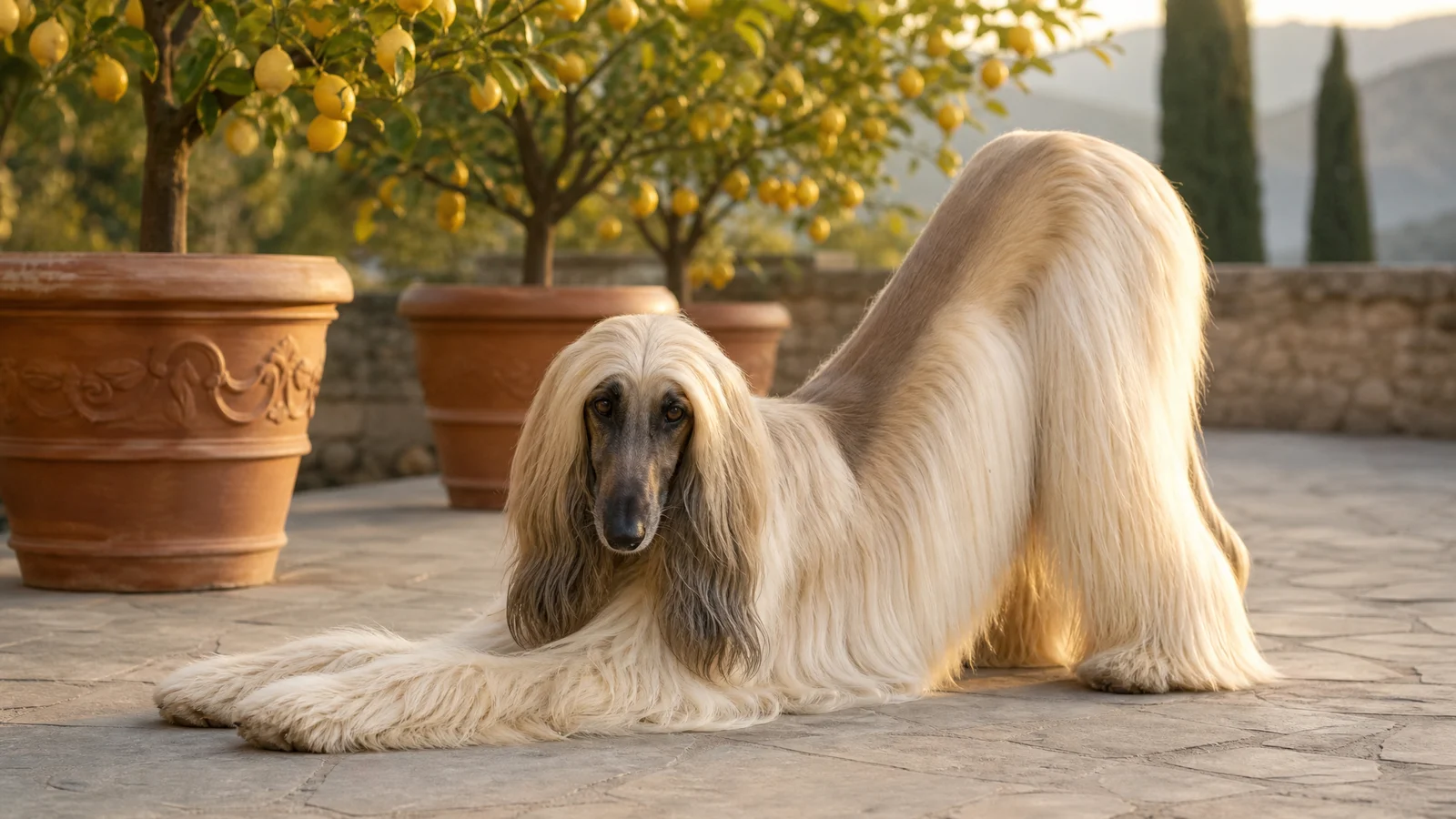
Easy Afghan Hound tricks begin with an action the individual dog can offer comfortably in the available space. A stationary target, a gentle turn, or a simple interaction with an object may fit, but no single performance is a requirement for the breed.
In this guide, we choose a suitable category, notice what the dog already offers, and shape one small change at a time. The goal is to select a promising lesson, not compress every paw, spin, roll, weave, or obstacle skill into a set of miniature tutorials.
Participation matters more than spectacle. We can change the action, the surface, or the reward when an Afghan hesitates, and we can stop when the dog shows that today's option is not comfortable or interesting.
Choose an Afghan Hound Trick That Fits Today
Start with three questions: what movement is comfortable, how much clear space is available, and what kind of reward keeps the dog engaged? These choices narrow the lesson before a cue or hand signal is attached to it.
The AKC Afghan Hound overview describes Afghans as independent and dignified, but a breed description cannot predict one dog's response to a trick. Treat willingness as information about the current setup rather than a score for intelligence or loyalty.
| Option type | Comfort or space question | Where the full lesson belongs |
|---|---|---|
| Stationary action | Can the dog remain balanced without repeated reaching or weight shifts? | The individual skill page owns its cue, steps and troubleshooting. |
| Turning action | Is there secure open space and comfortable footing for the whole movement? | The separate movement lesson owns direction, fading help and repetition. |
| Object interaction | Can the dog approach, touch and leave the item without pressure? | The specific object lesson owns handling, exchanges and safety details. |
If two choices seem suitable, begin with the one that asks for less movement and equipment. Broader activity needs remain with the guide to Afghan Hound exercise, while this page stays focused on selecting a teachable trick.
Notice Which Actions Your Afghan Hound Offers
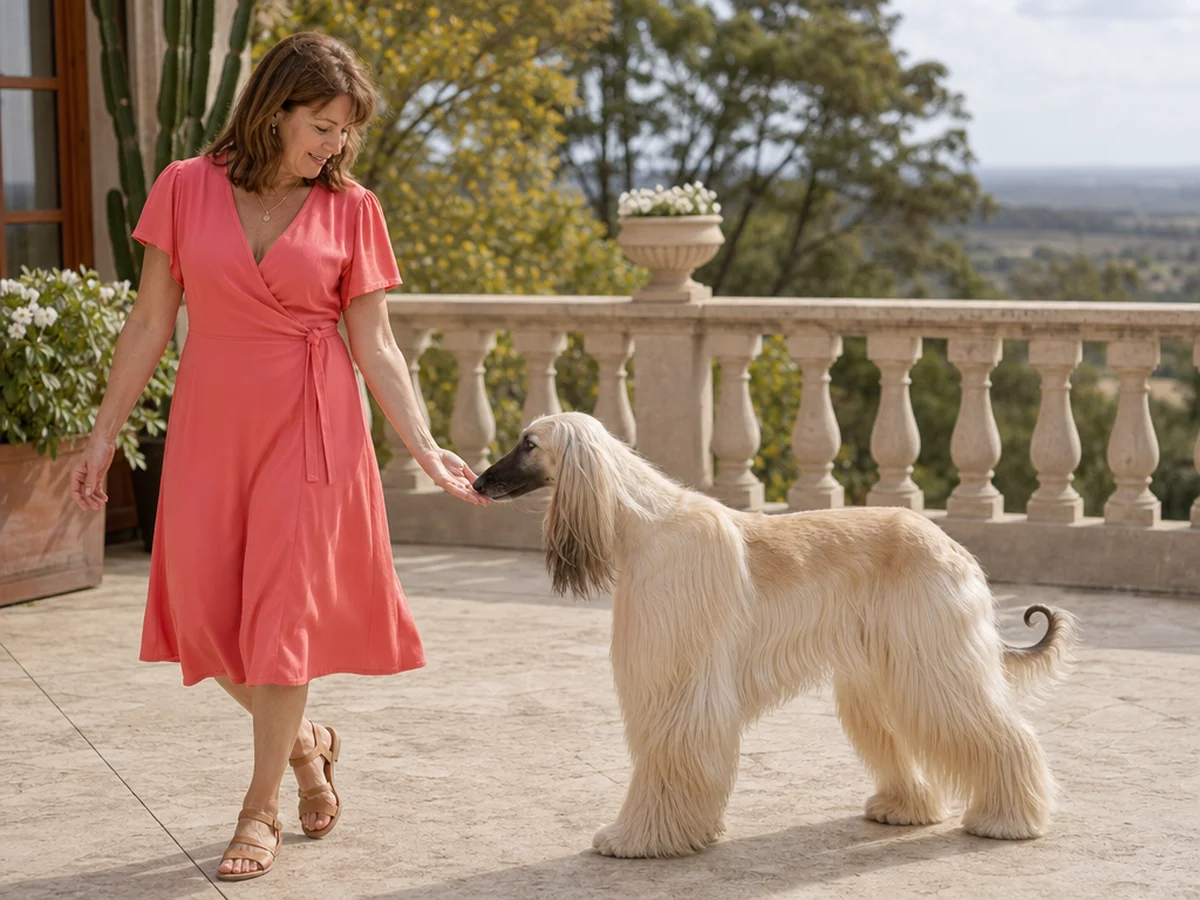
Watch during a calm moment before presenting a cue. A head turn, a deliberate paw lift, or a brief nose touch may reveal an action the dog can repeat without being guided through the full finished behavior.
Capturing means marking a useful action when it appears, while shaping means rewarding closer versions of a goal. The AVSAB humane training statement includes capturing and shaping among reward-based techniques that use cues, markers and reinforcers.
Choose one clear piece of the action and decide what will count before practice begins. If the dog offers several movements, reward only the one connected to today's lesson so the marker remains useful instead of becoming a signal for general excitement.
For an Afghan, a pause or look away can mean the setup needs to change, not that the dog has failed. The discussion of Afghan Hound trainability keeps reward choice and independent behavior with their detailed owner.
Shape One Trick in Small Rewarded Changes
The AKC shaping guide recommends breaking behavior into achievable approximations and changing the criterion if the dog becomes stuck. The general shaping method below applies that principle without taking over any individual trick's full lesson.
- Choose one voluntary action that is comfortable and easy to observe. Define the smallest version you can mark consistently before adding a spoken cue.
- Mark that approximation at the moment it happens. The marker should identify the action rather than the dog's approach to the food or toy.
- Deliver a reward the dog values, then allow a neutral reset. The Blue Cross training guide supports pairing a clear marker with a valued reward.
- Change one criterion only when the current version is easy to recognize. Ask for a slightly clearer movement, a different position, or less visible help rather than changing all three.
- Pause while the dog is still participating comfortably. Record the version that worked so the next session can begin with a familiar success.
If progress stops, return to the last version the dog could offer readily. Changing the criterion is part of shaping, while repeating a cue or moving the dog's body would hide the information that the step is too large.
Questions About Choosing Afghan Hound Tricks
- Can two Afghan Hound tricks use similar hand movements?
They can, but make the signals visibly different before adding both cues. Practice one trick at a time until the opening movement is clear, then test whether the dog can distinguish the two setups.
- Should different caregivers teach different tricks at once?
It is usually clearer for caregivers to agree on one marker, cue and current criterion for each trick. They may practice different skills, but a shared note prevents one person from rewarding a version another person is trying to change.
- Is declining a physical trick a training failure?
No, choosing not to teach a movement can be the best decision for that dog and setting. Select a stationary or object-based option instead, and pause training if any action looks uncomfortable.
Keep the Trick Your Afghan Hound Can Join Comfortably
Tricks can be one form of enrichment, but they do not need to carry the dog's whole activity plan. The ASPCA enrichment guidance notes that food puzzles can add mental stimulation, which offers another option when physical performance is not appealing.
Keep regular veterinary visits part of your dog's care, and pause a movement if comfort or mobility changes. The useful trick is the one the dog can join willingly, with a clear marker, a valued reward, and an easy way to finish.
 Training basicsAfghan Hound Temperament: What It Means for Training
 Training basicsHow to Teach an Afghan Hound to Focus on You
 Training basicsHow to Teach an Afghan Hound to Lie Down