 Afghan Hound
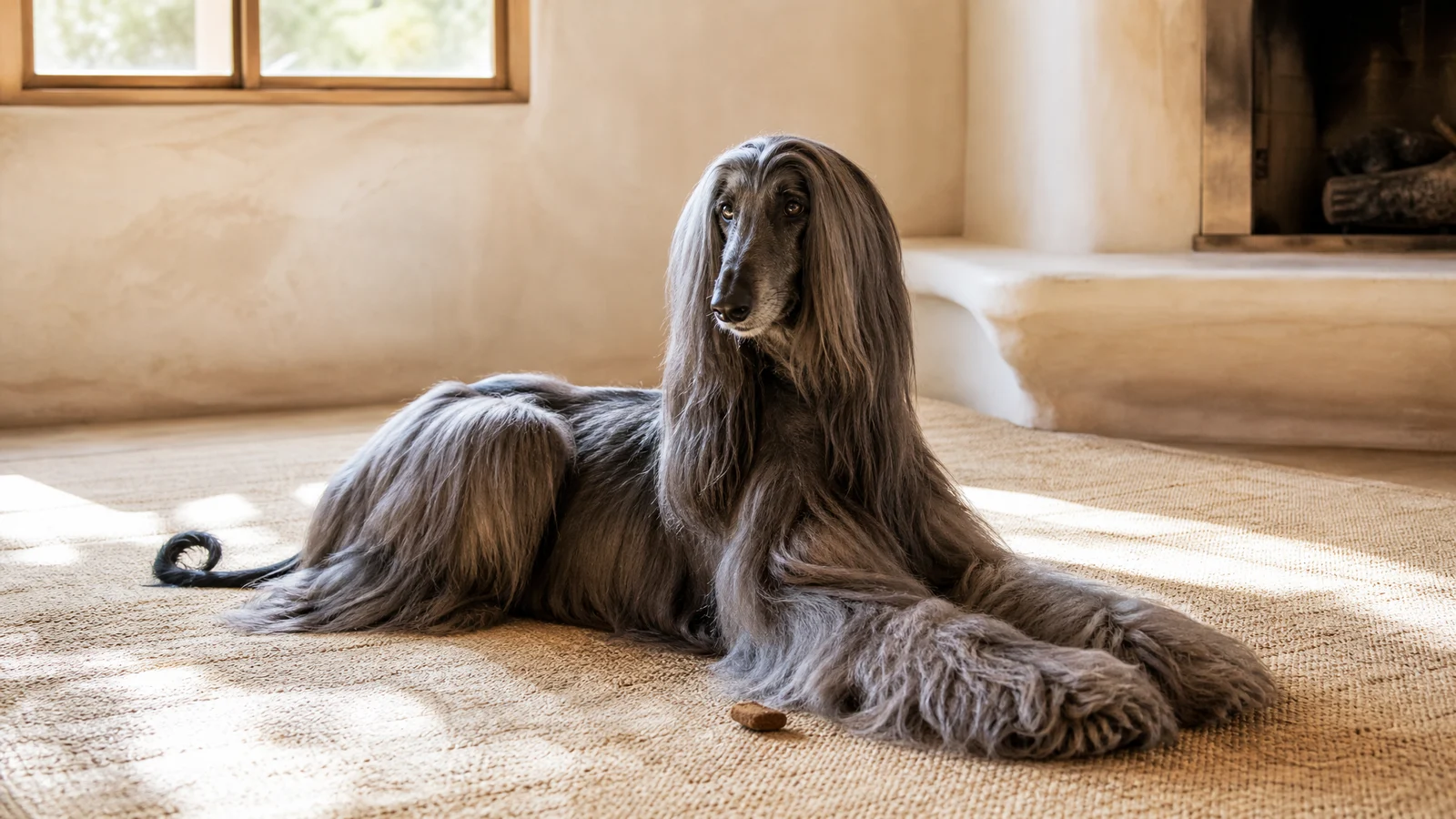
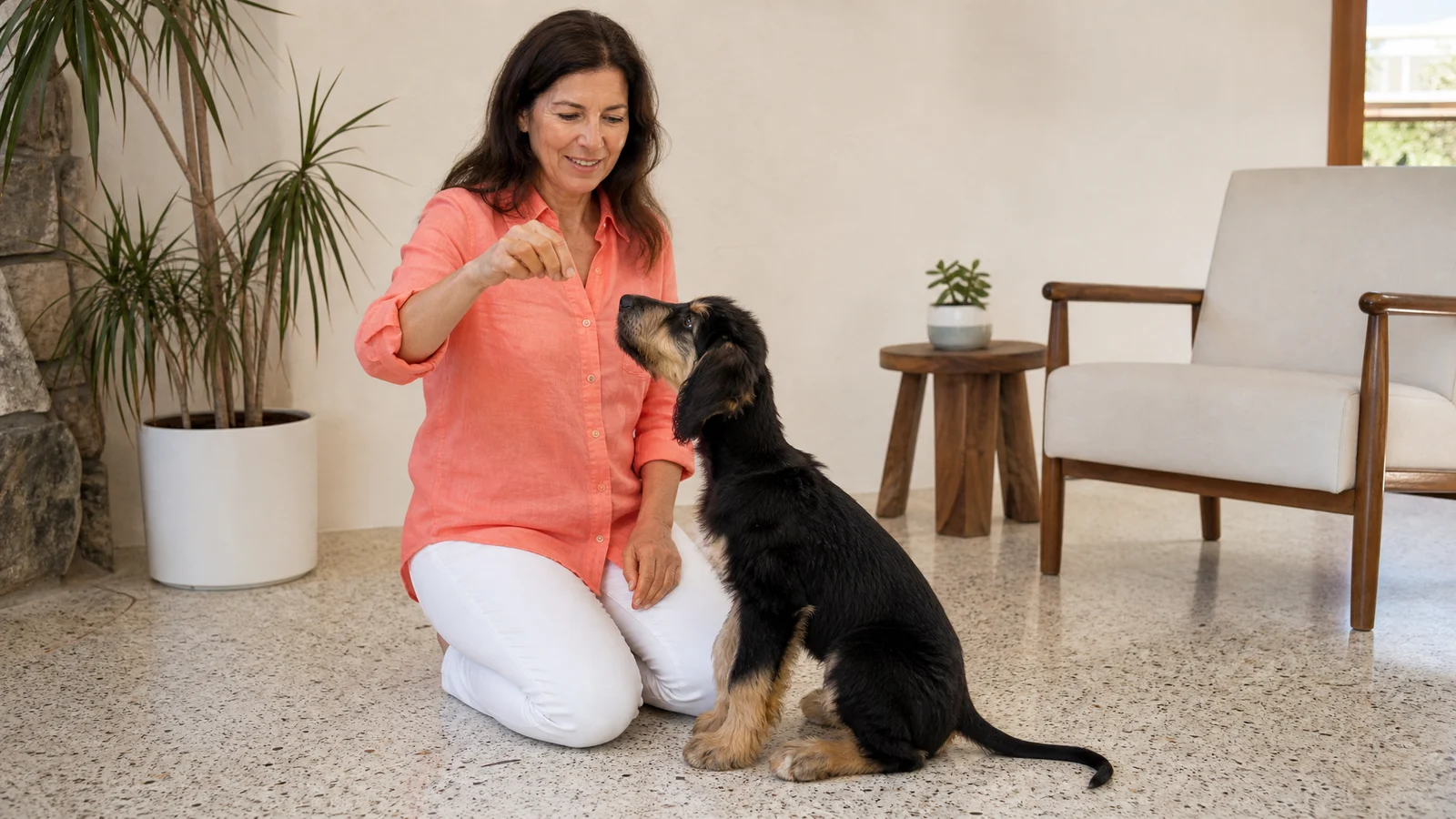
Teach an Afghan Hound to lie down by rewarding a voluntary movement onto a comfortable surface, then add the cue after the dog can perform that movement predictably. When both elbows touch the surface, mark immediately and place the earned reward low enough that the Afghan need not rise.
A down cue asks for a posture. It does not prove that a dog feels relaxed, and it does not include the duration that belongs to a stay lesson. Choose a first practice area with few distractions so the dog can attend to the setup without treating stillness as an emotional requirement.
This guide compares waiting for a naturally offered down with guiding a small nose-to-floor movement. Choose the route that lets the individual move freely, then remove the visible guide before naming the behavior.
Two Ways an Afghan Hound Can Offer a Down
Start on secure, comfortable footing and watch how the dog normally lowers the body. The American Kennel Club Afghan Hound profile describes the breed as independent and dignified, but that general trait does not tell you which teaching route will suit one dog. Let the dog's movement and comfort guide the choice.
| Approach | What the Handler Does | When It May Fit |
|---|---|---|
| Capture an offered down | Wait quietly, mark the completed posture and place the reward low | The dog already lies down comfortably in the practice area |
| Guide a small movement | Move a reward toward the floor and slightly away as the dog follows | The dog can follow without crowding, pawing or becoming stuck |
| Pause and reassess | Stop the attempt and change the surface, starting posture or setting | The dog hesitates, scrambles, resists bending or may be uncomfortable |
Capture a Comfortable Rest
Observe without repeating a cue the dog has not learned. When the Afghan Hound chooses to lower the chest and elbows, mark that completed movement and place the reward between the front paws. The Battersea down guide includes capturing a naturally offered down as an alternative to guiding it.
After the reward, release the dog to move again instead of building duration. Several separate opportunities make the movement easier to recognize without turning this lesson into stay practice. If coat, paw or body handling complicates the setup, use the approved Afghan Hound handling practice guide for that separate skill.
Guide a Small Movement
Begin from standing if sitting is awkward. Let the dog notice the reward, move it toward the floor near the front feet, then guide slightly forward so the elbows can lower without pushing the shoulders or moving the legs by hand. The Royal Kennel Club down lesson supports transferring from a guided movement to a hand signal and verbal cue.
Stop if the dog repeatedly backs away, scrambles for footing or seems reluctant to bend. Change the surface or starting position rather than forcing the posture. Keep regular veterinary visits part of ordinary care, and ask the veterinarian about new difficulty, apparent pain or a sudden change in movement.
Mark the Down Before Adding More Demands
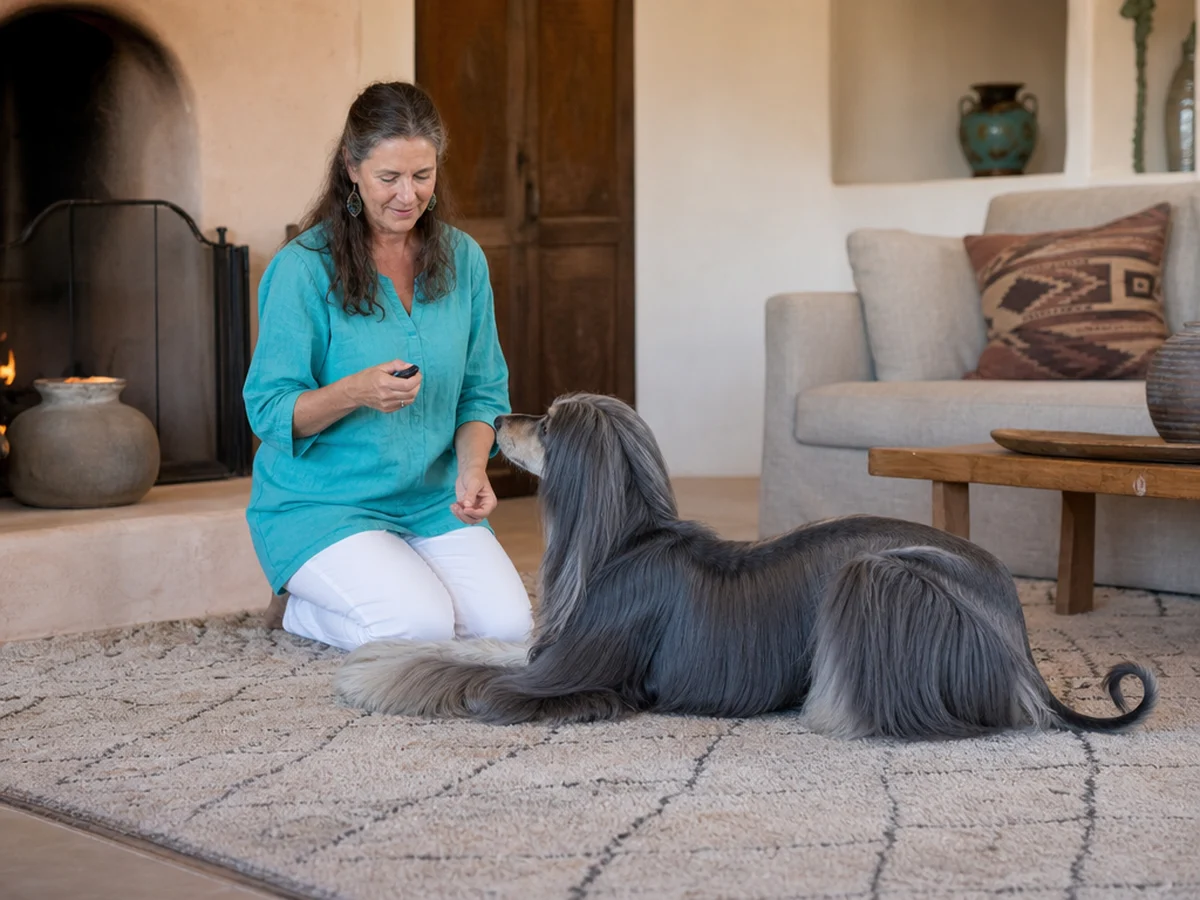
Use one clear marker for the instant the down is complete. A click or brief word pinpoints the movement. The following reward gives the dog a reason to offer it again. Within a reward-based lesson, the marker identifies the completed response and the earned outcome follows.
The general method below teaches the movement before naming it. Keep each repetition easy enough for the dog to stand, reset and choose again. Do not ask for a longer down during these steps.
- Notice or guide the movement. Wait for the dog to lower naturally, or use the smallest visible guide that produces a comfortable path to the floor.
- Mark the completed down. Mark when the elbows reach the surface so the exact movement is clear.
- Reward low. Deliver the earned reward near the front paws without turning the placement into pressure to remain there.
- Repeat comfortably. Release, reset and stop while the dog can still perform the movement without hesitation.
- Name the movement. Say the chosen cue just before the familiar hand signal, then gradually make the signal smaller.
Remove the obvious food guide before it becomes part of every repetition. The Blue Cross training guide describes a clear marker as a signal paired with something valuable to the dog at that moment. A reward can still follow the correct response after the lure is gone.
Practice in a slightly different spot only after the movement is easy in the first one. If the Afghan pauses when the surface or surroundings change, simplify the setting and help the dog succeed there. That is a context change, not evidence that the dog is being deliberately difficult.
Afghan Hound Down Questions
The body covers two ways to obtain the posture and the sequence for adding a cue. Three practical gaps remain about starting position, emotional meaning and the future role of the hand signal.
- Can an Afghan Hound learn down from standing if sitting is uncomfortable?
- Yes. Guide the movement from standing and keep the path small enough for the dog to follow without slipping or folding awkwardly. Pause and consult the veterinarian when discomfort or a change in movement may be involved.
- Is a down cue the same as settling around visitors?
- No. A correct down describes body position, while emotional comfort around visitors requires its own observation and plan. Release the dog or create space if the situation is difficult instead of using posture as proof of relaxation.
- Should the hand signal remain after a spoken cue is added?
- It can remain as a useful cue, but teach the spoken word separately if you want each signal to work on its own. Say the word before the familiar signal, reward the down and test the word alone only after that sequence is predictable.
Choose a Comfortable Use for the Down
Use the finished cue for one simple posture change, such as moving into a down before the next ordinary activity begins. Reward the response, then release the Afghan Hound without quietly adding a long wait. A short, successful use keeps the cue distinct from both stay and voluntary relaxation.
Continue to choose secure footing and a starting position the dog can use easily. If the response becomes hesitant, return to the earlier movement rather than repeating the word. The useful result is a dog who understands how to move into the posture, not a dog who has been held there.
 Training basicsHow to Choose an Afghan Hound Trainer
 Puppy trainingAfghan Hound at 6 to 12 Months: Adolescence Begins
 Puppy trainingAfghan Hound Puppy: What to Expect and How to Start Training