 Afghan Hound
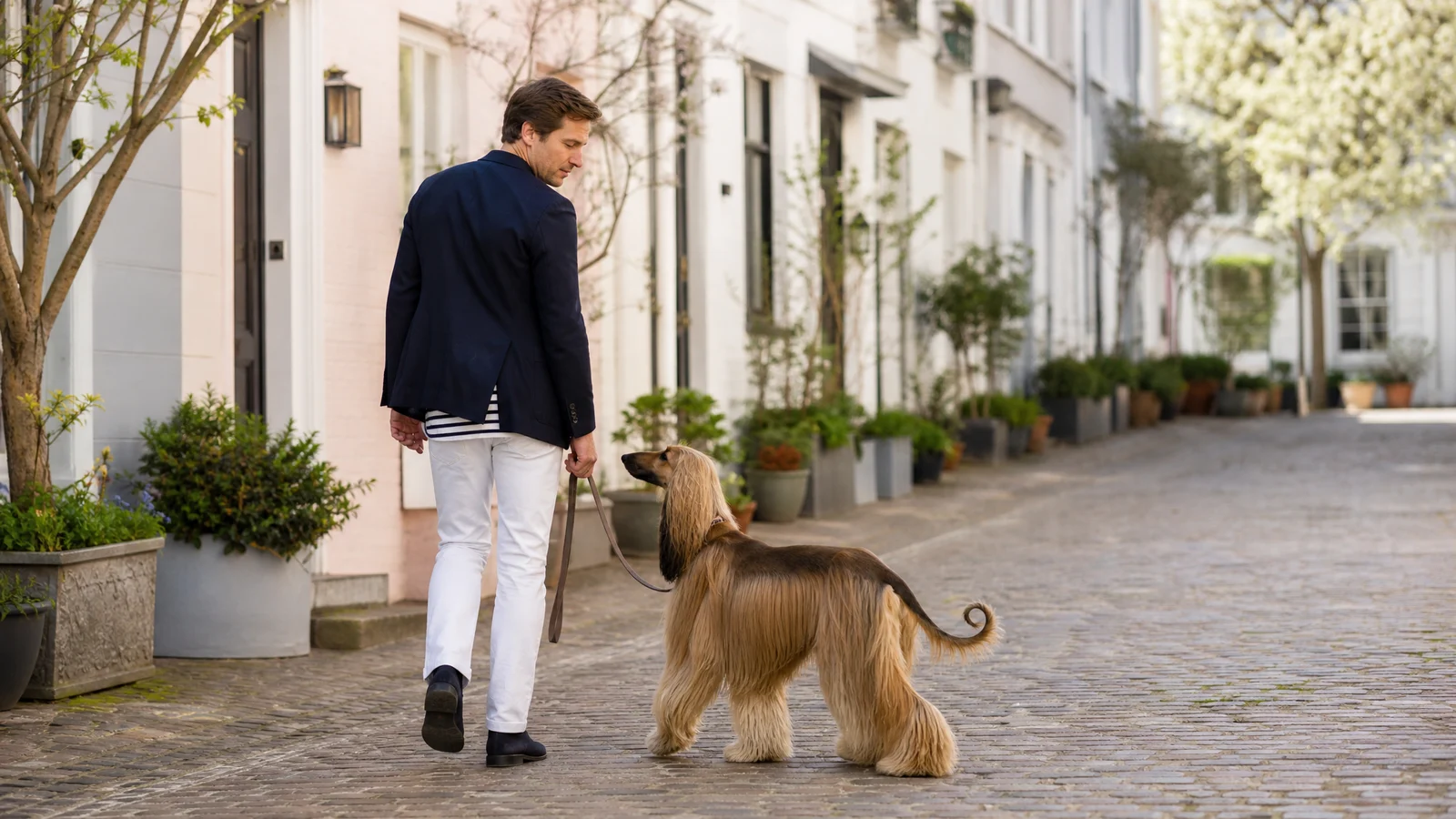
Teach an Afghan Hound to heel as a brief movement into and out of a position beside one chosen leg. Reward the dog for finding that location, take only the amount of movement they can keep comfortable, then use a release that clearly returns them to ordinary managed walking.
We begin with that exit boundary before building a longer sequence. The dog first learns that heel has a recognizable finish, then learns where to return, how a turn changes the available space and how one short stretch connects those pieces. Heel remains separate from relaxed walking and from repairing sustained leash tension. This guide follows that order and closes with practical decision questions.
Define the Exit From Afghan Hound Heel Work
Choose one release word and decide what happens immediately afterward. The handler can soften their walking posture and give the dog more room while keeping the leash and surroundings secure. Practice that contrast from stillness so the release does not depend on a long period of close walking.
The AKC Afghan Hound profile cautions against off-leash walking because an Afghan may pursue perceived prey. Releasing heel therefore changes the task, not the safety arrangement. Keep ordinary walking leashed and use the release only where the dog can move without crossing traffic or another hazard.
When the dog hears the release, pause close-position criteria. Let the dog use the space allowed by the ordinary walking plan, then reset separately before another heel entry. This clean ending prevents heel from expanding silently until neither dog nor handler knows when precision is required.
The Heel Return Point Beside One Leg
Select one side and picture a return area beside that leg rather than a line the dog must hold continuously. The Afghan Hound's shoulder can arrive near the leg while the head and neck remain free. The dog need not lean against the handler, cross in front or maintain constant eye contact.
Start with the handler quiet and the dog free to choose the nearby space. RSPCA walking guidance begins from stillness and rewards the instant the dog offers attention. For this task, mark the moment the Afghan enters the chosen return area and deliver the reward from the hand on that side.
Change the handler's position between repetitions instead of marching forward immediately. Take a small step away after the release, stop and invite the dog back to the same side. Returning from slightly different starting points shows whether the location is clear before straight movement or turns are added.
The AKC heel lesson supports marking and rewarding beside the selected side, using the near hand so the dog is not drawn across the handler. Keep secure footing and enough room for the Afghan to place their feet without brushing furniture or stepping into the handler's path.
An Early Turn Tests the Afghan Hound Heel Map
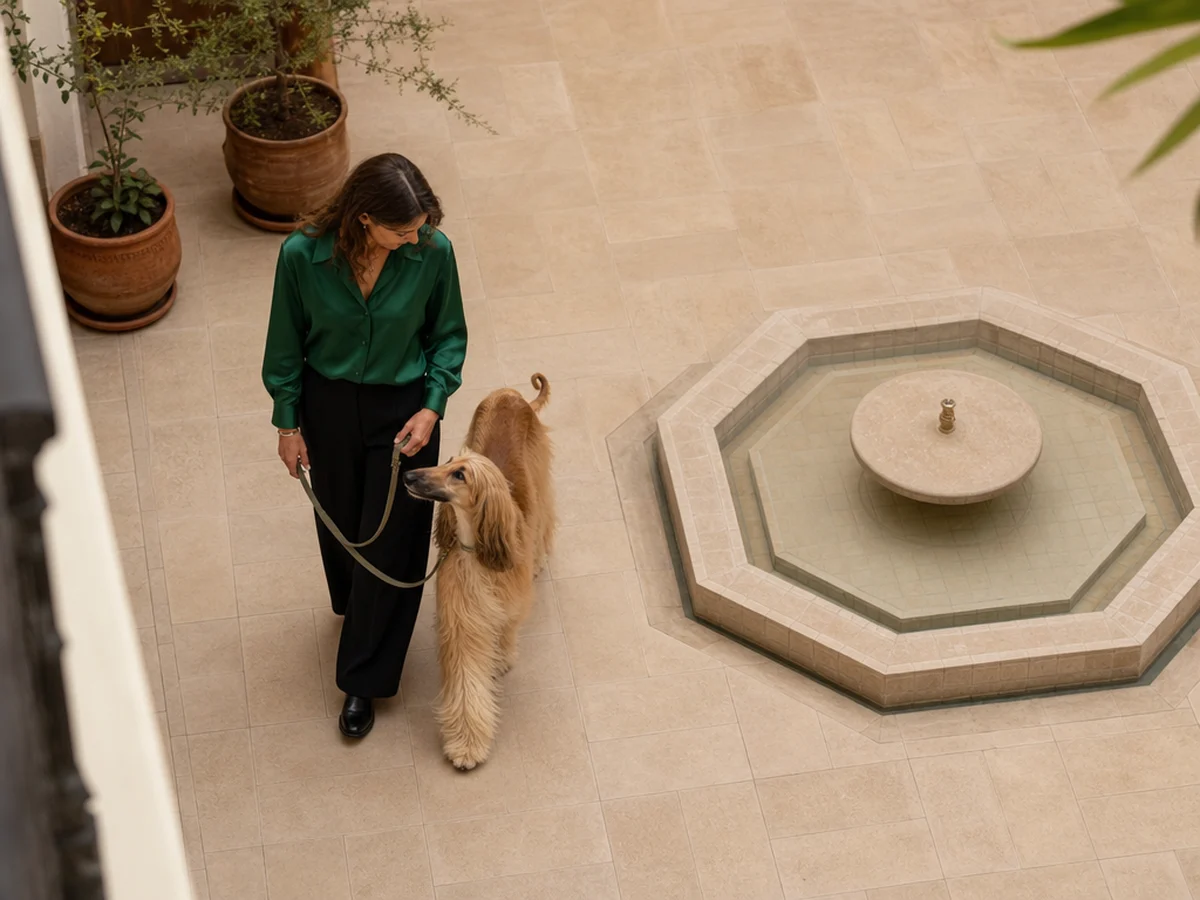
A turn is useful as an early location check because it changes which part of the return area is easy to reach. Work from stillness and use a single broad curve, then release. Do not combine the curve with a longer straight stretch or a pace change during the same attempt.
Show the Wider Route First
Turn away from the dog's side in a broad arc so the Afghan has room to follow the new line. Mark the first comfortable arrival beside the leg, reward from the near hand and release. The aim is not to keep the shoulder fixed through every point of the curve, but to make the return location easy to find after direction changes.
If the dog drifts wide, reduce the distance between the start and the return point rather than tightening the leash. Keep the handler's shoulders facing the route and finish before the dog has to rush to catch up.
Let One Step Answer the Problem
An inward change gives the dog less space. If the Afghan crosses behind, moves ahead to watch the reward hand or loses footing, stop the curve. Return to a stationary side entry followed by one step and a release. That smaller question reveals whether the difficulty was the location or the geometry.
Pause training if gait, balance or willingness to turn changes suddenly. Keep regular veterinary visits part of ordinary care and ask the veterinarian about possible discomfort instead of treating changed movement as a heel error.
Connect Short Heel Entries With Bookended Releases
Once the dog can return to the chosen side after stillness and a broad change of direction, connect one short movement between two clear boundaries. The general approach below treats every attempt as an entry and an exit, not as the beginning of an indefinite walk.
- Set the ordinary-walk space. Begin with the dog safely leashed and enough room to move without precision.
- Invite the return. Give the heel signal from stillness then mark the instant they return to the selected leg.
- Add one movement. Take one smooth step or one broad directional change, then mark the next comfortable return to the side area.
- Reward beside the leg. Deliver from the near hand so collection does not pull the Afghan across the handler.
- Release the task. Say the release word, change posture and resume the separate ordinary-walking plan.
Blue Cross training guidance links a clear marker with an outcome the dog values. Place the marker on the return beside the leg, then provide the earned reward there. The sound identifies the location, while the release explains that the close-position criterion has ended.
Extend only one part of the bookended exchange. Add another straight step, a slightly smaller curve or a new starting point, but do not change all three together. If the dog cannot return comfortably, shorten the middle and preserve the clear entry and exit.
Heel Questions That Choose the Next Practice
The body has established an exit first, a return area, an early turn check and a short bookended sequence. Three decisions remain about side cues, whole walks and the point at which sustained leash tension belongs to another method.
Can an Afghan Hound learn a heel cue on each side? Yes. Treat each side as a separate return area with its own signal and near-hand reward location. Build one version clearly before alternating, then release each version into the same ordinary walking plan.
Should heel continue for an entire neighborhood walk? No. Use heel for a brief position task and release before asking for ordinary movement. The approved Afghan Hound leash walking guide owns relaxed walking and the response to sustained leash tension.
What if pulling begins immediately after the release? Keep the release honest and move the pulling question to its own method. Best Friends leash guidance explains that allowing pulling to produce forward movement some of the time can preserve that pattern. Do not turn heel into a longer substitute for the separate walking plan.
Afghan Hound Heel as a Brief Transition
Choose one practical transition, such as passing through a prepared narrow space or moving around a stationary obstacle with enough clearance. Invite the Afghan into the known return area, use the shortest bookended sequence that fits the moment and release as soon as precision is no longer needed.
Judge the lesson by whether the dog can enter, move and exit without crowding, leash pressure or uncertainty about the task. If the return point becomes unclear, go back to stillness and one movement. A dependable heel is a short, recognizable transition with a deliberate finish, not the required shape of the whole outing.
 Puppy trainingAfghan Hound Puppy at 4 to 6 Months: What Changes
 BehaviorHow to Fix Afghan Hound Separation Anxiety
 Exercise and jobsHow to Teach an Afghan Hound to Spin