 Afghan Hound
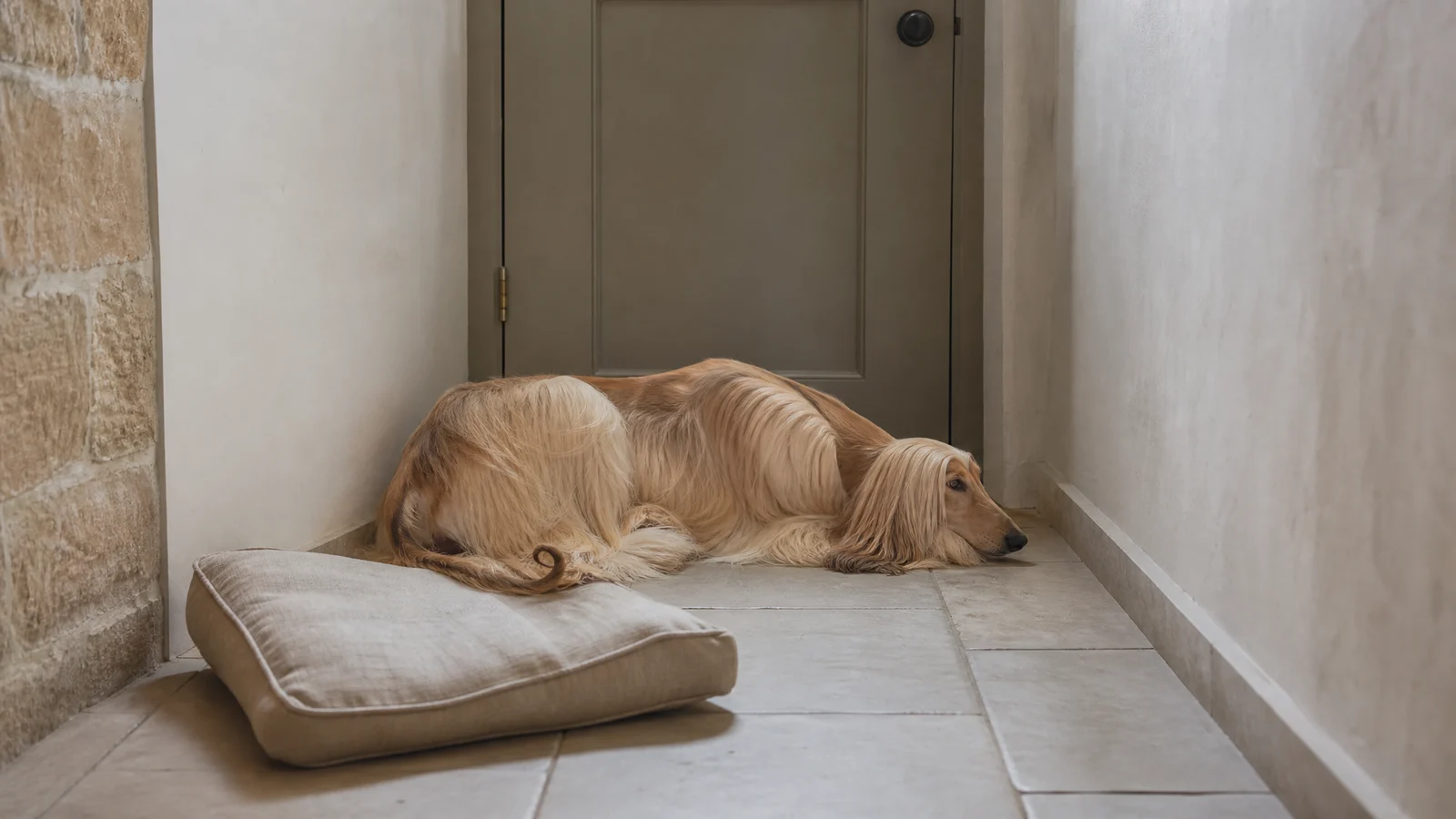
Afghan Hound separation distress needs a factual record, reliable cover for necessary absences and qualified help when the response is severe or unsafe. Do not extend an absence to test the dog's limit. Management comes first, and any practice should remain shorter or easier than the point where distress begins.
Aloofness with strangers or independent choices while someone is home do not show what happens after everyone leaves. Observe the departure, absence and return as separate parts of the event. Record visible behavior without assuming a motive, diagnosis or fixed timetable for improvement.
The immediate plan has two jobs. Prevent avoidable distress during real-life obligations, then give the record to the veterinarian and credentialed reward-based behavior support so they can shape the individual plan. Confinement equipment, obedience cues and a longer trial do not substitute for that assessment.
Breed Independence Cannot Prove Afghan Hound Alone-Time Comfort
The United Kennel Club Afghan Hound standard describes a strong-willed, independent thinker who can be dignified and aloof with strangers yet playful with family. That breed description does not predict whether an individual dog remains comfortable during a real absence.
Compare what the dog does while a person is nearby with what appears only after departure. Resting in another room, declining interaction or choosing a distant bed can occur while the household is still present. None of those observations proves tolerance when the home becomes empty.
Use absence evidence rather than a personality label. Pacing, repeated vocalizing, escape attempts, house soiling, destruction near exits or an inability to settle may be relevant, but one sign alone does not establish a diagnosis. Timing, context and recovery belong in the same record.
Independence can also look different across settings. A dog who chooses space during a quiet afternoon may follow one person closely during a household transition, then respond differently when the door closes. Keep those observations separate so the breed label does not flatten meaningful context.
Do not describe distress as stubbornness, spite or a failure of loyalty. Those labels add intent that the behavior cannot confirm and can lead the household toward punishment or longer tests. Record what happened, protect the next necessary absence and seek help with the pattern.
A new change also deserves a health check. Keep regular veterinary visits and contact the veterinarian when a sudden behavior change, altered movement, sensory concern or other physical sign appears. The household should report observations rather than trying to diagnose the cause from a recording.
Include uneventful absences and comfortable periods in the record as well. Knowing what did not happen, where the dog rested and which arrangement was in place can help define workable conditions. Do not recreate a harder setup merely to make the comparison more dramatic.
Build an Absence Record Without Extending the Test
Use an existing necessary departure or a professional-guided observation, not a deliberately longer absence. Set up a secure way to observe only if it does not add a new stressor or unsafe equipment. Write down what the household knows before watching the recording so later interpretation does not replace the basic facts.
Define the observation window before departure. Name the planned return, who can respond if safety changes and which part of the routine is being recorded. This prevents the household from turning a difficult event into an open-ended experiment while watching for one more sign.
Before Departure
Note the ordinary routine, the people present and the first point when the Afghan Hound's behavior changes. The change might begin with shoes, keys, a bag, a door movement or one person's departure. Record the cue and response without repeating the cue to see whether the reaction grows.
Include what was different that day. A schedule change, visitor, move, illness, construction noise or altered walking routine may affect the context, but the record should not name it as the cause without assessment. Mark it as a condition for the professional to consider.
While Everyone Is Away
Once the household has left, note the earliest visible response. Track whether the Afghan Hound moves between locations, settles, vocalizes or directs activity toward an exit. Use landmarks from the recording rather than guessing duration from memory. Stop the observation when the planned absence ends rather than extending it for more data.
Protect privacy and physical safety in any recording setup. Do not leave cords, unsecured devices or tempting objects within reach. If remote observation shows escalating or dangerous behavior and a safe return is possible, end the absence and use the management plan for future obligations.
After Return
Note the dog's body and behavior when the household comes back, then record how ordinary activity resumes. Recovery can include movement, drinking, resting or accepting normal interaction, but it should not be forced as a test. Avoid using an excited greeting as proof of either distress or comfort.
Separate evidence found in the home from assumptions. Damage near a door, soiling or displaced objects may be relevant to the event, yet they do not show the full sequence on their own. Combine those findings with the departure and absence record before discussing the pattern.
Put Human Cover in Place Before Another Absence
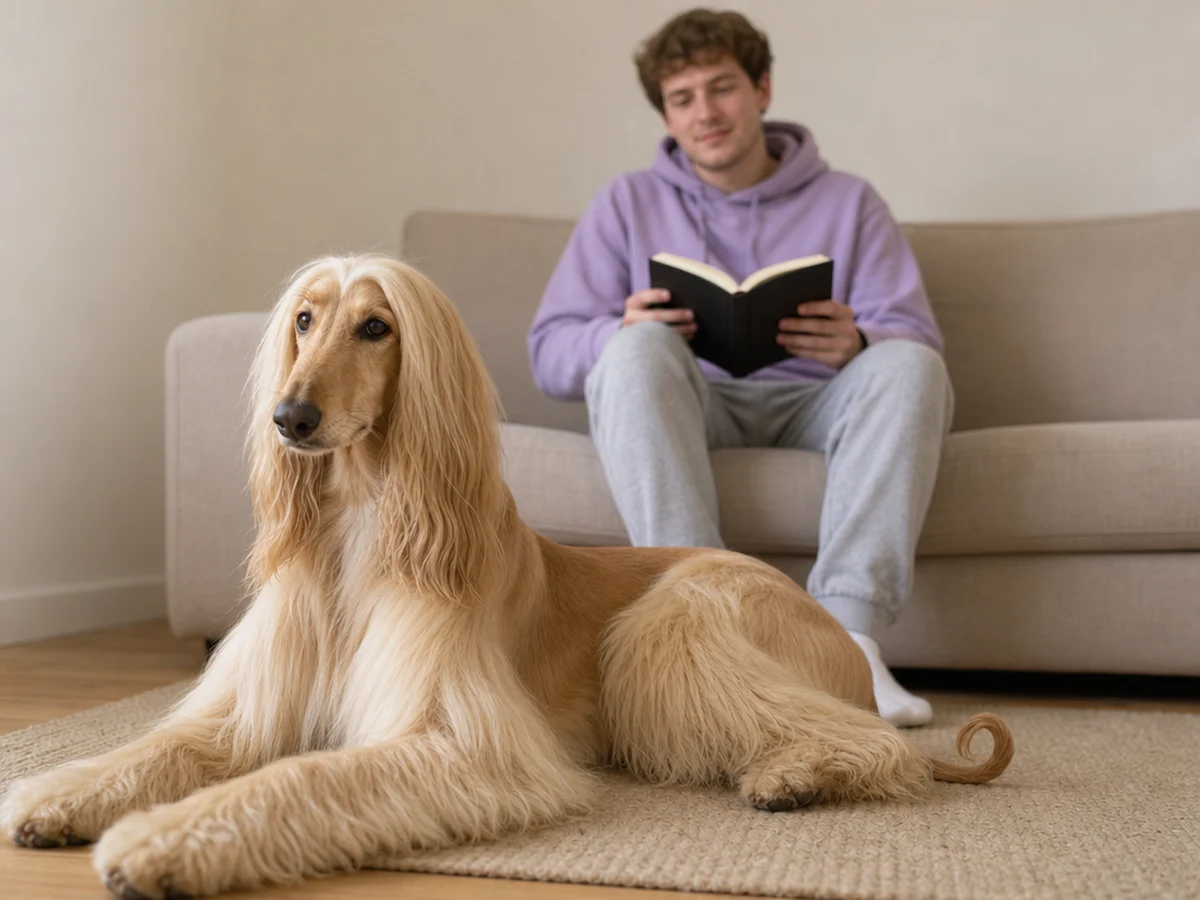
Management reduces the number of necessary departures that exceed the dog's current ability. It is not a cure and does not prove that alone-time comfort is improving. The household needs a feasible plan for work, errands and emergencies while professional assessment or gradual practice proceeds.
Write the cover plan as a handoff rather than an informal promise. Include who arrives first, how the Afghan Hound enters the familiar setting, where emergency contacts are kept and what change ends the arrangement. Clear logistics reduce last-minute departures that ignore the known boundary.
Start with people and places the Afghan Hound already knows safely. A household member, trusted caregiver or familiar suitable location may cover an obligation when that arrangement does not introduce another problem. Check availability in advance rather than improvising after the dog is already distressed.
- Map unavoidable absences. List the departures that cannot be delayed and identify which ones need cover first.
- Ask familiar people about exact availability. Confirm arrival, handoff and emergency contact details rather than assuming someone can stay.
- Review the setting. Make sure doors, gates, resting areas and household risks fit this individual dog.
- Prepare a backup. Keep a second safe arrangement for cancellations or a change in the dog's response.
- Share the observation boundary. Caregivers should know which changes require ending the plan and contacting the household.
Confinement should not be presented as treatment for absence distress. Humane World for Animals guidance warns that a dog can remain anxious in a crate and may soil, vocalize or be injured while trying to escape. Any alternative room must be safe and comfortable for this individual.
The approved Afghan Hound crate training guide owns equipment fit, voluntary entry and confinement comfort. Link those skills to the larger plan without assuming a crate resolves distress caused by everyone leaving.
Plan Afghan Hound Separation Practice Below Distress
Practice should begin from the observation record and professional plan, not from a universal duration. The ASPCA separation-anxiety guide places each graduated departure on the comfortable side of the individual dog’s first upset response. That principle requires an individual baseline rather than a fixed clock.
The professional may ask the household to distinguish preparation from an actual departure. A door sound, a person moving to another room and everyone leaving are different events. Record which event the Afghan Hound can manage instead of combining them into one assumed alone-time skill.
Work with a veterinarian or qualified reward-based behavior professional when distress is severe, escalating, difficult to observe safely or associated with injury risk. Ask what evidence to collect and how real absences should be managed. Do not design a complete exposure schedule from an online article.
Change one planned condition only when the professional-guided setup supports it. The condition might be a departure cue, movement toward the door or a very small absence step. If the dog's response changes, return to the last comfortable setup and report what happened instead of pushing through.
A cue such as a down or stay may be useful in another context, but it does not treat the underlying absence response. An American College of Veterinary Behaviorists resource for animal owners distinguishes teaching a response on cue from resolving the cause behind a behavior issue. Compliance before departure is not proof of comfort afterward.
The table below routes observations to the next qualified conversation. It does not rank severity or supply a diagnosis. Use the immediate-management column only to prevent another avoidable test while the household arranges the listed professional conversation:
| Observed Concern | Immediate Management | Qualified Help Route |
|---|---|---|
| Behavior changes around departure cues | Stop rehearsing the cue as a test and use the existing cover plan | Share the cue sequence with the behavior professional |
| Distress begins after everyone leaves | Keep necessary absences within the safest feasible arrangement | Bring the timed observation to the veterinarian and behavior professional |
| Escape attempts or injury risk appear | Do not repeat the setup or rely on stronger confinement | Contact the veterinarian and qualified behavior professional promptly |
| A sudden change appears with physical signs | Pause practice and avoid testing another absence | Arrange veterinary guidance about the change |
| A move or schedule change precedes the pattern | Restore predictable support where feasible | Review the changed context with the professional |
Measure progress by the quality of the observed response in the agreed setup, not by racing toward a workday. Record whether the dog remained able to rest, move normally and recover, using the professional's criteria. A setback is information to simplify the plan, not a reason to double the next duration.
Routine-Change Questions About Afghan Hound Alone Time
The body covers breed-label limits, an absence record, human cover and the boundary around sub-distress practice. Three practical gaps remain about room-to-room rest, sharing evidence and reassessing alone time after a household change.
Routine changes should be recorded by date and context, not treated as proof that progress vanished. A different work schedule, caregiver or room can alter the setup. Bring the comparison to the professional and return to the safest available management while the plan is reassessed.
Can a dog rest alone in one room but struggle when everyone leaves? Yes. A closed interior door while people remain home is a different context from an empty house. Record both situations separately and do not use comfort in the first as permission to extend the second.
Should I share video and the departure routine with a behavior professional? Yes, when the recording was collected safely and without provoking a longer test. Include the sequence before departure, the first change, what happened during the absence and recovery after return, along with any missing or uncertain parts.
Does moving home mean an old alone-time routine needs reassessment? Yes. The approved Afghan Hound adult adjustment guide covers settling into a changed household. Treat alone-time comfort in the new setting as new evidence rather than assuming the previous routine transfers unchanged.
Keep the record concise enough that every household member can use it. Agree on the cover plan, the contact person and the signs that end an observation. Consistent facts are more useful than different guesses about why the dog behaved that way.
Choose Support Before the Next Real Departure
Before the next necessary absence, confirm who will stay with the Afghan Hound or which familiar safe arrangement will cover it. Share the veterinarian and behavior-professional contacts, the known warning signs and the return plan. Do not make the next obligation a duration challenge.
If the existing arrangement cannot prevent an unsafe or distressing absence, tell the professional exactly what constraint remains. Adjust the management plan before attempting another practice step. A realistic cover decision protects the dog while the individual plan is still being developed.
The next useful action is a safer supported departure, not proof that separation anxiety has been fixed on a schedule. Preserve the observation record, keep real-life absences within the best available support and let qualified guidance determine when practice can change.
 Exercise and jobsHow to Teach an Afghan Hound to Spin
 Exercise and jobsHow to Teach an Afghan Hound to Weave Through Your Legs
 Training basicsHow to Teach an Afghan Hound to Stay