 Afghan Hound
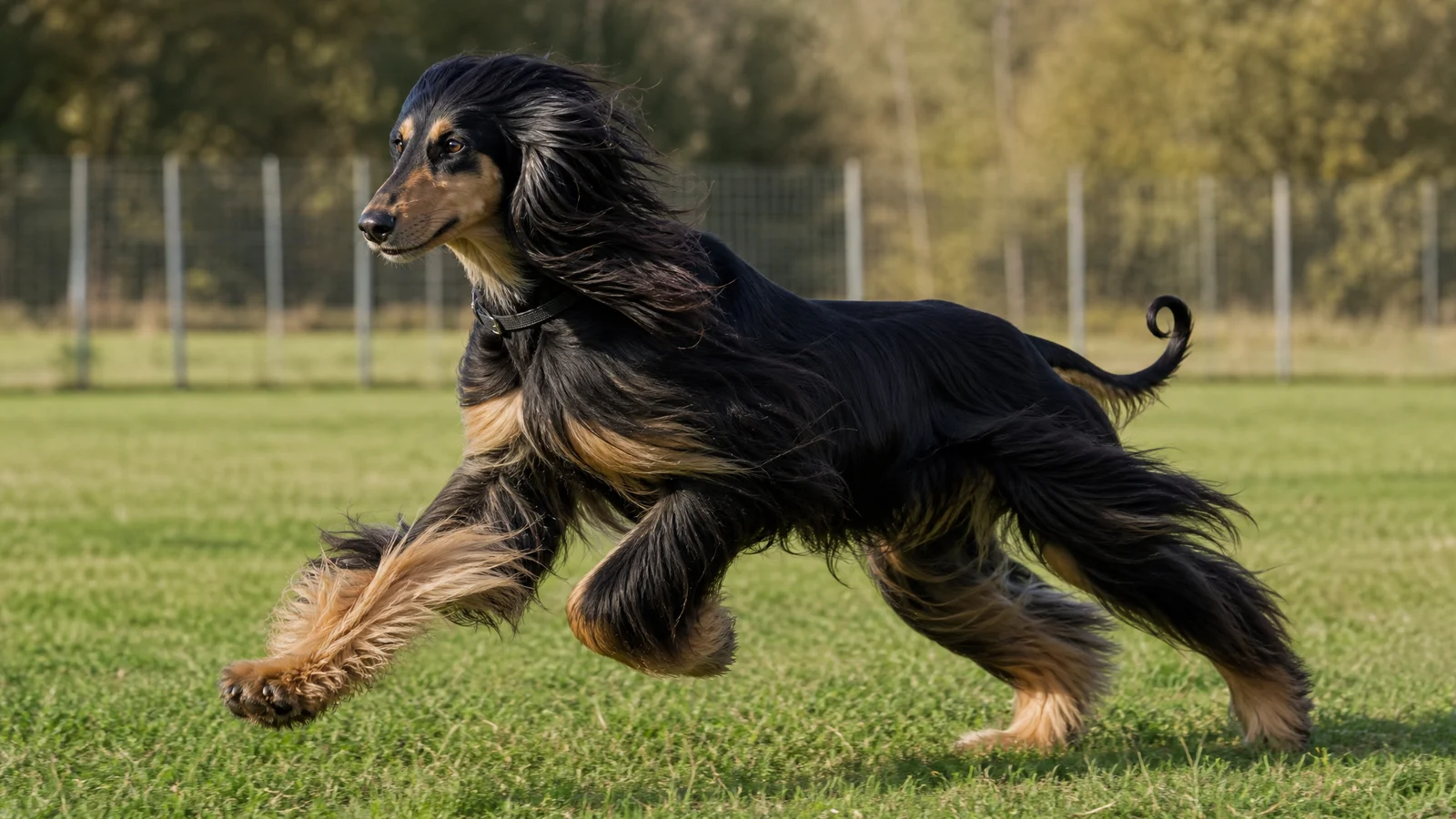
An Afghan Hound can return from a brisk loop around the block looking exercised while remaining mentally and physically unsettled. The mistake is treating leash mileage as the whole assignment.
This sighthound needs safe opportunities to open their stride, unhurried time to investigate the world, and enough quiet afterward to recover before the next household demand.
We build the week around secure running first, then give walks and brain games separate jobs. The field guide below explains how to judge the running space, record the whole week instead of one energetic day, choose thinking work that suits an independent Afghan, and adjust the plan without simply adding more intensity. It also shows how next-morning recovery can confirm whether the workload fit.
Safe Running Anchors Afghan Hound Exercise
Short walks cannot reproduce what this athletic breed can do at speed. A useful exercise plan includes chances to run full out in a large, securely enclosed area several times across the week.
That does not mean forcing continuous laps. Let the dog choose bursts, pauses, and direction changes, then end while their movement still looks free and willing.
Read the Gallop, Not the Mileage
The breed standard describes an Afghan Hound galloping when free and trotting at a fast pace on a loose leash. Those are different forms of movement with different purposes. Free running lets the dog extend and turn under their own control. Leash walking supports public manners, sniffing, connection, and exposure to ordinary surroundings.
Do not turn every run into an obedience session. Calling the dog back repeatedly can make the best physical outlet feel like another lesson. Practice a few rewarded check-ins, then release the Afghan to move again.
Vary where you stand and reward voluntary returns so the dog is not merely following a pattern at one gate. If another dog shares the enclosure, schedule separate turns unless both dogs already move comfortably together. The release itself can become valuable, while the fence remains the safety system even when recall is improving.
The Fence-Line Inspection
Walk the entire boundary before unclipping. Test latches, look under panels, and remove objects near the fence that could become launch points. Check whether another person can open a gate from outside. A safe run starts only when the route from the car to the enclosure is also controlled, with the leash attached until every gate is shut.
- Choose the quiet window. Avoid times when unfamiliar dogs or fast traffic are pressing against the boundary and raising arousal before the run begins.
- Carry water and an exit plan. Know how you will calmly leash the dog, leave the enclosure, and return to the car without gathering a crowd at the gate.
- Check coat and feet afterward. Look for seeds, tangles, surface irritation, or a change in gait before the excitement of the outing hides useful information.
- Protect the warm-up. Begin with an easy circuit of the enclosure before the fastest bursts, especially after a car ride or a long period of rest.
- Inspect the surface. Remove sharp debris and avoid ground made slick by standing water, deep holes, or ruts that disappear under grass. Recheck after storms because a familiar enclosure can change.
- Leave before fatigue changes form. End the session if turns become clumsy, the dog repeatedly seeks the gate, or the free stride loses its usual ease.
- Know the enclosure rules. Confirm booking times, shared-use expectations, and who controls the entrance before arriving. A surprise overlap can turn a carefully planned run into an unsafe handoff.
A Weekly Exercise Ledger for an Afghan Hound
A single tiring outing can hide an uneven routine. Record a whole week instead. The purpose is not to chase a perfect total. It is to see whether secure runs, relaxed walks, thinking work, and real rest appear in a pattern the household can sustain. Put scarce running opportunities on the calendar first, then fit flexible activities around them. Mark cancellations honestly so the record reflects the week the dog actually had.
| Ledger entry | What to record | What it helps you decide |
|---|---|---|
| Secure running | Place, freedom to choose pace, warm-up, fastest bursts, and movement afterward | Whether the dog received a true speed outlet safely and remained comfortable after it |
| Leash walks | Route, duration, sniffing time, visual triggers, recovery turns, and leash tension | Whether the walk restored attention, practiced useful skills, or overloaded the dog |
| Brain games | Task, setting, reward, successful repetitions, and point where interest faded | Whether the challenge was clear, worthwhile, and appropriately brief for that day |
| Recovery | Sleep, settling, appetite, gait, coat check, and willingness the next day | Whether to repeat the pattern, reduce one demand, or cautiously increase one activity |
| Household context | Weather, visitors, travel, and unusual trigger exposure | Whether restlessness came from missing exercise or from a harder environment |
Let Tomorrow Grade Today
A dog sleeping in the car is not enough evidence that the workload was right. Look again the next morning. A balanced plan usually leaves the Afghan ready for normal activity, not stiff, reluctant, frantic, or still unable to settle. Compare the dog with their own ordinary movement rather than another hound. Change one part of the ledger at a time so you can tell which adjustment helped, and hold that change long enough to see a pattern.
Age and condition change the answer. A growing puppy needs short, self-directed movement rather than forced distance. A mature dog may be ready for more sustained outings, while an older Afghan may benefit from shorter access and longer recovery. Keep regular veterinary visits in the routine and ask your veterinarian about any abrupt change in movement, appetite, sleep, or willingness.
Weather-limited days do not require a risky substitute. Use a longer sniff walk where conditions are comfortable, a carefully managed long-line outing where it is legal and clear of obstacles, or several small indoor activities.
Indoors, scatter easy searches through more than one room and place handling practice between normal rests. Missing one run is safer than gambling with an unfenced field and a chase instinct built for speed. Return to the usual ledger when conditions improve instead of trying to repay every missed minute at once.
Brain Games Belong After Movement
Mental work is a second course, not a replacement for running. The Afghan Hound is independent in training, so the best games make the path to a reward obvious and finish before repetition drains the value.
Several short turns placed naturally through the day usually teach more than one elaborate puzzle that ends in frustration. Rotate the task only after the current version is easy, since novelty and difficulty arriving together can make disengagement look like stubbornness.
Turn a Meal Into a Search
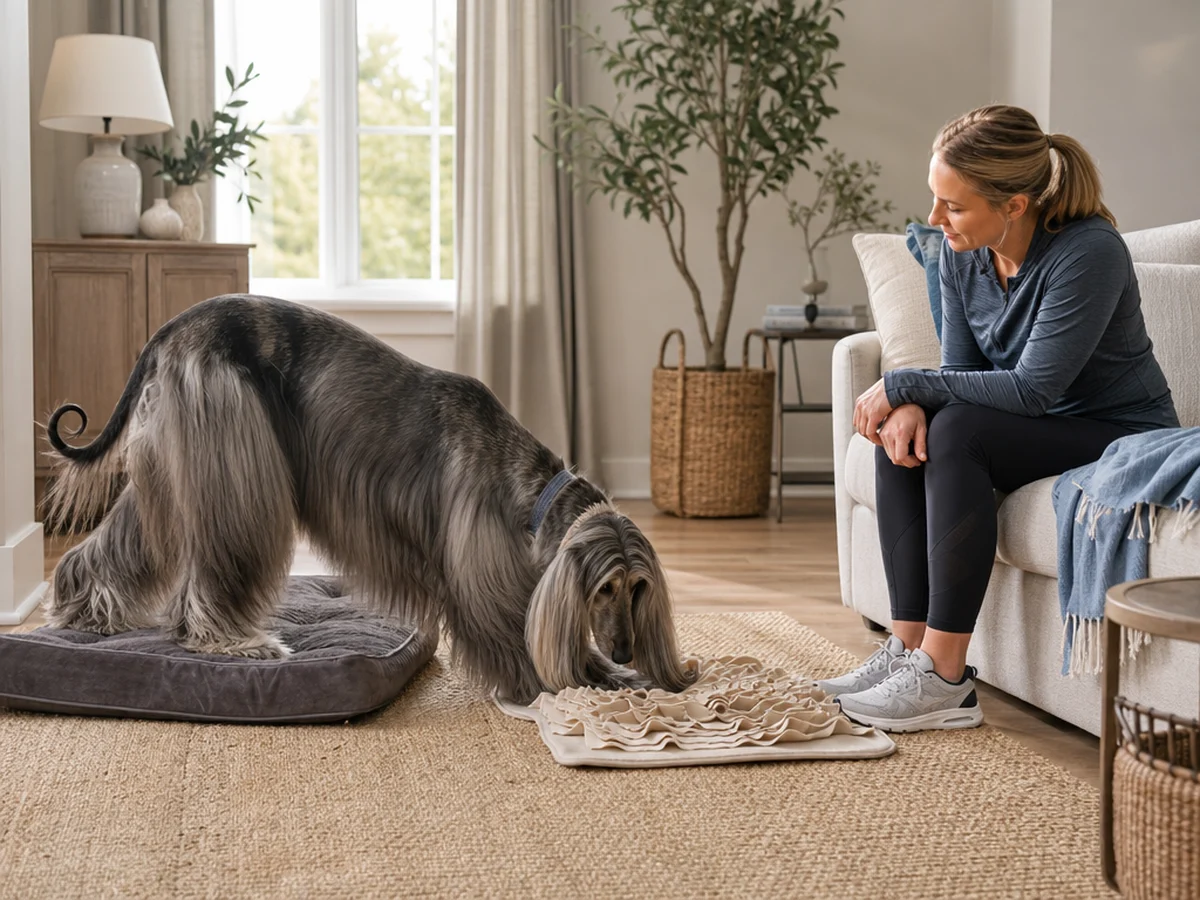
The ASPCA enrichment guide treats meals as opportunities for mental stimulation and suggests food puzzles. Use a measured part of the dog's normal food in a snuffle mat, a simple feeder, or a small search area. Begin where the food is easy to find, then make the hiding places only slightly harder.
Searching changes the pace of the day. Running raises the engine, while careful sniffing asks the dog to slow down and solve a problem. Supervise any object the dog could tear or swallow, remove it when the food is gone, and stop if the Afghan begins attacking the container instead of searching.
Micro-Skills With a Daily Payoff
Practice stepping onto a mat, turning toward a name, touching a hand, standing for a coat check, or waiting while a leash is clipped. Each skill can be taught in tiny pieces and used outside the lesson. The AVSAB position statement supports reward-based training, which fits an Afghan best when the correct choice is clear and worthwhile.
Make grooming one of those thinking games. Reward the dog for approaching the mat, then for a brief touch on an easy coat area. On later turns, add one brush stroke or a short paw lift. End while the dog is participating. The aim is not to finish the whole coat during a training turn, but to build cooperation that makes routine care easier.
Reward choice does not need to be identical in every setting. Food may work indoors, while access to sniff or another short turn at an easy game may matter more elsewhere. The RSPCA training guide explains that a behavior followed by something the dog likes becomes more likely to recur. Watch the individual in front of you.
Sort Out Restlessness Before Adding Exercise
A restless Afghan does not automatically need a harder run. The secure outing may be too rare, the walk may be crowded with visual triggers, the game may be confusing, or the home may offer no predictable transition into rest. Compare the ledger entries before escalating. More intensity added to an already overloaded day can produce a fitter dog who still cannot switch off.
When Excitement Spills Into the Walk
Scooters, squirrels, running dogs, and sudden traffic can pull a sighthound's attention forward before a cue has much chance. Choose distance early. Cross the street, use a visual barrier, or turn onto a quieter route while the dog can still eat and move with you. A shorter successful walk is more useful than a longer route spent rehearsing lunges.
The Battersea guidance notes that reactions may come from worry, excitement, or frustration. The same outward lunge therefore does not justify the same assumption. Observe whether the Afghan is trying to approach, escape, or chase, then manage the next outing around enough distance to keep learning possible.
After exercise, use a plain settling sequence: water, a coat and foot check, a quiet location, and an activity the dog already handles calmly. Avoid immediately starting energetic play because the run did not produce instant sleep.
Draw curtains if passing movement keeps restarting the dog's attention, and keep arrivals low-key while they come down from the outing. Recovery is an active part of conditioning, and predictable quiet helps the household see whether the dog truly needs something else.
The Afghan Hound Exercise Reset Calendar
For the first few days, record runs, walks, games, naps, and restless periods without trying to fix everything at once. During the rest of the first week, protect one secure running opportunity and add one easy search or handling game.
In the second week, repeat what worked, adjust only one weak point, and compare the following day's recovery rather than judging the plan at bedtime. Keep the entries plain enough that every household member can record them consistently, because a useful ledger should survive a busy weekday.
If the Afghan still cannot settle, do not keep increasing activity blindly. Review enclosure safety, trigger exposure, lesson difficulty, and rest. The best exercise week is not the busiest one. It is the week that gives a fast, thoughtful hound the movement they need, keeps chase behavior safely contained, and leaves enough attention for family life and Afghan Hound sports.
 Training basicsHousetraining an Afghan Hound Baby Who Wants to Please
 Training basicsLoose-Lead Walking for an Afghan Hound Who Lunges at Movement
 BehaviorSocializing an Aloof Afghan Hound Puppy Without Shyness