 Afghan Hound
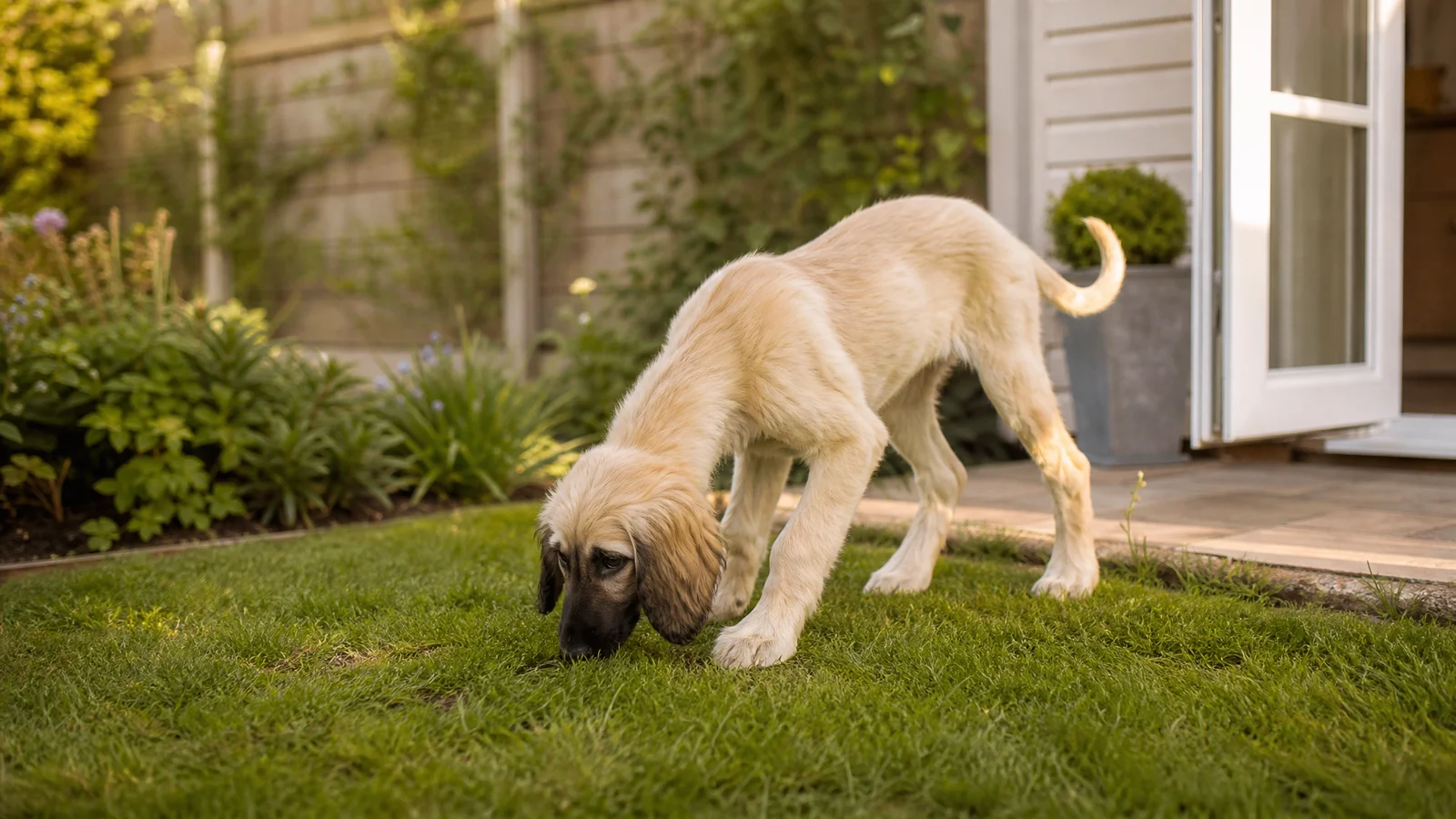
Potty training an Afghan Hound puppy is a scheduling and supervision problem, not a contest over stubbornness. Take the puppy out at predictable transitions, reward outdoor success immediately, and prevent unsupervised wandering indoors. The breed's loyalty can help the pattern stick, but only if the household makes the correct place easier to choose.
This guide covers the outdoor routine, indoor management, a stage-based schedule, calm accident handling, and a troubleshooting path for progress that suddenly slows. Use it as a handbook: identify where the chain broke, change that part of the setup, and let the next successful trip teach the lesson. That same chain shows when the schedule is ready to expand.
Afghan Hound Potty Training
The breed profile notes that an Afghan's loyalty can make housetraining fairly easy because they want to please their people. That is an advantage, not a substitute for structure.
A puppy still has to learn which surface counts, how to reach it, and what signal brings a helpful response.
We use the same outdoor area when practical, arriving on a leash or through a securely contained yard. Wait quietly and give the puppy time to finish. Mark the completed behavior, deliver a small reward while still outside, then allow a little sniffing or return indoors.
Stand in roughly the same part of the area at first so the trip has a recognizable beginning. The location and timing make the answer clear.
Everyone in the household should use the same route, reward location, and response to signals. Keep leash, shoes, waste bags, keys, and rewards beside the exit. An Afghan puppy can move quickly from waking to needing the bathroom, so preparation matters more than an ambitious schedule hidden in a drawer.
The Outdoor Potty Training Routine
Go out after waking, meals, drinking, energetic play, naps, release from a crate or pen, and before bed. Add trips between those transitions according to the puppy's actual record. The schedule is a set of opportunities, not a promise that a puppy of a certain age can wait a universal amount of time.
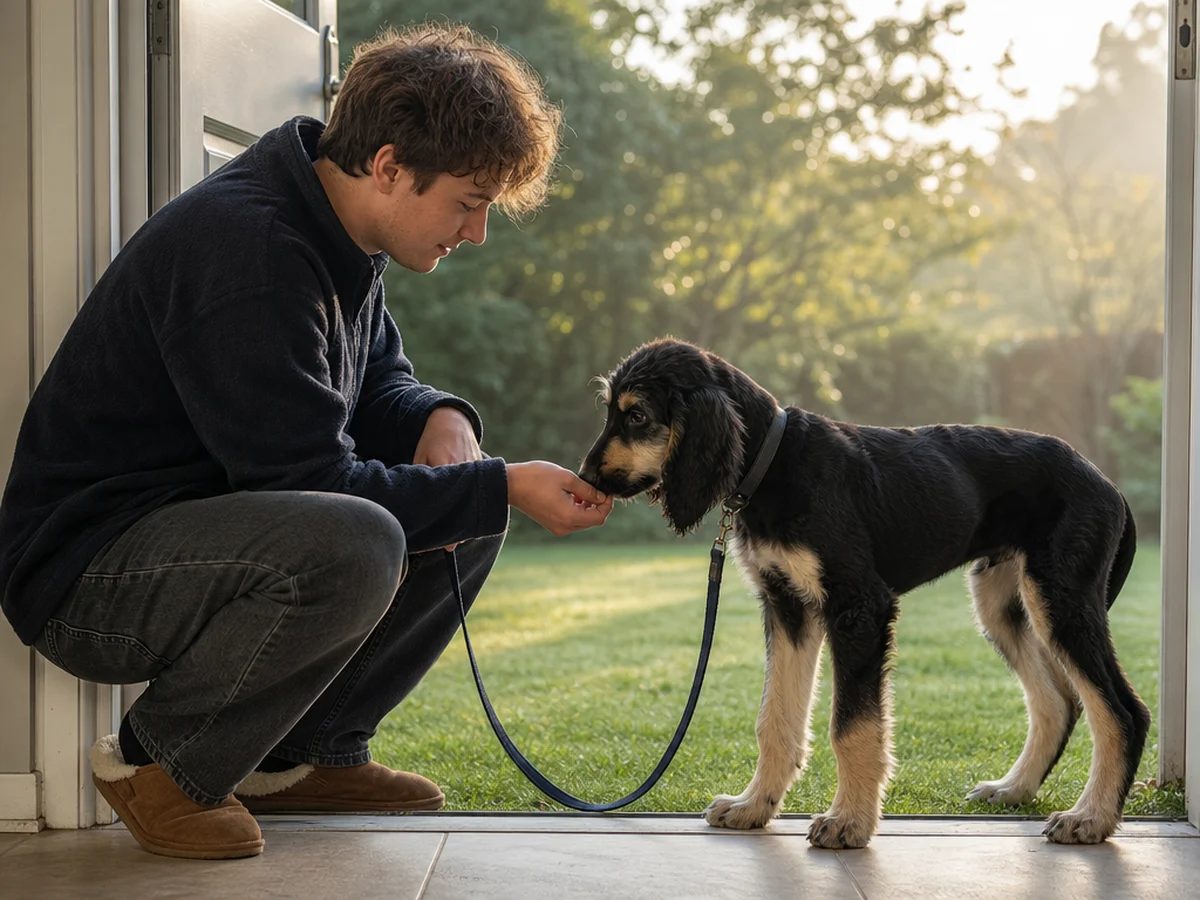
Reward at the Finish
Keep a quick reward ready before opening the door. Praise and reward as soon as the puppy finishes, not after returning to the kitchen.
The reward-based guide explains that behavior followed by something the dog values becomes more likely to recur. Prompt timing tells the puppy exactly which choice paid.
Use a calm marker and a small reward so celebration does not interrupt a puppy who may need another moment outside. Wait briefly after the first success, especially after waking or a meal. Then offer a little freedom to sniff or walk. That order makes finishing the bathroom trip the route to exploration rather than its ending.
Keep Exploration Second
A puppy who learns that elimination instantly ends every outing may delay it to preserve outdoor time. Begin with a quiet bathroom opportunity, reward success, and then make room for a short sniff. If nothing happens, return indoors to close supervision for a brief period and try again. Do not release the puppy to roam through the house.
Night trips should be plain. Use the same route and surface, keep light and conversation low, reward success, and return inside. In an apartment, take the shortest lawful route and prepare for the elevator or hallway before lifting or leashing the puppy. Avoid greeting neighbors or adding a long walk unless the puppy has clearly finished. Dry the Afghan's long coat and feet at the door without turning the return into play.
Apartment logistics deserve a rehearsal without urgency. Walk the route once with supplies ready, decide whether the puppy will walk or be carried through shared areas, and know where the first lawful surface is. If an elevator delay is common, schedule earlier opportunities instead of waiting for a desperate signal.
Keep a towel, spare waste bags, and a small light at the door. The easier it is to leave immediately, the more often the household will follow the plan on tired mornings and wet nights.
Indoor Potty Training Management
Indoors, the puppy should be actively supervised or resting in a safe, limited area. Freedom grows after a history of success. A puppy moving from room to room can leave your sight, make an error, and return before anyone notices. That is a management failure, not proof the dog chose to ignore a rule.
- Keep the puppy near you. Use doors, gates, or a properly arranged pen to keep the current space observable without following the puppy in constant excitement. Choose one room for active time and move the barrier with the household rather than opening the whole floor plan.
- Take transitions seriously. Go outside before a busy call, a visitor's arrival, food preparation, or children's play makes supervision less reliable. Set a simple reminder if the household regularly loses track during the same part of the day.
- Watch the individual signal. Circling, intense floor sniffing, leaving play, moving toward an exit, or becoming suddenly restless can all mean the trip should begin now. Rewarding a clear door signal later is useful, but never require it before meeting an urgent need.
- Use confinement thoughtfully. A positively taught crate may support a short rest between trips, but it cannot make a puppy wait beyond what they can comfortably handle. Release should lead directly outdoors, not to free play through several rooms before the bathroom opportunity.
Crate comfort is a separate skill. Build it gradually while you remain nearby before relying on it for management, and take the puppy out promptly after release. The detailed Afghan Hound crate training plan explains how to keep confinement from becoming a source of distress.
Clean high-risk rooms and block access to places where previous errors are hard to see. Rugs, distant hallways, and rooms behind furniture can become repeat locations simply because the puppy rehearses there unnoticed. Prevention removes the opportunity while the outdoor reward history becomes strong enough to guide a choice.
Map Potty Training by Afghan Hound Stage
Use life stage to decide what kind of support is likely, then use the puppy's own clean record to decide when to advance. Extend either the time between planned opportunities or the accessible indoor area, not both together. When an error appears, you will know which change to reverse.
| Stage | Schedule focus | Evidence for the next step |
|---|---|---|
| Newly home | Outside after every wake, meal, drink, play period, and release from confinement, plus extra opportunities between transitions. Keep indoor access small and the route fully prepared. | The puppy begins finishing promptly in the chosen area, remains clean within a small supervised zone, and starts showing a repeatable pre-trip signal. |
| Learning the route | Use the same exit and surface, reward outdoors, and add a brief sniff after success. Practice calm leash attachment before the puppy becomes urgent. | The puppy moves with you toward the exit, finishes before exploring, and shows a recognizable signal early enough for the household to respond. |
| Building reliability | Keep transition trips while cautiously lengthening one ordinary interval or opening one additional room. Preserve closer supervision during exciting household events. | The puppy stays clean through that single change across the normal household routine and returns to the established signal without repeated prompting. |
| Adolescent distraction | Return to more direct trips when outdoor movement or indoor exploration competes with the bathroom task. Reduce access after a lapse instead of abandoning the routine. | The dog again finishes before exploring, returns indoors without searching for a hidden location, and regains the previous clean pattern through ordinary days. |
| After a disruption | Restore the last dependable transition schedule after travel, guests, a room change, or several missed opportunities. Keep the chosen surface and reward timing familiar while the rest of the day settles. | The dog resumes the established route and signal without new hidden locations, then maintains success when one ordinary freedom is returned at a time. |
Let the Record Overrule the Calendar
Do not stretch the schedule just because the puppy reached a date on the calendar. Weather, visitors, a changed meal routine, and an unusually active day can alter the pattern.
Keep notes simple enough to use: time out, result, food and play transitions, and any indoor error. A short record exposes missed opportunities quickly and helps different household members respond from the same facts. Note unusual weather, visitors, and route delays because those details often explain a lapse that otherwise looks random.
Potty Training Accidents Are Clues
An accident is a clue, not a reason for a lecture. It points to a break in the setup: too much freedom, a long interval, a missed signal, a slow route, or an outdoor trip that ended too soon.
Choose the most likely break in the chain and tighten that part on the next repetition.
If You See It Start
Calmly guide or carry the puppy outside if that can be done without creating alarm, then reward if they finish in the correct place. Do not turn the interruption into a chase. The goal is to preserve the connection between the urge and the outdoor area, not to make eliminating in front of people feel unsafe.
If You Find It Later
Keep the puppy elsewhere while you clean with a product suitable for the surface, and inspect the long hair on feet, legs, and underside. There is no delayed lesson to deliver. The AVSAB position statement supports reward-based training. Calm cleanup protects trust and returns your attention to prevention.
Troubleshoot Afghan Hound Potty Training
Start with the previous day. Look for later meals, a missed transition trip, a new room, visitors, weather reluctance, more energetic play, or a crate interval that ran long.
Restore the last successful schedule for several days. If direct trips and closer supervision restore success, the puppy needed a clearer setup rather than a wholly new method.
Keep regular veterinary visits in the routine, and contact your veterinarian about frequent accidents, abrupt loss of a previously reliable pattern, discomfort, unusual drinking, or a sudden behavior change. Training cannot answer every cause. While you arrange advice, increase reasonable outdoor opportunities and protect the puppy from repeated indoor errors.
Today's Potty Training Reset
Choose the outdoor spot, place rewards and supplies by the exit, write down the next planned trips, and decide which rooms are available between them. That is enough for today. Add one calm name response or leash check during the trip if the puppy can manage it, but keep bathroom success first. The broader Afghan Hound training roadmap can carry the other skills.
Potty training becomes reliable through many ordinary successes that look almost boring. Periodically reward an especially prompt trip even after the pattern improves, and keep supplies ready so reliability does not make the household careless.
Be early with the trip, immediate with the reward, quiet with cleanup, and conservative with freedom. That pattern uses the Afghan Hound's bond with family while giving an inexperienced puppy the supervision and repetition they still need.
 Training basicsLoose-Lead Walking for an Afghan Hound Who Lunges at Movement
 BehaviorSocializing an Aloof Afghan Hound Puppy Without Shyness
 CareHow to Teach an Afghan Hound Puppy to Love the Brush