 Afghan Hound
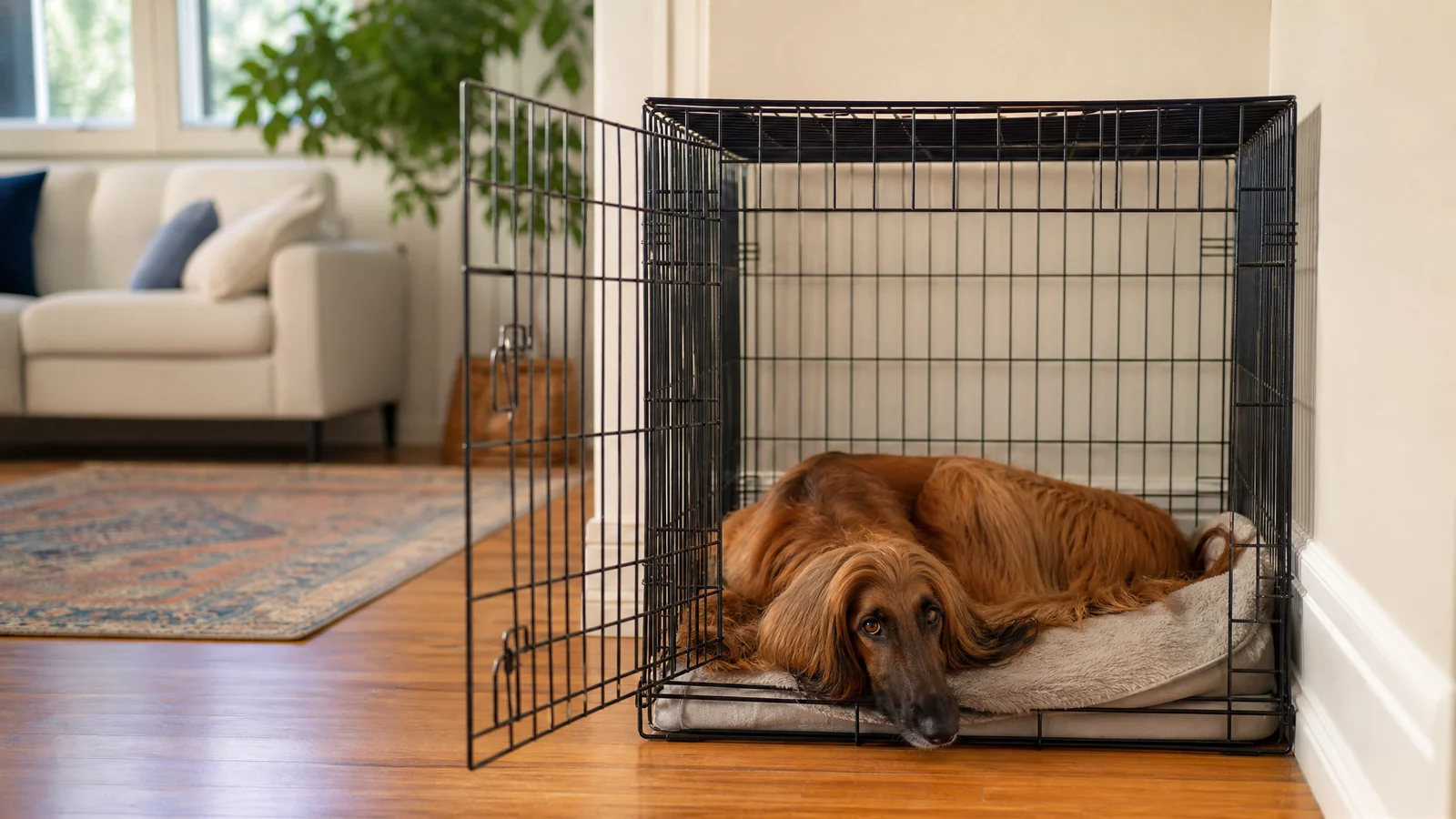
Crate training changes for an Afghan Hound because deep loyalty to family can make sudden isolation feel much larger than an ordinary confinement exercise. A dog may nap peacefully behind a closed crate door while you sit nearby and still become distressed when the front door closes. Treating those as separate skills prevents a calm crate from being asked to carry too much too soon.
We teach comfort in the space first, door movement second, distance third, and genuine absence last. This guide covers fit, voluntary entry, the first closed-door moments, a central departure ladder, signs that the step is too hard, and alternatives for an Afghan who rests better outside a crate.
Afghan Hound Crate Training
Place the crate in a room where normal family life happens, away from direct heat, cold drafts, and a busy walkway. Leave the door secured open. Put a comfortable, washable surface inside and let the dog investigate without being guided by the collar or shut in. Early sessions should feel uneventful, safe, and easy to leave.
The breed profile describes profound loyalty alongside the Afghan's dignified independence. That combination is why we avoid forcing contact with the crate. Give the dog control over the first approaches, while making each voluntary look, step, or rest worthwhile.
Fit the Space Around a Tall, Coated Dog
The Afghan Hound should be able to stand naturally, turn without brushing the topknot or ears against hardware, and lie on their side without being folded into the corners.
Check the floor for movement and the door for sharp or exposed points. A crate cover may help some dogs rest, but it must not trap heat or hide rising distress.
Long feathering changes the equipment check. Run a hand along wire joins, beneath the chest, and around the doorway. Watch the coat as the dog turns. After practice, inspect the shoulders, elbows, feet, and belly for tangles or rubbing. Bring grooming into the routine as a brief rewarded check rather than waiting for a mat to form.
Voluntary Entry Comes Before the Door
Start with food near the entrance, then place it just inside, and later farther back. The dog may reach in and leave. That is still useful information. Mark and reward a paw crossing the threshold, a full entry, a turn, and eventually a pause. Feed part of an ordinary meal inside only after the Afghan is comfortable approaching.
A clicker or short word can identify the exact moment the dog enters. The clicker guide explains that the sound should first be paired with food in a calm place. Do not lure the dog deep inside and immediately close the door. Entry must not predict the sudden loss of freedom.
Closed-Door Crate Training
Begin door work only when the Afghan enters readily and can remain inside to eat or rest while you stay close. Touch the door, reward, and stop.
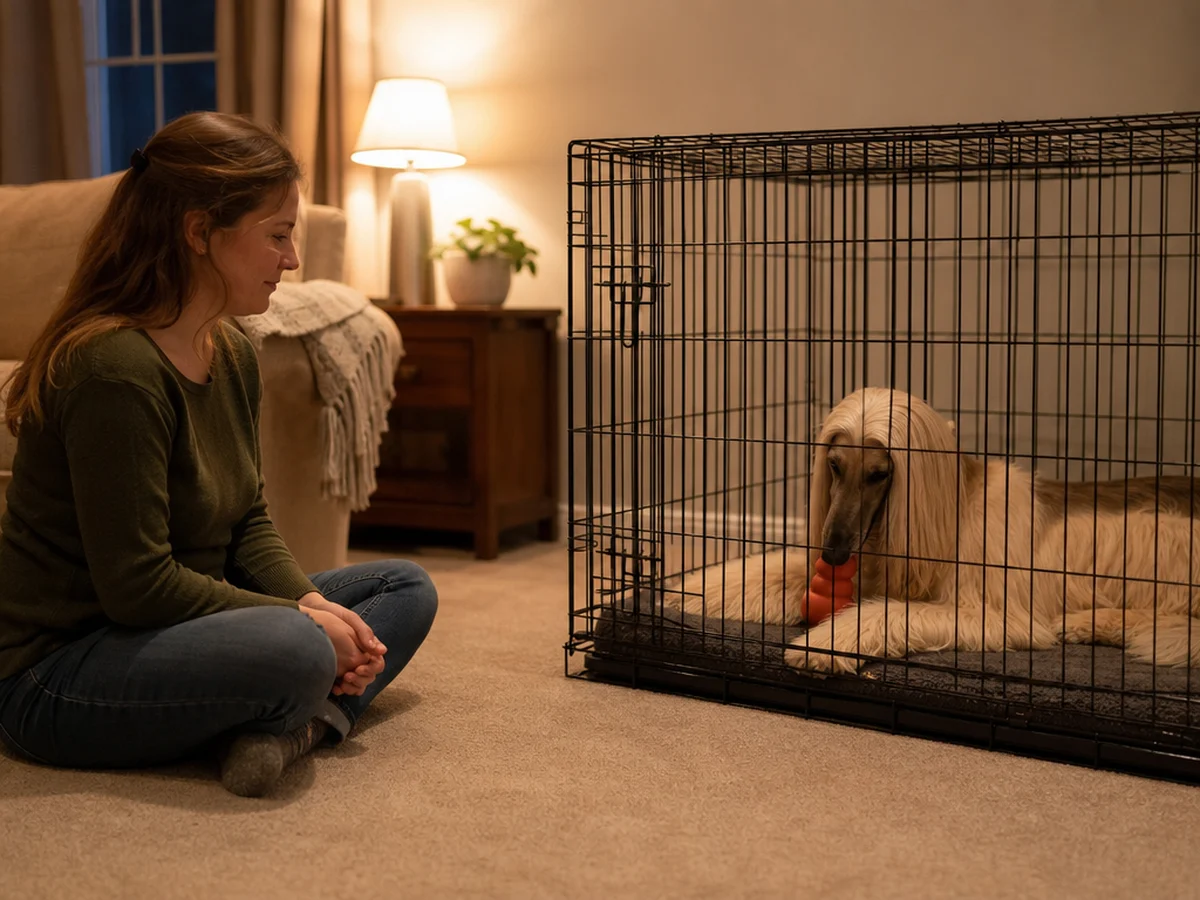
Move it slightly on the next turn. Later, close and reopen it while the dog remains relaxed. Duration is not the first goal. A calm response to the movement is.
Change One Variable per Turn
Door position, time, your posture, distance, room noise, and departure are different challenges. Raise one while the rest stay familiar. If you close the door for longer, remain seated nearby. If you stand, shorten the closed period. This makes a setback readable instead of leaving you to guess which combination overwhelmed the dog.
The Progression Stays in Order
The ordered plan below is the center of the program. Repeat a step until it looks routine across several ordinary practice turns. Move forward while the dog can eat, shift position, and settle. Move back if their body becomes rigid, their breathing changes sharply, or they fixate on the exit.
- Open-door rest. The Afghan enters, eats, or settles while the door remains fixed open and you sit nearby without constant interaction.
- Door movement. Touch, move, briefly close, and reopen the door. Reward calm behavior before release so excitement at the opening does not become the only practiced moment.
- Closed door with company. Sit beside the crate, then vary your posture. Read, work quietly, or move a hand without making every repetition about the dog.
- Distance in the room. Stand, take one step away, return, and reward. Build to moving naturally around the room while the closed interval stays easy.
- Out of sight and back. Disappear behind an interior doorway for a moment, return before concern rises, and spend time in the room before opening the crate.
- Departure sounds. Pick up keys, handle a coat, touch the exterior door, and sit down again. Break the sequence into pieces so those sounds stop predicting one abrupt event.
- Very brief absence. Step outside, return calmly, and wait for a settled moment before release. Increase only in small increments that the dog has shown they can handle.
Release Is Part of the Lesson
Return without a dramatic greeting. Put down what you carried, approach calmly, and open the door while the dog is composed enough to exit safely. A dog who rushes out has not ruined the exercise, but the next repetition should be easier. Practice many releases after easy steps, not only after the hardest absence.
Use ordinary food portions when practical so repeated training does not quietly add too much. The activity inside should encourage settling rather than frantic work. Remove any item the dog tears apart or cannot handle safely without supervision, and do not depend on a special object to make an overly difficult departure acceptable.
Graduated Alone Time
A comfortable crate does not prove that an Afghan Hound is ready to be left. The separation guidance notes that confinement helps some dogs who learn the crate is safe, while it adds stress for others. Keep asking whether the dog is comfortable, not whether the equipment is convenient.
Read the Body Before the Clock
Comfort may look like normal eating, changing position, stretching out, resting the head, or calmly watching household movement. Concern may appear as rigid standing, repeated scanning, inability to take familiar food, heavy panting unrelated to heat, persistent vocalizing, frantic movement, or repeated attempts to escape. The earliest change matters more than the longest time achieved.
A camera can show what happens after you leave, but it is an observation tool rather than a cure. Review the first moments, not only whether the room is intact later. If distress rises, return to a shorter absence and easier departure cues. Repeated panic is not practice toward calm behavior.
Necessary Absences Do Not Set the Pace
A workday, appointment, or errand cannot become the next rung merely because it is unavoidable. If the Afghan is comfortable alone only briefly, arrange a family member, trusted sitter, or other safe plan for longer needs while training continues separately. Preventing overwhelming rehearsals protects the progress made during controlled sessions.
Before a necessary departure, use the resting area and quiet routine that succeeded in practice. Appropriate exercise earlier in the day may help the dog settle, but exhaustion does not teach separation. Leave and return without ceremony. Record the dog's behavior so the next training step is based on evidence rather than hope.
Some Afghans Need a Different Resting Area
A gated room, dog-proofed bedroom, or roomy exercise area may suit a dog who dislikes close confinement. Test the alternative while you remain home. An Afghan who lies down behind a gate but stays standing and watchful in a crate has given you useful information. The goal is safe rest, not loyalty to one piece of equipment.
Remove hazards, secure windows and doors, protect cords, and consider what the dog can reach when standing tall. Do not leave the Afghan loose with another pet as a solution to distress. Another animal does not replace gradual practice, and sudden movement may activate the sighthound's chase response.
Continue teaching household calm in the chosen area. Reward resting while you prepare a meal, take a shower, or work nearby. Build ordinary distance before practicing an exterior departure. These small periods also connect to the wider plan for how to train an independent Afghan.
Travel is a new version of the skill. A crate that works in the living room may sound, smell, and move differently in a vehicle or unfamiliar lodging. Rehearse the portable setup at home, then in a parked vehicle or quiet destination before depending on it. Bring the known bedding when safe, confirm ventilation, and keep the first away-from-home rest much easier than the dog's usual household routine.
Long-Term Crate Use for an Afghan Hound
A crate can prevent unsafe wandering and support a predictable rest period. It cannot correct missing exercise, boredom, fear of absence, or a setup that is physically uncomfortable. Do not send the dog there only when visitors arrive or the household is frustrated. Include quiet, neutral moments when nothing unwelcome follows.
Crate management can support Afghan Hound potty training by separating supervised outdoor trips from brief rest. It cannot make a puppy wait beyond what they can handle. Take the puppy out promptly after release, reward outdoor success, and clean accidents calmly. The useful lesson is the next correct trip outside.
The crate also does not solve pulling or lunging. Use it to protect downtime, then teach walking skills in the environment where they matter. The Afghan Hound leash training plan separates ordinary pulling from reactions to movement and gives those behaviors their own practice.
Maintain the Resting Space Between Absences
- Keep daily access neutral. Leave the prepared space available for ordinary naps when practical, so entering does not predict that the family will disappear or an exciting event will begin.
- Recheck fit and coat contact. A growing puppy, changing coat, new bed, or moved divider can alter a setup that was comfortable. Inspect the dog and hardware instead of assuming the original fit still works.
- Refresh easy rungs. Practice a door close while you remain nearby and a brief walk out of sight even after longer absences are established. Easy successes preserve clarity without testing the dog every day.
- Use the resting area selectively. Choose it when the dog can genuinely rest there. Use another safe plan when visitors, construction noise, heat, or a changed routine makes the familiar space unusually difficult.
Keep Crate Training as One Safe Option
Keep regular veterinary visits up to date. Ask your veterinarian about a sudden inability to settle, a new avoidance of the crate, a sharp behavior change around departure, or discomfort when turning and lying down. Training should pause while an abrupt physical or behavioral change is understood.
Long-term success means the crate or resting area is one safe option the dog understands. It may help during travel, a muddy return, household activity, or a quiet nap.
It is not a measure of obedience and does not need to contain every absence. The graduated plan remains useful because it teaches security in layers instead of asking loyalty to absorb a sudden separation.
 Exercise and jobsWhy Short Walks Fall Short for a Full-Speed Afghan Hound
 Training basicsHousetraining an Afghan Hound Baby Who Wants to Please
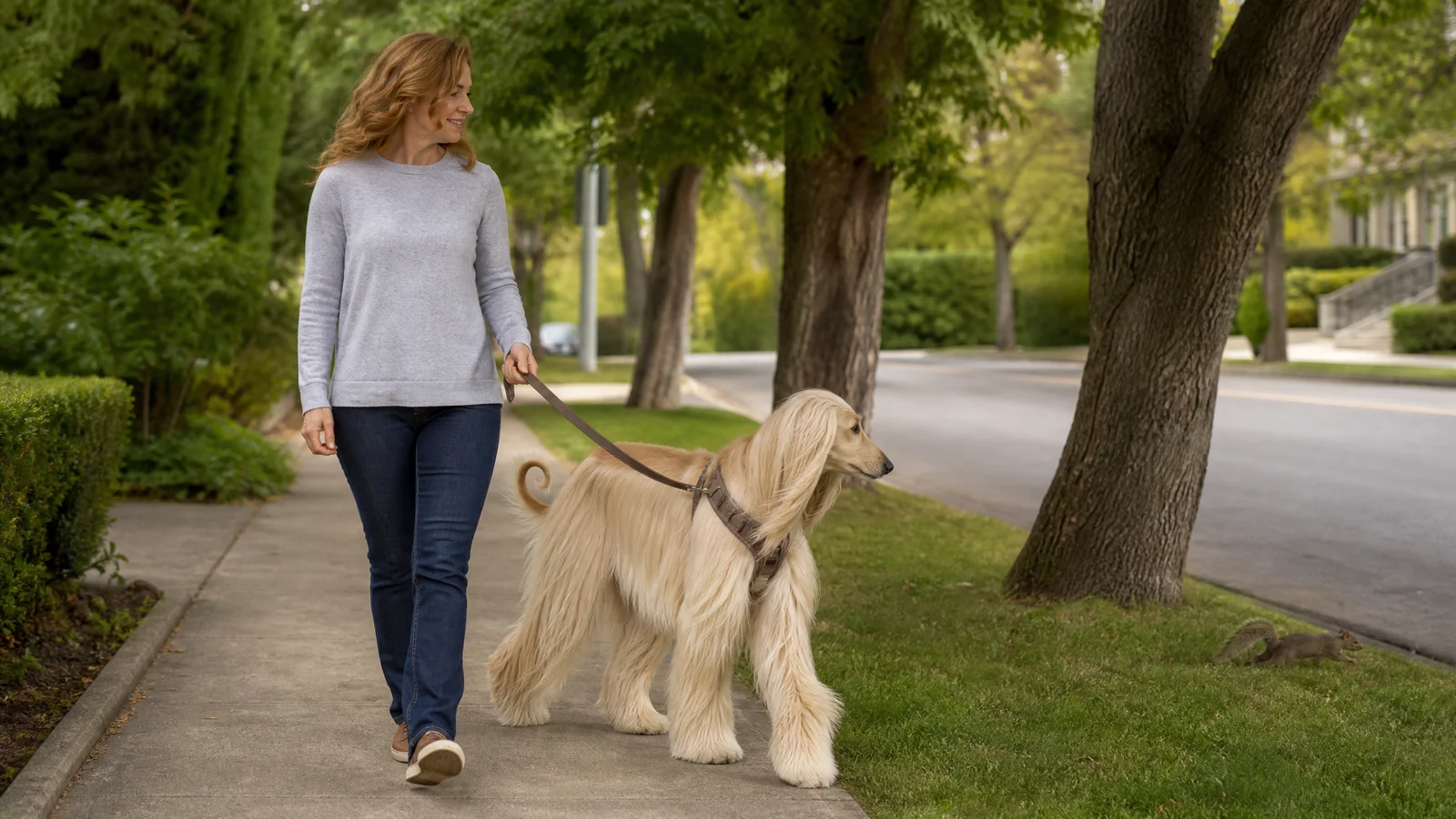 Training basicsLoose-Lead Walking for an Afghan Hound Who Lunges at Movement